News
Bar Association demands independent probe into Homagama custodial death
The Bar Association of Sri Lanka (BASL) has demanded an immediate, independent inquiry into the death of a 29 year old father of two while in police custody at Homagama.
The deceased, identified as Ishara Harshakumara from Kiriwaththuduwa, died following his arrest by Homagama Police during a narcotics investigation.
Family members who visited the suspect at the station on 25 October reported seeing visible physical injuries, alleging that he was subjected to a severe beating by officers.
Police officials provided a contrasting version of events, claiming the suspect suffered a sudden medical emergency during an operational raid and subsequently died at the hospital.
The BASL highlighted the stark contradiction between the official police account and the allegations made by the family.
Emphasizing that the state holds a mandatory duty to safeguard the physical well-being of all detainees, the association warned that any instances of custodial violence must be rigorously prosecuted under the law.
The Homagama Magistrate’s Court has ordered a comprehensive post-mortem examination, while an initial internal inquiry has begun under the direction of an Assistant Superintendent of Police.
Legal representatives called on the Inspector General of Police to secure all physical and forensic evidence to guarantee that investigations proceed without institutional interference.
The BASL pledged to monitor the legal proceedings closely and pursue further action if state authorities fail to deliver a credible probe into the custodial death.
Tamil voters express betrayal as NPP govt. delays northern land releases
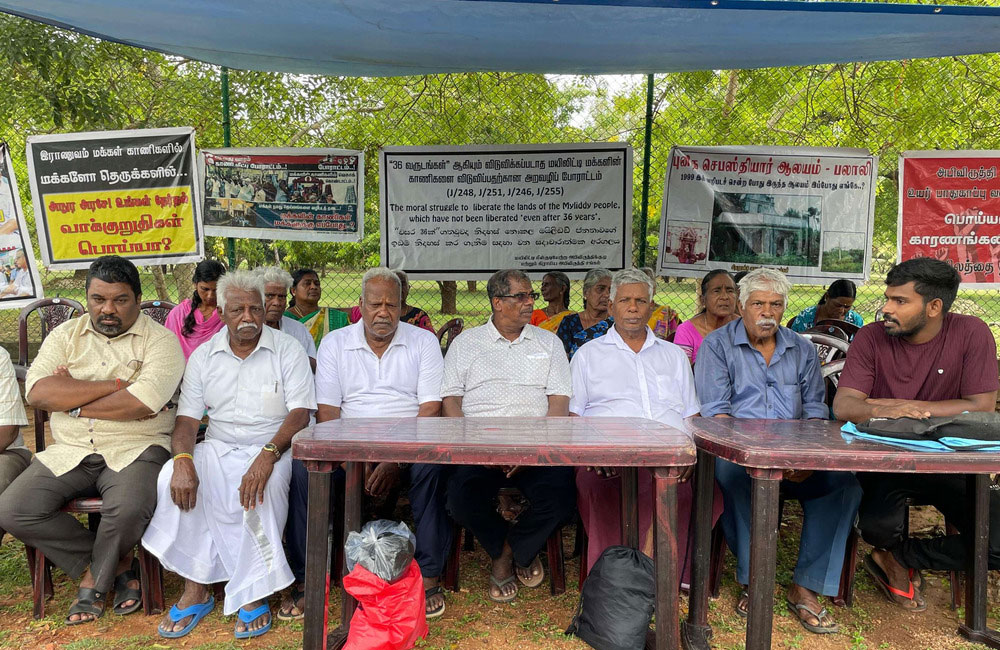
Displaced landowners in Valikamam North staged their 26th consecutive Friday protest outside a military site, accusing the government of failing to honour pledges to return occupied ancestral land.
They gathered in heavy rain outside the military commander's bungalow in Myliddy, Jaffna, representing affected families from four Grama Niladhari divisions who were original residents before being displaced in June 1990.
Protesters expressed outrage after the administration failed to meet its promised September deadline for returning properties held within the High Security Zone.
Residents pointed out that official claims regarding recent land releases were misleading because the 11.23 acres returned by the military in Jaffna consisted of state land rather than privately owned residential property.
Frustration deepened following a recent announcement by Fisheries Minister Ramalingam Chandrasekar, who asked for an additional two to three months to process the land releases.
Protestors noted that this delay follows earlier unfulfilled assurances that land would be handed back in April and September.
Protest actions have now spread beyond Myliddy, with parallel demonstrations taking place near Palaly Junction and in the Vasavilan area.
Local representative groups stated that they have been systematically excluded from divisional coordinating committee meetings.
Electoral promises under scrutiny
Community members highlighted that the government secured significant support in Jaffna based on explicit campaign commitments that civilian lands would be returned to their owners.
Local political figures remarked that the current government has spent two years repeating the same excuses without delivering tangible progress.
Protesters criticised ruling party parliamentarians, including local national list appointees, for failing to visit the demonstration site or directly engage with displaced families.
The affected villagers emphasised that they have been denied access to their homes for more than 17 years since the end of the armed conflict.
Opposition Leader proposes multi-agency action plan to resolve human-elephant conflict
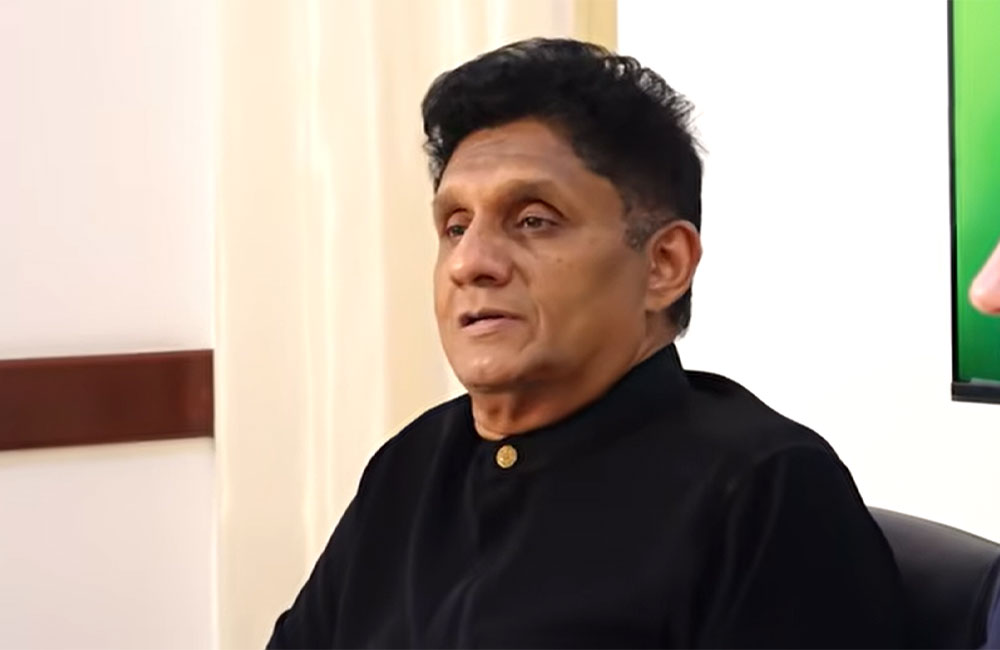
Opposition Leader Sajith Premadasa has called for urgent state action to halt elephant killings following the death of the prominent tusker Kavantissa.
Speaking at a meeting of the Parliamentary Forum on Climate Change in Colombo, the opposition leader declared that the loss of the tusker must mark an end to the country's ongoing human-elephant conflict.
Premadasa urged authorities to treat Kawanthissa’s death as a deliberate killing rather than an isolated accident.
He said that elephants and tuskers form an integral part of Sri Lanka's national and cultural heritage and must be safeguarded under a dedicated protection scheme.
To address systemic failures, the opposition leader proposed a national land-use plan, a people-centred environmental protection framework, and a specialized conservation strategy tailored specifically to elephants.
He highlighted severe shortages of physical resources and personnel within the Department of Wildlife Conservation, calling for immediate state funding to strengthen field operations.
Expressing concern over the dwindling population of large-tusked elephants, Premadasa called for formal investigations into the trend.
He advocated setting up a dedicated emergency hotline for citizens to report sick or injured tuskers, alongside closer collaboration between state wildlife officials and animal welfare organizations.
To assist medical care, the parliamentary forum offered to supply multi-parameter monitors to veterinarians treating wild elephants.
Premadasa also urged the involvement of civil society groups and grassroots activists to bolster monitoring efforts nationwide.
On broader climate challenges, he recommended launching community-level awareness campaigns across all Grama Niladhari divisions to educate the public on the risks of El Niño and La Niña weather patterns.
5,000 tonnes of toxic acid discharged annually amid unregulated battery recycling
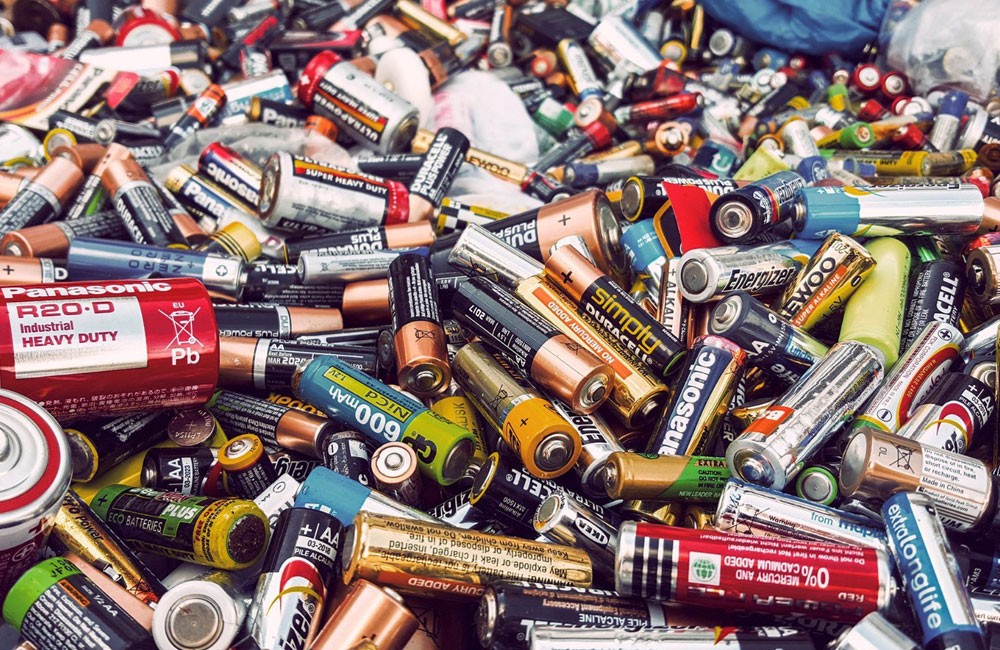
Environmental watchdogs have warned that over 5,000 metric tonnes of highly toxic sulphuric acid could be leaking into Sri Lanka’s ecosystems annually due to unregulated battery recycling practices.
The Centre for Environmental Justice (CEJ) issued the urgent warning following reports that more than 2,000 lead-smelting plants are operating nationwide without proper environmental safeguards or licensing oversight.
Experts highlighted that hazardous waste from battery recycling contains lead, cadmium, and arsenic, which pose severe health risks to workers and nearby populations.
Medical evidence indicates that no level of lead exposure is safe, with children facing permanent cognitive damage while adults risk cardiovascular and renal diseases.
The warning was delivered during events held between 18 and 24 October as part of global lead poisoning prevention awareness week.
Organisers conducted outreach sessions for schoolchildren and municipal waste workers in Kolonnawa, while experts held online panel discussions on national battery waste management.
Environmentalists warned that current licensing procedures fail to address toxic runoff, allowing hazardous chemicals to contaminate surrounding soil and water sources.
In addition to battery recycling, improper electronic waste disposal and unmonitored industrial discharges continue to spread heavy metals across the country.
Advocates urged authorities to establish a formal collection framework, enforce strict regulatory oversight, and align national policies with global chemical trade conventions.
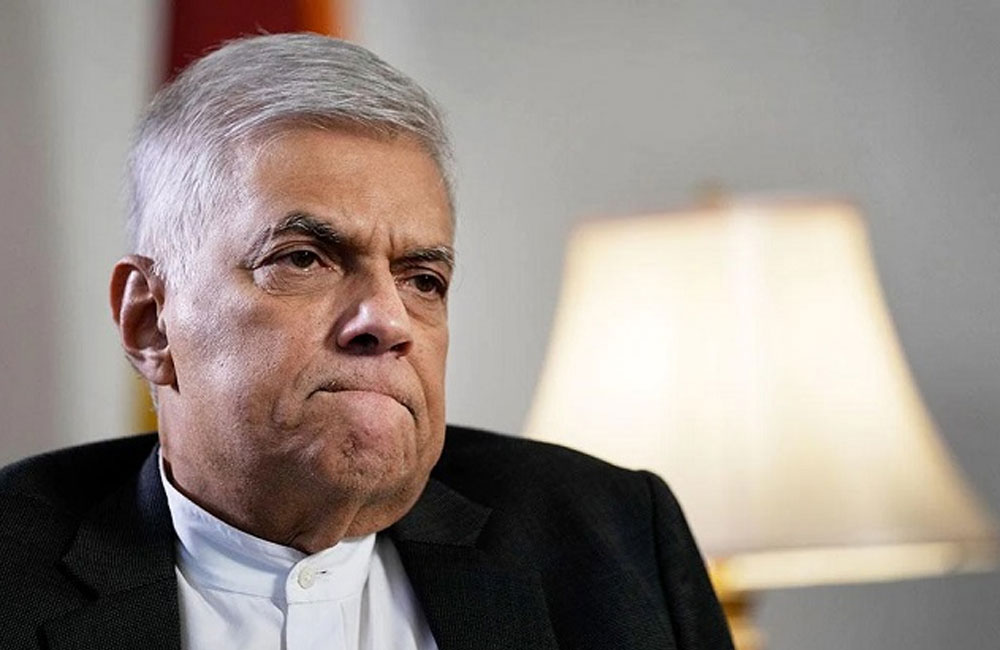
Ranil urges govt. to prioritise India trade deal
Former President Ranil Wickremesinghe has urged the government to prioritize finalizing the Economic and Technology Cooperation Agreement with India before pursuing trade deals with other Asian nations.
Speaking at a virtual economic forum organized by leading Sri Lankan business and professional bodies on Saturday, Wickremesinghe called for the immediate resumption of the suspended bilateral trade pact with New Delhi.
The former leader highlighted India’s trajectory toward becoming the world’s third largest economy, emphasizing its dominant military and maritime presence across the Indian Ocean.
He noted that global power dynamics were shifting beyond the traditional influence of the United States, China, and Russia, making deep engagement with India essential for Sri Lanka.
Reflecting on regional security, Wickremesinghe emphasized that bilateral ties should adhere to the historical principles of the 1987 letters exchanged between Rajiv Gandhi and J.R. Jayewardene, ensuring neither nation undermines the security of the other.
He observed that strategic competition was intensifying as China expands its reach into the Bay of Bengal, turning neighboring states like Myanmar and Bangladesh into focal points of diplomatic influence.
However, he pointed out that both Asian powers share membership in the BRICS bloc, requiring them to establish a mutual understanding on regional development and stability.
Establishing the trade pact with India remains a critical strategic milestone for Sri Lanka’s economic integration and foreign policy balance in a rapidly changing region.
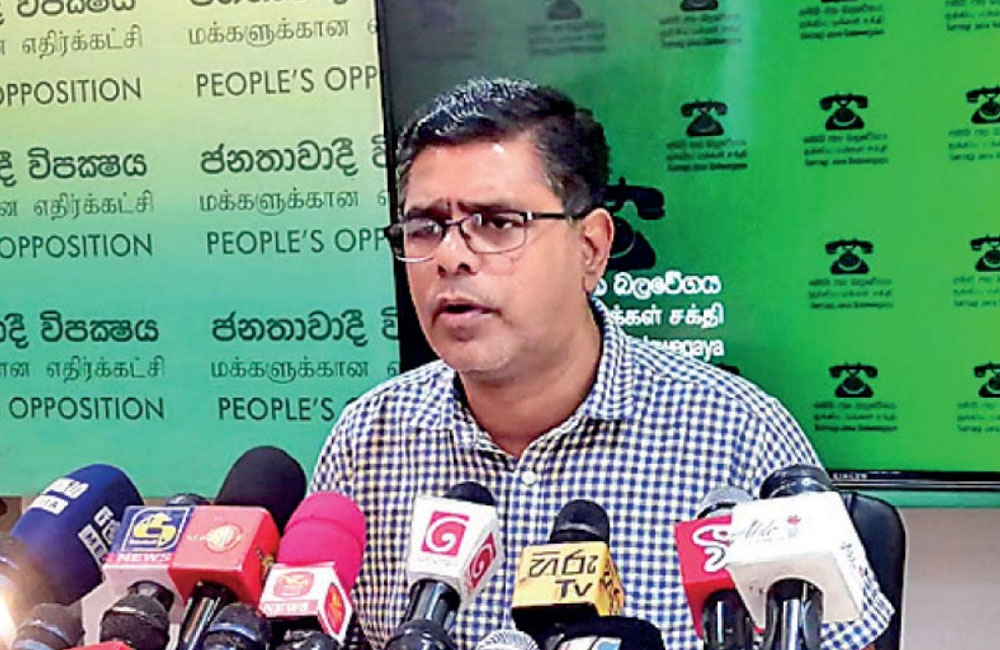
SJB claims Speaker Wickramaratne is eroding parliamentary democracy by blocking motion
The Samagi Jana Balawegaya (SJB) has accused Speaker Dr. Jagath Wickramaratne of eroding parliamentary democracy by blocking a no-confidence motion submitted against him.
SJB MP Mujibur Rahman made these remarks in Colombo on Tuesday, criticising the Speaker for refusing to schedule a debate on his conduct.
Parliamentary proceedings have faced growing criticism from opposition lawmakers over the handling of motions against the chair.
Rahman pointed out that official justifications regarding a pending court case should not prevent the debate from moving forward.
He noted that former Speaker Mahinda Yapa Abeywardena previously permitted a debate on a no-confidence motion against himself in 2023 despite ongoing legal proceedings concerning the appointment of the Inspector General of Police.
The opposition MP alleged that the current Speaker is displaying political bias and systematically preventing minority parties from raising critical questions on the house floor.
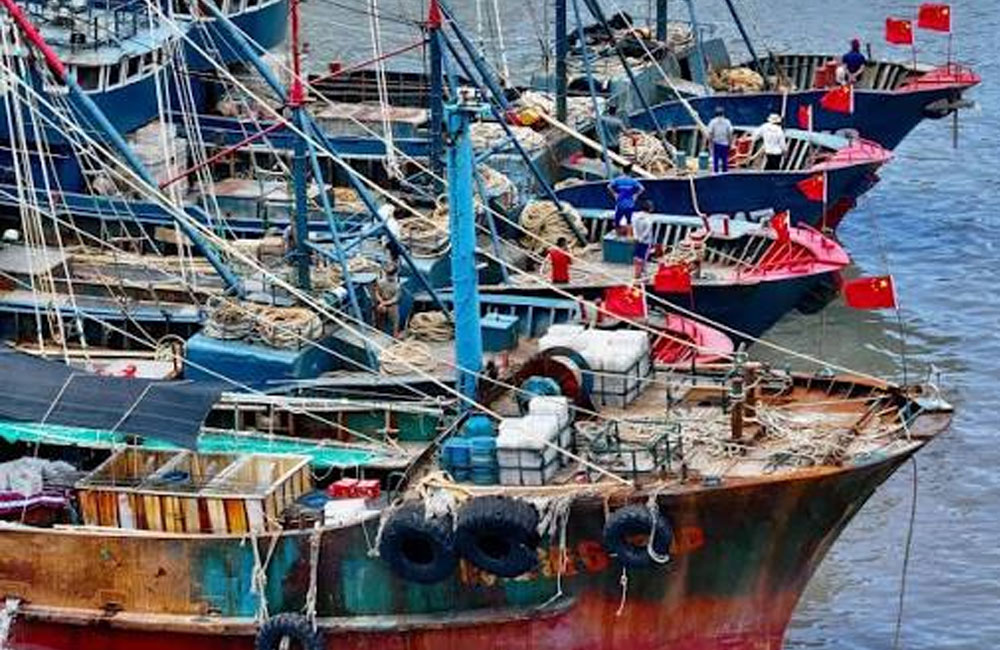
25 Sri Lankan fishing vessels allowed to enter Indian waters for safety
Twenty-five Sri Lankan multi-day fishing vessels stranded in waters near India due to adverse weather conditions have received permission to enter Indian waters to ensure the safety of their crews.
The approval was granted following a special request by the Sri Lankan Government to the Indian Government through the Indian High Commission in Colombo.
The Ministry of Fisheries, Aquatic and Ocean Resources initiated the request amid deteriorating weather conditions associated with Cyclonic Storm ‘Arnab’ over the Bay of Bengal.
The vessels have been instructed to leave the affected sea areas without delay and proceed to safer locations in accordance with weather advisories issued by the Department of Meteorology.
Meanwhile, the Department of Fisheries and Aquatic Resources has taken steps to formally notify vessel owners operating in the affected areas of the procedures they must follow under the prevailing conditions.
The ministry has also urged the fishing community across the country to remain alert and closely follow future weather warnings and official advisories to ensure their safety at sea.
Suspect arrested with foreign-manufactured revolver in Orugodawatta
A 41-year-old man has been arrested for allegedly possessing a foreign-manufactured revolver-type firearm during a police raid in Orugodawatta, within the Grandpass Police area.
The arrest was made by a team of officers from the Colombo District Crimes Division during an operation conducted in the area.
According to police, the suspect is a resident of Kirulapone.
Further investigations into the incident are being carried out by the Colombo District Crimes Division.
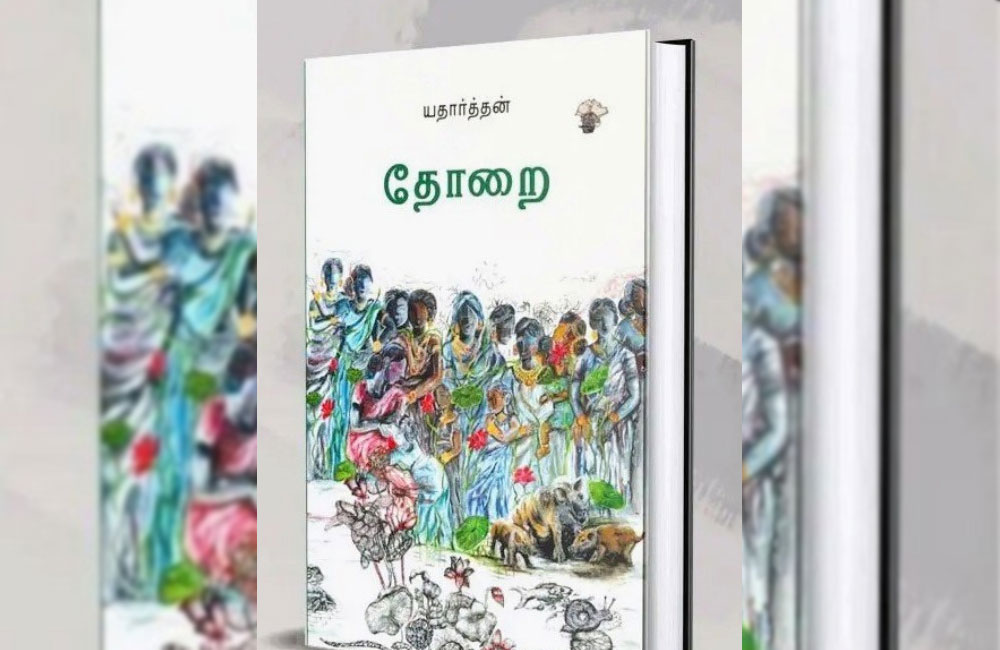
Fresh censorship row as Customs hold Tamil novel 'Thoarai'
Customs officials in Jaffna have refused to release 32 copies of the Tamil novel Thoarai by Piratheep Kunaradnam, who writes as Yatharthan, until the Ministry of Defence and the Department of Government Information approve the books.
The author went to the customs division at the Jaffna Post Office on Thursday, 22 October, to collect copies ordered by readers in Sri Lanka.
The novel is published by Kalachuvadu in Tamil Nadu.
A detention receipt issued by Sri Lanka Customs on 22 October lists the 32 books and gives the pending approvals as the reason for their detention.
It warns that goods not cleared within a month will be dealt with under the Customs Ordinance.
It also says the owner is liable for a storage fee of Rs 50 per parcel for each day the goods are held.
Writing on his website, Yatharthan said customs staff opened the package and searched the book for particular words, including “field bike” and “army man”.
He said a Tamil officer was then called in, and the officials told him the books could be released only with approval from the Ministry of Defence.
He said he told them the novel contained nothing that incited ethnic hatred or promoted armed groups.
He said he offered to wait while they read a few chapters, but the officials declined.
He said they told him two copies would be sent to the Ministry of Defence, which they said rarely responds, and suggested he travel to Colombo to pursue the matter himself.
Yatharthan said he had collected copies of his earlier novel, Nakulaathai, from the same office in 2022 without any difficulty.
He said the government had set out no clear legal framework for what writing it considers a threat to national security.
He also criticised the silence of much of the Tamil and wider Sri Lankan literary community.
He noted that books by the Tamil writers Shobasakthi and Theepachelvan Piratheepan had also been blocked recently, prompting a protest, and had still not been released.
This month the Human Rights Commission of Sri Lanka ruled that Sri Lanka Customs had violated the fundamental rights of Theepachelvan by holding two of his books for more than six months.
The commission found that state institutions had treated the books with suspicion because they were written in Tamil.
It called for all copies to be released immediately.
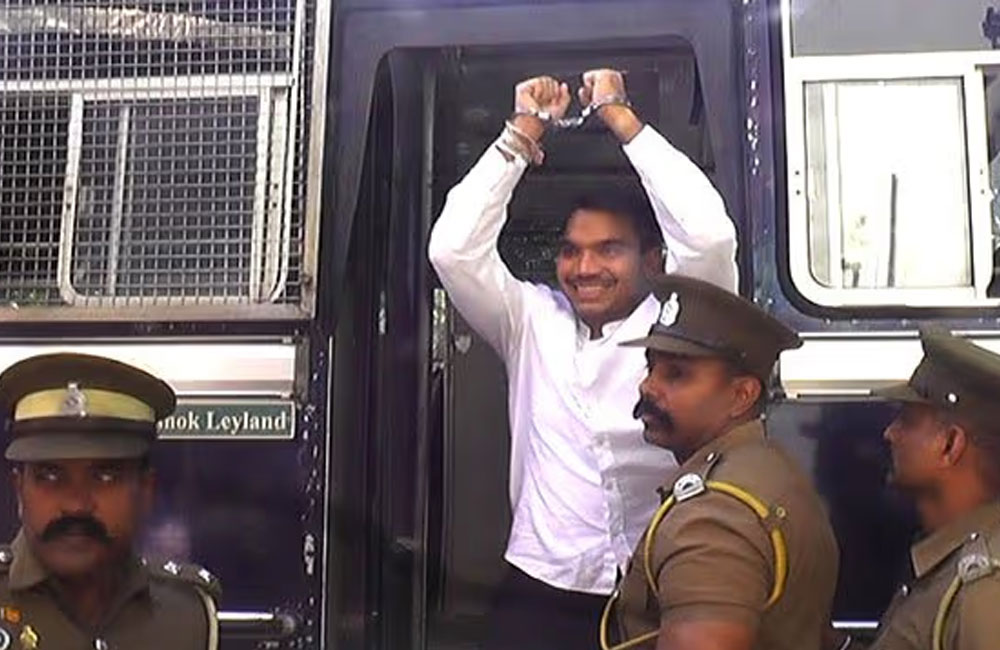
Namal Rajapaksa brought to Hulftsdorp courts complex
Parliamentarian Namal Rajapaksa was brought to the Hulftsdorp Courts Complex in Aluthkade a short while ago today (October 27) in connection with a court case.
Further details regarding the proceedings have not yet been reported.
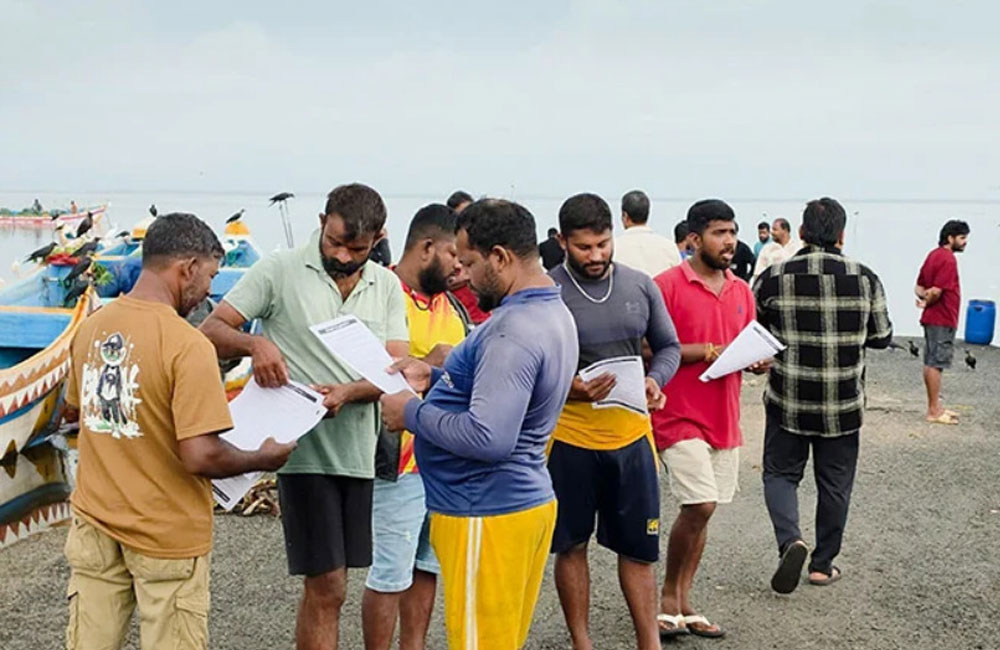
Jaffna fishermen mobilise against Indian trawlers and proposed fisheries legislation
Fishermen’s organisations in Jaffna have joined political activists to distribute leaflets demanding an end to Indian trawler incursions and the withdrawal of a proposed Fisheries Bill.
The joint campaign was conducted in northern Sri Lanka alongside members of the Jana Aragala movement, including Frontline Socialist Party activist Vasantha Mudalige.
Protesters warned that taxes on nets and gear have driven prices beyond reach, making boat purchases impossible for ordinary workers.
Demonstrators pointed out that despite an official fuel subsidy announcement, local fishermen are still forced to pay full market prices at the pump.
Campaigners alleged that the government has failed to deliver on its pledges, leaving fishing communities waiting in vain for relief.
The leaflets accused successive administrations of neglecting to develop the sector scientifically while failing to halt Indian vessels from plundering local waters.
The long-running maritime dispute remains unresolved after bilateral talks on bottom trawling were postponed without a new date set.
Tamil fishing communities continue to suffer as bottom trawlers damage gear, deplete fish stocks, and destroy seabed habitats in the North and East.
Local fishermen also face severe operational limits due to ongoing military occupation of coastal land and strict naval access controls.
Organisers outlined key demands including lower fuel prices, affordable equipment, concessionary fuel supplies, decisive action against foreign incursions, and the immediate withdrawal of the legislation.
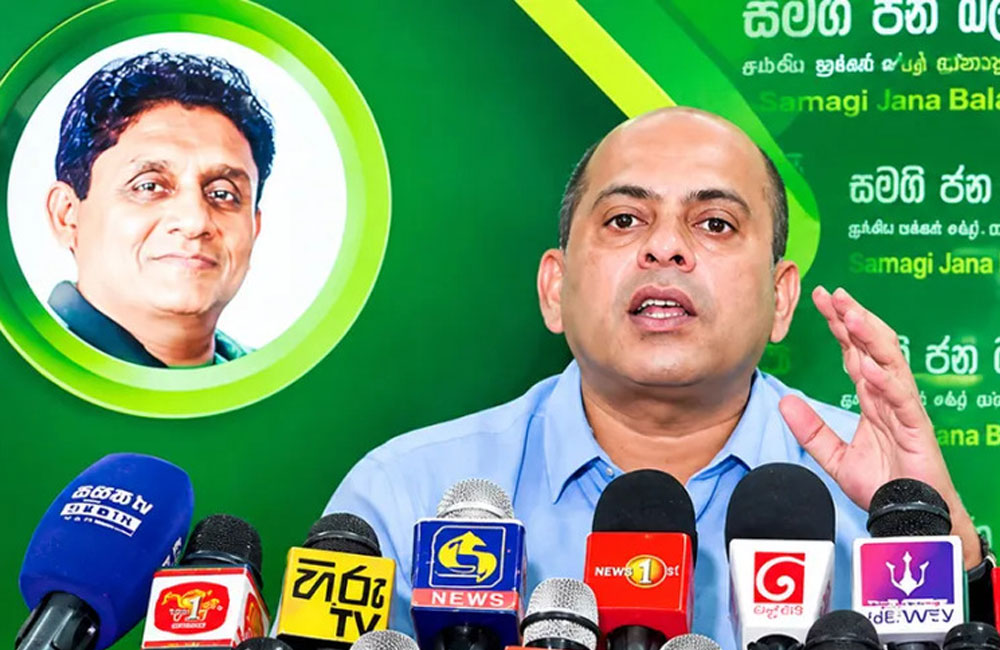
Marikkar claims govt. building regime more repressive than Rajapaksa era
Samagi Jana Balawegaya (SJB) MP S. M. Marikkar has accused President Anura Kumara Dissanayake’s government of imposing unprecedented authoritarian measures across Sri Lanka to conceal economic failure and public discontent.
He made these allegation during a media briefing in Colomb.
Marikkar asserted that the current executive was erecting a regime more repressive than that of former President Mahinda Rajapaksa while actively preparing legislative mechanisms to curtail civil liberties.
He said state authorities are attempting to dismantle freedom of speech and restrict journalists from reporting on growing social hardship.
He attributed these measures to the government's inability to reduce the prices of fuel, electricity, essential foodstuffs, and vital pharmaceuticals.
Marikkar observed that severe economic pressure had forced many families to reduce daily meals from three to two, driving record numbers of citizens to pawn personal jewellery to survive.
Anticipating widespread public demonstrations, he claimed the government was resorting to intimidation and media censorship to stifle dissent.
He said that the NPP government's political mandate had expired, asserting that voters were increasingly shifting allegiance to the SJB.
He also promised that an alternative SJB government would attract USD 10 billion in foreign direct investment during its first year to deliver economic relief.
Page 1 of 791