Business
Think Tank Warns Tariff Reform Needs Independent Oversight Body
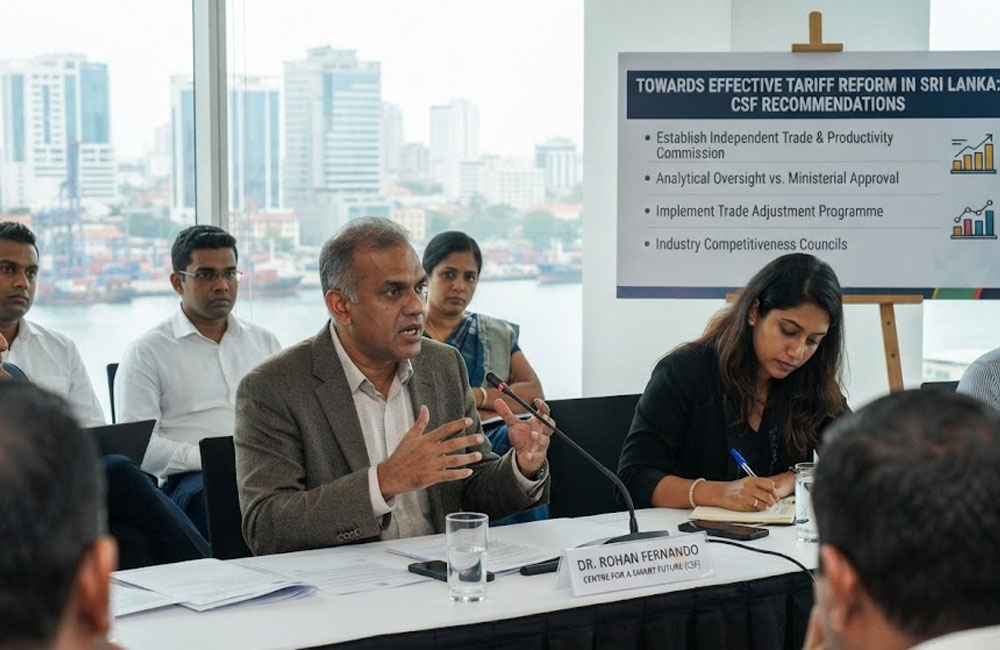
A Colombo-based think tank has said that Sri Lanka's renewed tariff rationalisation drive risks stalling unless it is supported by an independent, analytically-capable institution rather than a body that merely channels industry submissions for ministerial approval.
The Centre for a Smart Future (CSF) said the government should consider reviving free trade agreement negotiations alongside its tariff reform agenda.
The CSF pointed to Sri Lanka's own history with such reforms, noting that a similar tariff rationalisation effort undertaken a decade ago had collapsed under industry pushback and political pressure. The think tank observed that a detailed institutional framework for a trade adjustment programme had in fact been approved by the Cabinet of Ministers in early 2019, but had only ever been nominally put into effect, leaving the reform vulnerable to the same resistance that derailed earlier efforts.
According to the CSF, the technical groundwork for such a mechanism already exists in the form of templates and reference material developed previously, and what is now required is the institutional resolve to implement them with firmness and credibility. To this end, the think tank recommended the establishment of an independent Trade and Productivity Commission, equipped with its own secretariat and dedicated analytical capacity, and tasked with monitoring the follow-through of reform measures. It further suggested that this commission be interlocked with the National Tariff Policy Committee already proposed under the National Tariff Policy of February 2026.
The CSF cautioned that a body limited to convening stakeholder consultations and forwarding submissions for ministerial decision would not function as an effective adjustment mechanism, and stressed that the limited fiscal space available for adjustment support must be allocated judiciously. Among its specific recommendations, the think tank proposed the creation of Industry Competitiveness Councils to address sector-specific regulatory and facilitation constraints, alongside TVET-based worker retraining programmes and time-bound investment promotion initiatives designed to absorb displaced workers and capital.
The CSF urged policymakers to take the political decision to establish the appropriate institutional mechanisms now, rather than waiting to react to the industry pressures that trade liberalisation would predictably generate.
Sri Lanka tax waivers to BOI and strategic projects top Rs. 276 billion
Tax relief provided by the Finance Ministry to designated investment projects and enterprise zones has crossed Rs. 276 billion across direct and indirect duty lines.
Official figures published in the Tax Expenditure Report 30 June 2026 highlight extensive tax revenue forgone through special benefits granted to Board of Investment firms and Strategic Development Projects.
Corporate income tax concessions made up the largest portion of this total, reaching Rs. 171.37 billion for Board of Investment enterprises in the 2024/25 basis year when measured against the benchmark 30 per cent corporate rate.
A tax base of Rs. 623.26 billion taxed at a reduced 14 per cent rate produced roughly Rs. 99.72 billion in concessions, while entities enjoying a complete zero rate accounted for an additional Rs. 52.97 billion.
Strategic Development Projects operating under a zero tax rate gained Rs. 18.39 billion in corporate tax relief from a tax base of Rs. 61.28 billion over the same operational timeframe.
Sri Lanka Customs data revealed that Board of Investment businesses received Rs. 76.13 billion in border tax waivers up to 31 May 2026.
These border concessions comprised Rs. 36.86 billion in Customs Import Duty, Rs. 23.05 billion in Ports and Airports Development Levy, and Rs. 16.22 billion in CESS exemptions.
Border tax relief tied to Strategic Development Projects amounted to Rs. 886 million, whereas exemptions linked directly to Colombo Port City totaled Rs. 24.3 million during this timeframe.
Inland Revenue Department records showed Value Added Tax concessions for Board of Investment entities hit Rs. 9.58 billion in the first quarter of 2026 from a tax base of Rs. 53.2 billion.
General manufacturing enterprises accounted for Rs. 5 billion of these Value Added Tax concessions, with wholesale and retail services taking Rs. 3.45 billion and textiles and garments receiving Rs. 349 million.
Strategic Development Projects logged another Rs. 43 million in Value Added Tax relief during the identical quarter.
Treasury officials highlighted that because the report gathers data across varying tax timeframes, the overall numbers cannot be interpreted as a single period revenue loss.
The document clarifies that these statistical figures do not measure the broader economic value generated through employment creation, foreign investment, or export proceeds.

AI revolution disrupts Sri Lanka's $5 billion digital export ambitions
Rapid advances in artificial intelligence are threatening to destabilise Sri Lanka's long-term target of achieving USD 5 billion in annual digital exports by 2030 by fundamentally disrupting the traditional software development growth model.
This concern was raised by Deputy Minister of Digital Economy Eranga Weeraratne during the national validation workshop on the proposed Digital Export Roadmap held in Colombo, where senior policymakers, industry leaders, and technical experts gathered to review the country's technology trajectory.
Government leaders and private sector executives warned that the national reliance on billing international clients for engineering hours is becoming increasingly unsustainable as automated tools drastically diminish coding times and reduce staffing requirements for software projects.
Addressing industry stakeholders, the Deputy Minister questioned whether the traditional billing structure remains viable if automated programming platforms eliminate a third of billed hours, urging domestic firms to abandon low-value outsourcing in favour of proprietary software products, intellectual property, and specialised knowledge solutions.
These concerns reflect a deeper policy pivot as the State prepares a comprehensive reform package spanning taxation, venture capital, capital mobility, and public procurement to enable the technology sector to adapt.
Policymakers acknowledged that regulatory changes alone will prove insufficient, questioning whether national resources have been diluted by attempting to compete across numerous technology niches rather than developing distinct global strengths in two or three specialised fields.
To establish international credibility, officials emphasised that strategic branding must be matched by genuine technical capabilities capable of attracting international capital and top-tier talent, marking an implicit recognition that past export strategies suffered from weak accountability, fragmented leadership, and a lack of measurable execution.
Supporting these concerns, GovTech Sri Lanka Chairman Dr Hans Wijayasuriya noted that while the local technology ecosystem had previously survived major national disruptions, including the Easter Sunday attacks, the pandemic, and the severe economic crisis, mere survival could no longer be equated with meaningful industry growth.
Failure to pivot from selling basic engineering hours towards high-value innovation poses a severe threat to Sri Lanka's foreign exchange earnings, broader economic recovery, and talent retention during a crucial era of global technological transformation.
As international software markets undergo rapid restructuring, the Ministry of Digital Economy and industry stakeholders are scheduled to refine the Digital Export Roadmap and establish actionable performance indicators in the coming months to accelerate the national transition towards intellectual property creation.

Sweeping logistics reforms urged to attract FDI and drive growth
Sri Lanka must execute comprehensive regulatory and legal reforms within its logistics sector to attract major foreign direct investment and boost long-term national growth, according to Shippers’ Academy International Founder Rohan Masakorala.
Speaking on Ada Derana’s The Nightly Business Report, Masakorala explained that while domestic ports currently benefit from cargo diversions caused by tensions near the Strait of Hormuz, this sudden boost remains a short-term windfall.
To convert this temporary advantage into lasting economic progress, he urged the country to modernise its legal and operational frameworks, allowing international investors to operate with greater efficiency and transparency.
The logistics expert noted that Sri Lanka functions primarily as a transhipment hub rather than a fully integrated global maritime centre.
He stressed that simply relying on a strategic geographical location is insufficient, pointing out that existing domestic systems have remained unchanged for nearly four decades and require a complete structural overhaul.
Data from the Sri Lanka Export Development Board reveals that the logistics industry currently contributes around 2.5 per cent to the nation's gross domestic product and accounts for 7 per cent of total exports.
The sector provides full-time employment to up to 50,000 people, supporting regional transhipment, entrepot trade, and complex supply chain networks managed by over 500 registered maritime entities.
Masakorala added that building a competitive maritime ecosystem requires establishing dynamic business environments that move beyond state monopolies and outdated regulations.
Central Bank cracks down on inflated vehicle valuations
The Central Bank of Sri Lanka (CBSL) has ordered licensed finance companies to immediately halt regulatory bypass practices and enforce strict vehicle financing limits to prevent systemic financial instability.
The directive, issued on 28 July 2026 by the Macroprudential Surveillance Department of the central bank to chief executive officers of all registered finance firms across the island, follows regulatory discoveries of artificially inflated vehicle valuations and improper bridging loans used to circumvent existing credit controls.
Regulators discovered that motor vehicle valuers and sellers were routinely submitting valuations and invoices significantly higher than prevailing market prices, artificially inflating asset values across the non-bank financial sector.
The central monetary authority explicitly targeted alternative and secondary financing structures, confirming that bridging facilities provided alongside primary leases, hire purchase agreements, and standard motor vehicle loans fall strictly under regulatory caps.
Officials instructed financial institutions to cease disbursing or facilitating any credit arrangements that directly or indirectly breach prescribed loan-to-value boundaries.
The regulator warned that institutions prioritizing short-term profitability over macroprudential guidelines risk compounding systemic vulnerabilities, stressing that compliance must be maintained in both form and substance to safeguard long-term economic resilience.
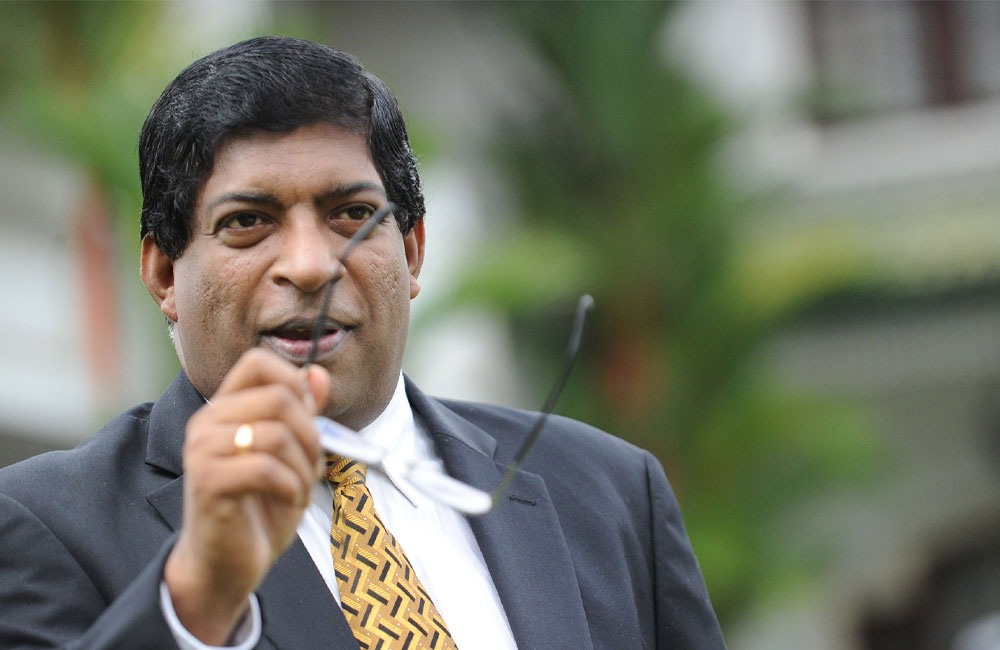
Govt, CBSL artificially inflating foreign exchange reserves - Ravi K.
Member of Parliament Ravi Karunanayake has accused the government and the Central Bank of Sri Lanka (CBSL) of artificially inflating headline foreign exchange reserves through short term domestic swap arrangements.
Raising the issue in Parliament, the opposition lawmaker called for an immediate breakdown of Sri Lanka's reserve composition from the Minister of Finance to clarify the true amount of liquid foreign currency available for import cover and total liabilities tied to forward contracts.
Karunanayake claimed that relying on six month domestic swaps to boost reported reserves was equivalent to propping up finances with a bank overdraft.
He questioned whether the statutory duty of reserve creation rests with the Central Bank or the Ministry of Finance, while requesting official projections for Gross Official Reserves and Net International Reserves up to 2029 alongside agreed targets set by the International Monetary Fund.
He also asked whether the government intends to re-enter the International Sovereign Bond market to manage its foreign debt obligations.
The former Finance Minister also criticised central bank forward guidance issued on 12 August which ruled out policy interest rate increases for the rest of the year.
He said that a governor could not make such declarations given the volatile nature of inflation, exchange rates, and capital flows.
Karunanayake called for total transparency regarding the Central Bank's 2025 net profits and remittances to the state, while asking if the governemnt plans to activate the Active Liability Management Act to lower debt servicing costs and support the national currency.
Sri Lankan brands hit record Rs. 652 billion peak as corporate values outpace pre-crisis benchmarks
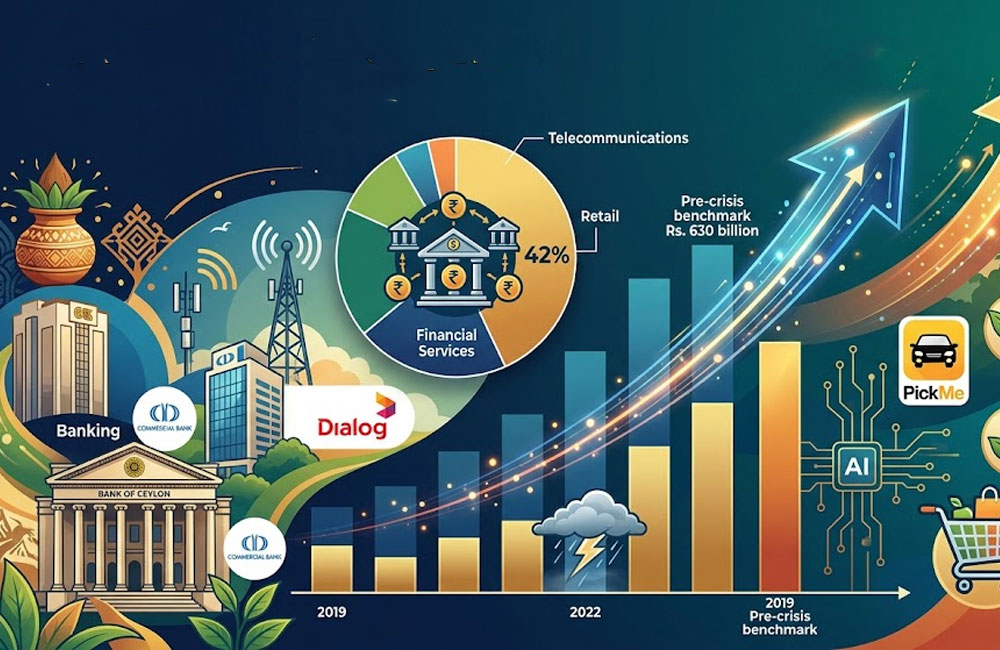
The total combined valuation of Sri Lanka's top 100 corporate brands has reached a historic peak of Rs. 652 billion, comfortably exceeding pre-crisis figures.
According to the Sri Lanka 100 2026 report released by brand valuation consultancy 'Brand Finance' on July 31, corporate brand values surged by 17 per cent year-on-year to eclipse the former 2019 benchmark of Rs. 630 billion.
The valuation milestone serves as a key indicator of macroeconomic recovery following the 2022 sovereign debt crisis, with the national economy sustaining five per cent GDP growth in 2025 despite an estimated USD 4.1 billion loss caused by Cyclone Ditwah.
Financial institutions continue to anchor the national commercial landscape, accounting for 42 per cent of total ranked brand value at 275 billion rupees and securing six of the top ten individual positions.
State-owned Bank of Ceylon retained its status as the most valuable Sri Lankan brand with a valuation of Rs. 65.5 billion, followed by Commercial Bank at Rs. 54.9 billion.
In the telecommunications sector, Dialog registered a 16 per cent rise in brand value to Rs. 41.1 billion while overtaking supermarket chain Keells to become the country's strongest overall brand with a Brand Strength Index score of 89.4 out of 100.
Significant corporate expansion was also recorded across the sector, including Nations Trust Bank's 35 per cent brand value surge following its acquisition of HSBC's domestic retail operations, and mobility provider PickMe's growth to Rs. 4.8 billion through artificial intelligence integration.
Commenting on the findings, Brand Finance Lanka Chairman Ruchi Gunewardene said that exceeding pre-crisis thresholds reflected renewed institutional confidence, adding that future commercial expansion would rely on sector diversification, continuous digital transformation, and cross-industry adoption of artificial intelligence.

Migrant workers face no tax on official bank remittances - IRD
Sri Lankan migrant workers remitting legally earned foreign income through formal banking channels will not face domestic taxation, according to senior officials at the Inland Revenue Department.
Inland Revenue Department Senior Deputy Commissioner Hiran Meneripitiya clarified the legal framework during a programme on a private television channel, addressing persistent misgivings among overseas workers regarding local tax liabilities.
He pointed out that individual tax liability depends entirely on an individual's tax residency status for any given year of assessment.
Sri Lankan tax residents may be subject to tax on both local and foreign earnings, whereas individuals who do not qualify as tax residents for the assessment year face no Sri Lankan income tax on earnings generated outside the country.
Migrant workers sending legally earned funds home through official banking channels have no reason to harbor fears of automatic taxation upon remittance.
The Senior Deputy Commissioner highlighted that no taxes are levied automatically by the banking system simply because foreign currency is remitted to a Sri Lankan account.
Overseas workers are free to bring their legally acquired foreign income into the island through formal channels and invest those funds legally within the domestic economy.
He urged the Sri Lankan expatriate workforce to avoid informal or illegal money transfer mechanisms, reiterating that concerns over taxation when using the formal banking sector are entirely unfounded.
Apparel sector faces high stakes as Sri Lanka prepares EU GSP Plus reapplication
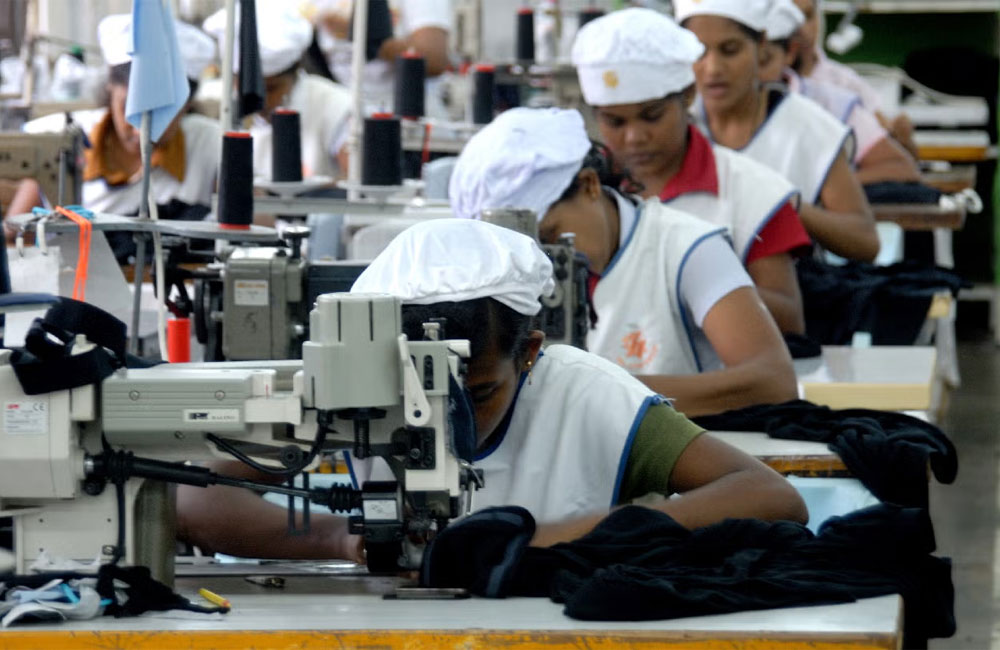
Sri Lanka's flagship apparel sector has entered a critical operational window as the government prepares to formally reapply for the European Union's revised GSP Plus trade preference scheme under heightened compliance rules.
The garment industry, which generates over USD 5 billion in annual exports, employs more than 350,000 workers, and contributes up to seven per cent of the national Gross Domestic Product, risks losing its competitive edge in key European markets if the country fails to meet the updated criteria.
With the European Parliament adopting a expanded regulatory framework, beneficiary nations must now demonstrate verified implementation across an expanded set of obligations, including human rights, climate action under the Paris Agreement, labor inspections, and anti-corruption measures.
A major commercial hurdle facing the sector is the historic underutilisation of existing trade benefits, with local exporters successfully claiming preferential access on only 49 to 59 per cent of eligible shipments.
According to industry analysts, this deficit is primarily driven by strict European Union rules of origin that require domestic yarn sourcing, a requirement that Sri Lanka struggles to fulfill due to insufficient local textile manufacturing capacity.
European Union Ambassador Carmen Moreno recently emphasised that the island nation has not fully capitalised on these concessions, urging domestic policymakers to accelerate industrial reforms, replace the Prevention of Terrorism Act with international standard legislation, and tackle issues surrounding illegal fishing and illicit narcotics before submitting the renewal application.
The urgency of securing a seamless transition is further compounded by the World Bank's recent reclassification of Sri Lanka as an upper middle income economy, a status that would eventually disqualify the nation from GSP Plus benefits if maintained for three consecutive years.
Government officials and industrial leaders must submit a comprehensive, evidence backed action plan during 2027 to prevent Sri Lankan exports from reverting to standard standard tariffs by mid 2029, a move that will determine the long term stability of the country's primary manufacturing export.

SLT-Mobitel records 11.1% revenue growth in H1 2026
Sri Lanka Telecom-Mobitel recorded an 11.1 per cent surge in group revenue during the first half of 2026, despite experiencing severe operational cost pressures driven by global trade headwinds.
The state-owned national telecommunications provider delivered a Rs. 6.1 billion top-line gain during the period, though imported hardware requirements caused operational expenditure to rise alongside earnings.
Network infrastructure deployments, which rely heavily on imported components such as microchips, optical fibre, and satellite transmission links, accounted for a 9.6 per cent expenditure increase, absorbing 53 per cent of the total revenue expansion in the first six months.
The cost pressures intensified during the second quarter, where operational expenses accounted for 64 per cent of revenue, despite quarterly top-line growth accelerating to 11.7 per cent.
To mitigate foreign exchange exposure arising from earning in local currency while acquiring network hardware in US dollars, SLT-Mobitel Chairperson Dr. Mothilal de Silva explained that the entity had accumulated US dollar reserves to hedge against currency fluctuations.
He also noted that the enterprise had avoided privatization under the current government through structural reform, enhanced procurement transparency, and waste reduction measures.
Meanwhile, Deputy Minister of Digital Economy Eranga Weeraratne confirmed that ongoing consultations were taking place between management and key stakeholders regarding the structural consolidation of the organization.
The proposed corporate restructuring aims to enhance operational efficiency by creating a unified architecture across state entities
Reliance on regressive consumption taxes shadowing Sri Lanka's fiscal gains
Sri Lanka's fiscal recovery is relying heavily on regressive consumption taxes that disproportionately affect ordinary citizens rather than progressive income taxes.
An analysis published by Verite Research's Public Finance platform reveals that the state successfully raised its revenue to 16.7 per cent of Gross Domestic Product (GDP) in 2025, marking a two-decade high following a series of economic shocks that had previously dragged collections down to a critical low of 8.3 per cent in 2021.
The post-crisis turnaround was primarily propelled by a steep escalation in Value Added Tax collections, which rose from 3 per cent of Gross Domestic Product in 2018 to 5.3 per cent in 2025.
According to Verite, this substantial jump was driven by raising the tax rate to 18 per cent, eliminating key exemptions, and lowering registration thresholds to pull more businesses into the tax net.
Adjustments to personal and corporate income tax rates contributed a mere 1.2 per cent of GDP to state coffers.
Additional gains were secured through the Social Security Contribution Levy, which generated 1 per cent of Gross Domestic Product largely as a replacement for the former Nation Building Tax, alongside a 1.5 per cent boost following the relaxation of restrictions on vehicle imports.
The heavy reliance on indirect taxation raises serious concerns regarding economic equity, while leaving the country's total revenue collection well behind regional peers like India, Nepal, Bhutan, and the Maldives, all of which maintain revenue levels at or above 20 per cent of Gross Domestic Product.
Page 1 of 31