World
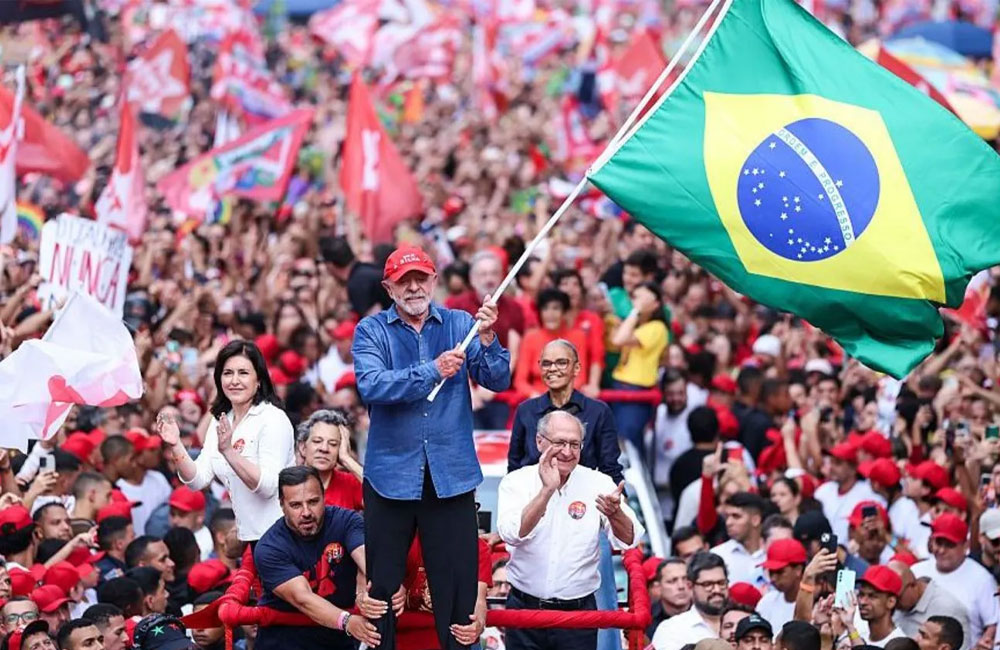
Lula's comeback in Brazil dents Trump's ambitions for Latin America
"Brazil will not accept being anyone's backyard," Brazil's left-wing President Luiz Inacio Lula da Silva declared in his election victory speech, a message squarely aimed at Washington.
Domestic elections are rarely won on foreign policy, and this one was no different. But Lula's defiance against what he has described as US interference in Brazilian affairs evoked a patriotic spirit that proved an effective campaigning tool.
It also chimed with his wider brand of politics as a former union leader: standing up to powerful figures.
Paradoxically, it seems to have earned him President Donald Trump's respect. "I like Lula, we get along well," Trump said, responding to the result. "I didn't take sides," he added, before calling the election "terrible" and "rigged".
If that sounds muddled, it is because the relationship between the two men is not straightforward. Trump did not explicitly endorse Lula's rival Flávio Bolsonaro, who has refused to recognise the result despite the Supreme Electoral Court finding no evidence of irregularities. But Trump was a close ally of Flávio's father, the former President Jair Bolsonaro.
When I spoke to Lula at his residence about a year ago, relations had hit rock bottom. He told me he had "no relationship" with Trump, that they had never spoken, and that he had no intention of picking up the phone. Trump had recently imposed punitive tariffs on Brazil, largely as a political response to Jair Bolsonaro's coup trial, which the US president called a "witch-hunt".
Rather than tiptoeing around Trump, as some US allies did, Lula fought back – and it paid off.
He made fiery speeches invoking Brazilian sovereignty, attacked US interference in the judicial process, and took to wearing a blue cap reading "Brazil belongs to Brazilians".
His approval ratings jumped.
He accused the Bolsonaro family, who had lobbied for the tariffs, of being unpatriotic – a blow to a political right that so often claims patriotism as its terrain.
Even some in the agricultural lobby, typically strong Bolsonaro supporters but reliant on US trade, thought Lula had a point.
The US eventually backed down and reduced the tariffs, although they have since risen again.
Relations then improved.
The two men spoke at the United Nations and later met in the Oval Office, where Trump called the talks "very good" and Lula said he left "very satisfied".
Another indication, perhaps, that Trump likes a strongman.
So why might Trump be unhappy with the result?
Latin America has swung to the right, with Ecuador, Chile, Colombia, Argentina and Peru all electing presidents closely aligned with the Trump administration. Trump has sought to use these allies to establish US dominance in the Western Hemisphere, a strategy he has dubbed the "Donroe Doctrine".
Christopher Sabatini, senior fellow for Latin America at Chatham House, notes that Trump thought Brazil would be the "10th and biggest prize" after Flávio Bolsonaro won the first round.
Brazil is Latin America's largest economy, and the younger Bolsonaro was expected to join Trump's "Shield of Americas" coalition against narco-trafficking.
Brazil also holds the world's second-largest reserves of rare earth minerals after China, and the US had been eyeing preferential access.
The relationship has thawed, but with four more years ahead for Lula, several issues could reignite tensions.
Brazil accused the US earlier this year of trying to cast doubt on its electoral system and denied visas to two state department officials planning to visit.
The US called this "baseless" and revoked the Brazilian ambassador's visa in response.
If Trump keeps calling this result "rigged", further diplomatic fallout is likely.
Lula has also vehemently opposed US military action in the region, from the seizure of Nicolás Maduro in Venezuela to the bombing of alleged drug-trafficking vessels.
He lambasted Washington for designating Brazil's two major gangs as terrorist organisations after lobbying from Flávio Bolsonaro, and warned of attacks on Brazilian sovereignty.
It is a sensitive subject for a political left that remembers the region's brutal 20th Century dictatorships, many backed by the CIA in the name of stopping communism.
Then there is US tech.
Lula's campaign accused Meta of favouring Flávio Bolsonaro.
Meta denied this but admitted moderation issues and technical errors had wrongly removed some posts or limited their reach.
Lula's supporters responded by sharing his messages through a 10-million-strong WhatsApp group to bypass the algorithms.
Separately, the Trump administration is unhappy with Pix, Brazil's instant payment system, which has boosted the economy, but which the US sees as taking business from Visa and Mastercard.
The relationship has exposed political divisions.
In the campaign, Bolsonaro supporters waved US flags at their rallies and, in one case, an inflatable saying "Trump Nuke Brazil", while Lula and his supporters accused Flávio Bolsonaro of protecting US interests over Brazil's.
Still, tensions can be overstated.
The US remains Brazil's second-biggest trading partner after China, and for now the two leaders get on.
Whether that lasts will depend on how far the US tries to intervene in Brazilian affairs, and how bullish Lula is in response.
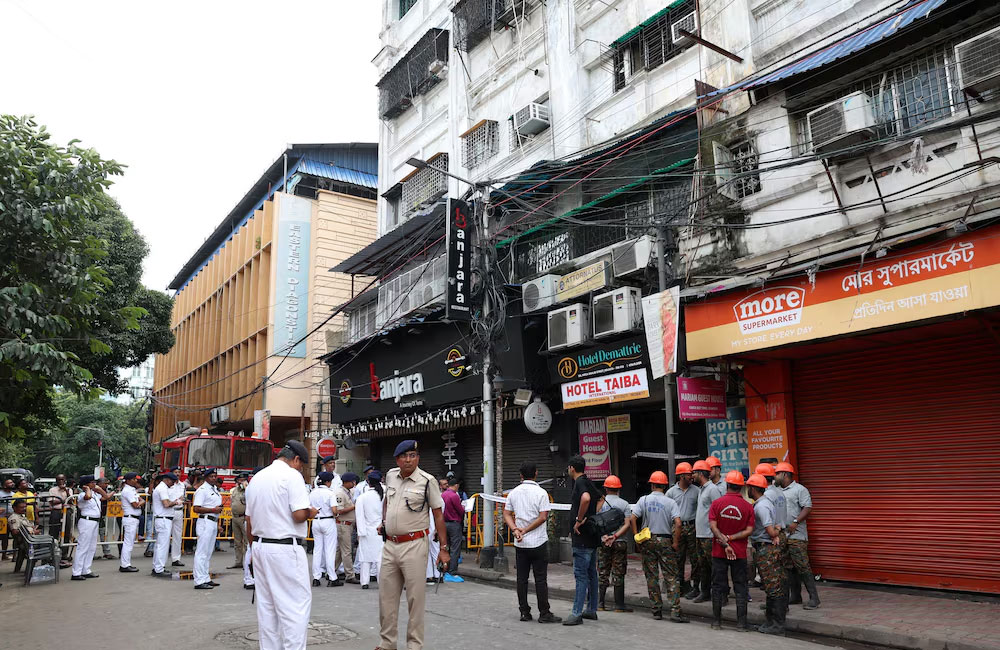
At least nine killed in hotel fire in India's Kolkata
At least nine people, including a child, have died after a fire broke out at a hotel in Kolkata, India, early Wednesday morning, according to local police.
The blaze erupted at around 2:50 a.m. local time on the second floor of the hotel and was brought under control within approximately an hour, a senior police officer said.
Around 30 people were safely evacuated from the building following the incident.
Authorities suspect that an electrical short circuit may have triggered the fire, although the exact cause has not yet been established.
Local media reports said at least six people were injured and receiving treatment at hospitals.
The hotel is situated in a congested area of central Kolkata and is known for offering budget accommodation and housing restaurants.
Reports on the nationalities of those who died remain unclear. ANI, citing the fire department, reported that some of the victims were Bangladeshi nationals who had travelled to Kolkata for medical treatment. NDTV reported that all nine victims were Bangladeshis.
However, the senior police official who spoke to Reuters said the nationalities of those killed had not yet been confirmed.
Authorities are continuing investigations into the circumstances surrounding the deadly fire.
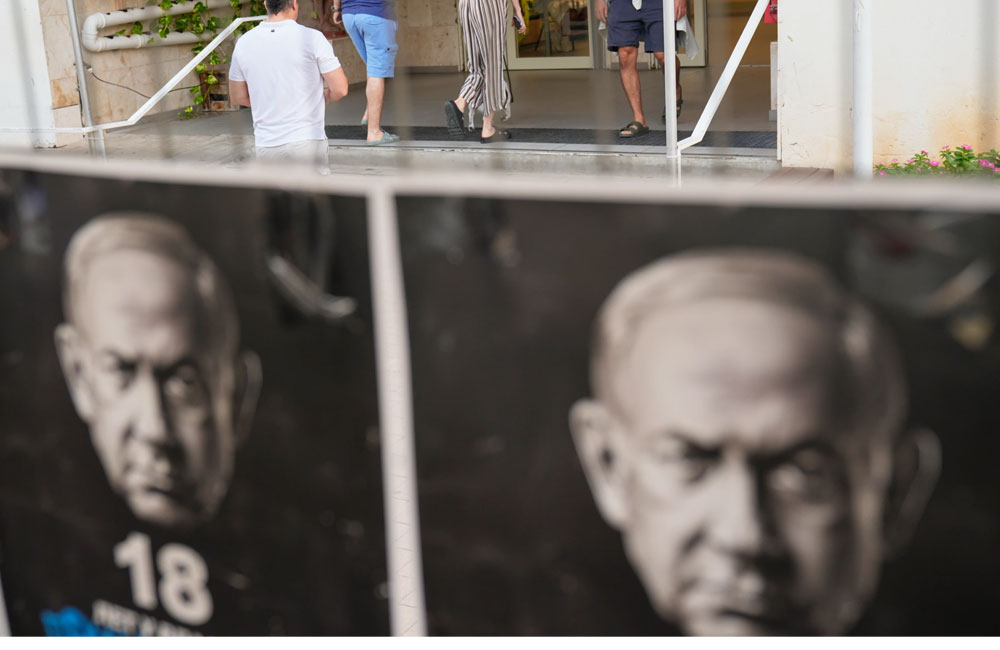
Voters in Israel are deciding whether to oust Netanyahu after 3 years of war
Israelis are voting in a pivotal election Tuesday as their country is embroiled in unresolved wars, still reeling from Hamas’ 2023 attack and deeply divided over the character of the state and the right person to lead it.
Prime Minister Benjamin Netanyahu is facing off against an array of parties seeking to oust the longtime leader from power. Opinion polls have suggested a tight race with his main rival, former military chief Gadi Eisenkot. Over 7 million people are eligible to vote.
In Israel’s fragmented parliamentary politics, no single party has ever won an outright parliamentary majority, so political leaders must forge coalitions.
There is a chance that neither Netanyahu’s religious and ultranationalist coalition nor the group of parties looking to remove him has enough support to win a parliamentary majority. That could set off weeks of negotiations before a leader is declared.
Israel’s Arab-led parties could emerge as kingmakers if they agree to support one candidate over the other — and if other parties agree to join forces with them.
“Our vote will change the government,” Mansour Abbas, head of the Islamist Ra’am party, said while voting, adding that he hoped turnout would surpass 70% in Arab communities.
Israel’s far-right national security minister, Itamar Ben-Gvir, known for taunting Palestinian detainees and saying some Palestinians in Gaza are “not even people,” warned after casting his ballot that “it will be Mansour Abbas’ government” if Netanyahu and his allies don’t win.
Emotions run high among some voters
Already, some emotions were high as polls opened. In Kiryat Shmona, a Netanyahu stronghold near the border with Lebanon, one man kicked and tore down a poster of Eisenkot.
Hanging over the election are lingering tensions with Iran. Netanyahu ramped up threats against the country ahead of the vote. He appeared in a video this week standing beside a missile-defense battery and warned Tehran it would face “a devastating blow” if it attacked Israel.
The election is Israel’s first national vote since the Oct. 7, 2023, attack that sparked the war in Gaza and related conflicts across the region. In Tel Aviv, families of some of those killed on Oct. 7 or former hostages held a moment of silence before polls opened. “Remember all those whose voices are no more,” said Yona Adam, whose daughter Mapal Adam was killed.
Around 330,000 young Israelis, many facing compulsory military service under the shadow of war, are eligible to vote for the first time.
The vote serves not only as a referendum on Netanyahu’s lengthy leadership but also on what kind of country Israel should be — heavily influenced by religious and nationalist forces, or more firmly anchored in liberal and secular values. Tens of thousands of voters living overseas reportedly flew to Israel to vote.
At stake is the fate of a country whose policies and leadership are being sharply criticized by its traditional allies. Since the 2023 attack, Israel has found itself increasingly isolated over its conduct in Gaza and in the occupied West Bank, where violence by Jewish settlers has intensified. Public support among Americans has plummeted and stalwart partners in Europe and elsewhere have slapped sanctions on Israel in recent months.
Security, military conscription and integrity are top issues
For Israelis, the election presents a chance at charting the country’s course after Netanyahu’s latest, and especially turbulent, four-year term.
Netanyahu’s supporters see him as a steady hand and a consummate statesman who they believe has triumphantly guided Israel through multiple wars. They think he is protecting Israel’s Jewish identity while keeping in check what they see as an interventionist judiciary.
His Israeli detractors see him as a polarizing leader who, beset by an ongoing corruption trial, dragged on the war in Gaza and its hostage crisis for political reasons. They say he is undermining Israel’s independent judiciary and weakening its democratic underpinnings. And they accuse him of abetting a system that has allowed ultra-Orthodox religious Jews to avoid enlistment in Israel’s compulsory military.
Eisenkot is viewed by supporters as a capable leader with sterling security credentials who, along with his likely governing partners, could act as a bulwark against creeping illiberalism. As someone personally touched by the conflict — his son and two nephews were killed in Gaza — his backers believe that he feels deeply the pain that still courses through Israel three years after the attacks.
Parties that would likely throw their support behind Eisenkot have vowed to improve Israel’s international standing and work to conscript ultra-Orthodox men while bolstering the independence of the judiciary.
(Source - APNews)
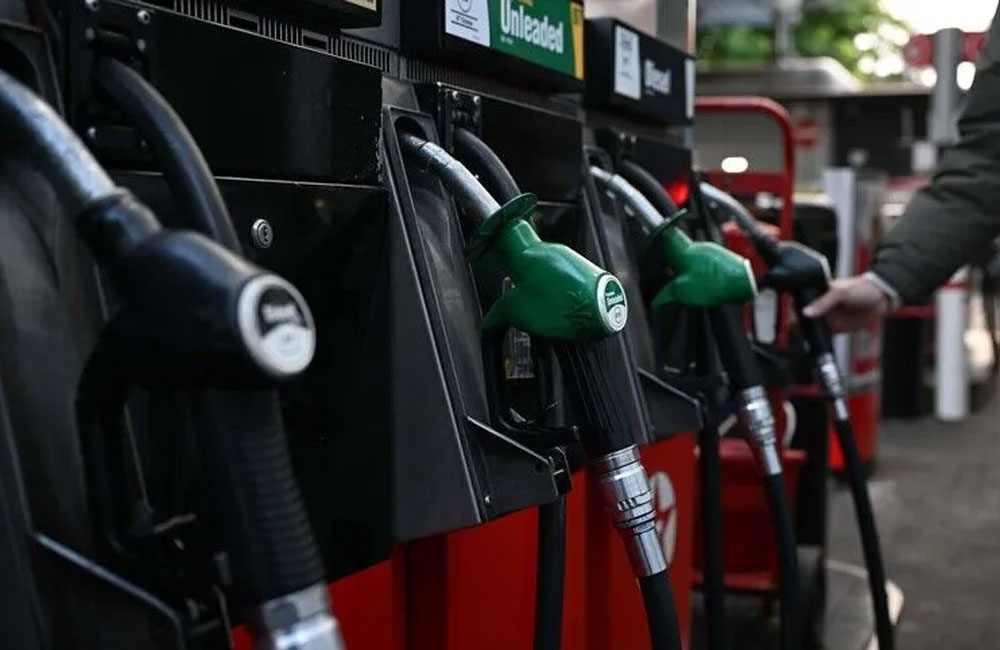
Oil prices jump as Trump rules out extending Iran ceasefire. What comes next?
Oil prices rose sharply on Monday (Aug 17) after US President Donald Trump ruled out extending an interim ceasefire arrangement with Iran, deepening uncertainty over the conflict and the future of shipping through the Strait of Hormuz.
Brent crude, the international benchmark, settled at $90.87 a barrel, while U.S. West Texas Intermediate rose to $84.50. The gains reflected renewed concern that stalled diplomacy could prolong disruptions to global energy supplies.
President Trump said Monday that he did not want to extend the memorandum of understanding reached with Iran in June. The agreement had been intended to create a path toward a broader settlement, but negotiations have struggled over several issues, including Iran’s nuclear program and control of the Strait of Hormuz.
Iran has also hardened its position. A senior Iranian official warned that Tehran could shift toward a more offensive military posture if diplomatic efforts fail.
Why Hormuz matters
The Strait of Hormuz remains the most important factor for oil markets. Before the conflict, around one-fifth of global oil supplies passed through the narrow waterway connecting the Persian Gulf to international markets.
Traffic remains heavily disrupted. Only five commodity vessels crossed the strait on Saturday, compared with 31 the previous weekend, while no crossings were recorded on Sunday, according to shipping data cited by Reuters.
Even without a complete shutdown, reduced tanker traffic can increase shipping and insurance costs and restrict supplies from major Gulf producers.
What’s next?
The immediate focus will be on whether Washington and Tehran can maintain diplomatic contacts despite increasingly confrontational rhetoric.
Sustained increases in crude prices can feed into gasoline and transportation costs, making the conflict increasingly relevant to American consumers.
For oil markets, Hormuz will remain the key indicator.
Any agreement that restores significant tanker traffic could quickly ease some of the geopolitical premium built into crude prices. Further attacks or a deeper disruption of the strait could push prices higher.
For now, markets are pricing in a conflict with no clear diplomatic exit and an energy supply route that remains vulnerable to the next political or military move.
(WION)

Serbia's veteran ruler Vučić concedes election to student-led protest movement
Serbia's long-standing leader Aleksandar Vučić has admitted defeat to the student-led protest movement in snap parliamentary elections.
"We still do not have final results... it is clear that we have lost these elections," the right-wing populist leader said as he conceded late on Sunday.
Preliminary figures from Serbia's election commission indicated a record high turnout, which commentators had suggested would favour the student movement. Celebrations erupted after Vučić conceded.
Vučić called the snap elections after two years of protests triggered by the collapse of a train station canopy in the city of Novi Sad, which killed 16 and was seen as emblematic of corruption and negligence.
Vučić had spent two terms as president and could not seek a third term, so was leading his Serbian Progressive Party (SNS) with the aim of returning to the post of prime minister, which he left in 2017.
The Student List's lead candidate Ilija Srdanović told BBC Serbian: "This will be a free state."
He said the anti-corruption movement, which had attracted anti-government voters across Serbia, hoped to "free the country from tyranny".
There were celebrations on the streets of the city, with people dancing and chanting "victory", cars honking, and fireworks set off. "Serbia is free," one student told the BBC. "It's a miracle."
During a celebration speech, Student List candidate Radomir Saicic said Serbians had shown "no obstacle was greater than their will", Reuters reported. "No force can forever overpower a people who have decided to take their destiny into their own hands," he added.
Amid scenes of people dancing in the streets Belgrade, Selena Lebovic said the result was "really fabulous".
"We are all crying, and what to say. We couldn't believe that it would be so easy," she told Reuters.
Vučić made his announcement at the headquarters of his Serbian Progressive Party (SNS) in the capital Belgrade.
The centre of Novi Sad - the northern city that triggered the student-led protests - was crowded. "Everything is going to get better now," David Vasić, one of those celebrating, told the BBC Serbian.
The Student List - which has no obvious leaders and whose members are not used to politics - had attracted anti-government voters across Serbia.
It decided to field candidates to the 250-member parliament from across Serbian society including doctors, actors, academics and sports personalities.
The anti-corruption movement campaigned on a manifesto that included purging officials who broke rules cracking down on protesters, stopping party loyalists from leading public enterprises, and freeing the public broadcaster of political control.
Vučić and the SNS party have repeatedly denied corruption.
Vučić, who backs Serbia's candidacy for the European Union while refusing to impose sanctions on Russia over its full-scale invasion of Ukraine, had pledged to increase pensions and public sector salaries, and investment in state healthcare.
Preliminary figures provided by Serbia's election commission suggested a record high turnout, with 64.9% having cast their vote by 18:00 local time (17:00 GMT), two hours before polls were set to close.
Earlier in the day, long queues were seen outside polling stations in cities and towns across Serbia.
This was also the case outside booths in a number of countries with sizeable Serbian communities - including Slovenia's capital Ljubljana, Germany's Munich, and Los Angeles and Chicago in the US.
In France, Serbian voters waited in line in heavy rain in Paris.
The election was held amid high tensions across Serbia, with police sealing off streets around the Republic Electoral Commission (RIK) in Belgrade.
(BBC)
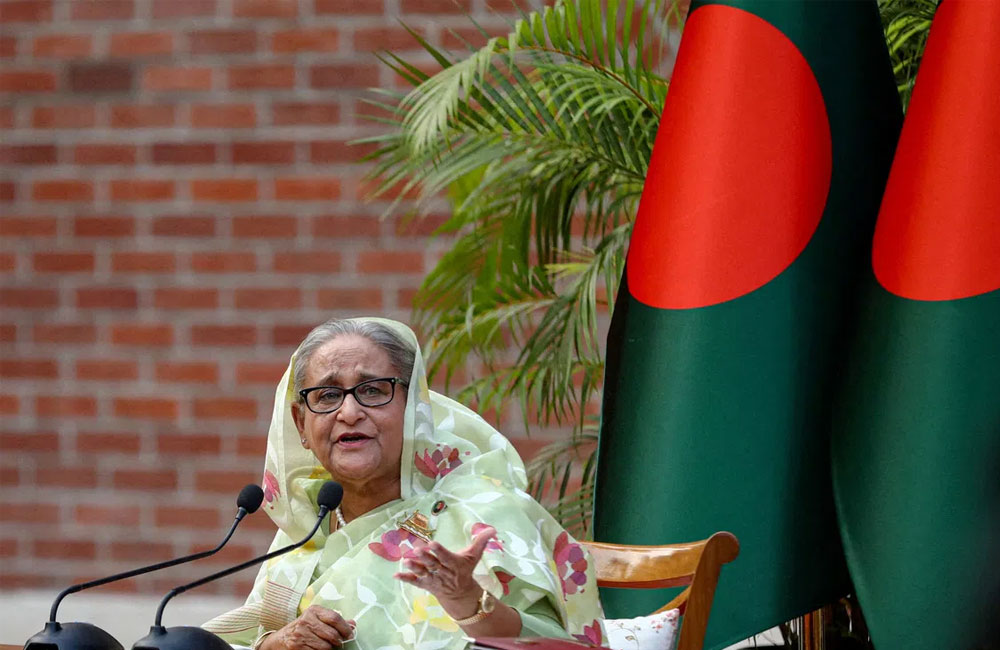
Bangladesh PM will not visit India until Hasina is handed over
The Ministry of Foreign Affairs (MoFA) in Dhaka said on Sunday (August 16, 2026) that officials of India and Bangladesh have been in talks for “several weeks” for a possible India visit by Prime Minister Tarique Rahman and stated that the atmosphere of bilateral relations was “vitiated” by deposed Prime Minister Sheikh Hasina’s August 5, 2026, press conference held in Delhi’s Foreign Correspondents Club.
MoFA’s official spokesperson A.K.M. Shahidul Karim said that “a propitious environment” is required for Mr. Rahman’s visit and urged India to “extradite” Ms. Hasina and the suspected killers of radical student leader Osman Hadi.
“We are of the view that a propitious environment needs to be created for the visit. To this end, we have requested the Indian authorities to expeditiously act on our request to extradite Sheikh Hasina and other fugitive criminals, and to hand over to Bangladesh the accused killers of Shaheed Sharif Osman Hadi in compliance with our bilateral extradition treaty,” said Mr. Karim in a statement, adding, “We are awaiting their response.”
Ms. Hasina sought refuge in India on August 5, 2024, after a popular uprising toppled her government. Hadi, a radical student leader who was part of the protests and subsequently planned to contest the election, was shot in Dhaka by unknown assailants in December 2025. He passed away in Singapore while undergoing treatment on December 18, 2025, leading to widespread violence in Bangladesh some of which also targeted India’s diplomatic missions and minority Hindu community members. Dhaka has been maintaining that the suspected shooters involved in the incident escaped to India, but New Delhi has not said anything definitive in response.
Diplomatic sources had earlier indicated that bilateral talks had been on the right track after India distanced itself from Ms. Hasina’s press conference in which she had targeted Mr. Rahman’s government. Subsequently, Indian High Commissioner to Dhaka Dinesh Trivedi called on Mr. Rahman on August 10.
In view of these exchanges, sources in Dhaka had indicated that “positive movements” had started and that the window for a big ticket visit from Dhaka was gradually opening. Mr. Karim confirmed the consultation and said, “Officials of Bangladesh and Inda have been in touch with each other for several weeks on the possibility of a bilateral visit by Honourable Prime Minister Mr. Tarique Rahman to India. However, this process was vitiated by the open press interaction in New Delhi on August 5 by Sheikh Hasina…”.
The official spokesperson of the External Affairs Ministry, Randhir Jaiswal, had reiterated last Friday that India had extended two invites to Prime Minister Rahman – one for the upcoming BRICS summit to be held here and the other an invite for a bilateral visit. The latter was extended on February 17, when Mr. Rahman was sworn in after winning the general election. Earlier, on August 7, Mr. Jaiswal had distanced India from Ms. Hasina’s press conference saying that India does not “endorse” the comments made against the “duly constituted government” of Bangladesh.
In Sunday’s remarks, Mr. Karim reiterated Dhaka’s “Bangladesh first” foreign policy and said the government will continue to “promote friendly bilateral relations with other countries” including with neighbours, “on the basis of sovereign equality, national dignity, non-interference in each other’s internal affairs and mutual benefit”.
(The Hindu)
Seven killed and 40 injured after gunmen open fire at church funeral in Jordan
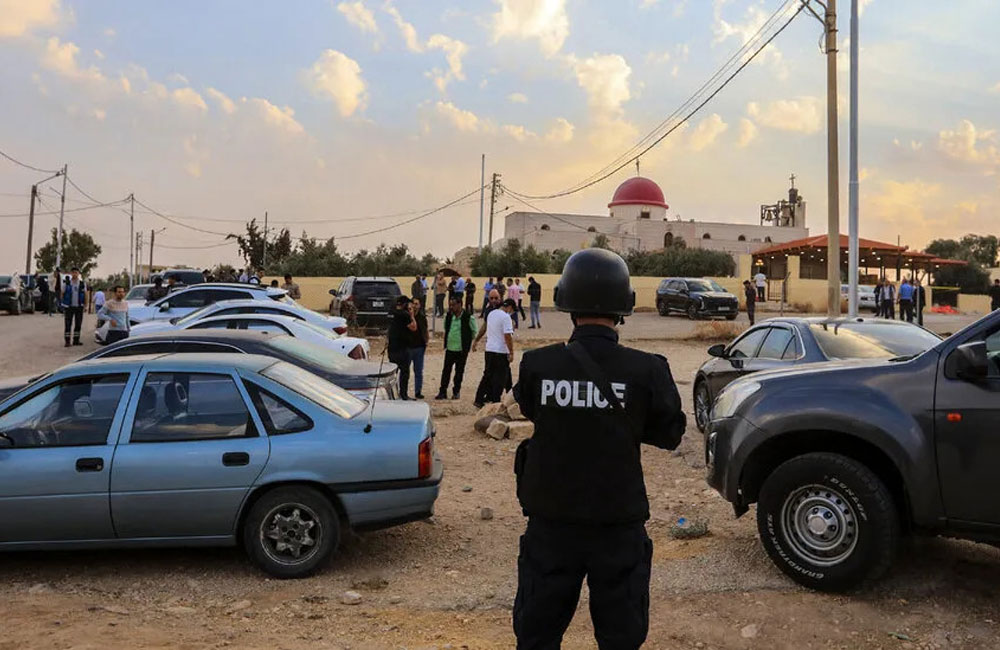
Gunmen opened fire during a funeral at a church in Jordan on Friday, killing seven people and wounding 40 others, authorities said.
The shooting took place at a Greek Orthodox church in Karak, about 180km (110 miles) south of the capital, Amman.
Footage broadcast on Jordanian state television showed two gunmen who appear to be holding pistols approaching the church and firing shots. A third man who appears to be holding a semiautomatic rifle then approaches and opens fire, and all three then run toward the church.
Video footage taken by witnesses shows broken glass and pools of blood on the floor of the church.
Dorgham Halasa, who was among the mourners inside the church, said intense gunfire erupted 15 minutes after the funeral had started, and then people started running. “It was a weird situation, and heavy gunfire,” Halasa said.
He did not see the gunmen, but said other people reported seeing four of them. The Associated Press could not independently verify the number of assailants, and Jordan’s security services did not immediately release details.
A government statement said that the attack was “carried out by unknown assailants,” but didn’t say whether any gunmen were captured or killed. It said that “investigations are under way at full speed”.
Jordan declared three days of national mourning, according to the kingdom’s Petra news agency.
Karak is home to a minority Christian population.
In 2016, gunmen ambushed police in a series of attacks in Karak, including at a Crusader castle popular with tourists, killing 10 people, including seven officers, and wounding dozens. Jordanian security forces killed those gunmen after a long standoff.
Jordan’s health minister Ibrahim al-Budour said two of those wounded are in critical condition.
King Abdullah II said on X that Jordan “will confront the terrorist act that targeted Karak with the harshest penalties” and offered his “deepest condolences to the families of the martyrs, and our wishes for recovery to the wounded”.
Jordan’s prime minister Jafar Hassan said during a security meeting in Karak on Friday evening that the attack was a result of terrorist ideology and blind extremism. He said the assailants will be punished and legal measures taken against those who seek to introduce extremism.
Condemnation of the slayings came from around the region, including from Lebanon, Syria, Egypt and Oman.
Ahmed al-Tayeb in Cairo, the grand imam of Al-Azhar, the Sunni Muslim world’s foremost religious institution, offered his condolences to the families of victims in Friday’s shooting, calling it a “heinous terrorist attack.”
Iraqi foreign minister Fuad Hussein called his Jordanian counterpart and “affirmed Iraq’s solidarity with Jordan in the face of terrorism”, Hussein’s office said in a statement.
UN Secretary-General António Guterres condemned the attack during a funeral as “especially heinous,” spokesperson Stephane Dujarric said. “The secretary-general also calls for all those responsible to be found and to be held to account.”
(The Guardian)
At least 15 die as boat sinks in Zimbabwe's Lake Kariba
At least 15 people have drowned and 27 are missing after a boat sank on Lake Kariba in Zimbabwe on Tuesday, officials have said.
The boat had a capacity to carry 90 passengers and five crew members but a lake official had reported that 120 people, including 12 children, were on it, police said.
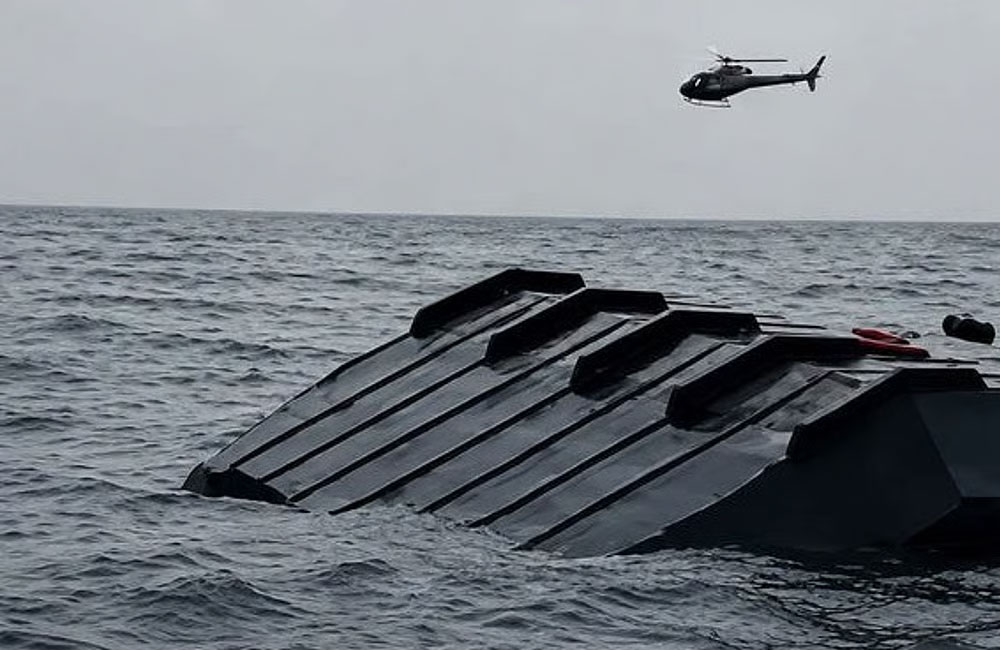
The vessel was hit by a strong wave and overturned, police added. Footage shared online appears to show the overturned hull floating in the water.
President Emmerson Mnangagwa has declared a state of disaster, as search and rescue operations intensify. A total of 77 people have been rescued so far.
Lake Kariba, which straddles the border with Zambia, is one of the world's largest man-made reservoirs, supporting transport and fishing and providing vital hydroelectric power to both countries.
Mutsa Murombedzi, a local member of parliament, posted a video on X of what she said was the boat at the start of the journey, adding that residents had been using it to travel across the lake to Kariba town, a journey that takes about five hours.
"We have very hard questions that require honest answers. The officials must release the correct number of people who were onboard," she wrote.
The Zimbabwe Civil Protection Unit (CPU) said that registered ticket sales showed 114 adult passengers were on the vessel. There could also have been an unknown number of children below ticketing age, it added.
The CPU confirmed that 77 passengers had so far been rescued, and 15 bodies had been retrieved.
Two funeral parlours were collecting the bodies, it added.
Local government minister Daniel Garwe said the president had declared a state of disaster to ensure "all necessary resources are mobilised" for search and rescue operations.
He said 27 people were still unaccounted for and an unconfirmed number of children were also believed to have been on the vessel.
Garwe added that an army boat squadron, a police sub-aqua unit and a privately owned helicopter were involved in search and rescue operations.
"The government extends its deepest condolences to the families and loved ones of those who have lost their lives in this tragic incident," he said in a statement.
Source: BBC
Extreme heat putting pregnant women, newborns at risk: UN climate chief
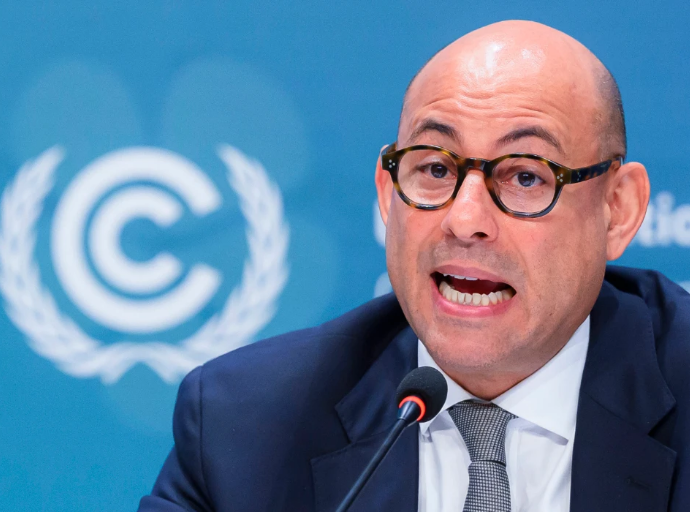
Extreme heat is putting pregnant mothers and their newborns at increasing risk, United Nations climate chief Simon Stiell will warn on Monday.
At least 132 killed in Colombia's largest earthquake in years
At least 132 people are dead and a state of emergency has been declared after Colombia was hit by one of its largest earthquakes in years.
The death toll is likely to rise, with more feared trapped under collapsed buildings.
The magnitude 7.4 quake struck at 07:34 (12:34 GMT) at a depth of 103km (64 miles) in Chocó province, the country's geological service said. It was felt across an enormous area, stretching for hundreds of miles across western Colombia.
Many of the deaths have been concentrated in the city of Pereira, in Colombia's coffee-growing region, with surrounding cities and the Valle del Cauca region also hit hard.
The epicentre of the quake was near the village of San José del Palmar, in Chocó province, but local mayor León Fabio Marín Moncada said that there had miraculously been no deaths or injuries - despite the roads in and out being damaged.
More than 480 people were injured in the quakes, Colombia's Association of Capital Cities wrote in a statement update on Monday.
About 55km (34 miles) from the epicentre of the earthquake, the city of Pereira saw some of the worst damage.
Videos verified by the BBC show at least one building collapsing in Plaza Bolívar, the city's main square, with scattered debris and dust across the open space where many people had gathered.
Local authorities have reported at least 40 people dead in the city's metropolitan area, with 65 collapsed buildings. People are believed to be trapped in 15 of them.
A curfew is in place in some parts of the city until 05:00 local time on Tuesday.
Thirty-two buildings collapsed in Cali, located about 160km south of Pereira and about 200km from the epicentre.
Dan Cutler, 29, is from London but has been in Colombia for about two months as part of a big trip with his partner, and is currently in Cali.
Being woken by the earthquake, he told the BBC: "I've never experienced anything like it."
"We sprinted outside in our pyjamas. There's no major structural damage to the hotel, but there are surface cracks in the walls, and paint and plaster have peeled off," he says.
There were also reports of deaths in Manizales, Quibdó, Medellín, across the Chocó and Valle del Cauca regions.
At least two people have died in Manizales.
Speaking to BBC World Service, Angélica Ávila said she had been staying in a hotel in Manizales.
She said as the earthquake hit, cracks appeared in the walls.
"Everyone was screaming... I saw dust coming out of the neighbouring buildings, and bricks were falling off the walls," she said.
Journalist and meteorologist Luis Felipe Molina, from Manizales, was at home when the earthquake struck - about 150km from the epicentre.
He explained that due to previous earthquakes, the city has "very strict seismic-resistant building regulations" - so his building was able to resist the impact.
"I have 450 books and only a few were left standing on the shelves. You could hear glass breaking and people screaming," he told BBC Mundo.
"It was a terrible and terrifying experience."
The country's aviation authority has reported damage at several regional airports, including those in Pereira, Manizales, Quibdó, Armenia, Cartago and Buenaventura.
In the capital, Bogotá, trees and traffic lights shook violently, with reports of cracks in buildings but so far none of any serious damage to the city's infrastructure.
Tremors were felt as far away as neighbouring Venezuela, Ecuador and Panama.
The quake comes less than two months after twin quakes devastated the north of Venezuela, killing more than 6,300 people.
Colombia's President Abelardo de la Espriella has declared a national disaster situation, creating special powers to react to the emergency, including to reallocate budgets.
Having only taken up the role on Friday, the new president is immediately faced with a potentially legacy-defining event.
Along with the dead, he confirmed that more than 1,500 homes had been damaged.
As the extent of the damage has begun to emerge, world leaders have come forward to offer support.
US Secretary of State Marco Rubio said it was "closely monitoring" the earthquake, and stood "ready to support", while EU chief Ursula von der Leyen said the EU's Copernicus satellite was being used in the rescue operation.
The President of El Salvador, Nayib Bukele, sent a message of solidarity to the Colombian people and offered personnel and equipment for rescue efforts.
According to the US Geological Survey, an estimated 1.5 million people felt shaking close to magnitude seven.
It stated that deep earthquakes, like the one which hit on Monday, are usually less dangerous than earthquakes which break closer to the Earth's surface.
But they can release energy in a way which is damaging to buildings, with fewer but potentially stronger aftershocks.
(BBC)
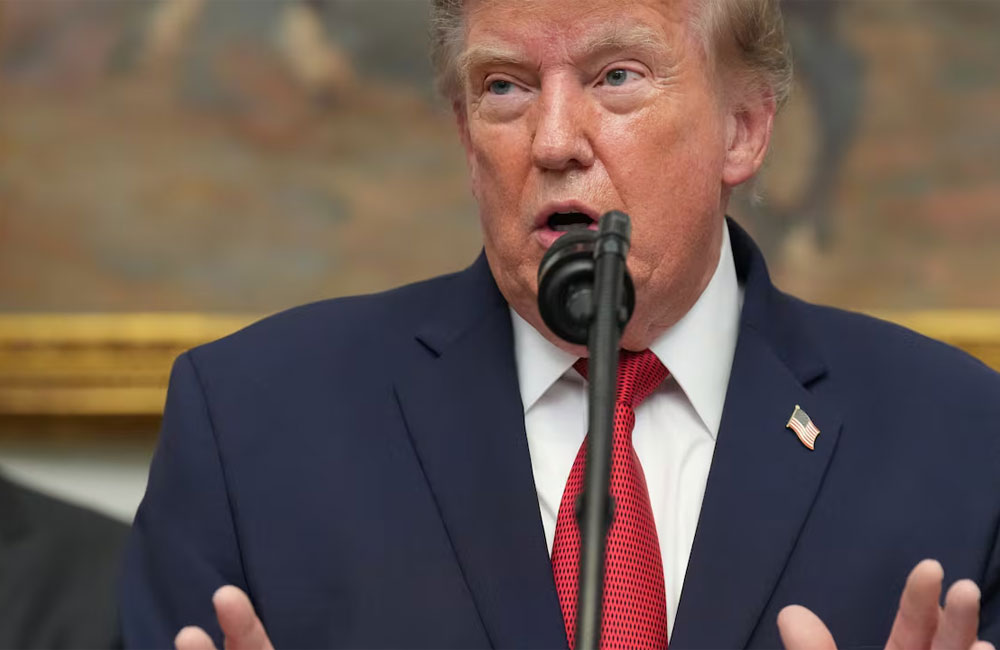
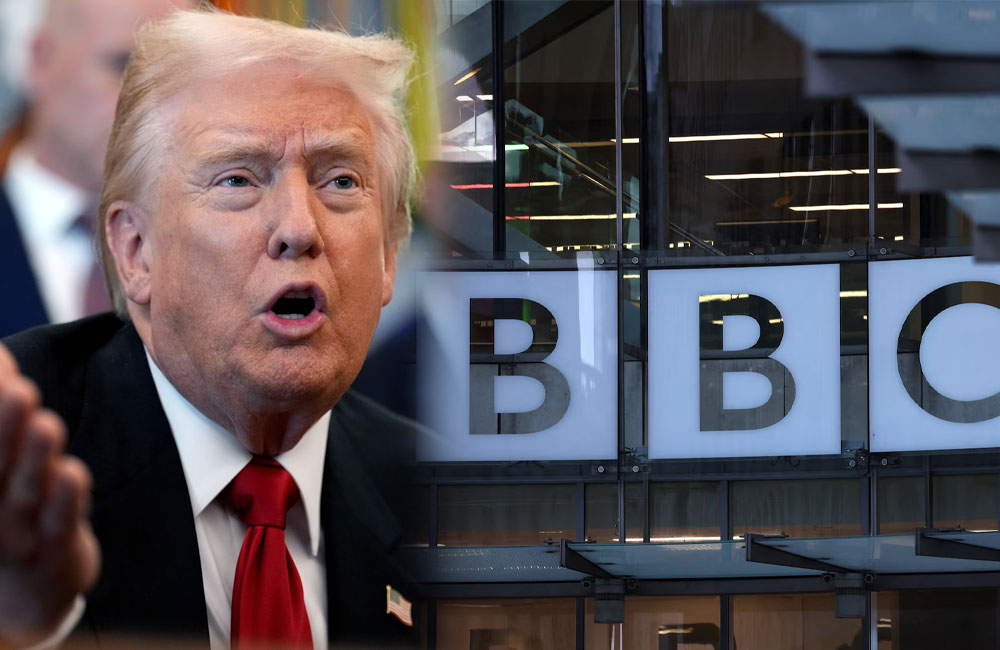
Trump says he'll launch 'most crushing economic operation ever' on Iran
U.S. President Donald Trump vowed on social media Wednesday to launch against Iran what he called "the MOST CRUSHING ECONOMIC OPERATION EVER TAKEN AGAINST ANY COUNTRY!
"This will be Economic Warfare and Isolation on an unprecedented scale," he wrote in a post on Truth Social, offering few details.
He also warned of economic consequences for any country that supported Tehran or provided "any type of lifeline to Iran."
"ANY country that allows its financial institutions, businesses, airports, or government entities to provide any type of lifeline to Iran will itself face TREMENDOUS Economic Consequences," Trump said in a post on social media.
He did not specify what specific steps Washington would take against such a country, nor did he list any country by name. He wrote: "Oil smuggling, swap lines, cash transfers, exchange houses, ship registries, front companies — It all needs to stop NOW. You know who you are."
Thousands of people have been killed in the six-month-old war, which quickly drew in countries across the Gulf. Meanwhile, global markets have been shocked as Iran flexed its ability to control shipping through the Strait of Hormuz, through which about a fifth of the world's traded oil passed before February.
The U.S. and Iran have twice announced ceasefire agreements, in April and June, designed to restore the free flow of shipping through Hormuz to pre-war levels on the way toward ending the conflict. Both quickly crumbled even as Israel largely withdrew from the fighting it launched alongside the U.S. in February.
Trump's social media threats and announcements are not always expanded or successfully acted upon as written.
Conflicting accounts of U.S.-Iran talks
On Tuesday, the United Arab Emirates, which hosts a major U.S. military base, announced it was suspending all trade activities, commercial exchanges and financial transactions with Iran until further notice.
The announcement came after the UAE defence ministry said it had detected two missiles launched from Iran that fell into the sea, a report Iran dismissed as baseless.
China buys more than 80 per cent of Iran's shipped oil, according to 2025 data from analytics firm Kpler, but for the U.S. to engage in further economic warfare with China — a major exporter to the U.S. including of vital rare-earth minerals — risks retaliation.
On Tuesday, Mohammad Mokhber, an adviser to Iran's supreme leader, said Iran remains open to dialogue with the U.S. but does not confuse negotiations with surrender. According to the semi-official Fars news agency, Mokhber said military pressure and sanctions would not break Iran's resolve.
On Tuesday, Trump said no talks were taking place with Iran. A day earlier, Jared Kushner, Trump's son-in-law and special envoy, struck an upbeat tone, saying talks with Iran were still underway and were "probably more robust" than ever.
(Agencies)
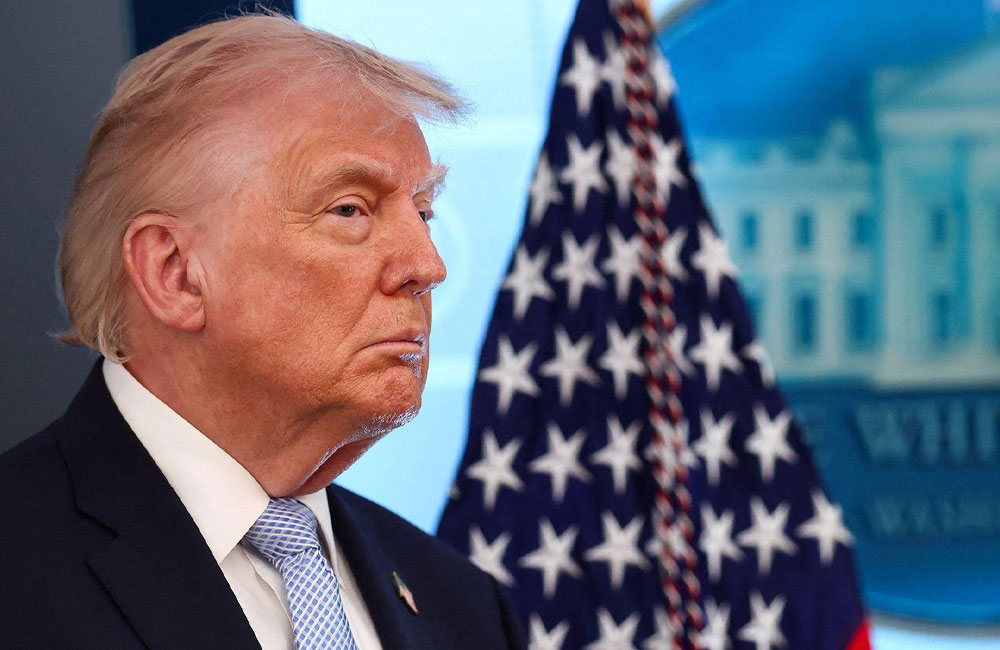
Trump signals he's 'low-keying' Iran pressure
US President Donald Trump signaled Sunday he is prepared to let economic pressure mount against Iran, apparently backing away from ordering more military strikes even as Tehran issues tough demands.
"We are low-keying it," Trump said, according to the news outlet Axios, which said it spoke to him in a brief phone call.
Only a week ago Trump made the latest of his series of threats to hit Iran hard, only to back off, as he presses for a deal to end the war he started along with Israel on 28 February.
Axios said Trump did not express any frustration Sunday with Iran's delaying an agreement to open up the Strait of Hormuz. Iran has demanded that the US first end its blockade of Iranian ports and lift oil sanctions, as per the memorandum of understanding the two countries signed in June.
The strait's blockage by Iran since the war started has sent fuel prices soaring and rattled the world economy, putting pressure on the Trump administration as midterm elections in November grow nearer.
"We are only semi-negotiating with them. We are just watching Iran with its huge inflation and the fact they have no money," Trump was quoted as saying.
Trump also said oil prices are falling so American consumers are feeling less pain from the war.
"It will work out. It always works out. It's like a chess game," Trump said of US dealings with Iran.
Source: AFP
Page 1 of 57