Business
Reliance on regressive consumption taxes shadowing Sri Lanka's fiscal gains
Sri Lanka's fiscal recovery is relying heavily on regressive consumption taxes that disproportionately affect ordinary citizens rather than progressive income taxes.
An analysis published by Verite Research's Public Finance platform reveals that the state successfully raised its revenue to 16.7 per cent of Gross Domestic Product (GDP) in 2025, marking a two-decade high following a series of economic shocks that had previously dragged collections down to a critical low of 8.3 per cent in 2021.
The post-crisis turnaround was primarily propelled by a steep escalation in Value Added Tax collections, which rose from 3 per cent of Gross Domestic Product in 2018 to 5.3 per cent in 2025.
According to Verite, this substantial jump was driven by raising the tax rate to 18 per cent, eliminating key exemptions, and lowering registration thresholds to pull more businesses into the tax net.
Adjustments to personal and corporate income tax rates contributed a mere 1.2 per cent of GDP to state coffers.
Additional gains were secured through the Social Security Contribution Levy, which generated 1 per cent of Gross Domestic Product largely as a replacement for the former Nation Building Tax, alongside a 1.5 per cent boost following the relaxation of restrictions on vehicle imports.
The heavy reliance on indirect taxation raises serious concerns regarding economic equity, while leaving the country's total revenue collection well behind regional peers like India, Nepal, Bhutan, and the Maldives, all of which maintain revenue levels at or above 20 per cent of Gross Domestic Product.

Melco Resorts & Entertainment brings a global legacy of luxury hospitality to Sri Lanka through City of Dreams Sri Lanka
Melco Resorts & Entertainment, a globally recognised leader in luxury integrated resorts, continues to redefine destination hospitality through a portfolio that spans Asia and Europe. With six landmark integrated resorts across Macau, Manila, Cyprus and Colombo, Melco has built a reputation for world-class design, exceptional service, elevated dining and immersive entertainment experiences.
For Sri Lankan travellers and regional audiences, this global legacy now has a home in Colombo through City of Dreams Sri Lanka, South Asia’s first integrated resort and Melco’s newest destination in the region.
At the heart of Melco’s portfolio is City of Dreams Macau, the company’s flagship integrated resort and one of Asia’s most distinctive luxury destinations. It is home to Morpheus, the iconic architectural landmark designed by the late Dame Zaha Hadid, and the reimagined House of Dancing Water, a spectacular live entertainment production that has become synonymous with Macau’s appeal as a global leisure capital.
Also in Macau, Studio City brings together cinema, entertainment and hospitality in a Hollywood-inspired setting. Known for its bold Art Deco architecture and immersive guest experiences, Studio City is anchored by signature attractions including the iconic Golden Reel, the world’s first figure-eight Ferris wheel, standing as one of Macau’s most recognisable entertainment landmarks.
Altira Macau reflects Melco’s commitment to refined luxury and service excellence. A 17-time Forbes Travel Guide Five-Star hotel and spa, Altira is home to Ying, the Michelin-starred Cantonese restaurant, and Tenmasa, the Forbes Five-Star Japanese restaurant. Together, they represent Melco’s pursuit of exceptional hospitality, wellness and culinary craftsmanship.
In the Philippines, City of Dreams Manila has elevated the country’s luxury hospitality landscape since opening in 2014. Overlooking Manila Bay, the dynamic urban resort brings together premium accommodation, curated dining, entertainment and leisure experiences, strengthening Manila’s position as a leading lifestyle and tourism destination in Southeast Asia.
Melco’s presence in Europe is led by City of Dreams Mediterranean in Cyprus, Europe’s first and largest integrated resort. Located in Limassol, the destination has introduced a new benchmark for premium hospitality in the region, positioning Cyprus as a year-round travel destination for leisure, entertainment, events and luxury tourism.
Completing this global journey is City of Dreams Sri Lanka, a landmark development that brings Melco’s international expertise to Colombo. Featuring the luxury Nüwa hotel, world-class entertainment offerings, premium dining, retail and leisure experiences, City of Dreams Sri Lanka represents a bold new chapter for the country’s tourism and hospitality sector.
City of Dreams Sri Lanka reflects the same spirit that defines Melco’s global portfolio: excellence, innovation and unforgettable moments. From Macau to Manila, the Mediterranean and now Sri Lanka, every Melco destination tells a story of vision and ambition, creating experiences that go beyond hospitality to shape the future of luxury travel.

PickMe unlocks over Rs 22 b for micro-entrepreneurs
Digital Mobility Solutions Lanka PLC (PickMe) generated Rs 22 billion (b) in income for its network of independent driver and merchant earners during the first quarter of FY2026/27. This reflects a robust 50% Year-on-Year (YoY) growth, reinforcing the company’s position as a key driver of Sri Lanka’s digital economy. Furthermore the platform contributed Rs 773 million (m) in national taxes during the quarter, maintaining strong operational momentum despite temporary fuel supply disruptions stemming from the Middle Eastern conflict.
The Company reported revenue of Rs 2.5 b for the quarter, a 40% increase from Rs 1.8 b recorded in the corresponding period last year. Despite fuel rationing and the operational challenges experienced during the quarter, revenue growth was driven by a 40% year-on-year increase in average monthly unique consumers, an all-time high during the quarter, reflecting the continued expansion of PickMe’s marketplace ecosystem.
This growth translated into a 43% year-on-year increase in total platform movements, while Gross Transaction Value (GTV), the total value of trips and deliveries facilitated through the platform, increased 48% year-on-year to Rs 25.3 b from Rs 17.0 b in the corresponding quarter last year. Over 85% of this value flowed directly to PickMe’s network of independent drivers and merchant earners, highlighting the platform’s growing role in creating livelihoods, supporting entrepreneurship and enabling digital commerce across Sri Lanka.
Chairperson Ajit Gunewardene said the results reflect the broader economic value created through the platform’s continued expansion. “These results represent far more than business growth. Every transaction facilitated through PickMe creates income for drivers, business for merchants and greater convenience for consumers, generating meaningful economic value across the country. That is where the real significance lies: not in what the platform earned, but in what it enabled others to earn. As the marketplace grows, sustaining and widening that contribution is the responsibility we carry”.
While year-on-year growth remained strong, the Company noted that sequential performance moderated from the exceptionally strong fourth quarter of FY2025/26, which has historically been PickMe’s strongest quarter due to seasonal demand. Net revenue eased by 1%, primarily due to fuel supply constraints and quota-related disruptions that temporarily affected driver availability. Higher fuel prices also weighed on consumer affordability, contributing to softer trip volumes during the quarter. Nevertheless, average monthly unique consumers continued to grow by 3% quarter-on-quarter, demonstrating the resilience of customer engagement despite the temporary market disruption.
Founder and Chief Executive Officer Jiffry Zulfer said PickMe’s long-term focus remains on expanding the value created across its marketplace rather than simply growing the platform itself. “Every quarter of growth on the platform translates into more earning opportunities for our driver earners, more business for merchants and greater convenience for millions of Sri Lankans. That multiplier effect is what drives our investment strategy. We will continue strengthening supply-side reliability, investing in technology and expanding our regional presence so that the value created by the platform reaches even more people and communities across the country.”
Net profit for the quarter increased 45% year-on-year to Rs 631 m from Rs 437 m in the corresponding period of the previous financial year. Sequentially net profit moderated by 10% compared with the record fourth quarter of FY2025/26, reflecting softer marketplace volumes, higher IT infrastructure and subscription costs, and the impact of currency depreciation. The Company stated that the result demonstrates the resilience of its operating model despite temporary external disruptions.
Today, PickMe has evolved beyond a mobility platform into one of Sri Lanka’s largest digital marketplaces, connecting ms of consumers with a growing network of independent drivers and merchant earners. By facilitating transportation, deliveries and digital commerce at scale, the platform continues to generate significant economic value while supporting livelihoods, small businesses and the country’s ongoing digital transformation.

TUDO.LK Introduces Google Pay Express Checkout for Faster Online Shopping
Sri Lankan online marketplace enhances its checkout experience with a faster and more convenient digital payment option
TUDO.LK, a Sri Lankan multi-vendor online marketplace, has introduced Google Pay Express Checkout, allowing customers to complete eligible online purchases more quickly and conveniently.
With Google Pay Express Checkout, customers can use payment details already securely saved to their Google account, reducing the need to manually enter card information during checkout. The new payment option is designed to make shopping on TUDO.LK simpler, faster, and more convenient across supported devices and browsers.
Customers shopping on TUDO.LK can select the Google Pay button at checkout and confirm their payment using their supported device. This creates a more streamlined purchasing experience, particularly for mobile shoppers who want to complete their orders with fewer steps.
The introduction of Google Pay complements the existing payment methods available on TUDO.LK and gives customers greater flexibility when placing online orders.
Key benefits of Google Pay Express Checkout on TUDO.LK include:
Faster checkout with fewer manual steps
No need to repeatedly enter card details
Convenient payments on supported mobile and desktop devices
A familiar Google Pay payment experience
Access to products from multiple sellers through one marketplace
TUDO.LK offers customers access to a wide selection of products across categories including electronics, home and living, fashion, health and beauty, automotive products, tools, gifts, digital products, and more.
Customers can visit https://tudo.lk to explore available products and use Google Pay Express Checkout when the payment option is available for their order, supported card, device, and browser.
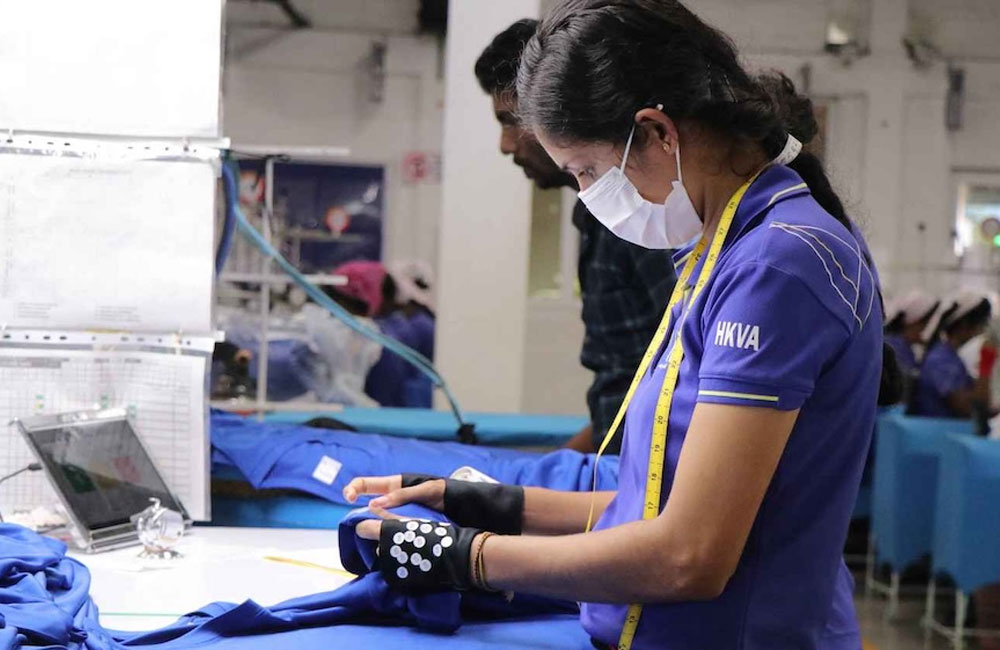
Sri Lanka’s apparel industry at risk under EU GSP+, JAAF warns
The EU adopted new GSP+ rules in May 2026 that will require higher compliance on human rights, labour, environmental standards and governance from the start of 2027.
Under these revised requirements, Sri Lanka must meet obligations on disability rights, child protection during conflict, labour inspection, the Paris Agreement and organised crime, in addition to previously established criteria.
The EU has introduced a stricter “urgent withdrawal” mechanism for non-compliance and extended the review cycle from two to three years, meaning Sri Lanka would have fewer chances to address any compliance issues identified.
Current GSP+ trade preferences will be maintained until the end of 2028, but future access is not automatic.
According to JAAF, the EU requires Sri Lanka to formally reapply under the new regulations, submitting a comprehensive action plan in 2027 detailing specific, evidence-supported steps towards meeting the enhanced conditions.
During a recent GSP+ review, officials from Brussels made clear that “the action plan cannot be a paper exercise; this time, Sri Lanka will have to show credible, demonstrable action, supported by evidence of implementation”.
The apparel sector, which provides jobs for more than 350,000 people and accounts for 40-45% of the country’s total exports, is particularly reliant on GSP+.
JAAF claims the sector’s export earnings exceeded $5bn in December 2018, less than two years after the restoration of GSP+ status by the EU, underscoring the scheme’s importance to the industry’s performance.
One challenge highlighted by JAAF is the low take up of GSP+ benefits by Sri Lankan exporters, which has remained between 49% and 59%. This is largely due to the EU’s rules of origin, which stipulate that garments must be manufactured from domestically produced yarn.
Most Sri Lankan apparel makers rely on imported textiles that do not qualify under these conditions. JAAF claims that investments in local fabric production, agreements with regional partners and negotiations with the EU for more flexible rules could help increase utilisation.
The time frame for action is narrowing. Sri Lanka’s categorisation as an upper-middle-income country by the World Bank in July 2026 places it close to the GSP+ exit threshold. If this income level is maintained for three years, Sri Lanka risks losing access to the scheme.
JAAF suggests Sri Lanka begins early reapplication in 2027 to avoid any potential disruption to market access, noting that late application could see apparel exports face Most Favoured Nation tariffs as soon as 2029 if renewal is denied.
EU Ambassador Carmen Moreno recently told the Sri Lankan-German Business Forum that GSP+ “has delivered mixed results in Sri Lanka,” noting that manufacturing remains a smaller part of GDP compared to other export-driven economies.
Moreno encouraged Sri Lanka to pursue reforms and industrial investment, observing that the country has yet to realise the full potential of the preferences already available.
JAAF maintains that strengthening compliance and improving utilisation rates ahead of the 2027 application will be essential if Sri Lanka’s garment sector is to retain its access to the EU market under the revised GSP+ scheme.
Earlier this year, JAAF shared that Sri Lanka’s apparel exports dropped by 11.46% in February 2026, as key global markets experience increased strain, with the EU recording the steepest fall.

HNB enables Google Pay for debit cards via Google Wallet
HNB PLC has enabled Google Wallet support for its debit card customers, allowing eligible cardholders to make contactless payments using Google Pay through Android smartphones and supported wearable devices.
The capability expands the customers’ payment options for day-to-day transactions, supporting greater convenience at contactless payment points locally and overseas.
With this enablement, the customers can add their HNB Visa debit card to Google Wallet and use Google Pay to tap and pay at contactless-enabled point-of-sale terminals. Where supported, the customers can also use Google Pay for online and in-app purchases without repeatedly entering card details. The supported devices include NFC-enabled Android smartphones as well as compatible wearable devices as supported by Google Wallet.
At present, the service is available for HNB debit cards. The bank will share further updates on additional card products closer to future rollouts.
To set up, the customers can open the Google Wallet app, select the option to add a card, enter or scan their HNB Visa debit card details, accept the applicable terms and conditions and complete the verification process. Once verified, the card is available for use through the device for payments where Google Pay is accepted.
“Our collaboration with Google Pay shows our focus on expanding modern payment capabilities for our customers. By integrating this feature, we are strengthening our digital ecosystem and providing greater flexibility in how the customers choose to transact, while maintaining the high standards of reliability and security associated with HNB,” said HNB Senior Vice President and Head of Retail Banking Kanchana Karunagama.
The service is designed with enhanced security controls that align with the card payment standards. When a card is added to Google Wallet, it is represented on the device in a secure digital form. During payment transactions, the card number is not shared with merchants and payments are authorised using the device’s security features such as a PIN, fingerprint or face unlock, depending on the customer’s device settings.
If a phone or wearable device is lost, the customers can remove their card from Google Wallet and are advised to contact HNB promptly to block the physical card if required. Since payments require device authentication, unauthorised use is further restricted by the device’s security layer.
HNB Vice President Cards Gauthami Niranjan said, “This capability gives our debit card customers a practical way to transact through Google Wallet with the controls and security expected of card-based payments. It supports the customers who prefer contactless options for everyday spending, while allowing the bank to extend digital payment convenience without compromising governance, verification and operational oversight.”
(Source:dailymirror.lk)
Non-compliant Sri Lankan exporters could face fines up to 4% turnover under strict EU anti-greenwashing rules
Sri Lankan exporters selling goods and services to European Union markets face potential financial penalties of up to two million euros or four percent of annual turnover if they fail to comply with strict new sustainability regulations designed to eliminate greenwashing.
The upcoming enforcement measures, led by EU authorities under the Empowering Consumers for the Green Transition Directive, require all non-European suppliers to provide verifiable, credible evidence for any environmental claims made across product labels, promotional campaigns, websites, and official sustainability disclosures.
The statutory obligations will take effect on 27 September 2026, directly impacting local businesses across primary export categories including tea, textiles, spices, rubber, and food products.
Local advisory firm Peterson Solutions Sri Lanka warned that failure to establish comprehensive environmental verification systems risks market access restrictions and severe reputational damage.
Officials from the firm stated that generic marketing descriptors such as eco-friendly or sustainably produced will no longer be permitted without backing data, as sustainability metrics have transitioned from voluntary corporate initiatives into mandatory trade entry conditions.
Furthermore, the advisory firm highlighted that compliance applies to any offshore manufacturer marketing to European consumers, dispelling a widespread misconception among domestic firms that European regulatory reforms apply exclusively to businesses registered inside the single market.
The EU regulations form part of a structural overhaul of international trade standards targeting supply chain transparency and corporate accountability.
In addition to anti-greenwashing rules, exporters must simultaneously adjust operations to align with the Packaging and Packaging Waste Regulation starting 12 August 2026, alongside due diligence mandates under the EU Deforestation Regulation commencing 30 December 2026 for larger corporate entities.
Corporate strategy advisors noted that early adoption of these environmental, social, and governance tracking mechanisms should be treated as a commercial investment to secure long-term client trust and preserve market competitiveness against regional rivals.
Proactive compliance with European environmental standards is now a critical prerequisite for safeguarding Sri Lanka's vital export revenue and maintaining integration within high-value global supply chains.
Exporters across affected agricultural, manufacturing, and service sectors are expected to audit their promotional claims, revise compliance frameworks, and establish supply chain tracing protocols ahead of the mandatory August and September 2026 deadlines.

To reach US $ 8bn, Sri Lanka apparel must grow differently
Sri Lanka’s apparel industry has earned its place in the global market through consistency, trust and a strong reputation for ethical manufacturing. Over many years, we have shown that Sri Lanka can deliver quality, compliance and reliability at a level that global brands value. That foundation remains one of our greatest strengths.
However, the next chapter for this industry cannot be built on reputation alone. It has to be built on growth that is measurable, broader in base and more resilient in the face of global change.
As Chairman of the Joint Apparel Association Forum, I believe the task before us is clear: Sri Lanka must move with greater purpose toward the long-discussed ambition of becoming a US $ 8 billion apparel export industry.
That ambition is important because it gives the industry a shared direction. Yet, it must now be treated as more than a headline target. It must become a practical national agenda.
Sri Lanka apparel’s published export data show that textile and apparel exports for 2025 amounted to just over US $ 5.0 billion. That is a meaningful achievement, particularly in a demanding global environment but it also shows that there is still a substantial gap between current performance and where we say we want to go. Closing that gap will require more than incremental improvement. It will require sharper execution, stronger coordination and a more deliberate growth model.
One of the most important realities we must confront is market concentration. Our industry has traditionally depended heavily on the US, EU and UK and together these destinations account for about 85 percent of Sri Lanka’s apparel exports. That concentration has served us well in some respects because these are mature and valuable markets where Sri Lanka has built long-standing relationships.
However, concentration at that level also creates vulnerability. When consumer demand weakens, tariffs shift, compliance expectations tighten or brands change sourcing patterns in those markets, the effects are felt across our entire industry.
This is why diversification must now move to the centre of our export strategy. If Sri Lanka is serious about reaching US $ 8 billion, we cannot rely on the same market mix and expect a fundamentally different outcome. We need to build stronger export pathways into newer regions and expand our relevance in markets that have not yet been fully developed.
The ASEAN, Middle East, Africa and parts of Asia must become part of a structured and sustained growth effort. This is not about replacing our traditional markets. It is about reducing risk, widening opportunity and building a more balanced export portfolio over time.
At the same time, diversification should not be understood only in geographic terms. It is also about moving up the value chain. Sri Lanka cannot compete on volume alone and it should not try to. Our advantage lies in being a premium sourcing destination, one that brings together product integrity, speed, sustainability, technical capability and increasingly, stronger design and development input.
We must ensure that Sri Lanka is not viewed simply as a production base that executes instructions but as a partner that contributes value, thinking and innovation throughout the sourcing relationship.
That means we also need to become more disciplined in how we define progress. Export growth should not be reduced to one annual number. We must measure what kind of growth we are generating, where it is coming from and whether it is making the industry stronger.
Are we increasing our share in higher-value categories? Are we entering new markets in a meaningful way? Are we improving lead times and deepening customer relationships? Are we strengthening design capability and sustainability performance in ways that help us command better value? These are the questions that should shape our next phase.
No industry can achieve an ambitious export target, however, without the right operating environment. Sri Lanka must improve the systems that support trade. Faster customs processes, stronger digital integration across approvals, lower administrative friction and more predictable policy are not side issues. They are core to competitiveness.
In an industry where delivery timelines matter, delays at any point in the system affect confidence, planning and future order allocation. Trade facilitation must therefore be treated as an export growth issue, not merely an administrative reform issue.
The same applies to the broader investment climate. If Sri Lanka wants to attract fresh capital, deepen value addition and strengthen its manufacturing base, we have to be seen as commercially responsive as well as ethically strong.
Investors look for clarity, speed, stability and confidence that business can be done efficiently. This matters not only for foreign investment but also for the expansion decisions of companies already operating in Sri Lanka.
The opportunity is still very much in front of us. Sri Lanka apparel has the capability, reputation and institutional knowledge to grow beyond its current scale. Yet, the route to US $ 8 billion will not come from doing more of the same. It will come from measurable export growth, deliberate diversification, stronger systems and a clear commitment to higher-value positioning. If we align around those priorities and act with consistency, the industry can move into its next chapter with greater strength and greater confidence.
(Source:dailymirror.lk)
(Felix Fernando is Joint Apparel Association Forum Chairman)

June PMI: Services resilient as manufacturing momentum slows
Sri Lanka’s economic expansion continued into June, driven by resilient service sectors and steady factory output, though the manufacturing sector saw its growth momentum cool, according to the latest Central Bank data.
The Purchasing Managers’ Index (PMI) highlights a two-speed economy with a booming services sector capitalising on domestic recovery, alongside a manufacturing sector grappling with persistent domestic labour bottlenecks and global geopolitical anxieties.
Manufacturing moderates amid labour constraints
The Manufacturing PMI dropped to 53.0 in June from 56.6 in May. While any figure above the 50-point threshold indicates expansion, the drop signals a distinct deceleration in factory activity.
A flattening of new orders, which hit the neutral 50-point mark, was the primary drag on the index. Despite stagnant order books, actual production managed an upward trajectory, heavily supported by the robust food and beverages segment.
However, manufacturers are increasingly hitting operational walls. Firms reported severe shortages of skilled labour paired with escalating wage costs. To counter supply chain volatility and lengthening delivery times, companies aggressively built up inventories, stocking up on raw materials to create operational buffers.
While the outlook for the next three months remains generally optimistic, local manufacturers expressed growing anxiety over global stability, particularly the ongoing volatility in the Middle East, which threatens supply routes and energy prices.
Services sector surges on tourism hopes
Meanwhile, the services sector accelerated, with its index climbing to 58.5 in June from 56.9 in May.
The expansion was broad-based but led predominantly by financial and professional services, alongside strong gains in the insurance sector. This commercial momentum was reflected in the new businesses index, which jumped to 62.5 from 58.0 the previous month.
The service sector's buoyancy translated into job creation. Staffing levels rebounded sharply into growth territory, rising to 54.0 from 49.4 in May, as firms expanded their workforces to meet rising demand.
Furthermore, the persistent contraction in backlogs was halted, with outstanding business volumes stabilising perfectly at the neutral 50-point mark.
Service providers remain highly optimistic about the upcoming quarter. The sector is banking heavily on the continued domestic macroeconomic recovery and a highly anticipated influx of tourists for the upcoming Kandy Esala Perahera festival, which is expected to provide a substantial boost to hospitality, transport,
Public – Private Partnerships strengthen rebuilding efforts post Cyclone ‘Ditwah’
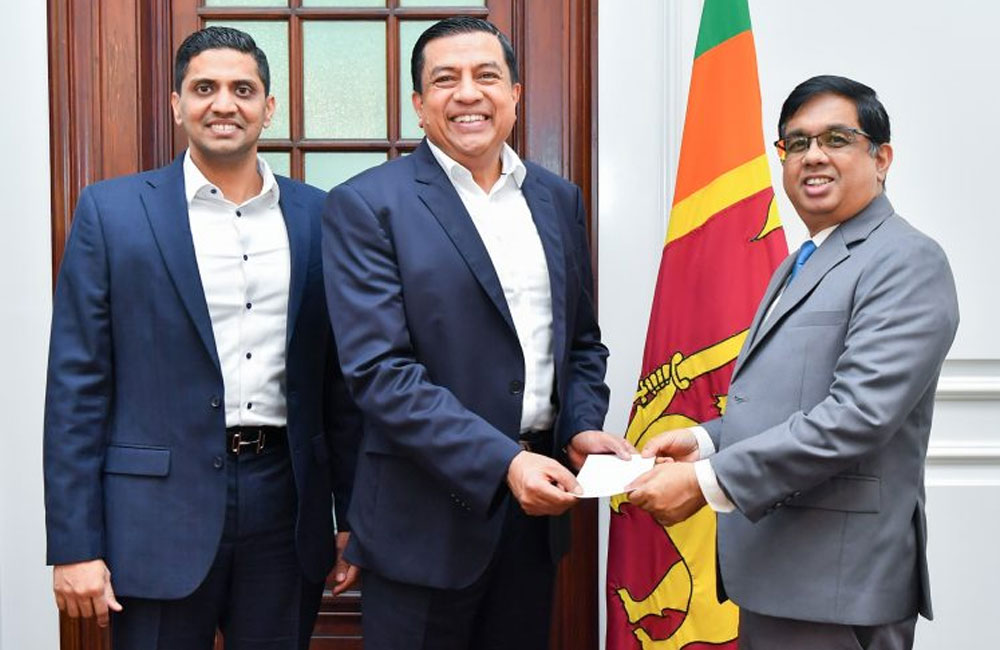
Pyramid Wilmar, one of Sri Lanka’s most progressive and influential corporate entities in the food manufacturing and marketing sector has donated a sum of Lankan Rupees Fifty Million to the Presidential Secretariat to aid the government’s relief effort towards the victims of the recent ‘Ditwah’ cyclone.
Group Managing Director of Pyramid Wilmar (Pvt) Ltd., M. Sajjad Mawzoon said, “The devastation that took place throughout the country due to the recent cyclone has left everyone in a vulnerable situation. For some who lost their loved ones, life will not be the same. In light of all affected individuals and families, we stand with the people of Sri Lanka as the country begins to recover and rebuild from this existential challenge. Our commitment is to change life for the better.”
Pyramid Wilmar remains committed to its mandate for social responsibility, ensuring support for communities during times of crisis.
Secretary to the President, Dr. Nandika Sanath Kumanayake receiving a cheque of LKR 50 million for flood relief and humanitarian efforts from Group Managing Director of Pyramid Wilmar, M. Sajjad Mawzoon (Centre) and Director / Chief Operating Officer of Pyramid Wilmar Thanveer Siddique (Left)
(Adaderana.lk - Business)

Oil falls for a third straight day after US, Iran conclude talks in Doha
Oil prices dropped about 1% on Thursday, down for a third consecutive day, after Qatar said Iran and the U.S. had made progress in indirect talks focused on the Strait of Hormuz, which handled one-fifth of global oil supply before the war.
The talks made "positive progress" on matters related to the memorandum that halted the war in June, a Qatar Foreign Ministry spokesperson said in a post on X, though there was no sign the two sides made headway towards a lasting peace.
Brent futures lost 79 cents or 1.1% to $70.78 a barrel by 0642 GMT, while U.S. West Texas Intermediate crude fell 84 cents or 1.2% to $67.74 a barrel. Both benchmarks fell more than 1% in the previous session.
As the strait stays open and crude oil flows out, there are growing expectations of oversupply and competition for market share is pushing prices down, Haitong Futures said in a note.
OPEC+ oil-producing countries are likely to agree to a furtherhikein their output targets from August when they meet on Sunday, sources said on Wednesday.
UBS cut on Thursday its Brent forecasts citing the U.S.-Iran pact and the subsequent increase in oil shipping through the Strait of Hormuz.
It cut its average Brent price forecast for the September quarter by $25 and for the December quarter by $10. The bank now expects the benchmark to average $80 a barrel during the second half of the year and $75 in 2027.
"Despite this, we believe it is premature to assume a full normalisation, and see price risk skewed to the upside, noting that inbound tankers to the Persian Gulf have lagged outbound tankers," UBS said.
The next meeting between Iran and U.S. negotiators will take place after July 9 funeral processions for Iran's late Supreme Leader Ayatollah Ali Khamenei, the Qatar ministry added.
(Reuters)
NTB’s HSBC Takeover Reshapes Sri Lanka’s Retail Banking Landscape
Sri Lanka’s banking sector is headed for one of its most significant structural shifts in years, following the Central Bank’s approval for Nations Trust Bank (NTB) to acquire the retail banking operations of HSBC Sri Lanka in a deal valued at Rs. 18 billion plus applicable taxes.
The transaction, expected to be completed in the first half of 2026, will transfer nearly 200,000 customer accounts including premium banking portfolios, credit cards and retail loans into NTB’s network, marking a major consolidation in the country’s financial services market.
For NTB, the acquisition represents a decisive strategic leap. By absorbing one of the country’s most established foreign retail banking franchises, the bank strengthens its position in the high-value, premium segment an area HSBC has traditionally dominated.
NTB’s leadership says the approval from the Central Bank allows the bank to “move forward with confidence,” indicating that integration planning, regulatory alignment and systems preparation are already underway.
For depositors, the deal carries both opportunities and questions. NTB gains access to a customer base known for strong balances, cross-border transaction needs and high credit quality, potentially enabling better product bundling, digital upgrades and expanded service offerings.
However, longstanding HSBC clients many accustomed to international banking standards and global service integration will closely monitor how seamlessly NTB can replicate, or enhance, their experience. The Central Bank’s oversight aims to ensure smooth continuity of services, uninterrupted access to funds, and safeguards on customer rights during the transition.
From a broader economic perspective, the consolidation signals two key trends: the gradual shrinking presence of global banks in small markets and the corresponding rise of domestic financial institutions positioned to fill the void.
Analysts say HSBC’s exit from Sri Lankan retail banking reflects a global strategy prioritising large-scale markets, while the transfer of assets to NTB ensures local stability and avoids the destabilising effects of a foreign-bank withdrawal.
The deal may also support economic recovery by strengthening capital flows and lending capacity. With a larger deposit base and expanded customer portfolio, NTB will gain improved liquidity buffers important at a time when the banking system is navigating post-crisis restructuring, tighter regulation and the need to restore credit growth.
The premium customer segment, in particular, plays a significant role in long-term deposit stability, wealth management and consumption-driven economic activity.
HSBC says its priority is ensuring a smooth transition, pledging to maintain high service levels throughout the process. NTB, in turn, has committed to preserving service quality and offering continuity for staff shifting as part of the transfer.
If executed effectively, the takeover could become a textbook example of managed financial sector transformation one that strengthens domestic banking resilience while ensuring depositors benefit from improved reach, technology and service integration.
The real test, however, will be whether NTB can not only absorb HSBC’s customer base but retain their confidence in a changing financial landscape.
Page 2 of 31