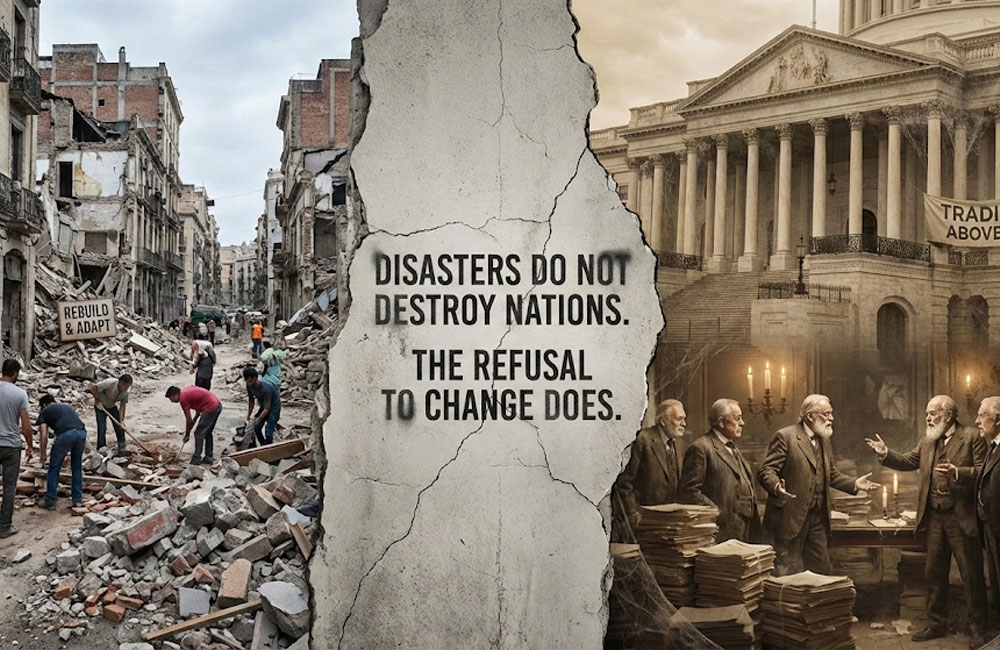
Sri Lanka has endured both kinds of catastrophe that a nation can face, those caused by nature and those created by human hands. A thirty-year civil war tore apart the social fabric, deepening mistrust between communities and leaving lasting psychological wounds, particularly among those who lived through displacement, loss, and fear. The 2004 tsunami, by contrast, arrived without warning, erasing entire coastal communities within minutes and reminding us of our vulnerability to forces beyond human control.
These two disasters posed the same question in different forms: did we learn, and did we change? After the war ended, did we invest seriously in repairing relationships between Sinhalese and Tamil communities, or did we equate peace with silence and infrastructure alone? Were collective efforts made to heal trauma and restore dignity, or were psychological wounds left to be carried privately, generation after generation? After the tsunami, did we fundamentally rethink how and where we build, how we plan settlements, and how we prepare for future risks, or did we rebuild quickly, gratefully, and then forget?
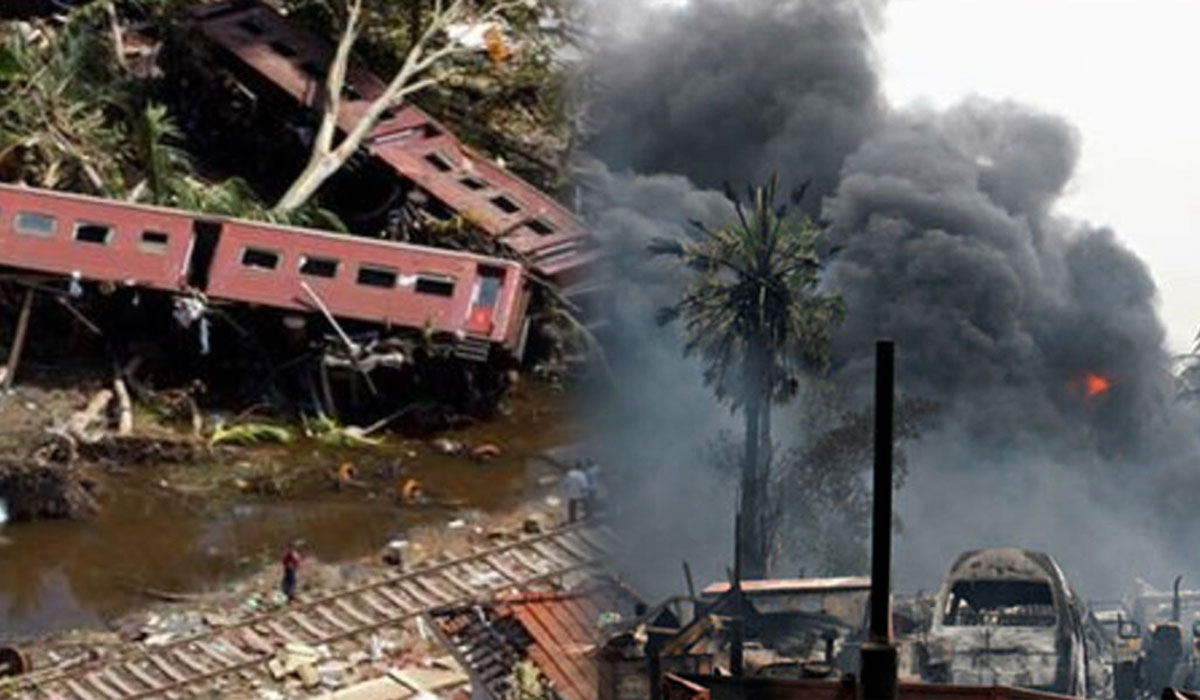
Years later, as Sri Lanka confronts economic collapse and climate-driven disasters, the uncomfortable truth emerges. we survived these catastrophes, but we did not allow them to transform us. Survival became the goal; change was postponed.
History offers rare moments when societies stand at a crossroads, able either to restore what was lost or to reimagine what could be built on stronger foundations. One such moment occurred in Lisbon in 1755. On 1 November 1755, Lisbon-one of the most prosperous cities in the world, was almost completely erased. A massive earthquake, estimated between magnitude 8.5 and 9.0, was followed by a tsunami and raging fires. Churches collapsed during Mass, tens of thousands died, and the royal court was left stunned. Clergy quickly declared the catastrophe a punishment from God, urging repentance rather than reconstruction.
One man refused to accept paralysis as destiny. Sebastião José de Carvalho e Melo, later known as the Marquês de Pombal, responded with cold clarity. His famous instruction, “Bury the dead and feed the living,” was not heartless; it was revolutionary. While others searched for divine meaning, Pombal focused on human responsibility. Relief efforts were organized immediately, disease was prevented, and plans for rebuilding began almost at once. Sebastião José de Carvalho e Melo
Pombal did not seek to restore medieval Lisbon. He saw its narrow streets and crumbling buildings as symbols of an outdated order. Under his leadership, Lisbon was rebuilt with wide avenues, rational urban planning, and some of the world’s earliest earthquake-resistant architecture. Moreover, his vision extended far beyond stone and mortar. He reformed trade, reduced dependence on colonial wealth, encouraged local industries, modernized education, and challenged the long-standing dominance of aristocracy and the Church. Lisbon became a living expression of Enlightenment values, reason, science, and progress.
Back in Sri Lanka, this failure is no longer a matter of opinion. it is documented evidence. An initial assessment by the United Nations Development Programme (UNDP) following Cyclone Ditwah revealed that more than half of those affected by flooding were already living in households facing multiple vulnerabilities before the cyclone struck, including unstable incomes, high debt, and limited capacity to cope with disasters (UNDP, 2025). The disaster did not create poverty; it magnified it. Physical damage was only the visible layer. Beneath it lay deep social and economic fragility, ensuring that for many communities, recovery would be slow, uneven, and uncertain.
The world today offers Sri Lanka another lesson Lisbon understood centuries ago: risk is systemic, and resilience cannot be improvised, it must be planned. Modern climate science shows that weather systems are deeply interconnected; rising ocean temperatures, changing wind patterns, and global emissions influence extreme weather far beyond their points of origin. Floods, landslides, and cyclones affecting Sri Lanka are no longer isolated events, but part of a broader climatic shift. Rebuilding without adapting construction methods, land-use planning, and infrastructure to these realities is not resilience, it is denial. In this context, resilience also depends on Sri Lanka’s willingness to learn from other countries, adopt proven technologies, and collaborate across borders, recognizing that effective solutions to global risks cannot be developed in isolation.
A deeper problem is how we respond to disasters: we often explain destruction without seriously asking why it happened or how it could have been prevented. Time and again, devastation is framed through religion, fate, karma, or divine will. While faith can bring comfort in moments of loss, it cannot replace responsibility, foresight, or reform. After major disasters, public attention often focuses on stories of isolated religious statues or buildings that remain undamaged, interpreted as signs of protection or blessing, while far less attention is paid to understanding environmental exposure, construction quality, and settlement planning, the factors that determine survival. Similarly, when a single house survives a landslide, it is often described as a miracle rather than an opportunity to study soil conditions, building practices, and land-use decisions. While such interpretations may provide emotional reassurance, they risk obscuring the scientific understanding needed to reduce future loss.
The lesson from Lisbon is clear: rebuilding a nation requires the courage to question tradition, the discipline to act rationally, and leadership willing to choose long-term progress over short-term comfort. Until Sri Lanka learns to rebuild not only roads and buildings, but relationships, institutions, and ways of thinking, we will remain a country trapped in recovery, never truly reborn.

Darshika Thejani Bulathwatta
Psychologist and Researcher
Leave your comments
Login to post a comment
Post comment as a guest