News
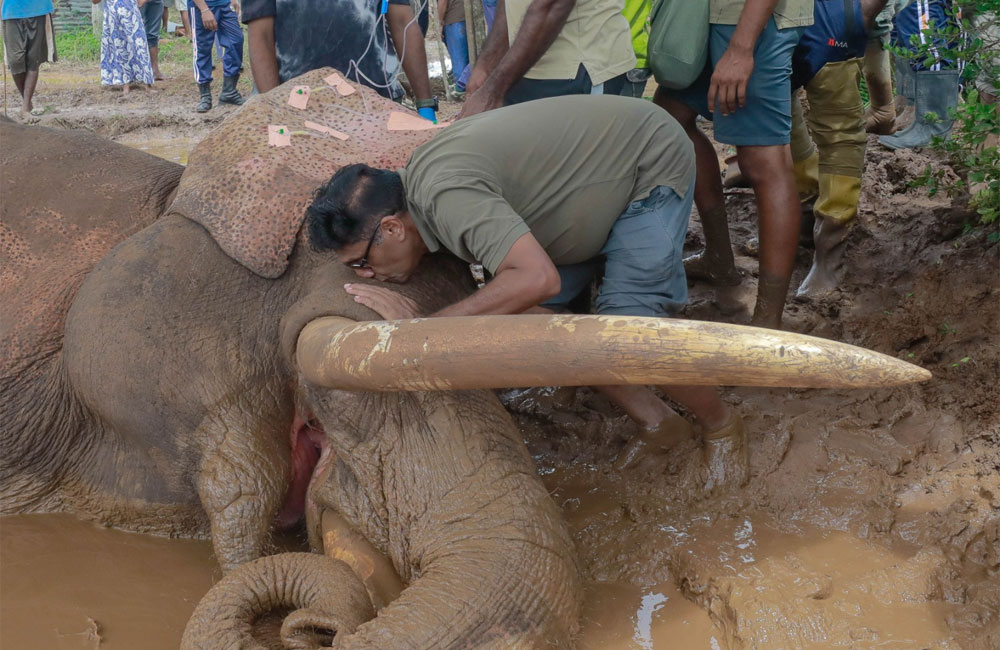
Sajith calls for national strategy to end human-elephant conflict following iconic tusker’s death
Opposition Leader Sajith Premadasa has called for a comprehensive national strategy to resolve Sri Lanka’s escalating human-elephant conflict following the death of the iconic tusker Kavantissa.
Premadasa inspected the site at the Siyambalangamuwa paddy field hours before the ailing animal passed away after collapsing in critical condition.
Premadasa said that a sustainable resolution must guarantee dedicated forest habitats for elephants while simultaneously safeguarding agricultural opportunities for local farming communities.
Highlighting the rapid decline of the island’s historical tusker population, he urged authorities to establish a specialized task force to protect the remaining few animals with large tusks.
He praised the dedicated efforts of Wildlife Department personnel, veterinary surgeons, and volunteer officers who worked tirelessly to treat the animal, adding that short-term medical int
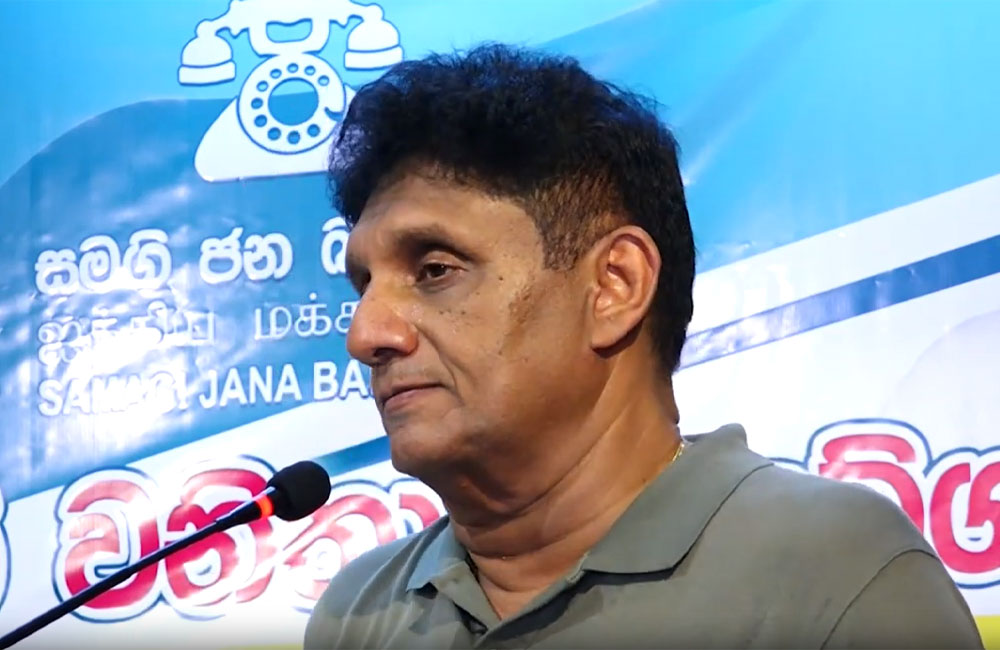
Sajith calls for new legal framework to protect religious leaders over colonial era laws
Opposition Leader Sajith Premadasa has called for a new legal framework to protect the dignity of religious leaders rather than relying on colonial era laws, stressing that preserving social harmony must remain a national priority.
Addressing a meeting of the Samagi Vanitha Balawegaya in Moratuwa yesterday (13), the Samagi Jana Balawegaya (SJB) leader said that any responsible government must actively prevent religious and national divisions across the country, adding that Sri Lanka requires sensitive leadership capable of treating all communities and faiths equally.
His remarks were made in response to the public controversy following the removal of Ven. Galagoda Aththe Gnanasara Thera's robes and his subsequent court appearance in lay attire after his imprisonment.
The Opposition Leader clarified that he does not question judicial rulings or the legal process, but noted that disrobing a Buddhist monk remains a disciplinary matter strictly reserved for the Maha Sangha and relevant monastic chapters rather than state officials.
He emphasised that such reverence is paid to the religious symbol rather than the individual, asserting that equal respect must be extended to leaders of all faiths.
Premadasa urged immediate reforms to outdated colonial prison regulations and circulars to bring them into alignment with contemporary values.
He criticised the government for establishing a committee with a two week delay, saying that sensitive issues affecting national security and communal harmony require urgent executive action.
Political and legal commentators have similarly emphasised that all such disputes should be resolved within the existing constitutional framework, which accords Buddhism the foremost place while safeguarding the fundamental right to practice all religions.
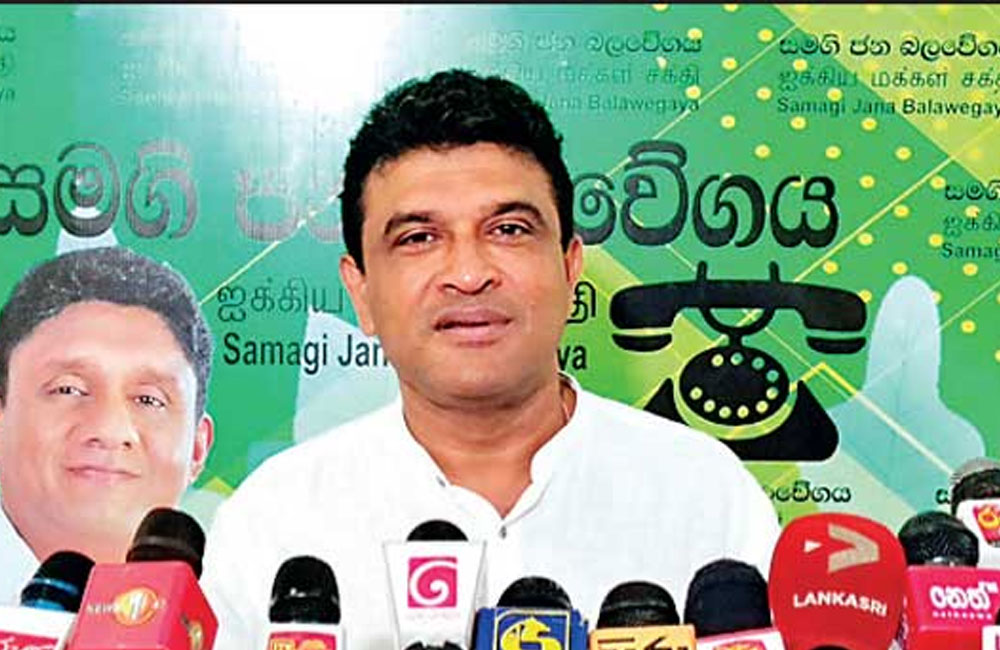
Political hand behind Gnanasara Thero's civilian attire - Nalin Bandara
Samagi Jana Balawegaya (SJB) MP Nalin Bandara said that Ven. Galagoda Aththe Gnanasara Thero was produced before court in civilian clothing following political directives issued to prison authorities.
He made these remarks during a media briefing held at the SJB headquarters yesterday (15).
Bandara said that prison officials were forced to alter a protocol spanning more than seven decades because of executive instructions originating from the subject minister, the Presidential Secretariat, the Prime Minister's Office, or ruling party headquarters in Pelawatte.
He noted that members of the clergy across all faiths have historically been permitted to appear in court dressed in their respective religious attire.
Bandara observed that as public disapproval mounted against the decision, the government appointed a committee to conceal the lapse caused by political interference, ultimately returning discretionary authority to the minister.
He said that no issue would have arisen had long-standing procedures been followed, adding that prison personnel had clearly acted under intense political pressure and should not bear blame.
Regarding monastic discipline, Bandara noted that while the Sangha Council prohibits monks guilty of Parajika offenses or serious criminal acts from wearing robes, no such canonical restriction applies to Gnanasara Thero. He accused the government of fabricating an artificial controversy around the matter.
Bandara claimed the administration is prioritizing party interest over national priorities, drawing parallels to colonial eras when Buddhist monks mobilised against foreign rule.
He said that forcing the Maha Sangha into opposition against the state represents a grave turn of events, urging the government to govern responsibly without provoking communal or religious divisions.
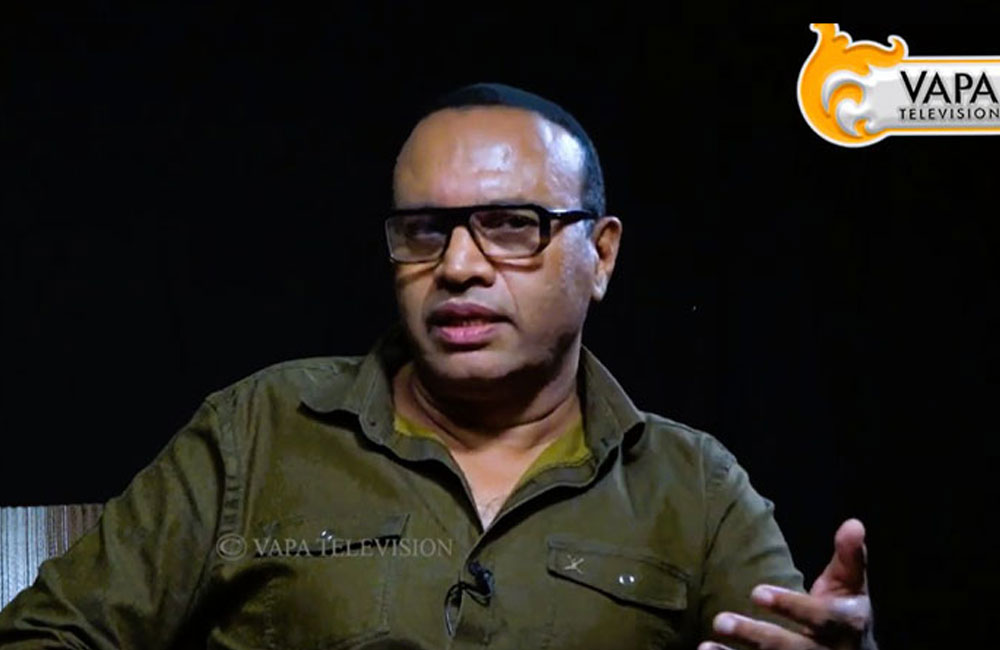
Why Sri Lanka must prioritise quality of life and human happiness over traditional economic metrics
National development must be evaluated through citizen well-being and overall quality of life rather than physical infrastructure construction or standalone economic growth metrics, according to a senior academic.
Prof. Pradeep N. Weerasinghe of the University of Colombo Department of Journalism stated that sustainable development strategy in developing countries like Sri Lanka requires prioritising human happiness, personal freedom, and institutional integrity over traditional capital projects.
During a national television current affairs program hosted by journalist Mangala Jayamanna, Prof. Weerasinghe explained that international standards increasingly measure societal advancement using broad social indicators such as Gross National Happiness instead of relying solely on gross domestic product figures.
He noted that fundamental human needs, including fair access to quality education, healthcare services, civil liberties, and environmental protection, form the real foundation of genuine national advancement.
Addressing past economic policies, the academic pointed out that Sri Lanka’s post-war strategy suffered from a fundamental misalignment between state spending and grassroots priorities.
He observed that while rural populations continue to experience severe deficiencies in drinking water supplies, adequate school infrastructure, and essential pharmaceuticals in public hospitals, successive governments channeled substantial funds into low-utility transport hubs and ostentatious commercial developments.
He noted that political elites repeatedly favored multi-billion rupee megaprojects to achieve short-term political visibility and financial kickbacks instead of addressing community needs.
Furthermore, Prof. Weerasinghe highlighted the dangers of long-term reliance on international credit facilities, foreign loans, and bailout programs without establishing a self-sustaining productive economy.
He explained that systemic administrative corruption combined with a lack of government transparency has broken public trust in state institutions, creating a climate of social uncertainty that hinders economic growth.
He called on national policymakers to examine international models that emphasise rigorous anti-corruption mechanisms, natural resource management, and human resource investments to establish a tailor-made national policy framework for Sri Lanka.
SJB calls for fresh investigation into Temple of the Tooth attack
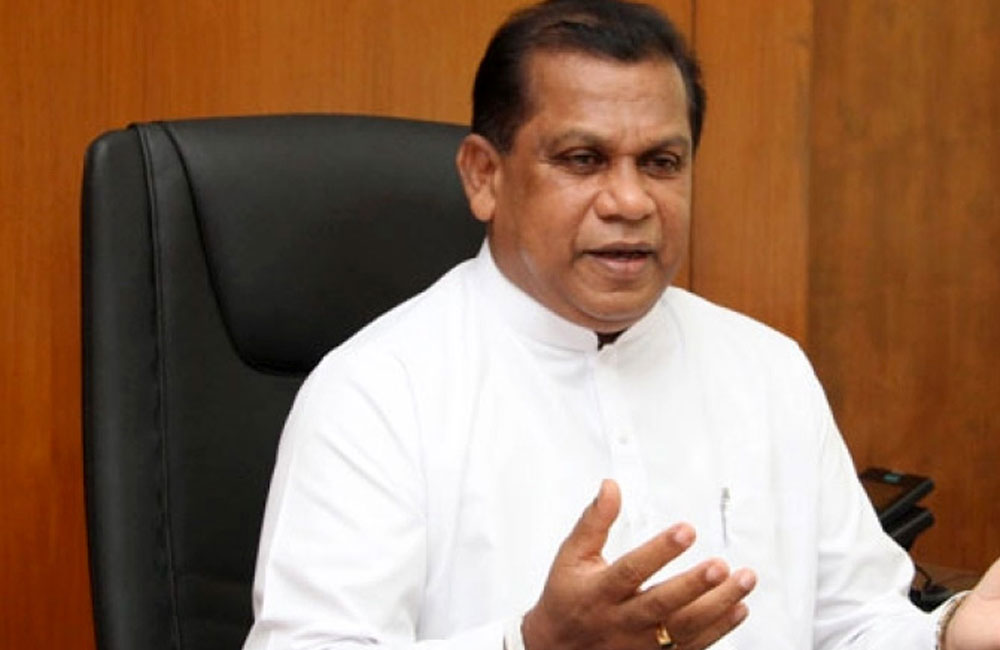
Samagi Jana Balawegaya (SJB) general secretary Ranjith Madduma Bandara has called on authorities to launch a fresh investigation into the historical bombing of the Sri Dalada Maligawa.
Speaking at a press conference in Colombo on Thursday, the former minister cited recent public observations made by the Mahanayake of the Malwathu Chapter, Most Venerable Thibbotuwawe Sri Siddhartha Sumangala Thera, regarding the attack on the Temple of the Tooth Relic.
Madduma Bandara expressed his party's support for the prelate's perspective, emphasising that despite stylistic differences in language, acts involving gunfire and bombings represent equivalent forms of severe violence.
“Although bombing and shooting are two different words, both are similar, as they are violent acts,” he noted.
Expanding on his call for judicial review, the SJB general secretary urged law enforcement authorities to reopen files on several key historical atrocities alongside the Kandy temple bombing.
He drew specific attention to the attack on the annual Kataragama Perahera, highlighting that the incident resulted in 13 fatalities and remained a critical subject requiring comprehensive legal re-examination.
By bringing these historical security breaches back into the political discourse, Madduma Bandara said that impartial state inquiries into all past acts of mass violence remain necessary to achieve absolute legal accountability.
Shiranthi Rajapaksa Remanded Until October 16 Pending Medical Reports
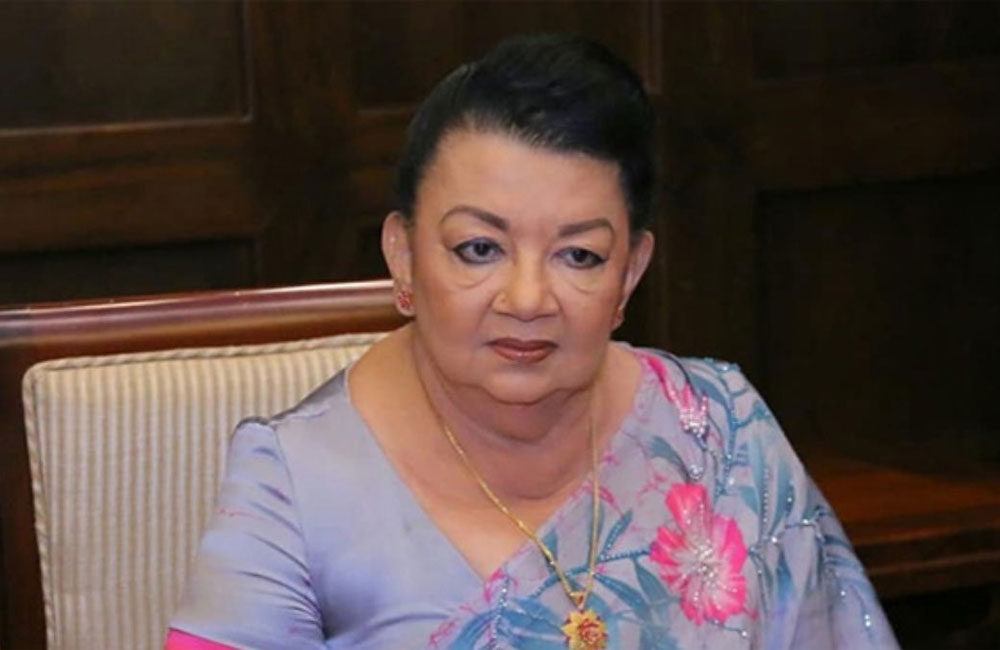
Former First Lady Shiranthi Rajapaksa has been further remanded until October 16 by the Colombo Chief Magistrate’s Court, as investigations continue into alleged financial misappropriation involving the ‘Siriliya Saviya’ account.
The decision was made after the court considered a medical report issued by the National Hospital, which confirmed that Rajapaksa had no ongoing surgeries or operations planned.
Colombo Chief Magistrate Asanga S. Bodaragama ordered her continued remand after hearing submissions from lawyers representing Rajapaksa and the Commission to Investigate Allegations of Bribery or Corruption (CIABOC).
Rajapaksa is currently being held in remand custody in connection with the ongoing investigation into the alleged misuse of funds linked to the ‘Siriliya Saviya’ account.
The court has also directed that her detailed medical reports be submitted on October 16. According to an Ada Derana reporter, the magistrate indicated that a decision on bail would not be made until the reports are presented and considered.
The case is expected to be taken up again on October 16, when the court will consider the medical documentation before proceeding further with the matter.
Kiriella clarifies remarks to Mahanayake Thera, denies targeting minority communities
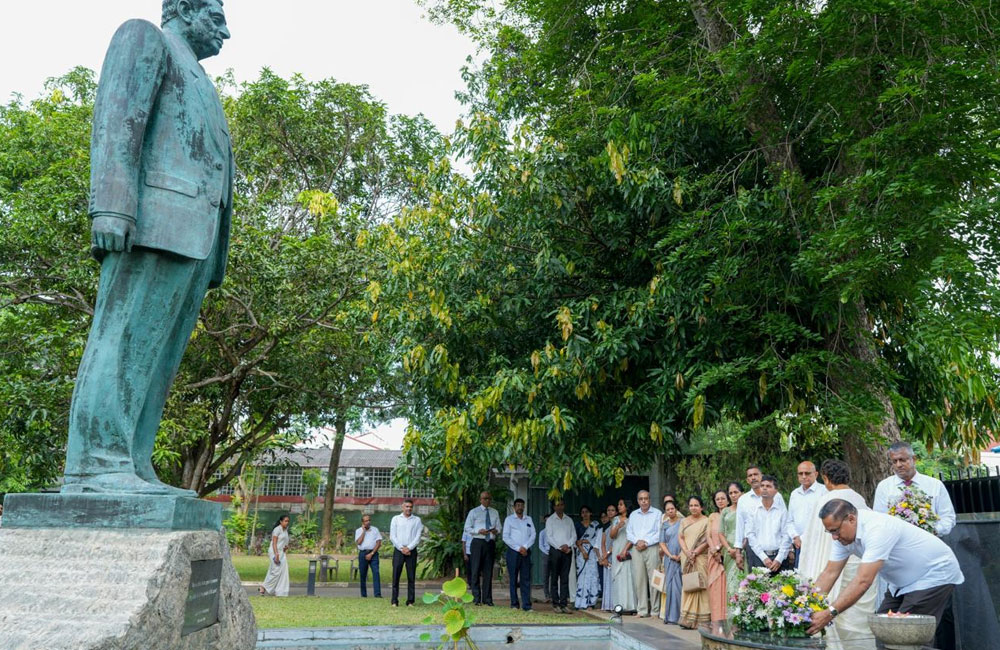
Former minister Lakshman Kiriella has defended his recent public comments made to a senior Buddhist prelate, clarifying that his criticisms were aimed strictly at the government rather than minority groups.
The former minister addressed a media briefing in Colombo on Friday (16) following backlash over remarks delivered during a meeting with the Mahanayake Thera of the Malwathu Chapter in Kandy.
The controversy arose after reports suggested Kiriella had accused the government of exploiting its legal proceedings regarding the imprisoned Venerable Galagoda Aththe Gnanasara Thero to court political support among minority communities.
Rejecting the backlash from critics, Kiriella stressed that his statements had been taken out of context by individuals who failed to listen to the complete recording of his discussions at the Malwathu Maha Vihara.
He asserted that pointing out political maneuvering by the state did not equate to finding fault with minority populations.
He also said that President Anura Kumara Dissanayake possessed the constitutional authority to issue a presidential pardon for Gnanasara Thero through a direct executive order, rendering any reliance on fresh parliamentary legislation entirely unnecessary.
Marikkar alleges plot to reappoint sacked former minister linked to sub-standard coal fraud
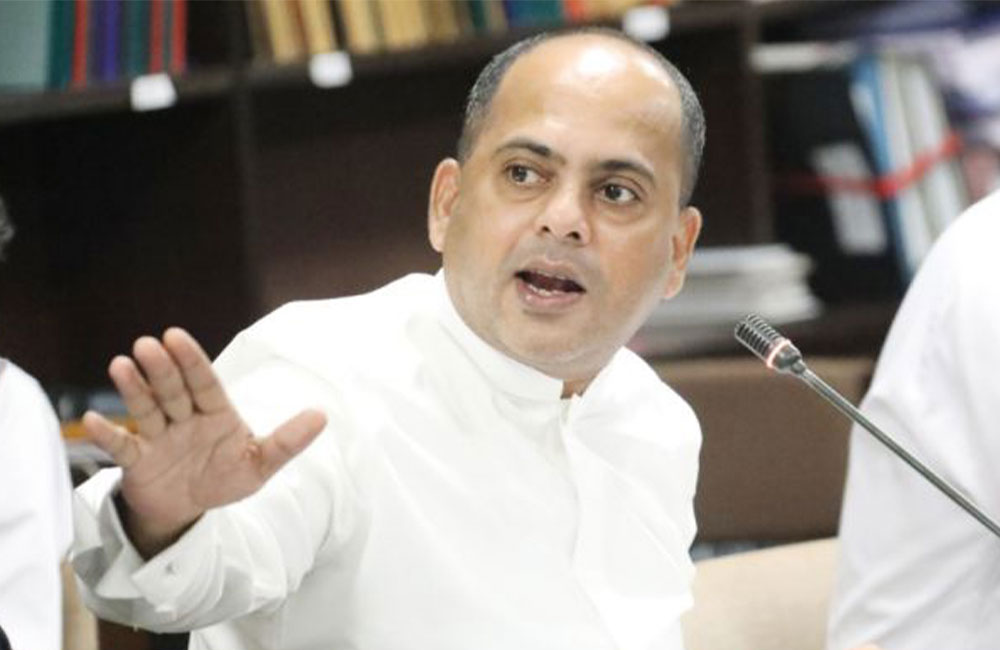
Samagi Jana Balawegaya (SJB) MP S.M. Marikkar has accused the government of plotting to reappoint former Energy Minister Kumara Jayakody to the cabinet despite ongoing investigations into a Rs. 20 billion sub-standard coal fraud.
Speaking at a press conference held at the SJB headquarters in Colombo today (13), the opposition lawmaker said that efforts are underway to reinstate the former minister by January 2027 while misleading the public regarding the actual financial damage.
Financial losses and procurement failures
Marikka said that the overall financial losses resulting from the coal deal are projected to reach Rs. 20 billion when including state fuel subsidies, contradicting government assertions that performance bonds would offset the damage.
He said the official report compiled by an expert panel under the Sectoral Oversight Committee on Infrastructure reveals that direct losses total Rs. 18.393 billion.
"Procurement failures led to severe power generation shortfalls, forcing the state to spend Rs. 8.572 billion on emergency power purchases after failing to generate 300 megawatts. Additional expenses included Rs. 7.099 billion for extra coal consumption, Rs. 2.284 billion paid above market rates for emergency shipments, and Rs. 402.8 million caused by shipment delays. Furthermore, suspicious quality certificates required third party testing by an Australian firm costing Rs. 26.6 million, while increased equipment maintenance and ash disposal added tens of millions to the final bill," he said.
Calls for investigation and parliamentary action
Marikkar claimed that Cabinet members attempted to whitewash the incident by citing Rs. 16.9 billion held in performance bonds and penalties, but significant net losses remain unrecoverable.
He said the parliamentary committee recommended recovering Rs. 400 million directly from the private supplier responsible for shipping delays.
He alleged that alterations made to procurement guidelines during the former minister's term allowed uncertified suppliers into the bidding process, establishing his direct accountability for the crisis.
Marikka added that the full expert report will be tabled in Parliament next Tuesday for distribution to all 225 lawmakers before being forwarded to the Bribery Commission, Criminal Investigation Department, and a Presidential Commission for formal legal proceedings.
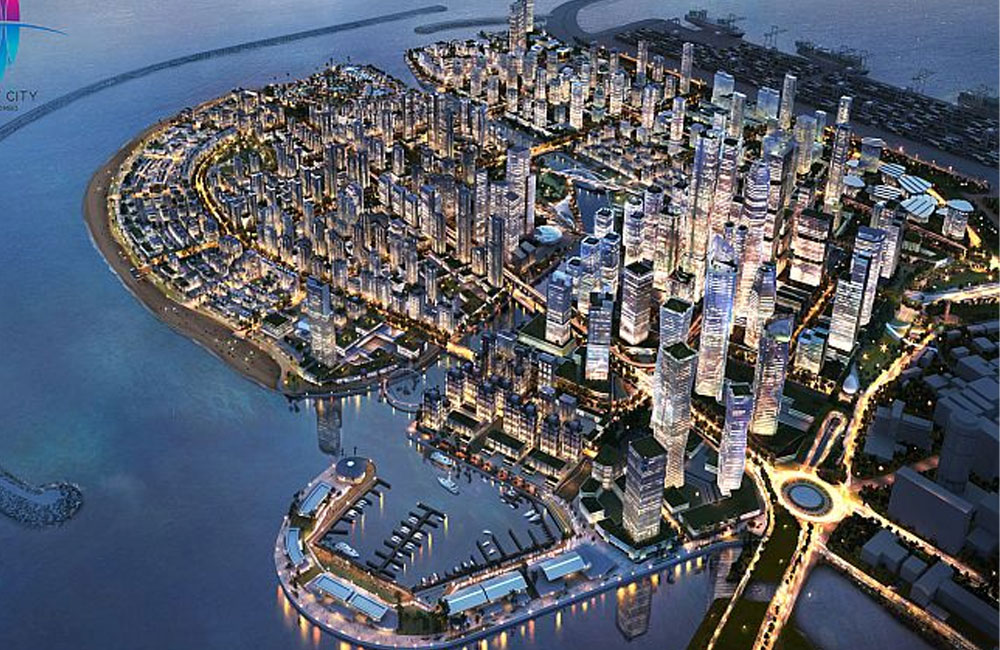
Port City’s 14,300 visas raise alarming national security questions
The issuance of 14,300 visas to foreign employees of businesses operating in Colombo Port City has triggered serious questions about immigration oversight, financial security and Sri Lanka’s vulnerability to transnational cybercrime, following disclosures before Parliament’s Committee on Public Finance (CoPF).
The revelations expose a potentially dangerous gap between the ambitious investment agenda of the Colombo Port City Economic Commission (CPCEC) and its capacity to verify whether foreign workers entering the country are employed in legitimate business activities.
Commission Chairman Harsha Amarasekera, PC, informed the committee that the Commission had issued 14,300 visas for foreign employees of Port City businesses but could not vouch for every visa holder. The Commission relies on monthly reports submitted by businesses and random periodic visits by officials to monitor foreign employees.
However, with only 16 staff members, the Commission faces questions about whether its monitoring arrangements are sufficient to oversee thousands of foreign workers and verify compliance across multiple businesses.
The scale of the issue becomes clearer when the number of visas is considered against the businesses concerned. Committee members questioned why certain businesses of strategic importance (BSIs) required approximately 200 foreign employees each, given the nature of their operations. The disclosure raises questions about whether projected employment requirements are realistic and whether the Commission adequately scrutinises applications before recommending visas.
Committee Chairman Dr. Harsha de Silva warned that the matter extended beyond the Commission’s administrative responsibilities, potentially affecting financial-sector stability, anti-money laundering safeguards and Sri Lanka’s international reputation.
He cited official arrival statistics showing increases during the first quarter of 2026 of 458% from Myanmar, 258% from Vietnam and 70% from Cambodia. Although these increases do not establish criminal activity by individual travellers, they warrant careful scrutiny against regional concerns about cyber-scam compounds, illicit financial flows and organised online fraud.
The issue has also attracted diplomatic attention. Dr. de Silva referred to statements by Vietnamese and Chinese embassies, including a Chinese Embassy statement issued on May 29, 2026, and warned that damaging international media coverage could undermine confidence in Sri Lanka’s regulatory environment.
The Commission previously suspended visa recommendations for two authorised persons after five Chinese nationals associated with them were detained and deported. Amarasekera said the suspension lasted approximately three weeks to one month while Commission and immigration officials inspected the businesses concerned.
Nevertheless, Dr. de Silva highlighted a critical legal weakness: deportation for immigration violations is not equivalent to establishing or prosecuting involvement in cyber-scamming activities. Without clearly defined regulations, authorities may struggle to intervene effectively when suspicious employment arrangements emerge before criminal conduct is conclusively established.
The central question is whether Sri Lanka’s investment facilitation framework has developed adequate safeguards alongside its incentives for foreign businesses.
Port City could generate employment, investment and export earnings. But an inability to verify foreign employees would expose the country to immigration abuse, financial crime and reputational damage.
The Commission has been asked to provide Parliament with detailed information on foreign recruitment, nationalities, duration of stay and employment responsibilities within two weeks.
The report must establish whether existing controls are proportionate to the risks. Without transparent records, stronger inter-agency coordination and enforceable compliance standards, Sri Lanka risks allowing an investment initiative to develop regulatory vulnerabilities that could prove far more costly than the benefits it promises.
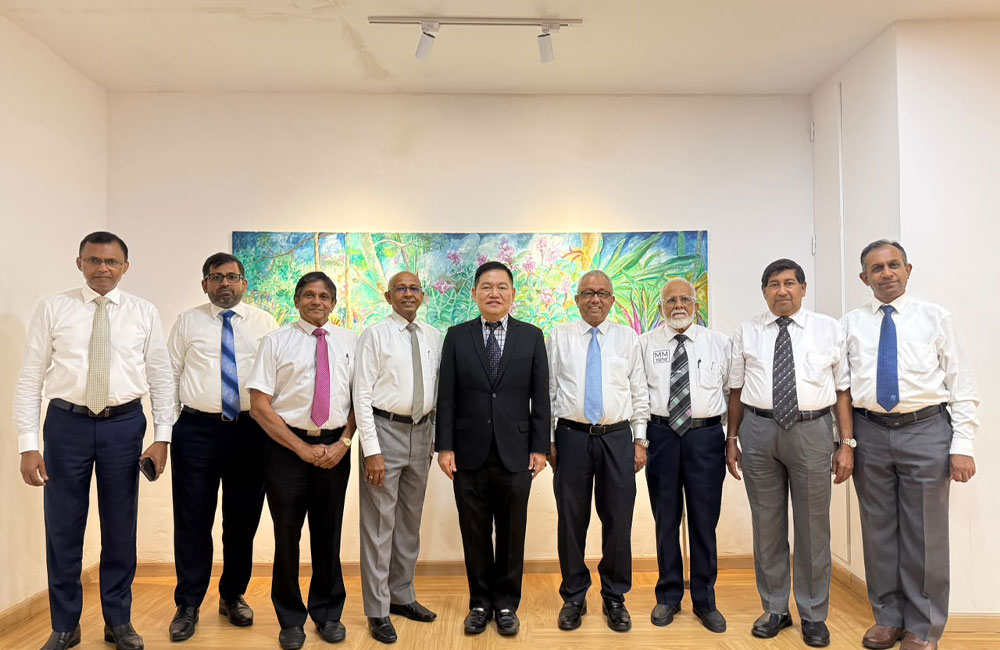
Sri Lanka–Thailand Business Council meet Thai Ambassador to advance FTA implementation and job opportunities for Sri Lankan workers
A delegation from the Sri Lanka–Thailand Business Council (SLTBC) consisting of the President Rizan Nazeer and a few Exco members met with His Excellency Mr. Paitoon Mahapannaporn, the Ambassador of Thailand to Sri Lanka, recently. The strategic dialogue focused on unlocking new economic avenues, advancing implementation of the landmark Sri Lanka–Thailand Free Trade Agreement (FTA), and operationalizing the newly signed labour cooperation frameworks.
The FTA was signed on 3 February 2024 but is not yet in force. The Council engaged in productive discussions with the Ambassador to clarify on an implementation roadmap.
The SLTBC formally requested an update on outstanding steps and approvals, potential obstacles, and the definitive timeline required to bring the agreement into full force. Discussions also centered on identifying high-potential export sectors for Sri Lankan goods into Thailand, simultaneously mapping strategic spaces for Thai investments and partnerships in Sri Lanka.
To sustain the momentum, the Council requested regular updates to be shared with its members. The SLTBC offered to actively support the process, organizing targeted B2B meetings and business delegations between Sri Lankan and Thai companies. Furthermore, the Council proposed jointly hosting an FTA Awareness Programme for the business community as soon as the agreement officially becomes active.
To operationalize employment opportunities for Sri Lankans, the Council warmly welcomed the recent signing of the Labour Cooperation MoU and Employment Agreement between the two nations, which is understood to open an initial 10,000 employment opportunities for Sri Lankan workers in Thailand.
During the meeting, the delegation sought clarity on the official implementation mechanisms, timelines, the sectors and occupations in greatest demand, how vacancies from Thai employers will be communicated to Sri Lanka, and the exact qualifications, experience, skills and language requirements.
The SLTBC also offered to act as a vital bridge to connect Thai employers with Sri Lankan companies, recruitment organisations, and training institutions. The collaboration aims to help identify suitable skilled a candidate and to ensure they are provided the precise preparation required for the Thai market. Additionally, the Council inquired if an official, verified channel or database of vacancies will be available, so it can circulate these opportunities among its members.
The visa issue was also discussed at length. The SLTBC requested the Ambassador to revert back to getting on line or at entry point to Thailand visas as previously done.
The Sri Lanka–Thailand Business Council is committed to support the implementation of these bilateral agreements. Fostering direct institutional and commercial links, the Council seeks to expand trade, attract Thai investment, and open employment pathways for Sri Lankan workers.
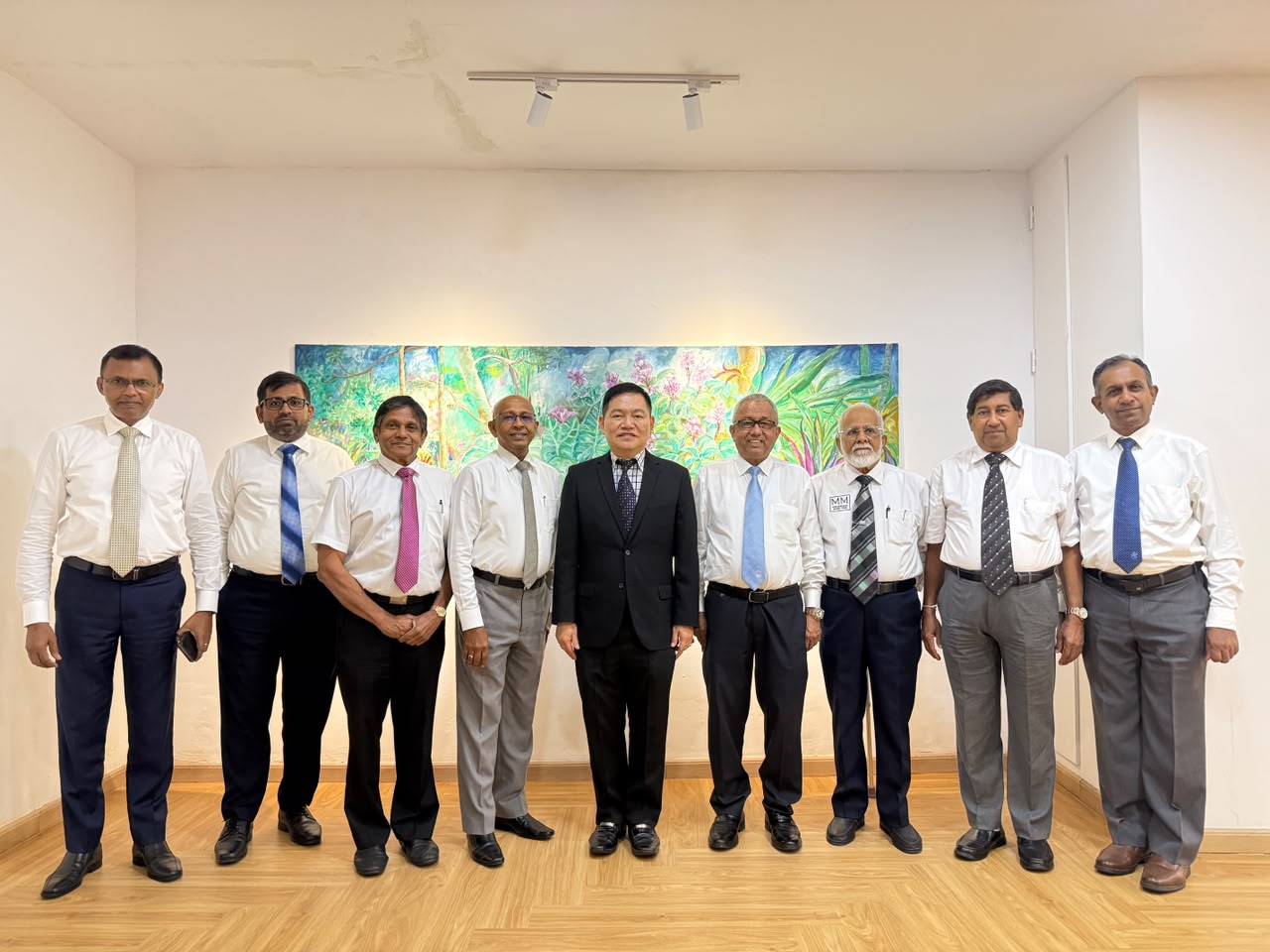 From Left to Right - Dushyanta Basnayake - Immediate Past President Chandana Nanayakkara – Committee Member Kamil Weerasekara – Vice President Lionel Fernando – Founder / Past President Paitoon Mahapannaporn – Ambassador Rizan Nazeer – Founder / President A.M. Musajee – Vice President Priyantha Kolonnage – Secretary Rohan Elgiriyawithana – Assistant Secretary
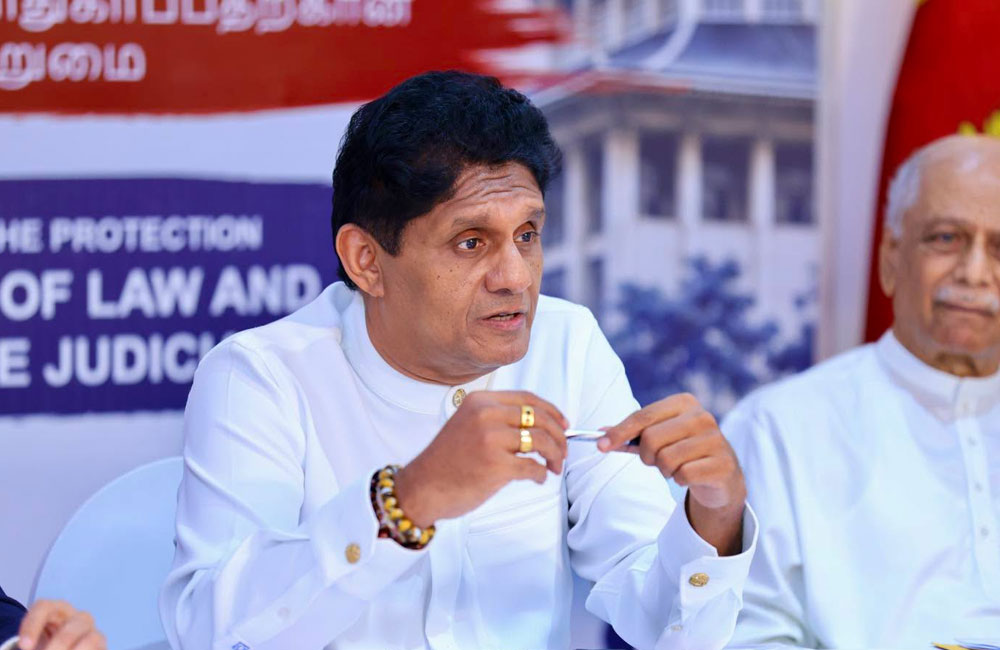
Opposition Leader urges executive action to resolve standoff over protesting monks
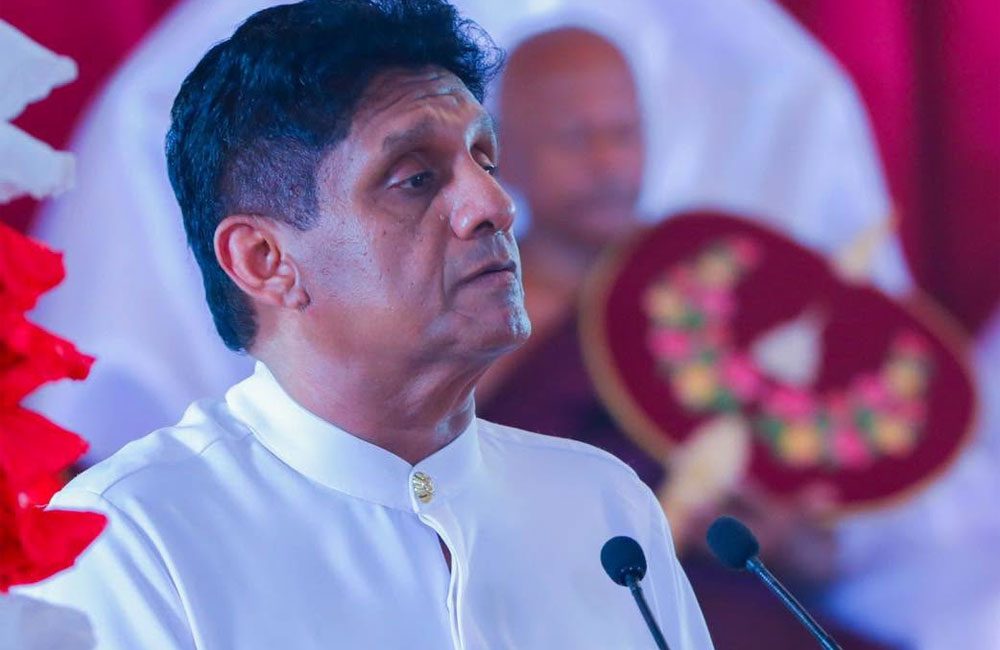
Opposition Leader Sajith Premadasa has called on President Anura Kumara Dissanayake to step in personally after police dismantled a temporary shelter erected by Buddhist monks protesting outside the Presidential Secretariat in Colombo.
The demonstration, organized to demand the immediate release of the imprisoned Venerable Galagoda Aththe Gnanasara Thera, saw members of the clergy and their supporters gather at the site following a march from Kandy.
Tensions escalated on Thursday afternoon when law enforcement officers removed a makeshift structure intended to house a Buddha statue brought by the demonstrators, a move that drew sharp criticism from political figures and sparked widespread disquiet among those present.
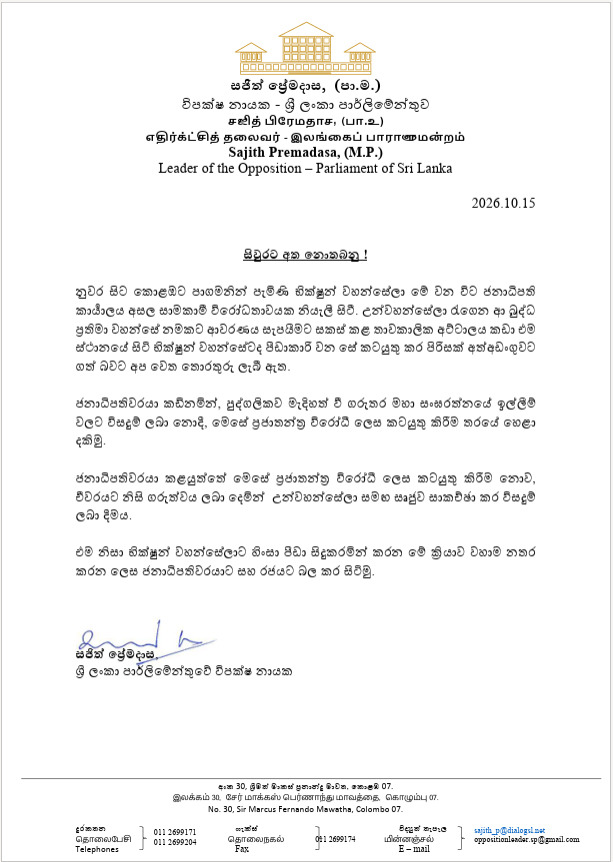
In a statement released on Thursday (15), the Opposition Leader condemned the actions of the security forces, describing the removal of the shelter and the reported arrest of several individuals as undemocratic.
Premadasa said that state authorities and law enforcement must immediately halt any measures that cause harassment or distress to the clergy, emphasizing that administrative actions should respect the traditional standing of the Buddhist robe.
He urged President Dissanayake to initiate direct dialogue with representatives of the Maha Sangha to resolve the ongoing impasse amicably, rather than relying on heavy-handed security interventions to manage the demonstration.
The protest forms part of a campaign organized by Buddhist clergy seeking the release of Ven. Gnanasara Thera, who remains in custody following his conviction under state laws.
Demonstrators have maintained a continuous presence near the executive office, insisting that they will remain staged outside the building until executive officials provide a definitive outcome.
Despite police actions to clear temporary structures from the roadway, the clergy and their supporters have resolved to continue their sit-in, maintaining pressure on the administration to address their grievances directly.
Clergy attire in prison: Opposition Leader calls for urgent meeting of oversight committee
Opposition Leader Sajith Premadasa has called an emergency meeting of a key parliamentary body to review prison rules governing the attire of detained Buddhist monks and clergy of other faiths.
In a letter sent to the Committee Chairperson through the Speaker on 10 October 2026, the Opposition Leader called for an immediate session of the Parliamentary Sectoral Oversight Committee on Governance, Justice and Civil Protection.
He highlighted growing public concern over the enforcement of Department of Prisons Standing Order Number 550, which dictates how religious leaders in custody are dressed while serving sentences and during transfers outside prison facilities.
Premadasa noted that the government had failed to take swift, constructive action to resolve the escalating dispute, resulting in widespread public distress.
He emphasised that parliament bears a direct responsibility to re-examine existing statutory provisions and formulate necessary legal amendments.
To ensure a comprehensive review, the Opposition Leader requested that officials from the Ministry of Justice and National Integration, the Ministry of Buddhasasana, Religious and Cultural Affairs, the Department of Prisons, and the Attorney General's Department be summoned for the initial hearing.
Highlighting the national sensitivity of the matter, Premadasa also requested special authorization to attend the committee proceedings as a non-member so he could directly submit policy proposals aimed at resolving the crisis.
Page 8 of 790