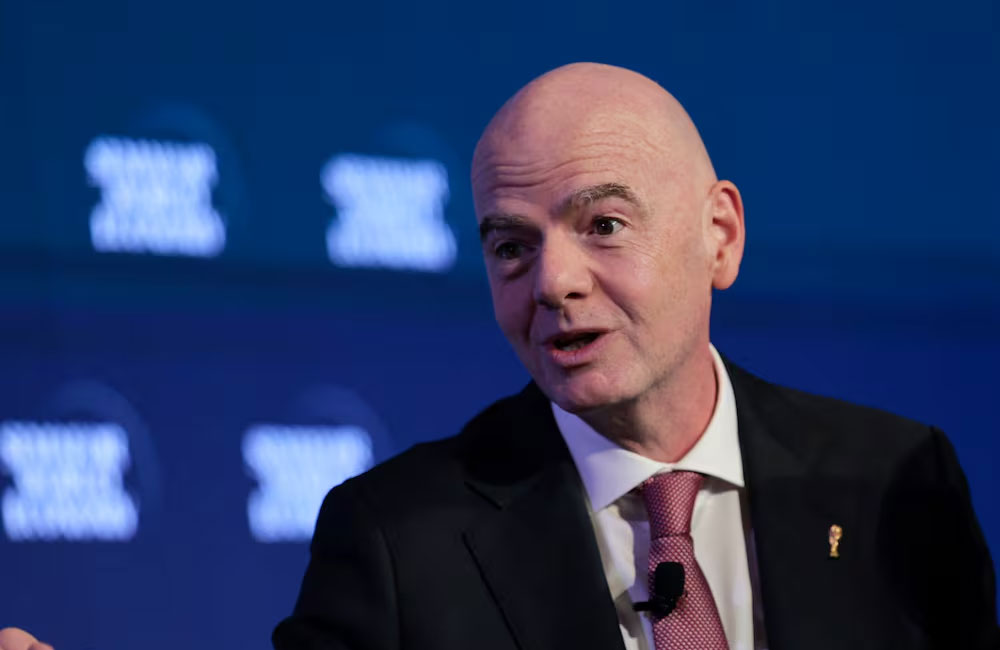

FIFA President Gianni Infantino confirmed on April 15, 2026, that Iran will take part in the 2026 World Cup, with group matches scheduled in the United States despite tighter entry rules for Iranian nationals and an elevated security backdrop around the tournament.
Gianni Infantino delivered the remarks in Washington during a CNBC forum appearance, describing Iran’s participation as settled and linking delivery to operational planning across host cities. Iran qualified for the tournament in March 2025 and remains assigned to play two group fixtures in Inglewood, California, and a third in Seattle, according to published match allocations.
Mexican officials also confirmed FIFA rejected a request to shift Iran’s games to Mexico, keeping the existing venue plan intact across the three host countries.
FIFA has locked the expanded tournament format at 48 teams and 104 matches, with the United States hosting 78 fixtures. FIFA programming sets the final for July 19, 2026, in the New York-New Jersey venue cluster, anchoring a six-week operational calendar for airlines, hotels, transport operators, stadium contractors, and city agencies.
FIFA data circulated alongside the Washington appearance projects $11bn in tournament revenue during 2026, with the World Trade Organisation estimate placing gross output at $80.1bn, including $30.5bn in the US.
FIFA also framed the event as a funding engine for football projects across 211 national associations, tying commercial yield to global grant distribution.
Infantino offered a brief assurance to close speculation over Iran’s entry, telling the forum that Iran is “coming for sure” and linking delivery to match integrity and player availability.
US travel restrictions introduced ahead of the tournament include Iran, alongside Haiti, Senegal, and the Ivory Coast, creating a two-track access regime that separates teams from ticket-holding fans.
Council on Foreign Relations analysis indicates fans holding those passports cannot attend matches hosted in the United States under the current ban terms.
Fragomen’s analysis includes a carve-out for officials, teams, and support staff linked to qualified national sides, while explicitly excluding fans from the exemption.
US consular practice also adds a cost layer for some visitors through a Visa Bond Pilot Program, with refundable bonds of $5,000, $10,000, or $15,000 applied at the officer’s discretion for certain B1 B2 applicants.
CFR reporting also flags a $15,000 bond requirement for some non-immigrant visitors attending US matches, tightening demand elasticity for late booking travel.
Arabian Business
Leave your comments
Login to post a comment
Post comment as a guest