News
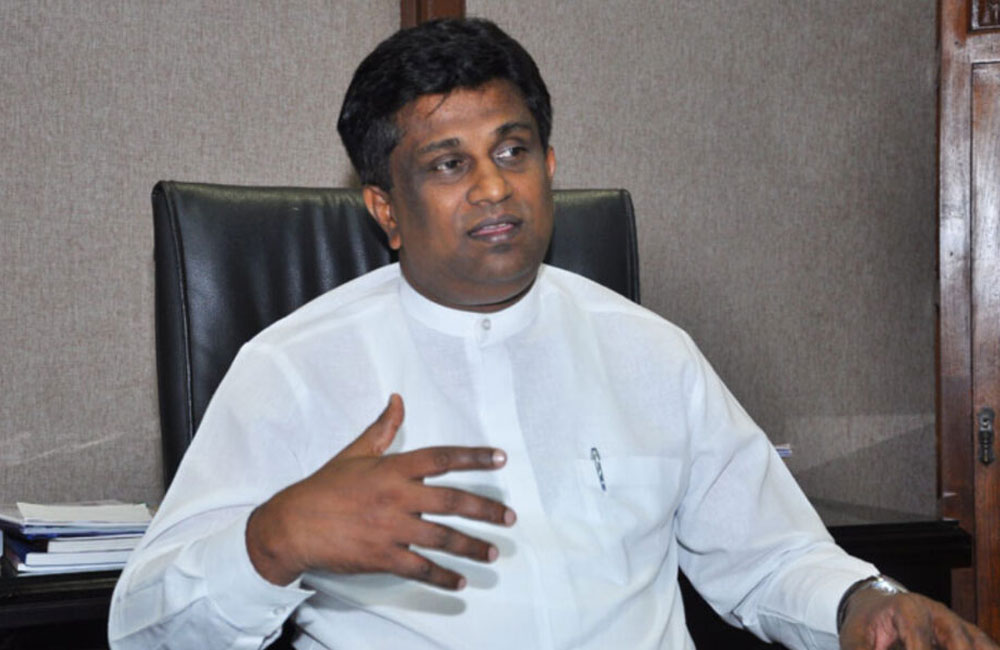
Public support shifts over Govt. corruption and policy failures, says Ajith P. Perera
The Samagi Jana Balawegaya (SJB) reported strong public participation during its ongoing grassroots re-organisation drive in the Anuradhapura District, claiming widespread opposition is mounting against the government's economic policies and governance track record.
Speaking to the media, SJB MP Ajith Perera acknowledged that while party activists faced a setback following losses in the last three elections, public sentiment has shifted due to growing concerns over government mistakes and alleged corruption.
Under the direction of Opposition Leader Sajith Premadasa, SJB parliamentarians and electorate organisers spent the past two days conducting small-scale meetings across every polling division in Anuradhapura to establish branch committees and electoral bodies.
During these outreach sessions, local farmers voiced strong discontent over the lack of fair pricing for paddy.
Perera noted that although the government announced a purchasing price of 120 rupees per kilogramme, farmers are receiving significantly less and are being forced to either store their harvests at home or sell at a loss.
He said that agricultural producers require a fair price of at least 135 to 140 rupees per kilogramme to remain viable.
Perera also accused the government of interfering with the judiciary and eroding public faith in legal fairness.
He challenged the NPP government to test the proposed 22nd Constitutional Amendment through a national referendum rather than relying on its two-thirds parliamentary majority, predicting that voters in Anuradhapura—where President Anura Kumara Dissanayake previously secured heavy support—would decisively reject the government's legislative push.

Two Sainthamaruthu Police Officers Remanded Over Alleged Rs. 20,000 Bribe
Two police officers attached to the Sainthamaruthu Police Station have been remanded until August 28 after being arrested in connection with an alleged Rs. 20,000 bribery transaction.
The suspects, an Inspector of Police and a Police Constable, were taken into custody by officers of the Commission to Investigate Allegations of Bribery or Corruption (CIABOC).
According to the allegations, the officers sought and accepted the money in return for providing lenient treatment to a suspect arrested in connection with the possession of “ice”, or crystal methamphetamine.
The two officers are accused of offering to limit the legal action against the suspect by failing to report the full quantity of the drug allegedly recovered. They are also alleged to have agreed to report only 70 milligrams of heroin to court in an attempt to obtain a lighter penalty.
The allegations further state that the officers promised to allow the suspect to continue operating without facing interference in the future.
The Police Inspector was arrested on August 17 inside the Periyanilavanai Police Station. The Police Constable was arrested separately in front of Zahira College in Kudi 9, Kalmunai.
Following their arrests, both suspects were produced before the Kalmunai Magistrate’s Court, which ordered that they be remanded until August 28.
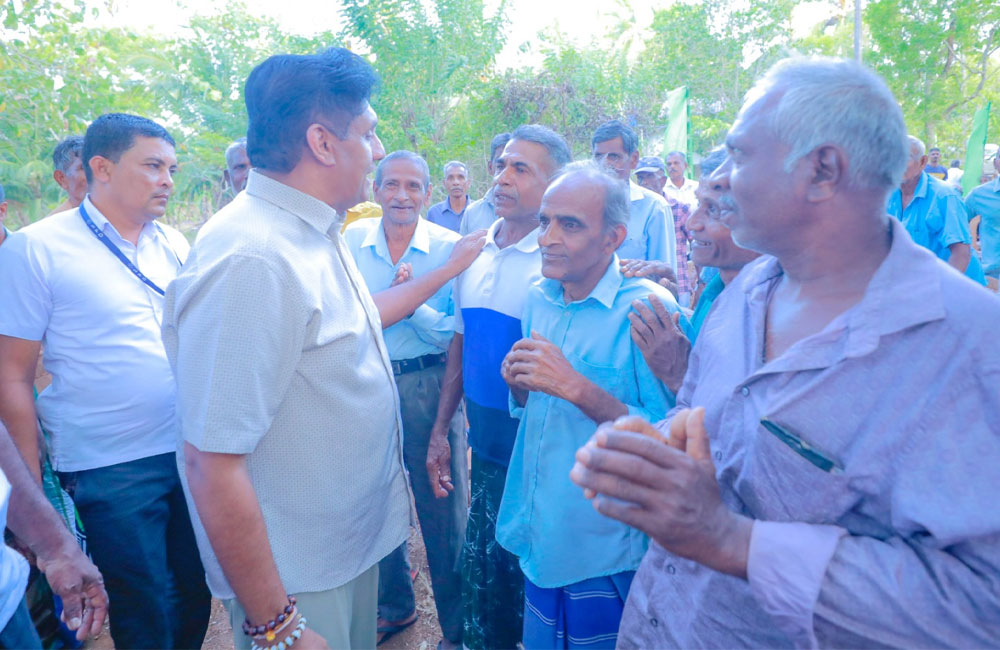
Poverty could hit 40% amid impending water and agriculture crises - Opposition Leader
Opposition Leader Sajith Premadasa says the government has betrayed Sri Lankan farmers by failing to implement a promised guaranteed price for paddy, despite being in office for two years.
Speaking at an event in Devahuwa, Galewela, to donate a water purification system to a local community organisation, Premadasa pointed out that while the Agriculture Minister stated in Parliament that producing a kilo of paddy costs Rs. 137, the government fixed the guaranteed price at just Rs. 120 per kilo, imposing a Rs. 17 loss on farmers for every kilo produced.
The Opposition Leader criticised the government for importing 382,000 metric tonnes of rice despite the country producing 3.2 million metric tonnes against an annual requirement of 2.5 million metric tonnes.
He stated that while paddy, maize, and potato farmers were left destitute, the NPP government prioritized raising the retirement age of judges over addressing the immediate economic hardships of the public.
Warning of future environmental challenges, the Opposition Leader highlighted that extreme weather events like El Niño and La Niña could dry up water sources, pushing national poverty levels to between 30 and 40 per cent and threatening factory closures.
Addressing his party's record, Premadasa claimed that the Samagi Jana Balawegaya remains the only political party to serve the public using non-state resources while in opposition since independence, expressing confidence that political truth would prevail by 2029 despite social media campaign attacks.
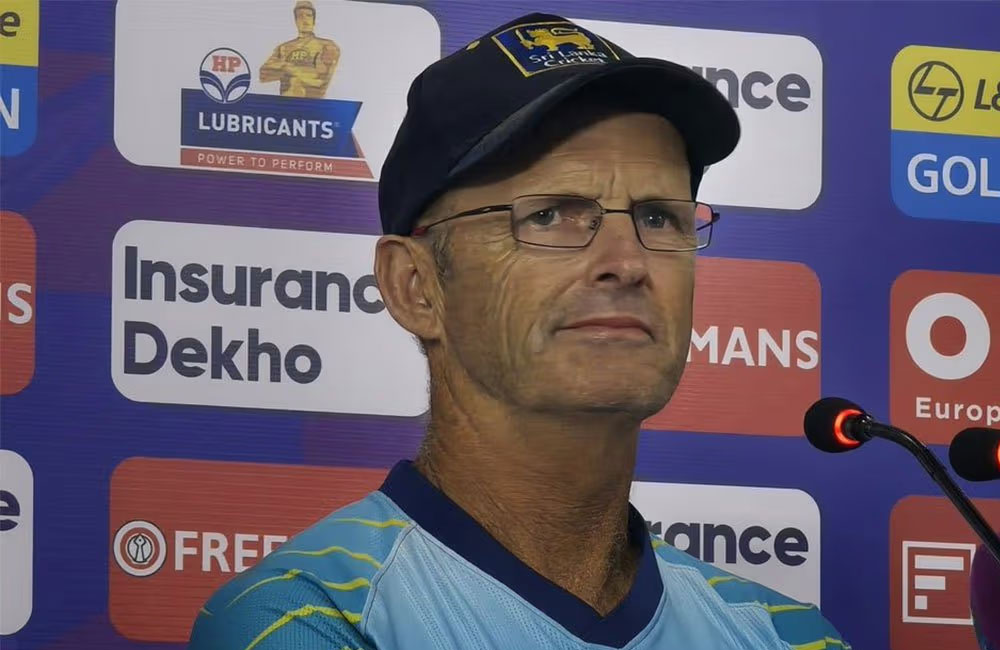
Lack of tegular Test Cricket hindering Sri Lanka's progress, says coach Kirsten
Sri Lanka head coach Gary Kirsten has urged his team to turn the progress they have made through more Test cricket into actual results after India handed them a 165-run loss in the first Test in Galle.
The reverse means Sri Lanka are still waiting for their first Test win since Kirsten took charge. They have lost two of their three Tests under the former South Africa batter, including a defeat against the West Indies in Antigua in June.
Kirsten said a lack of regular Test cricket had made it difficult for his players to adapt to the demands of the format.
"It's sometimes tough when you don't play much Test cricket to understand how you need to play," Kirsten said after the defeat.
Sri Lanka were dismissed for 206 while chasing 372 in the final innings, with India's young spinner Manav Suthar taking six wickets for 55 runs and finishing with 10 wickets in the match.
Kirsten said Sri Lanka needed a bowling attack capable of regularly taking 20 wickets if they wanted to compete consistently in Tests.
"You need to be able to get 20 wickets consistently, bowl teams out with your seam, and be able to bowl teams out with spin as well.
It's really important that we develop that Test match squad," he said.
Despite the crushing defeat, Kirsten was encouraged by the team's progress and welcomed a busier Test schedule. Sri Lanka are set to play six more Tests over the next six months.
"I think the challenge for the modern players, especially in Sri Lanka, is you don't play much Test cricket," Kirsten said.
"At least now we've got another six to go within the next six months or so, so it's great to get into the Test match game a little bit and then to understand how to score runs and bat for long periods of time and have an influence on a game over a long period of time," he added.
(Agencies)

Three-Year-Old Dies After Tractor Accident in Kilinochchi
A three-year-old child has died after being run over by a tractor in the Murasumoddai area of Kilinochchi, police said.
The incident took place yesterday (21) at the child’s home, where the child and his brother had reportedly been playing on the trailer of a parked tractor.
Police said a relative later started the tractor and attempted to turn it around within the yard, while the children were still on the trailer.
The three-year-old fell from the trailer during the manoeuvre and was subsequently run over by the tractor’s rear wheel.
The child suffered serious injuries and was rushed to the Kilinochchi District General Hospital for treatment. However, the child later succumbed to the injuries.
The tractor driver has been arrested in connection with the incident, while Kilinochchi Police are continuing investigations.
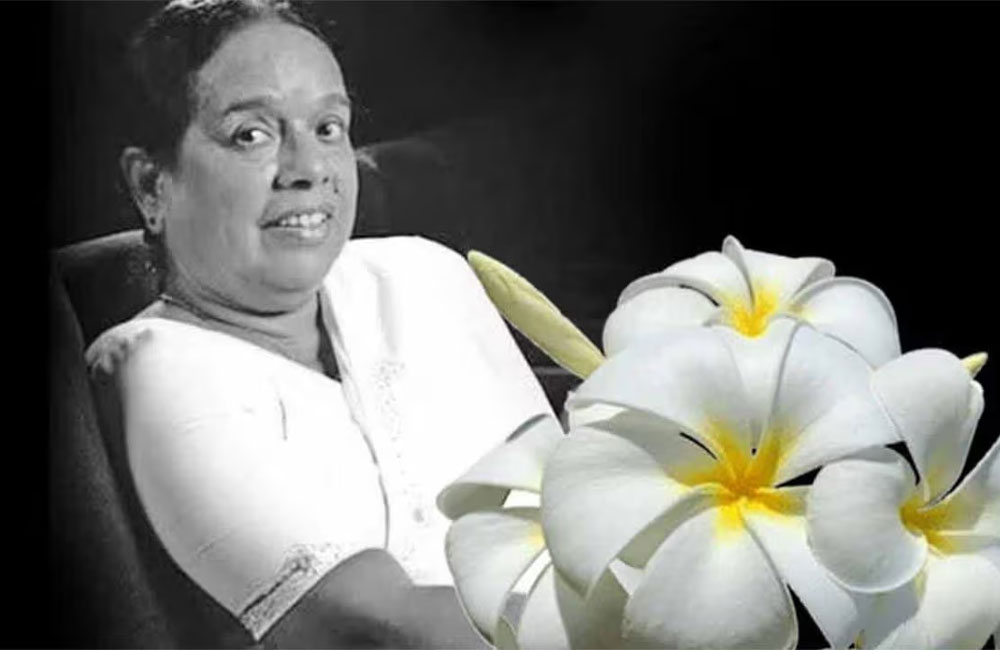
Sri Lanka Declares Three Days of National Mourning for Nanda Malini
Sri Lanka has declared three days of national mourning following the death of veteran singer Visharad Dr. Nanda Malini, who passed away at the age of 82.
According to the Government Information Department, August 21, 22 and 23 have been designated as days of national mourning in honour of the celebrated artiste.
The remains of Nanda Malini will be placed at the Nanda Malani Sangeetha Ashramaya (Music Academy) at No. 30, Vijayaba Mawatha, Nawala Road, Nugegoda, from 10.00 a.m. today (21) until 3.30 p.m. tomorrow (22), allowing members of the public to pay their final respects.
Her final rites are scheduled to take place at 5.00 p.m. tomorrow at the General Cemetery in Borella.
Nanda Malini died at her residence in Nawala on Wednesday (20), marking the loss of one of Sri Lanka’s most celebrated voices.
President Anura Kumara Dissanayake expressed his condolences following her death, describing her as “a true musical legend of our time” in a message posted on X.
The President said her music had inspired generations of Sri Lankans across age groups, while her enduring musical legacy would continue to live on in the hearts of millions.
The declaration of national mourning reflects the significance of Nanda Malini’s contribution to Sri Lankan music and the lasting impact of her work on the country’s cultural landscape.
Final Rites of Veteran Singer Nanda Malini to Be Held Today
The final rites of veteran Sri Lankan singer Dr. Nanda Malini will be held at the Borella General Cemetery today (22).
Her remains are currently lying at the Nanda Malini Sangeetha Ashramaya (Music Academy) at No. 30, Vijayaba Mawatha, Nawala Road, Nugegoda, where members of the public have been given an opportunity to pay their last respects.
According to Professor Sunil Ariyaratne, the funeral rites (Pansukula rites) will commence at 10.00 a.m. Public visitation will be temporarily suspended for approximately one hour during the rites and will resume afterwards, continuing until 3.30 p.m.
The funeral procession will depart from the Nanda Malini Sangeetha Ashramaya at 3.30 p.m. and travel via Parliament Road in Rajagiriya to the Borella General Cemetery.
The cremation is scheduled to take place at 5.00 p.m., with no ceremony planned at the venue.
Dr. Nanda Malini, one of Sri Lanka’s most celebrated singers, passed away at her home in Nawala on August 20 at the age of 82.
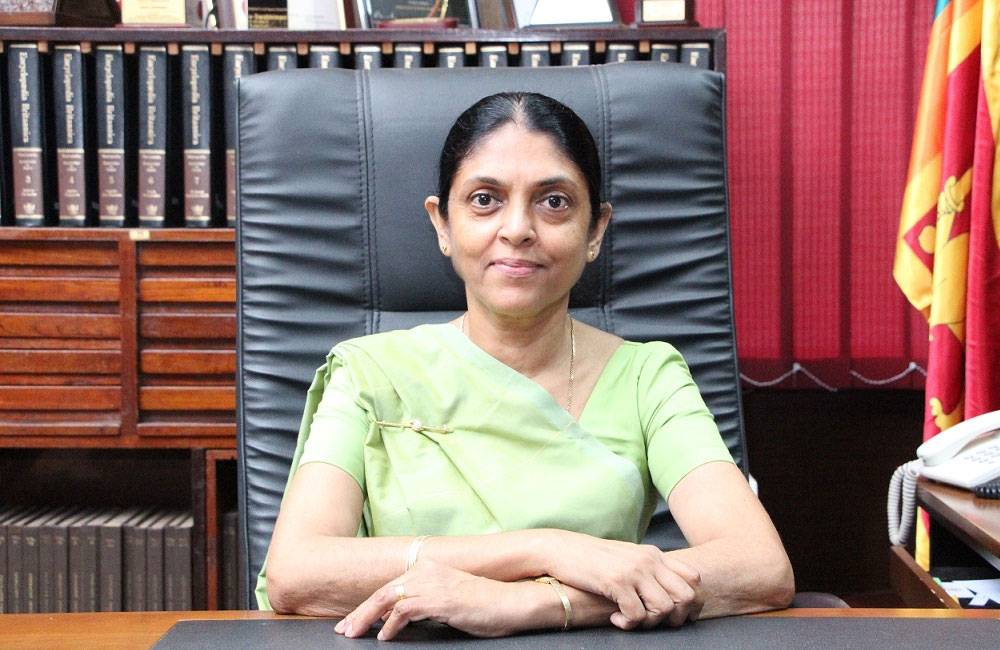
Indumini Thilakarathna makes history as Sri Lanka’s first female Surveyor General
Indumini Thilakarathna has made history by becoming the first woman to be appointed as the Surveyor General of Sri Lanka.
Taking office as the 59th head of the Survey Department, her elevation marks a major milestone in the institution's long-standing history.
Thilakarathna began her career with the department as a government surveyor in 1989 and brings 37 years of technical and administrative experience to the top role.
Her early education was completed in Ratnapura at Nivithigala Sumana Maha Vidyalaya, Ferguson High School, and Seevali Central College.
She subsequently earned a BSc Honours degree in Surveying Sciences from the Institute of Surveying and Mapping in Diyatalawa, followed by an MSc in Photogrammetry and Geodesy from the University of Stuttgart in Germany.
Throughout her career, she held key executive positions, serving as Surveyor Superintendent, Senior Surveyor Superintendent, Provincial Surveyor General of Uva, Director of the Institute of Surveying and Mapping, and Additional Surveyor General.
In her administrative and academic capacities, she played a vital role in training future professionals and driving curriculum development within the country's surveying sector.
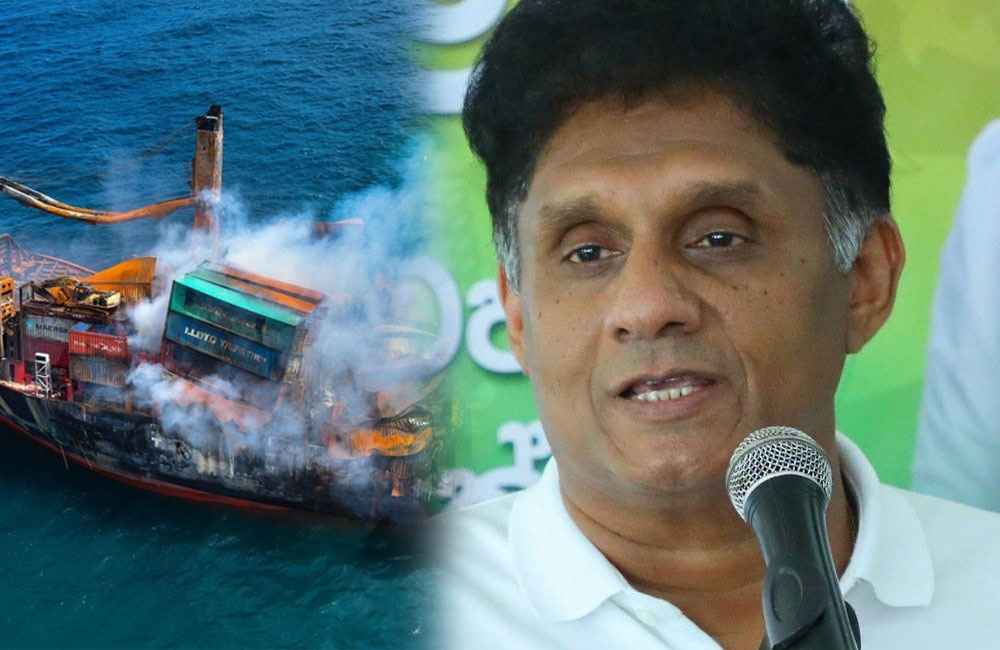
X Press Pearl disaster: Sajith demands transparency over $1 billion compensation recovery
Leader of the Opposition Sajith Premadasa questioned the government in parliament regarding the current status of compensation due for the destruction of the X Press Pearl ship in Sri Lankan waters in 2021.
The opposition leader raised these concerns under Parliamentary Standing Order 27(2), noting that the public lacks official and transparent information despite a Supreme Court ruling establishing the legal framework to recover the funds.
He inquired whether the government had received the initial installment of the USD 1 billion compensation ordered by the Supreme Court.
He noted reports indicating that only Rs. 300 million has been received so far, calling it a fraction of the expected installment.
He demanded that parliament be provided with accurate data on the total funds received, the paying entities, the credited accounts, and the remaining amounts due.
Clarification was also sought on whether received funds were directed toward fisherfolk welfare or ecosystem restoration.
The opposition leader asked what steps had been taken to assess the total long term economic and environmental damage to secure additional compensation.
He also requested an update on the recovery of damages from the MT New Diamond disaster off the eastern coast.
The opposition leader asked whether the court ordered criminal investigations and prosecutions had been completed, calling on the Attorney General's Department to provide a timeline of actions against non compliant parties.
Referring to the proceedings before the Singapore International Commercial Court, he requested full disclosure on expenditure incurred for foreign legal counsel and the strategy moving forward.
He also questioned the progress of the X Press Pearl Compensation Commission and how the government plans to address the administrative, legal, and constitutional issues raised by its chairman.
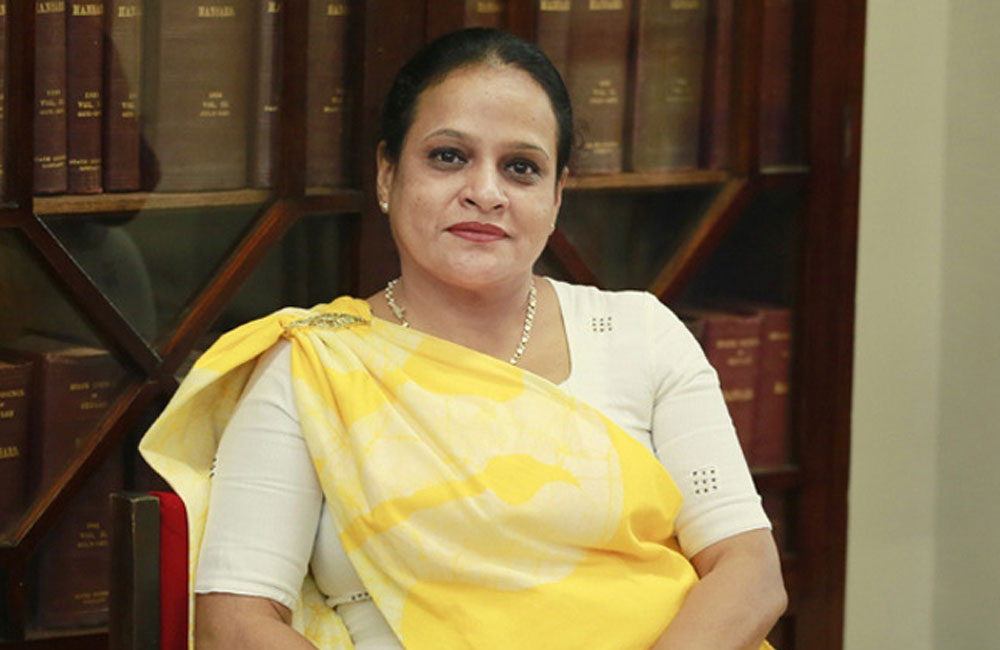
Govt. must clarify allegations against Chief Justice - Rohini Kaviratne
The government must immediately clarify serious allegations circulating on social media regarding the Chief Justice, Samagi Jana Balawegaya (SJB) Member of Parliament Rohini Kaviratne said.
Speaking in Parliament yesterday (20), she said that a YouTube channel has made several disclosures regarding personal information and confidential documentation belonging to the head of the judiciary.
She noted that the channel raised critical questions over data discrepancies in records linked to General Sir John Kotelawala Defence University, as well as the Chief Justice's marriage certificate, date of birth, and his children's birth certificates.
Kaviratne said that public suspicion has arisen over whether the President is using an issue surrounding the Chief Justice's birth certificate to exert pressure on him.
She expressed concern that the top judge might be intimidated with the threat of a 20 year prison sentence for document forgery to influence judicial rulings in favour of the government.
Kaviratne stressed that if these allegations are unfounded, the government must issue an immediate correction to protect judicial independence.
She warned that failure to address the matter would inevitably shatter public confidence in the judicial system.
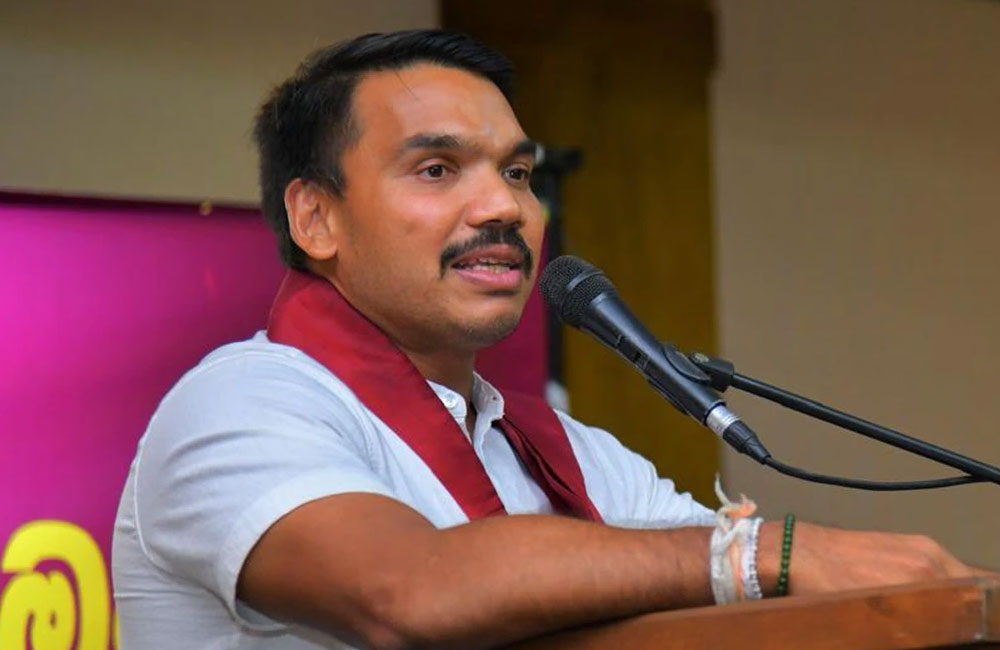
Namal Rajapaksa Appears Before FCID for Statement
SLPP National Organiser and Parliamentarian Namal Rajapaksa arrived at the Financial Crimes Investigation Division (FCID) this morning (21).
Rajapaksa appeared before the FCID in response to a summons requiring him to provide a statement as part of an ongoing investigation.
The reason for his statement was not disclosed in the available information.
He arrived at the FCID premises earlier today, where he is expected to meet investigators handling the inquiry.
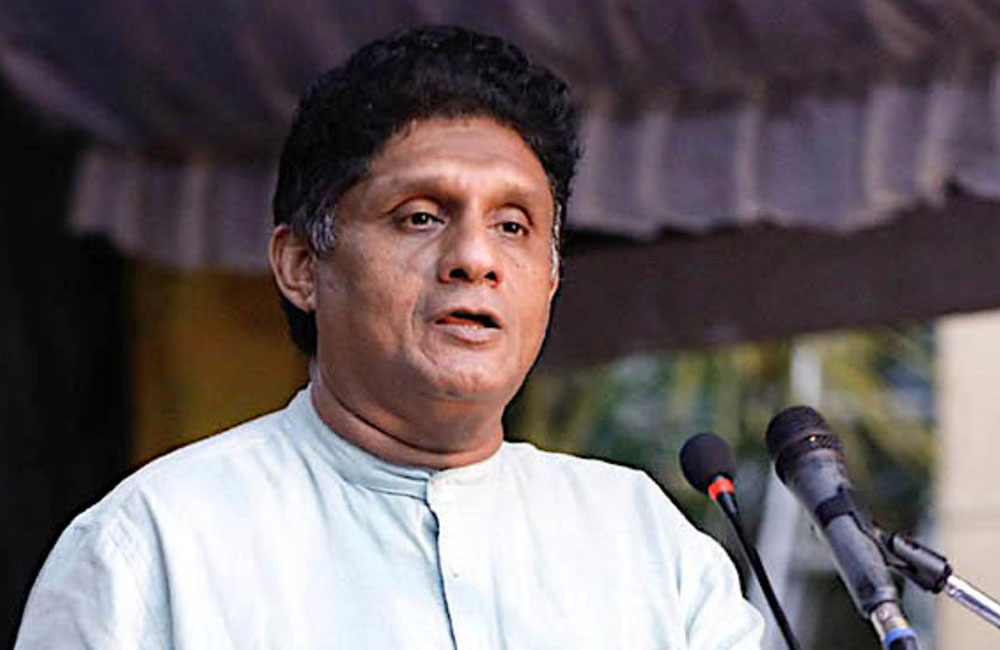
Govt. intimidation forced Bar Association away from parliament, claims Opposition Leader
An intense parliamentary debate erupted in parliament yesterday (20) over allegations of government intimidation after the Bar Association of Sri Lanka (BASL) cancelled a scheduled meeting with lawmakers regarding proposed constitutional changes.
Opposition Leader Sajith Premadasa raised the issue in Parliament following remarks made by Chief Government Whip Minister Nalinda Jayatissa.
The Opposition leader said that intimidating language from government members forced the BASL to withdraw from the planned discussions on the proposed 22nd Amendment to the Constitution and the ongoing vacancies in the Supreme Court.
He said that the right to free expression is guaranteed by the Constitution and insisted that equal treatment must be afforded to all citizens, including representatives of legal bodies.
The Opposition Leader clarified that his involvement in arranging the meeting was purely in the capacity of a facilitator rather than a personal initiative, noting that official records in the Hansard confirm the formal invitations extended to legal representatives.
He urged the Speaker of Parliament to intervene actively and facilitate a rescheduled dialogue with the legal fraternity, while calling for an end to misleading reports regarding the cancellation.
Page 32 of 791