News
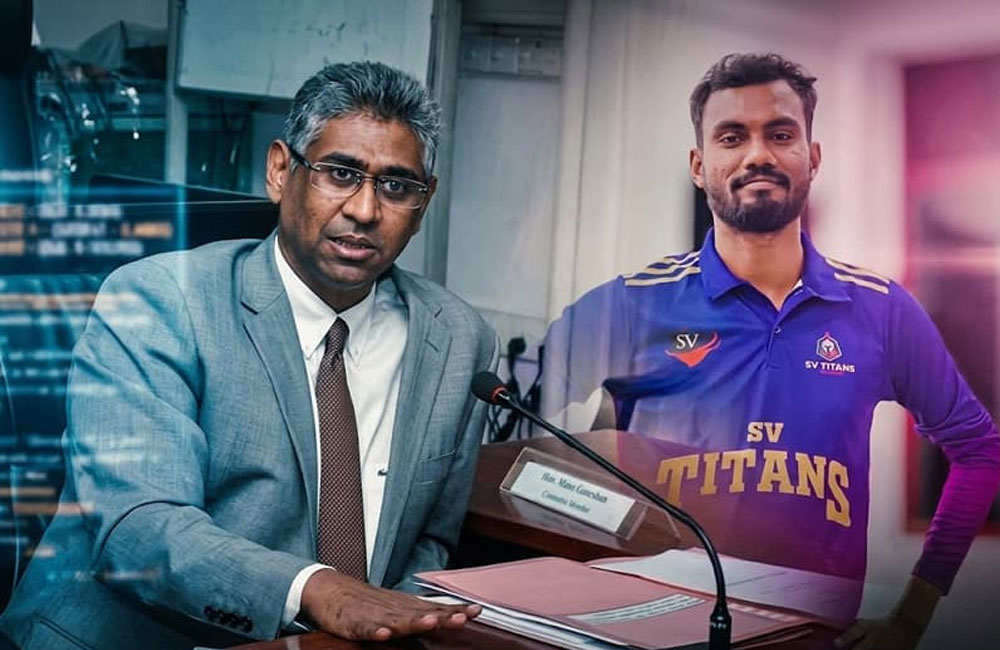
Faiszer explains cross-party legal strategy behind Saudi appeal
A rare joint legal and diplomatic intervention by the government and opposition lawmakers has successfully secured the overturning of a death sentence handed to a Sri Lankan youth in Saudi Arabia.
Speaking to The Daily News, Parliamentarian and President's Counsel Faiszer Musthapha said that the Saudi Supreme Court set aside the execution order against Anojan, a Sri Lankan youth originally convicted under cybercrime and religious offense laws.
The case has now been referred back to the Saudi High Court for re-hearing following a combined appeal funded and led by the Sri Lankan state alongside cross-party legal representatives.
Cross-party legal delegation
Highlighting the background of the intervention, Musthapha explained that Anojan had initially received a five-year prison sentence and a three million riyal fine for a cybercrime offense involving insults to religious figures.
Following an escalation to a capital sentence under Saudi legal frameworks, the youth's parents sought legal assistance, prompting Musthapha to partner directly with state authorities.
A three-member legal delegation comprising Musthapha, Upul Kumarapperuma, and Azad Navavi traveled to Saudi Arabia with the full authorization of the President and the Minister of Foreign Affairs.
The legal strategy navigated strict Saudi judicial categories, specifically distinguishing between pardonable offenses and divine law violations.
To ensure complete representation before the Saudi Supreme Court, the Sri Lankan state covered all associated judicial fees, retaining a specialized local defense team.
Musthapha noted that while the offense itself carried severe legal consequences, the primary objective was to spare the youth from execution and pursue sentence reductions or deportation through formal judicial channels.
National unity
Addressing political interpretations surrounding the joint mission, Musthapha rejected claims that the state intervention was driven by electoral motives regarding minority communities.
He emphasized that the delegation brought together a Muslim lawyer, a Sinhalese lawyer, and a Tamil youth under a unified national identity.
The opposition lawmaker commended the administration's willingness to finance the legal defense and entrust diplomatic responsibilities to opposition lawyers, describing the decision as an example of political maturity and national reconciliation.
Reflecting on future legislative and diplomatic engagements, Musthapha called for a broader shift in Sri Lanka's political culture regarding overseas citizen welfare.
He stated that national interests and the protection of citizens abroad must transcend party loyalties and ethnic divisions, urging both the government and opposition to maintain collaborative channels on matters of national importance.
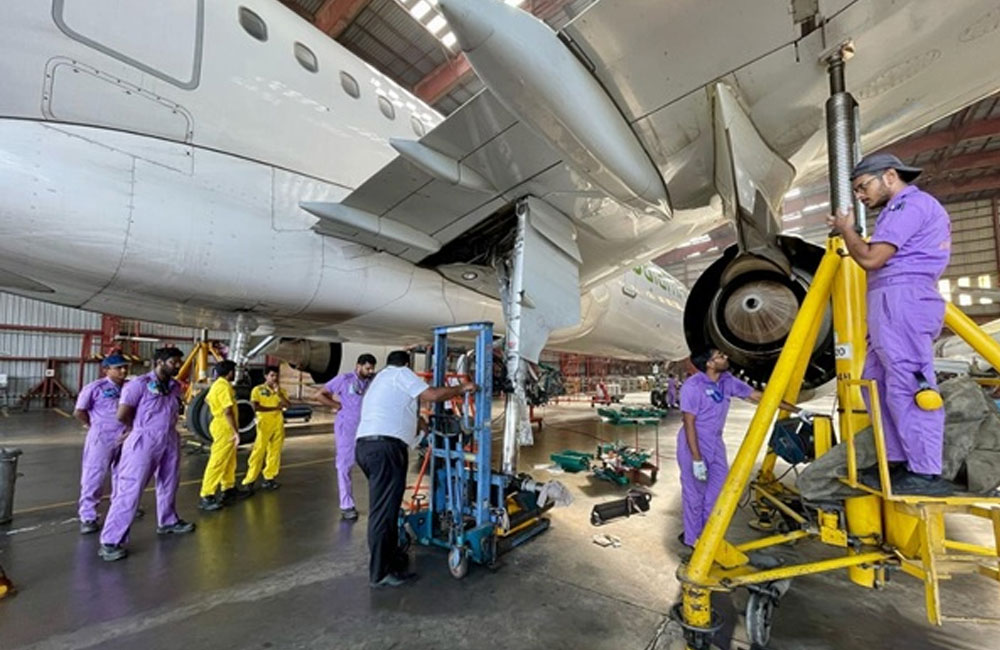
Engineer exodus threatens Sri Lankan Airlines’ maintenance resilience
The aborted London-bound flight raises urgent questions about engineering manpower, technical oversight and the cost of sustaining a financially strained national carrier.
The engine malfunction that forced SriLankan Airlines flight UL503 to abort its departure at Bandaranaike International Airport has placed the national carrier’s engineering capacity under renewed scrutiny, raising questions about whether the airline has the skilled workforce and technical resources needed to sustain reliable operations.
The Airbus A330-300, registered as 4R-ALR, reportedly suffered a malfunction in its number two engine while taxiing. The crew aborted the takeoff, and the resulting emergency reportedly damaged the aircraft’s tyres. Passengers and crew escaped without injuries.
Although the cause remains undetermined, the incident exposes a broader issue facing airlines worldwide: technical reliability depends not only on aircraft and spare parts but also on the availability of experienced, appropriately licensed engineers who can inspect, maintain and certify aircraft for service.
For SriLankan Airlines, the reported migration of engineering personnel deserves particular attention. The departure of experienced professionals can create gaps in institutional knowledge, increase recruitment and training costs and make it harder to maintain sufficient technical capacity across different aircraft types.
The critical question is whether the airline’s engineering workforce remains adequate for its operational commitments. Publicly available information accompanying the incident does not establish that staff shortages contributed to the engine malfunction. That relationship must be investigated rather than assumed.
Nevertheless, management cannot ignore the potential consequences of an engineering exodus. Aircraft maintenance involves complex, highly regulated procedures, including scheduled inspections, engine monitoring, component replacement and the certification of work performed. Qualified personnel cannot always be replaced immediately, particularly when specialist training and licensing are required.
If engineering vacancies remain unfilled, the airline could face heavier workloads, greater reliance on contracted maintenance and longer aircraft turnaround times. These outcomes are not inevitable, but they warrant scrutiny through staffing records, maintenance performance indicators and aircraft availability data.
The financial implications could also be significant. An aircraft grounded for technical inspections or engine repairs may generate little or no revenue while continuing to incur ownership, financing and other operating costs. Disruptions can additionally lead to passenger compensation where applicable, rebooking expenses, schedule changes and damage to customer confidence.
For a state-owned airline, sustained operational inefficiency ultimately raises questions about the stewardship of public resources. Taxpayers and policymakers need evidence showing whether management decisions on recruitment, retention, training and maintenance procurement are protecting the airline’s long-term viability.
The airline should disclose the scale of its engineering vacancies, annual departures of licensed personnel, recruitment trends and the measures being taken to retain experienced staff. It should also clarify whether any maintenance work has been delayed, outsourced or affected by shortages of qualified personnel.
Independent scrutiny is equally important. The relevant aviation authorities should ensure that the technical investigation into the UL503 incident establishes the failure mechanism and examines all relevant maintenance records. Any identified deficiencies should lead to corrective action, with safety-critical findings communicated transparently.
The government, as the airline’s public-sector owner, must also demand measurable improvements in workforce planning and operational reliability. Recruitment targets, training programmes, retention strategies and maintenance performance indicators should be monitored rather than left as broad management commitments.
The aborted takeoff must not become the basis for unsupported accusations. Equally, the absence of injuries should not end legitimate questions about the airline’s technical resilience.
SriLankan Airlines needs a credible, evidence-based response addressing both the immediate mechanical failure and the wider engineering workforce challenge. Without transparent answers, uncertainty over maintenance capacity could further weaken public confidence in a carrier whose reliability matters to tourism, international connectivity and the national economy.

Prolonged global oil price surge risks driving up Sri Lankan inflation - CBSL
Sri Lanka faces the threat of accelerated domestic inflation if international crude oil prices remain elevated over an extended period, Central Bank Governor Dr. Nandalal Weerasinghe said.
He made these remarks during a joint Colombo Stock Exchange and Securities and Exchange Commission institutional investor forum in Colombo this week.
The statement comes as headline consumer price inflation held at a 40-month high of 8.1 per cent in September, largely driven by surging energy costs.
Under state-owned Ceylon Petroleum Corporation adjustments following Middle East geopolitical conflicts, domestic retail fuel prices have surged by approximately 50 per cent.
Governor Weerasinghe said that monetary authorities had initially projected crude prices to stabilise around 90 dollars per barrel by late 2026, though actual market rates have consistently exceeded those estimates.
While the monetary authority maintains that inflation can be contained near current levels even if crude averages 100 dollars per barrel, a prolonged price shock will inevitably pass through supply chains to raise headline consumer figures.
Monetary policy, the Governor emphasised, targets demand-side pressures rather than external supply-side shocks.
Because Sri Lanka relies heavily on imported fossil fuels to drive thermal power generation, freight transport, and agriculture, rising crude import bills filter directly into production costs.
Under strict International Monetary Fund conditions attached to its USD 3 billion External Fund Facility, the state can no longer absorb these costs through subsidies, leaving businesses to pass higher freight and energy expenses onto household consumers.

Extreme heat costs Sri Lanka $6.5 billion in lost economic output
Escalating heat stress driven by climate change threatens to strip Sri Lanka of hundreds of thousands of productive working years over the coming decades.
A new report published by the International Labour Organisation reveals that rising temperatures could eliminate the equivalent of up to 349,000 full-time jobs each year by 2060.
The study benchmarks future projections against historical data from 1985 to 2014, warning of severe economic consequences across multiple sectors as extreme heat curtails daily labour capacity.
Severe economic hits across key industries
The economic damage caused by thermal discomfort is already registering across the island.
In 2023 alone, heat-induced productivity drops cost the national economy an estimated USD 6.5 billion in fixed 2015 terms, translating to a loss of more than 120,000 full-time positions.
While outdoor manual labourers in agriculture and construction face extreme physical strain, the service sector absorbed the largest direct hit to economic output, accounting for nearly 42 percent of total financial losses.
Transport, trade, and manufacturing also suffered notable downturns as excessive heat forced employees to slow their pace or take frequent breaks to avert heat-related illnesses.
Proposed policy measures
To safeguard the domestic workforce, the report advises authorities to adopt comprehensive national workplace regulations that align with international safety standards.
It emphasizes the enforcement of ILO Convention No. 155 on occupational safety and health, alongside Convention No. 161, to ensure employers implement preventive measures against heat illness.
The severity of future working-hour losses will depend on global greenhouse gas reduction efforts and local adaptation measures.
Under a low-emissions scenario based on Shared Socioeconomic Pathways, annual job losses could be limited to 158,000, whereas unchecked emissions will push productivity decline to its upper forecast.

Public interest must guide innovation - PM
Prime Minister Dr. Harini Amarasuriya emphasised that innovation must serve the public interest, research must inform national priorities, and the opportunities created by emerging technologies must be shared more equitably.
She made these remarks while addressing the inauguration of the University of Colombo International Conference 2026, held at the UCFM Tower Main Auditorium of the Medical Faculty.
The two-day academic forum, organised under the theme of advancing an inclusive future through artificial intelligence, sustainability, and innovation, brought together scholars and policymakers to address key national issues.
Addressing the assembly, the Prime Minister stated that higher education institutions hold a critical obligation to drive national progress by fostering rigorous critical thinking, advancing research, and formulating practical solutions to societal challenges.
She reaffirmed that providing equal access to high-quality education remains an essential state responsibility, adding that economic and social development must deliver fair outcomes across every community.
Turning to technological advancement, she observed that artificial intelligence offers major prospects for improving public administration, elevating educational standards, and unlocking new economic growth.
However, she warned that these advantages come with distinct risks, including digital divide disparities, data privacy vulnerabilities, algorithmic bias, and misinformation.
To manage these threats, she called for nationwide efforts to boost digital literacy and insisted that human oversight, ethical accountability, and public welfare must govern every technological application.
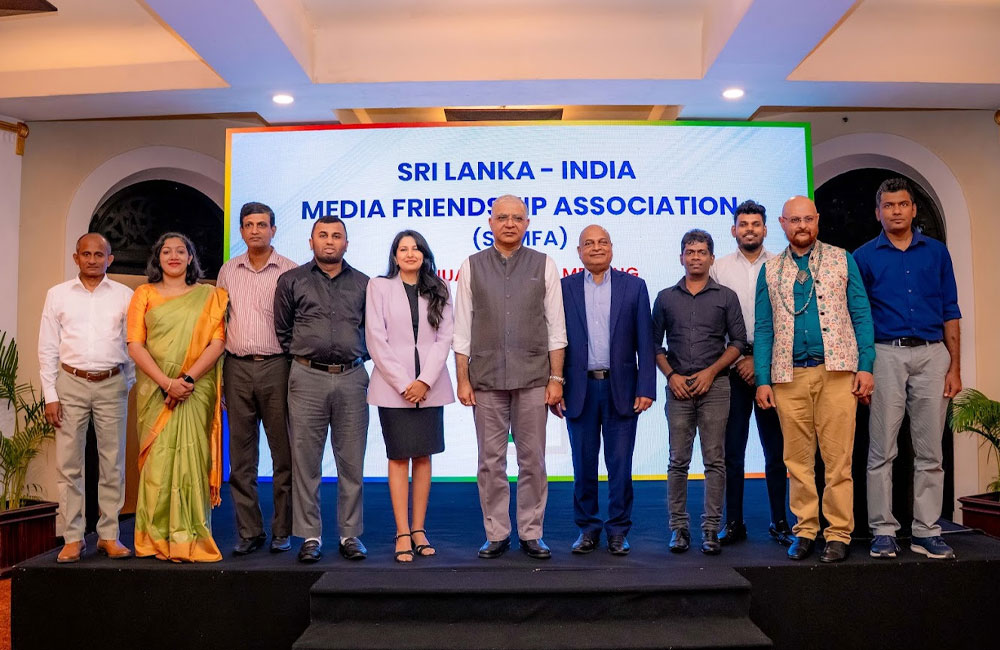
Indian envoy calls for deeper media collaboration between India and Sri Lanka
The Sri Lanka India Media Friendship Association (SLIMFA) held its Third Annual General Meeting on 28 October 2026 in Colombo, with the participation of the Patron of SLIMFA and High Commissioner of India to Sri Lanka, Santosh Jha and the members of SLIMFA.
The meeting saw the election of the new Executive Committee for the coming year.
Nisthar Cassim was re-elected as President, while Shehan Baranage, Kalani Kumarasinghe, Rifthi Ali, Santosh Menon, Dinesh De Alwis, Arosha Fernando, Robert Anthony, Dilrukshi Hadunnetti and Mahesh Bandara were elected to serve as members of the Executive Committee.
The President thanked members for their continued support and expressed his hope for continued collaboration in strengthening media ties.
The High Commissioner highlighted the important role played by SLIMFA in fostering deeper engagement and collaboration between the media communities of India and Sri Lanka.
He also congratulated the Association on organizing impactful initiatives within a short period since its establishment.
The High Commissioner wished SLIMFA success in their endeavours to further strengthen media cooperation, encourage professional exchanges and deepen the bonds of friendship between India and Sri Lanka.
Established in May 2024, SLIMFA brings together Sri Lankan journalists who have visited India under Government of India supported programmes, providing a platform for sustained engagement and knowledge-sharing between the media communities of both countries.
Since its establishment, the Association has organized several initiatives, including Sri Lanka’s first-ever Media Fest and its second edition in 2026, an AI Masterclass for media professionals, interactions with visiting Indian journalists, an Editors’ Roundtable, and discussions on media practices and election coverage.
These initiatives have provided opportunities for media professionals to exchange experiences, explore emerging trends and share best practices.
Through its continued engagement, SLIMFA seeks to strengthen professional networks and facilitate greater collaboration between media professionals in India and Sri Lanka, further reinforcing the longstanding friendship and people-to-people ties between the two countries.
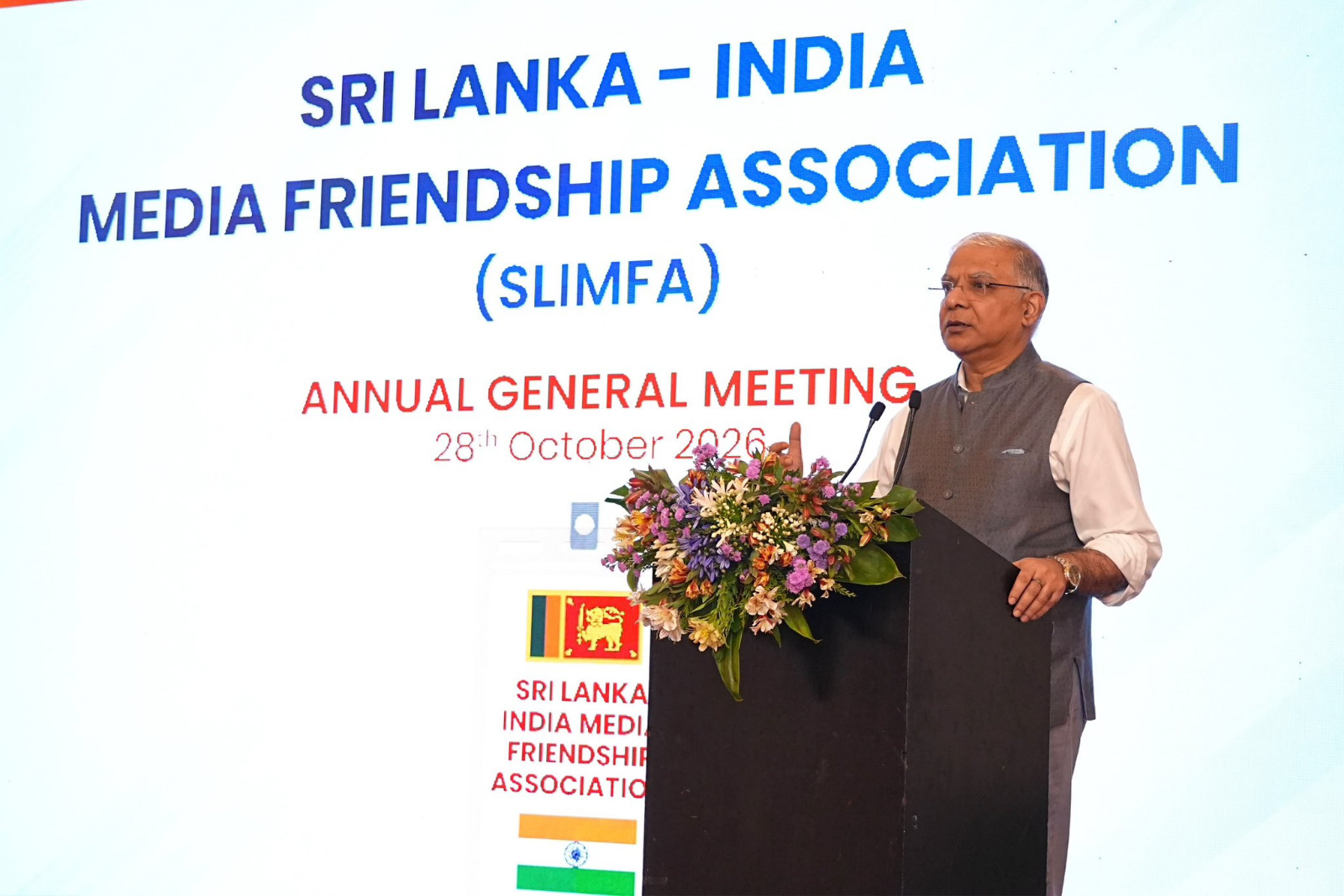
Rule of law concerns keep foreign investors away - Marikkar
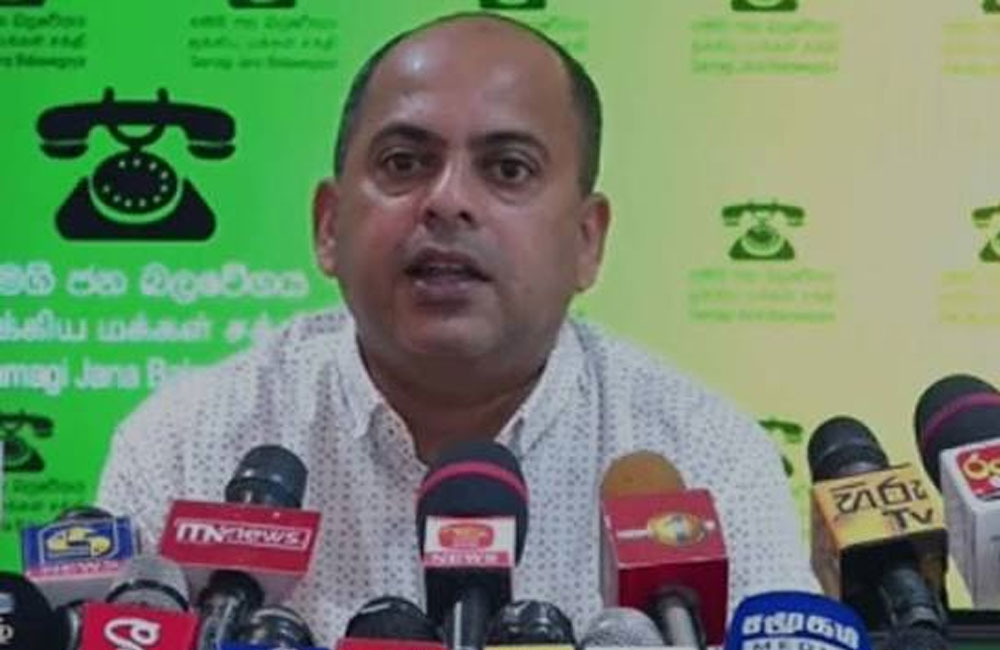
Samagi Jana Balawegaya (SJB) Member of Parliament S.M. Marikkar says foreign investors remain reluctant to enter Sri Lanka due to lingering concerns surrounding democracy and the rule of law.
He noted that when capital is deployed overseas, international investors carefully evaluate a host country's democratic framework and judicial enforcement before committing funds.
Marikkar questioned official claims that two domestic firms have injected 500 million US dollars into the Port City project, while revealing that a separate 320 million US dollar Chinese port investment had been pulled out.
Pointing to mounting losses from coal imports, an unresolved controversy over 323 containers, capital flight, and the failure to secure new investments, he said that recent political developments have delivered destruction rather than progress.
Marikkar also urged media professionals to take responsibility for protecting the independence of their craft against legal overreach.
He concluded that journalists share a fundamental obligation to voice strong opposition against restrictive laws that threaten press freedom.
Court fixes February 2027 date for Namal Rajapaksa money laundering case
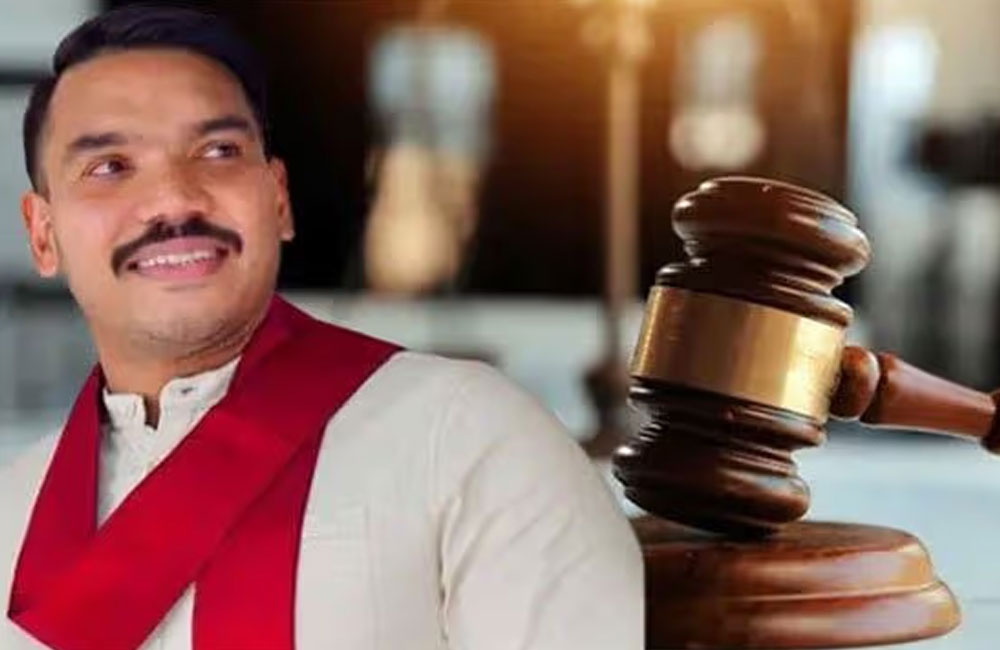
The Colombo Magistrate’s Court has scheduled a money laundering case against Parliamentarian Namal Rajapaksa and several other suspects for February 11, 2027, after the Police Financial Crimes Investigation Division (FCID) informed the court that it had yet to receive instructions from the Attorney General on how to proceed.
The case involves an alleged money laundering offence concerning Rs. 15 million reportedly invested in a company named N.R. Consultancy. The suspects are accused of investing funds allegedly obtained through unlawful means while Namal Rajapaksa was serving as a Member of Parliament.
The allegations fall under the Prevention of Money Laundering Act.
The investigation was initiated during the tenure of the good governance government and concluded in 2016. Following its completion, the relevant investigation files were forwarded to the Attorney General for further action.
The case was taken up before Colombo Chief Magistrate Asanga S. Bodaragama on October 29. However, Namal Rajapaksa, who was reportedly in remand custody, was not produced before the court.
The other suspects, Sujani Bogollagama, Nithya Samaranayake and Sudarshana Bandara, who have been released on bail, appeared before the court.
During the proceedings, the FCID informed the court that the investigation had been completed and the relevant files had been submitted to the Attorney General. However, the division said it had not received instructions regarding further legal proceedings.
The Magistrate subsequently ordered that the case be called again on February 11, 2027, and directed the authorities to inform the court of any progress in obtaining the Attorney General’s instructions.
State university lecturers announce one-day nationwide strike
Academic activities across all state universities could grind to a total halt on Thursday (30) as academic staff plans to launch an island-wide 24-hour strike.
The Federation of University Teachers' Associations (FUTA) announced the single-day trade union action across the entire higher education network to protest against severe systemic deficiencies.
General Secretary of FUTA, senior lecturer Charudaththe Illangasinghe, said that existing staff members face immense pressure due to an acute shortage of academic personnel.
He noted that state university lecturers are currently required to manage unreasonable workloads without adequate physical resources or proper educational infrastructure.
To reinforce their demands and highlight these operational challenges to the public, union representatives said that a major demonstration march will take place alongside the work stoppage.
FUTA said that urgent official intervention is needed to restore baseline standards and resolve chronic resource deficiencies across the tertiary education sector.
Japan grants Rs. 4.56 billion to reduce flood risks in Wattala and Peliyagoda
Japan has agreed to provide a grant of 2.179 billion Japanese yen, equivalent to approximately Rs. 4.56 billion, to Sri Lanka to improve flood management in Wattala and Peliyagoda.
The funding will support the Project for the Improvement of the Pump Station in the Kelani River basin under Japan’s Economic and Social Development Programme, with assistance from the Japan International Cooperation Agency (JICA).
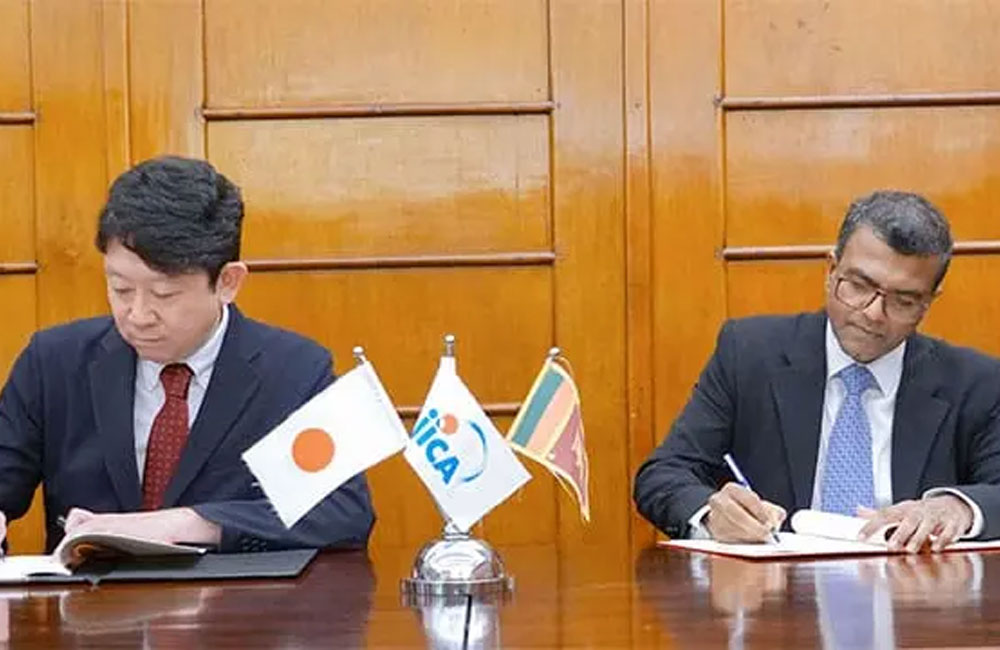
The Exchange of Notes for the grant was signed at the Ministry of Finance, Planning and Economic Development. Dr. Harshana Suriyapperuma, Secretary to the Ministry, signed on behalf of Sri Lanka, while Japanese Ambassador to Sri Lanka Akio Isomata represented the Japanese government.
A separate grant agreement was also signed by Dr. Suriyapperuma and Shigeo Honzu, Chief Representative of the JICA Sri Lanka Office.
According to the Finance Ministry, the project aims to address recurring flooding in the Mudun Ela sub-basin, which covers parts of Wattala and Peliyagoda. Rising water levels in the Kelani River can obstruct stormwater drainage, increasing the risk of flooding in nearby areas.
As part of the project, a new pumping station with a discharge capacity of 15 cubic metres per second will be installed. The facility will also feature a modern Supervisory Control and Data Acquisition (SCADA) system to improve monitoring and operational control.
The new infrastructure is expected to improve stormwater discharge when water levels in the Kelani River rise, helping reduce flood risks for surrounding communities.
The project is also expected to safeguard residential neighbourhoods, businesses, industries and transport infrastructure while supporting sustainable urban development and creating a more favourable environment for investment.
Peliyagoda, a major commercial, logistics and transportation hub, is among the areas expected to benefit from improved flood management and increased resilience to climate-related risks.
The Sri Lanka Land Development Corporation will implement the project under the supervision of the Ministry of Transport, Highways and Urban Development.
Sri Lanka could lose GSP+ over repressive anti-terror laws - Sajith
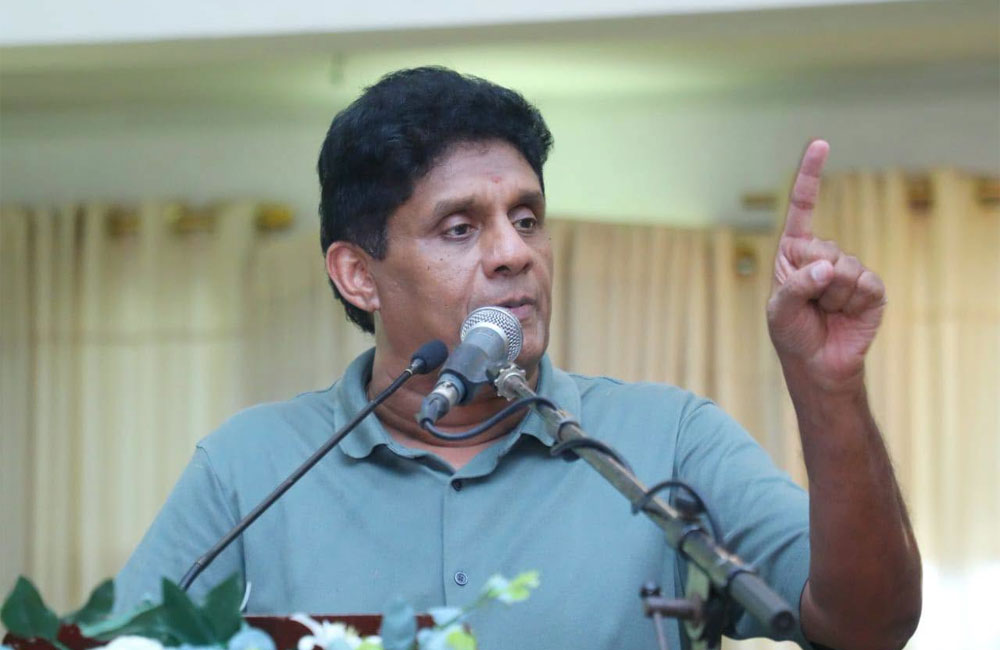
Opposition Leader Sajith Premadasa has warned that Sri Lanka risks losing its crucial GSP+ trade concessions from the European Union if the government enacts repressive anti-terrorism legislation.
He said that replacing existing security measures with harsher laws could jeopardize duty-free access to European markets.
The warning arrives amid mounting scrutiny over the draft Protection of the State from Terrorism Bill and the Prevention of Organised Crime Bill, both of which have drawn public objections from the Bar Association of Sri Lanka and the Human Rights Commission of Sri Lanka.
Brussels has consistently called for the complete repeal of the Prevention of Terrorism Act to reinforce democratic protections, warning against substitute laws that broaden state powers to label citizens as terrorists.
The Opposition Leader contends that the ruling party is attempting to fortify executive authority under the pretext of national security to mask unfulfilled campaign promises, including lowering utility costs and providing relief to small businesses, farmers, and workers.
Rather than consolidating political power, the administration has been called upon to pursue constitutional reforms that uphold fundamental liberties and citizen sovereignty.
Although the potential cancellation of GSP+ benefits remains a political assessment rather than a formal directive from European authorities, the commercial risk for domestic exporters remains substantial.
Undermining core democratic freedoms imperils both the country's international standing and its fragile economic recovery, he added.
New organised crime bill risks Sri Lanka EU GSP+ trade concessions - HRW
International rights watchdog Human Rights Watch (HRW) has urged the Sri Lankan government to withdraw its newly proposed organized crime legislation, warning that the draft bill risks replicating the abusive powers of the country's notorious counterterrorism laws.
The call was made in an official statement issued on 29 October following the submission of the Prevention of Organised Crimes Bill to Parliament on 20 October, which rights advocates argue contradicts election promises made by President Anura Kumara Dissanayake to abolish oppressive state security frameworks.
Replicating abusive legal frameworks
HRW highlighted that the proposed law, alongside the Protection of the State from Terrorism Bill submitted earlier in October, shifts draconian provisions outside standard criminal procedure.
Although introduced to meet obligations under the 2003 United Nations Convention against Transnational Organised Crime, the draft bill establishes broad definitions for serious crimes and organized groups that lack legal certainty.
Under the proposed terms, individuals could face criminal charges based on subjective factors such as physical association, meeting locations, style of dress, hand gestures, or tattoos, effectively penalizing personal association rather than proven unlawful conduct.
Sweeping executive detention and police surveillance
HRW said that the draft legislation empowers the Secretary to the Ministry of Public Security to issue two-month detention orders for up to a year without magistrate discretion, restricting bail exclusively to the High Court under exceptional circumstances.
The bill retains the admissibility of police confessions in court, a practice long linked to coercive interrogation, ill-treatment, and systemic torture.
Law enforcement agencies would also gain expansive authority to conduct warrantless searches, stop vehicles, and demand owner identity, location, and call records directly from digital and telecommunication service providers without prior judicial approval.
Freedom of Expression
"Sri Lanka’s organized crime bill would enable prolonged detention without adequate judicial oversight or evidence of criminal conduct, and could encourage torture by allowing convictions based on confessions obtained by the police," said Elaine Pearson, Asia director at Human Rights Watch.
Rights monitors further warned that clauses prohibiting media reporting on court proceedings without judicial permission, alongside restrictions on identifying crime victims, threaten freedom of expression and public oversight.
Failure to align the proposed laws with international human rights standards could also jeopardize Sri Lanka's duty-free market access to the European Union under the GSP+ trade scheme.
HRW said that the government should immediately withdraw the draft legislation to conduct open, inclusive public consultations that guarantee robust judicial safeguards and preserve fundamental civil liberties.
Page 2 of 795