The aborted London-bound flight raises urgent questions about engineering manpower, technical oversight and the cost of sustaining a financially strained national carrier.
The engine malfunction that forced SriLankan Airlines flight UL503 to abort its departure at Bandaranaike International Airport has placed the national carrier’s engineering capacity under renewed scrutiny, raising questions about whether the airline has the skilled workforce and technical resources needed to sustain reliable operations.
The Airbus A330-300, registered as 4R-ALR, reportedly suffered a malfunction in its number two engine while taxiing. The crew aborted the takeoff, and the resulting emergency reportedly damaged the aircraft’s tyres. Passengers and crew escaped without injuries.
Although the cause remains undetermined, the incident exposes a broader issue facing airlines worldwide: technical reliability depends not only on aircraft and spare parts but also on the availability of experienced, appropriately licensed engineers who can inspect, maintain and certify aircraft for service.
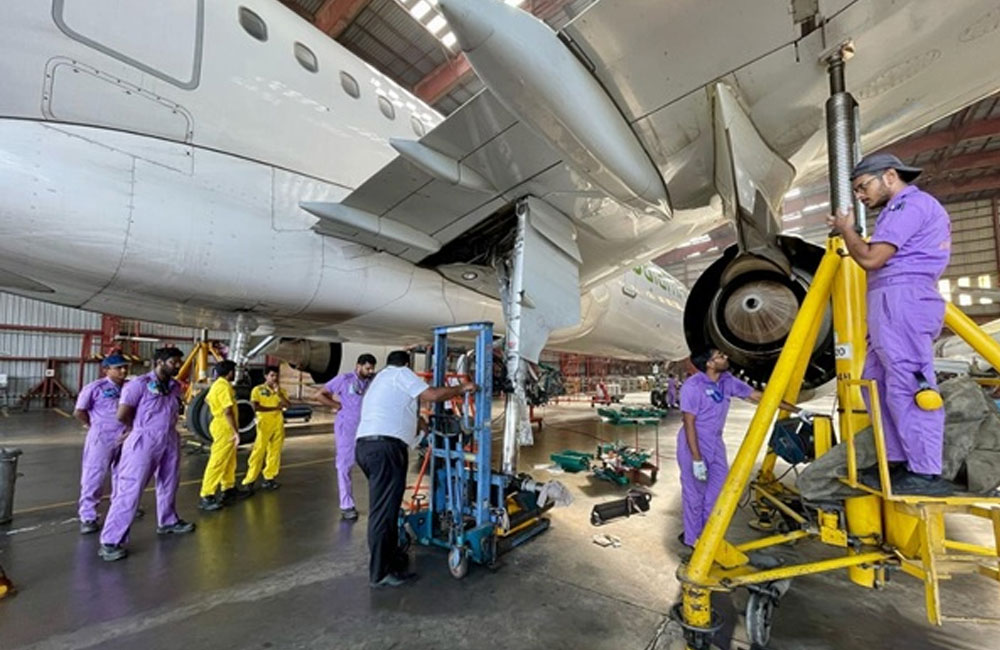
For SriLankan Airlines, the reported migration of engineering personnel deserves particular attention. The departure of experienced professionals can create gaps in institutional knowledge, increase recruitment and training costs and make it harder to maintain sufficient technical capacity across different aircraft types.
The critical question is whether the airline’s engineering workforce remains adequate for its operational commitments. Publicly available information accompanying the incident does not establish that staff shortages contributed to the engine malfunction. That relationship must be investigated rather than assumed.
Nevertheless, management cannot ignore the potential consequences of an engineering exodus. Aircraft maintenance involves complex, highly regulated procedures, including scheduled inspections, engine monitoring, component replacement and the certification of work performed. Qualified personnel cannot always be replaced immediately, particularly when specialist training and licensing are required.
If engineering vacancies remain unfilled, the airline could face heavier workloads, greater reliance on contracted maintenance and longer aircraft turnaround times. These outcomes are not inevitable, but they warrant scrutiny through staffing records, maintenance performance indicators and aircraft availability data.
The financial implications could also be significant. An aircraft grounded for technical inspections or engine repairs may generate little or no revenue while continuing to incur ownership, financing and other operating costs. Disruptions can additionally lead to passenger compensation where applicable, rebooking expenses, schedule changes and damage to customer confidence.
For a state-owned airline, sustained operational inefficiency ultimately raises questions about the stewardship of public resources. Taxpayers and policymakers need evidence showing whether management decisions on recruitment, retention, training and maintenance procurement are protecting the airline’s long-term viability.
The airline should disclose the scale of its engineering vacancies, annual departures of licensed personnel, recruitment trends and the measures being taken to retain experienced staff. It should also clarify whether any maintenance work has been delayed, outsourced or affected by shortages of qualified personnel.
Independent scrutiny is equally important. The relevant aviation authorities should ensure that the technical investigation into the UL503 incident establishes the failure mechanism and examines all relevant maintenance records. Any identified deficiencies should lead to corrective action, with safety-critical findings communicated transparently.
The government, as the airline’s public-sector owner, must also demand measurable improvements in workforce planning and operational reliability. Recruitment targets, training programmes, retention strategies and maintenance performance indicators should be monitored rather than left as broad management commitments.
The aborted takeoff must not become the basis for unsupported accusations. Equally, the absence of injuries should not end legitimate questions about the airline’s technical resilience.
SriLankan Airlines needs a credible, evidence-based response addressing both the immediate mechanical failure and the wider engineering workforce challenge. Without transparent answers, uncertainty over maintenance capacity could further weaken public confidence in a carrier whose reliability matters to tourism, international connectivity and the national economy.
Leave your comments
Login to post a comment
Post comment as a guest