News
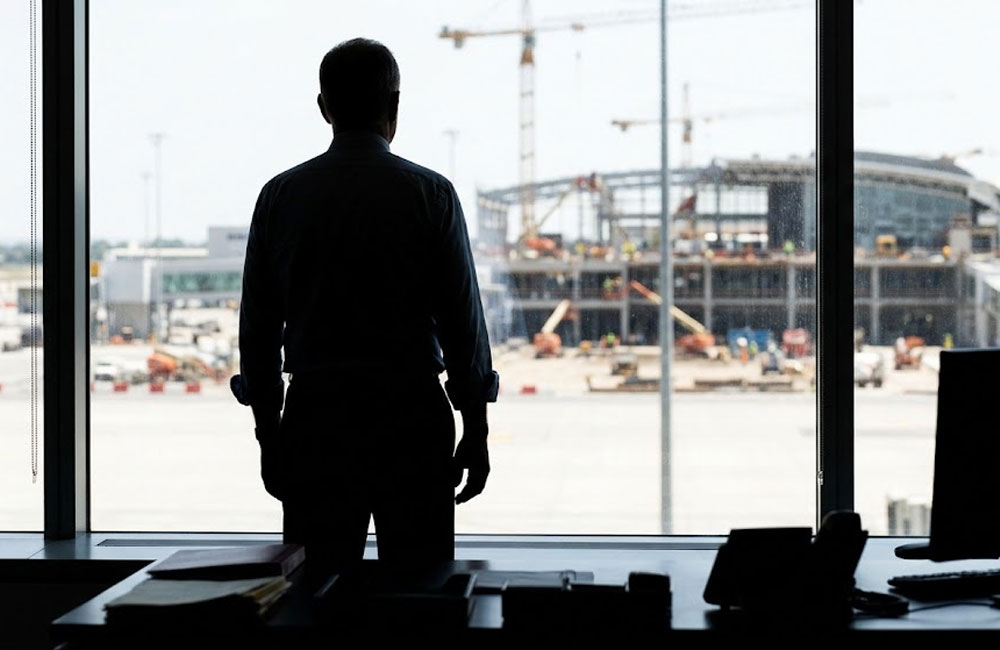
President urged to intervene over alleged $190M airport tender manipulation
Six TEC members reportedly refuse to endorse controversial price increase as allegations of undue interference rock the Terminal 2 project. President urged to intervene immediately.
A potentially explosive procurement scandal is emerging over the Bandaranaike International Airport Terminal 2 project, with serious allegations that the Secretary of the Ministry responsible for the airport is actively intervening in negotiations in favour of Japanese contractor Taisei Corporation, which is reportedly demanding an astonishing USD 190 million above its original tender price.
The most disturbing allegation is not merely the extraordinary price increase, but the conduct of the very senior public official entrusted with protecting the country's interests.
According to concerns raised over the negotiation process, the Ministry Secretary has allegedly been advocating Taisei's commercial position, facilitating its participation in discussions involving internal government matters and attempting to push through a price increase despite resistance from technical evaluators.
Has the official entrusted with safeguarding public money effectively become an advocate for the contractor seeking an additional USD 190 million?
The seriousness of this conduct demands an immediate investigation.
Six technical evaluators reportedly resist - but is the Secretary pushing ahead?
In an extraordinary development, six members of the Technical Evaluation Committee (TEC) are alleged to have refused to endorse the proposed price increase.
Instead of allowing the independent technical process to reach its proper conclusion, the Secretary is accused of attempting to override the resistance.
If confirmed, this would represent a deeply troubling breakdown of procurement governance.
Technical evaluation committees are not ceremonial bodies established to rubber-stamp decisions already made by powerful officials. Their responsibility is to protect the State through independent technical and commercial assessments.
Any attempt to pressure committee members into accepting an unjustified increase would warrant urgent investigation and appropriate disciplinary action.
A USD 250 million cheaper bidder eliminated - now another USD 190 million demanded?
The tender involved Taisei Corporation and the Sojitz–Larsen & Toubro consortium.
Sojitz–L&T was declared technically non-responsive, leaving Taisei as the sole responsive bidder, with JICA subsequently concurring in the selection process.
However, the competing bid was reportedly approximately USD 250 million cheaper than Taisei's offer.
Now, having emerged as the sole technically responsive bidder, Taisei is alleged to be seeking a further USD 190 million.
If both reported figures are confirmed, the combined difference between the competing offer and the proposed revised Taisei price would reach an extraordinary USD 440 million.
This is not evidence that the lower bid was technically acceptable, but it raises an unavoidable question: Has the procurement process genuinely secured the best value for Sri Lanka?
Is the Middle East conflict being used as an excuse?
Taisei reportedly attributes the additional demand to construction-cost escalation arising from the Middle East conflict.
While geopolitical instability can increase freight, energy, insurance and material costs, such increases must be supported by independently verified cost calculations.
Concerns have also been raised that Taisei's original price was already inflated by more than 30%, while the overall cost impact of the conflict would be considerably lower than the additional amount now sought. These claims require independent verification.
Sri Lanka's procurement framework places strict controls on bid modifications and negotiations. A contractor's commercial demands cannot simply override the principles of competition, transparency and value for money.
The urgency of completing Terminal 2 cannot become a weapon for extracting an unjustifiable premium from the Sri Lankan taxpayer.
President Dissanayake: This is the real test of your anti-corruption promise
President Anura Kumara Dissanayake's Government was elected on a powerful commitment to end corruption, political patronage and the misuse of public funds.
Yet the present controversy raises the disturbing possibility that, although governments change, the same questionable procurement practices and networks of influence may survive.
The President must now intervene decisively.
The reported USD 190 million increase should be suspended pending an independent review. The TEC members' objections must be examined, the Ministry Secretary's alleged interference investigated, and the competing bid evaluation and negotiation records scrutinised.
The Government should also urgently assess, in consultation with JICA, whether a properly structured rebidding process could restore competition and secure substantial savings. Even an additional three months, if achievable, could be a small price to pay to protect hundreds of millions of dollars.
This is not about delaying a vital national project or undermining Japan's longstanding support for Sri Lanka. It is about ensuring that the airport is built at a fair price, through a process free from improper influence.
USD 190 million is enough to fund major additional national infrastructure. It is not money Sri Lanka can afford to surrender through questionable negotiations.
The allegations against the Ministry Secretary and the reported TEC objections must be investigated fairly, with all parties given an opportunity to respond. But waiting until an inflated contract is signed would defeat the purpose of oversight.
Mr. President, stop the questionable increase. Protect the technical evaluators. Investigate the alleged interference. Restore procurement integrity. Save the people's money.
Your Government promised to fight corruption. This is an opportunity to prove it.
The entire country is watching.
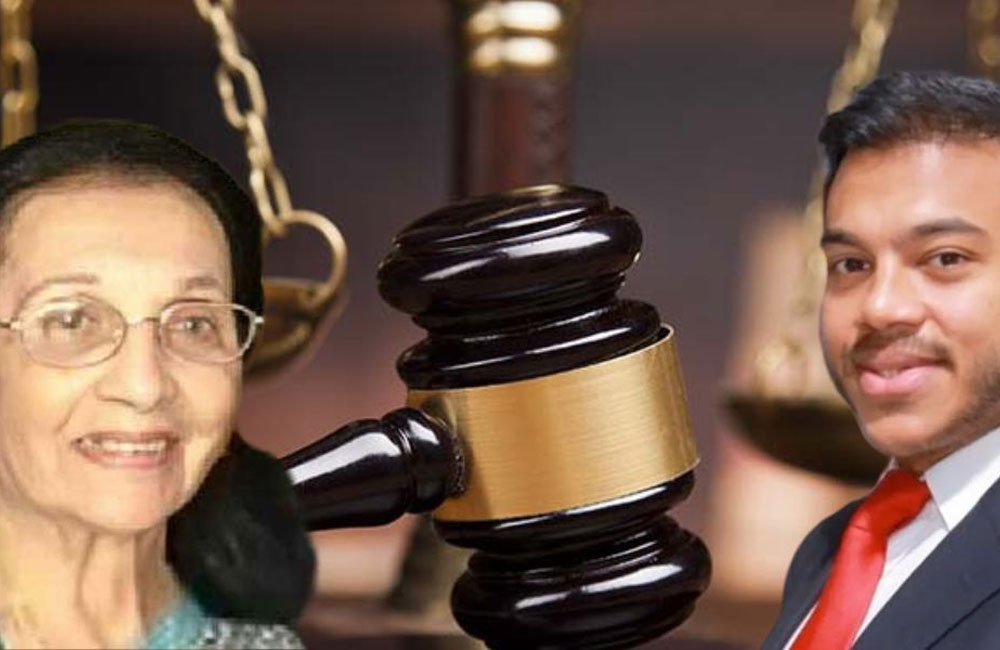
Daisy Forrest released from money laundering case involving Yoshitha Rajapaksa
The Colombo High Court has ordered the removal of Daisy Forrest, the grandmother of Yoshitha Rajapaksa, from the money laundering case filed against both of them under the Prevention of Money Laundering Act.
The order was issued after the court considered submissions indicating that Forrest was not in a mental condition suitable to stand trial.
Accordingly, the court ordered that she be released from the proceedings in the case.
The case against Yoshitha Rajapaksa will continue separately.
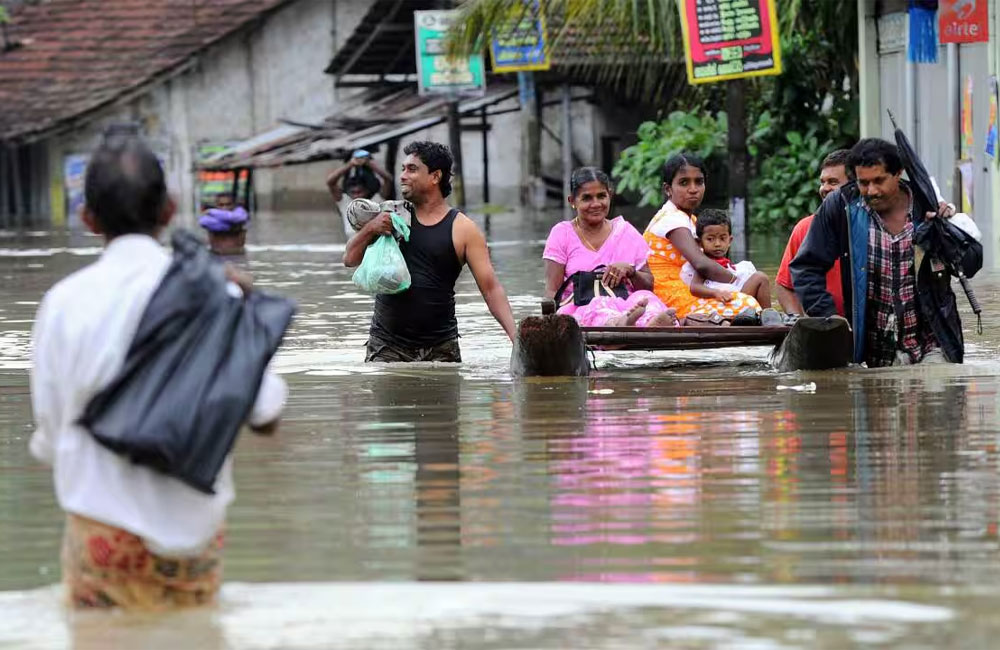
Cabinet approves Rs. 3.33 billion in contracts to repair cyclone-damaged roads
The Cabinet of Ministers has approved contracts worth approximately Rs. 3.33 billion, excluding VAT, to rehabilitate and upgrade several road sections damaged by Cyclone Ditwah.
The contractors were selected through the National Competitive Bidding procedure, following an evaluation of the bids received.
The Cabinet approved proposals submitted by the Minister of Transport, Highways and Urban Development to award the contracts to the substantially responsive lowest bidders, based on recommendations from the High-Level Procurement Committees.
The three approved contracts cover the following road sections:
1. Gampola–Nawalapitiya, Ulapane–Pussellawa and Atabage–Ulapane roads
The first contract covers rehabilitation and improvement work on three road sections:
-
Gampola–Nawalapitiya Road (AB013), from kilometre 8+500 to 16+300.
-
Ulapane–Pussellawa Road (B431), from kilometre 0+000 to 6+440.
-
Atabage–Ulapane Road (B490), from kilometre 0+000 to 7+500.
The contract has been valued at Rs. 852.83 million, excluding VAT.
2. Wattegama–Kande Nuwara–Wariyapola Road
The second contract involves the rehabilitation and improvement of a 16.77-kilometre section of the Wattegama–Kande Nuwara–Wariyapola Road (B461), extending from kilometre 11+000 to 27+700.
It also includes improvements to drainage capacity along the section from kilometre 27+700 to 30+800, as well as construction work involving retaining walls.
The contract value is Rs. 1,516.08 million, excluding VAT.
3. Katugastota–Madawala–Bambarella and Wattegama–Kande Nuwara–Wariyapola roads
The third contract covers repairs to damaged locations and areas affected by slope failures along two roads.
These include a 15-kilometre section of the Katugastota–Madawala–Bambarella Road (B205), between kilometre 19 and kilometre 34, and a four-kilometre section of the Wattegama–Kande Nuwara–Wariyapola Road (B461), between kilometre 1 and kilometre 5.
The contract has been valued at Rs. 965.37 million, excluding VAT.
The combined value of the three contracts approved by the Cabinet is approximately Rs. 3.33 billion, excluding VAT.
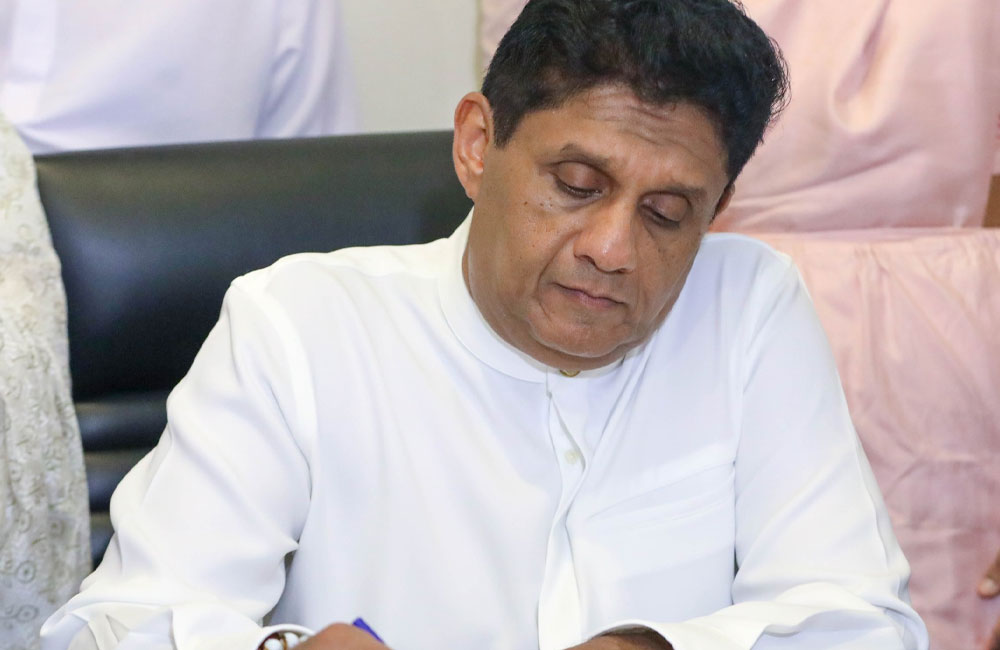
Opposition Leader condemns decision to block debate on Speaker no-confidence motion
Sri Lanka's parliamentary opposition has accused the government of undermining democratic governance by blocking a debate on a motion of no-confidence against the Speaker.
Opposition Leader Sajith Premadasa issued a special statement in Colombo condemning the decision of the Committee on Parliamentary Business to dismiss the resolution without allowing floor time.
He noted that although a formal privilege motion will be submitted regarding constitutional violations, legislative supremacy, and the chair's partiality, there is little expectation that parliamentary authorities will allow the matter to be heard.
Restrictions on legislative speech
The Opposition Leader said that constitutional guarantees securing freedom of expression within the house have been systematically undermined by the governing coalition.
He noted that under Article 3 of the Constitution, national sovereignty resides with the public, while Article 4b dictates that legislative power must be exercised exclusively through elected representatives.
Parliament remains a constitutional mechanism designed to execute popular sovereignty rather than an instrument governed by the political preferences of any single party. Article 74 grants the assembly explicit power to establish standing orders, providing a binding legal framework intended to safeguard collective legislative authority, he said.
Impartiality of the chair
The Opposition Leader Pointed out that the office of the Speaker represents a constitutional role created to preserve the dignity, authority, and democratic function of the entire legislature rather than advance party agendas.
Drawing on Westminster traditions, absolute political neutrality remains the defining obligation of the chair, who must guarantee equitable floor time for members across the chamber.
Authentic parliamentary democracy requires protecting the right of minority and opposition groups to scrutinise executive actions, express alternative opinions, and challenge government policies.
Rejection of no-confidence motion
Suppressing legitimate parliamentary actions through majority power violates the foundational principles of representative democracy, the Opposition Leader noted.
He said that a resolution detailing 50 specific charges against the Speaker, bearing the signatures of 44 opposition members, was formally submitted to the Secretary-General of Parliament on 9 October and placed on the order paper on 12 October.
He also said the subsequent decision by the Committee on Parliamentary Business to reject the item prevented any debate, effectively insulating the head of the assembly from answering public allegations.
Breach of parliamentary privilege
The refusal to allow a floor debate raises fundamental questions over the independence of the legislature, the neutrality of the chair, and the constitutional protections afforded to lawmakers, he said.
Standing orders and constitutional provisions impose a clear duty on presiding officers to maintain established procedures without creating artificial barriers to speech.
A formal investigation must now determine whether suppressing the resolution constitutes a direct breach of parliamentary privileges guaranteed to elected representatives, he added.

SC moved to stop supermarkets profiting from polythene bag charges
In a decisive push against environmental degradation, Sri Lanka’s apex court has intervened to overhaul the regulation of single-use polythene.
The Supreme Court has directed state authorities to submit a detailed progress report by 5 March next year on establishing a statutory framework to impose and administer a government levy on single-use plastic and polythene bags.
The directive follows a Fundamental Rights petition filed by the Centre for Environmental Justice, which brought the matter to the bench comprising Chief Justice Preethi Padman Surasena, Justice Achala Wengappuli, and Justice Gihan Kulatunga.
Senior Counsel Ravindranath Dabare, representing the public interest organisation, informed the court that supermarket chains currently collect surcharges on polythene bags directly into their corporate revenue accounts.
He said that these private collections fail to support ecological conservation or curb plastic consumption.
In response, the Attorney General assured the bench that relevant state bodies are actively formulating a national state-managed levy structure.
The petitioners have urged the judiciary to order the immediate creation of a dedicated public environmental fund to absorb all proceeds generated by the proposed levy.
Under the scheme sought by the petitioners, these funds would be strictly channeled into waste management infrastructure, recycling programmes, and the enforcement of the internationally recognised "polluter pays" principle.

Yoshitha Rajapaksa pleads not guilty to money laundering charges
Yoshitha Rajapaksa, the second son of former President Mahinda Rajapaksa, has pleaded not guilty to charges brought against him under the Prevention of Money Laundering Act.
He entered the plea before the Colombo High Court today (03), after the charges were formally read out to him in open court.
The case will proceed through the Colombo High Court in accordance with the relevant legal proceedings.
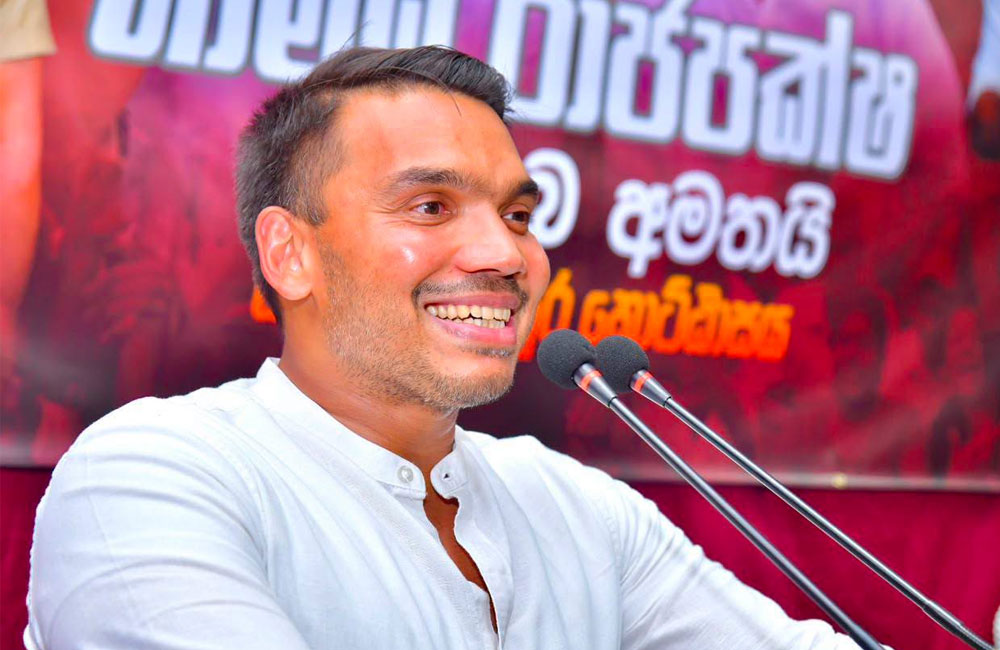
Namal Rajapaksa granted bail in Krrish deal case
The Colombo Magistrate’s Court has ordered the release on bail of Sri Lanka Podujana Peramuna (SLPP) National Organiser and MP Namal Rajapaksa, who was remanded in connection with the controversial Krrish deal.
At an earlier hearing, lawyers representing Rajapaksa requested bail, citing the serious health conditions of both his parents as an exceptional circumstance warranting his release.
The Commission to Investigate Allegations of Bribery or Corruption (CIABOC), however, objected to the application.
After considering submissions from both sides, Colombo Chief Magistrate Asanga S. Bodaragama issued the bail order today.
Rajapaksa was arrested by the Bribery Commission on September 4 and produced before the court. He was subsequently remanded over allegations that he had accepted a bribe of Rs. 70 million to facilitate the allocation of land at Transworks Square in Colombo to Indian company Krrish for a multi-purpose development project.
Despite being granted bail in the Krrish deal case, Rajapaksa will remain in remand custody in connection with a separate case relating to the Airbus bribery scandal.
Tax overdose squeezes households as govt over-performs on IMF targets
Former Central Bank Deputy Governor Dr. W.A. Wijewardena has urged the Sri Lankan government to moderate its revenue collection targets in the upcoming 2027 Budget, saying that excessive taxation combined with deteriorating public services is eroding public trust and economic productivity.
Delivering the 28th Annual Tax Oration of the Institute of Chartered Accountants of Sri Lanka in Colombo, the veteran economist warned that the state's aggressive fiscal consolidation measures had become counterproductive for the country.
The former central banker pointed out that government revenue as a percentage of gross domestic product had climbed rapidly from 12.3 per cent in 2021 to surpass the International Monetary Fund's 15 per cent target.
He explained that while official fiscal targets were met ahead of schedule, the underlying extraction of capital from households and businesses was suppressing private consumption and essential investment.
According to the top economist, a series of policy adjustments, including lowering the personal income tax threshold to Rs.100,000 before settling at Rs.150,000, expanding the maximum marginal tax rate to 36 per cent, enforcing mandatory Taxpayer Identification Numbers for all adults, and raising Value Added Tax to 18 per cent while lowering registration thresholds to Rs.36 million, had pulled smaller enterprises into a complex compliance framework.
He highlighted that indirect levies on essential goods created a regressive burden that hit lower income earners disproportionately hard, compounding the double pressure of direct taxation and inflation.
Dr. Wijewardena also criticised the structure of IMF prescriptions, asserting that relying primarily on revenue expansion while ignoring expenditure reform prioritises creditor repayments over taxpayer welfare.
He noted that although the government achieved a primary budget surplus of nearly 4 per cent against an IMF target of 1.5 per cent in 2025, it did so by failing to spend a quarter of its allocated capital expenditure budget.
Capital spending execution remained similarly sluggish into 2026, with only 28 per cent of the annual allocation deployed by the end of September.
He stressed that suppressing public investment directly weakens long-term national economic growth, creating a systemic cycle of fiscal decline.
Pointing to severe delays at police stations, overcrowded hospital wards, and widespread reliance on private tuition, he said that the fundamental social contract between the state and its citizens had been broken, further worsened by technical failures in tax filing systems like the Inland Revenue Department's digital infrastructure.
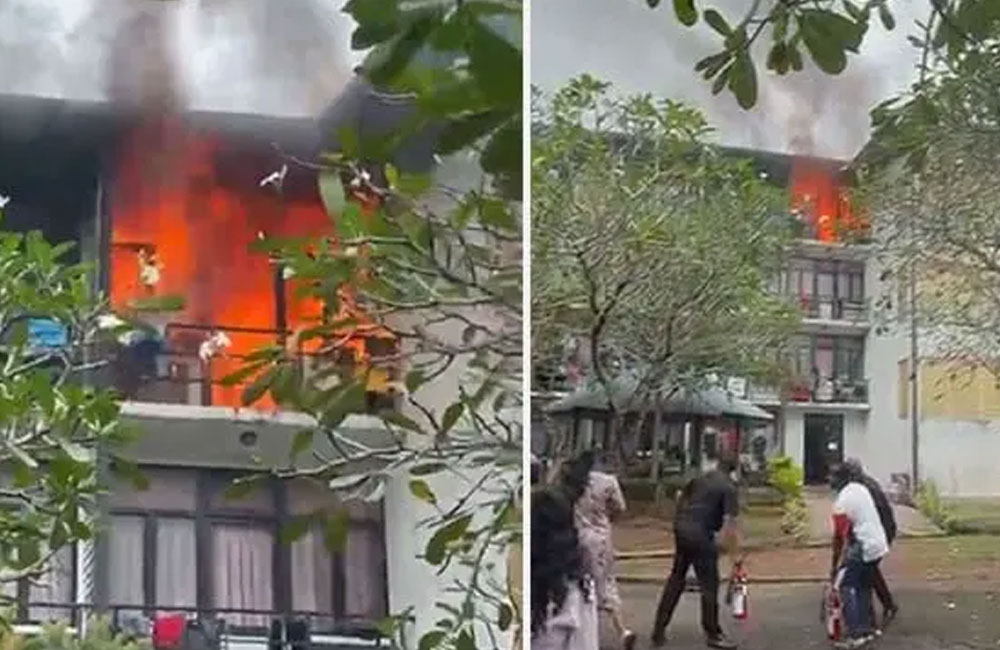
Fire breaks out at University of Kelaniya girls’ hostel
A fire has broken out in a room at a girls’ hostel at the University of Kelaniya this morning (03), reportedly destroying all the belongings of the students staying in the affected room.
No students were inside the room when the fire started, and no injuries have been reported.
Fire engines have been dispatched to the scene to bring the blaze under control.
The cause of the fire has not yet been established.
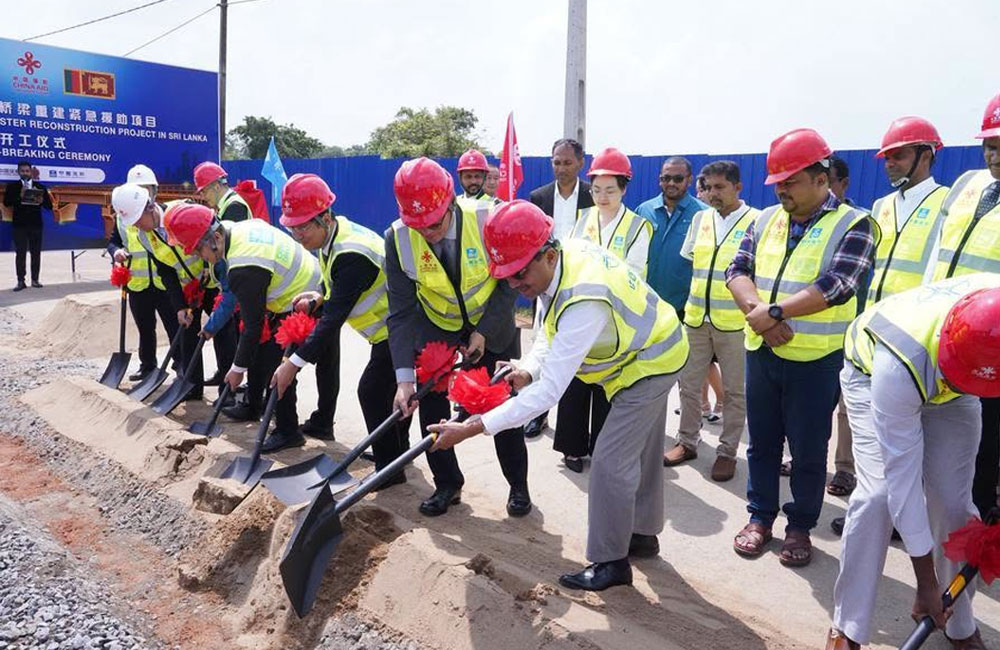
Chinese grant exposes Sri Lanka's weaknesses in infrastructure resilience
A multi-billion rupee Chinese grant for emergency bridge reconstruction has exposed Sri Lanka's chronic dependence on foreign aid and critical gaps in national disaster preparedness.
Work officially commenced on 1 November near the Yakkala Seventh Bridge in Gampaha for the first phase of the China Government Emergency Assistance Project, which will see nine disaster-damaged bridges rebuilt across six districts.
Attended by Transport Minister Bimal Rathnayake, Deputy Finance Minister Dr. Anil Jayantha Fernando, and Chinese Ambassador Wei Huaxiang, the launch marks the initial step in a two-phase scheme targeting 14 vital crossings island-wide.
The initial phase is backed by a 79 million Chinese yuan grant, equivalent to approximately Rs. 3.93 billion, jointly managed by the Finance Ministry, the Ministry of Transport, Highways and Urban Development, and the Road Development Authority.
Operations began with the Bemmulla Bridge on the Aluthgama to Wigoda Road, spanning damaged sites across Gampaha, Kegalle, Ampara, Kurunegala, Polonnaruwa, and Batticaloa districts.
While the bilateral assistance addresses immediate structural failures that sever rural transport routes and isolate communities, it leaves broader policy vulnerabilities unaddressed.
Questions remain over whether the chosen sites stem from a systematic national risk assessment or merely fixed bilateral selections.
Furthermore, authorities have yet to release critical project parameters, including individual financial allocations, completion timelines, and independent engineering standards designed to withstand future climate shocks.
Without transparent project data and a comprehensive national inventory of vulnerable assets, recurring environmental disasters will continue to trigger costly emergency interventions.
Proposal submitted for PSC to study Black July tragedy
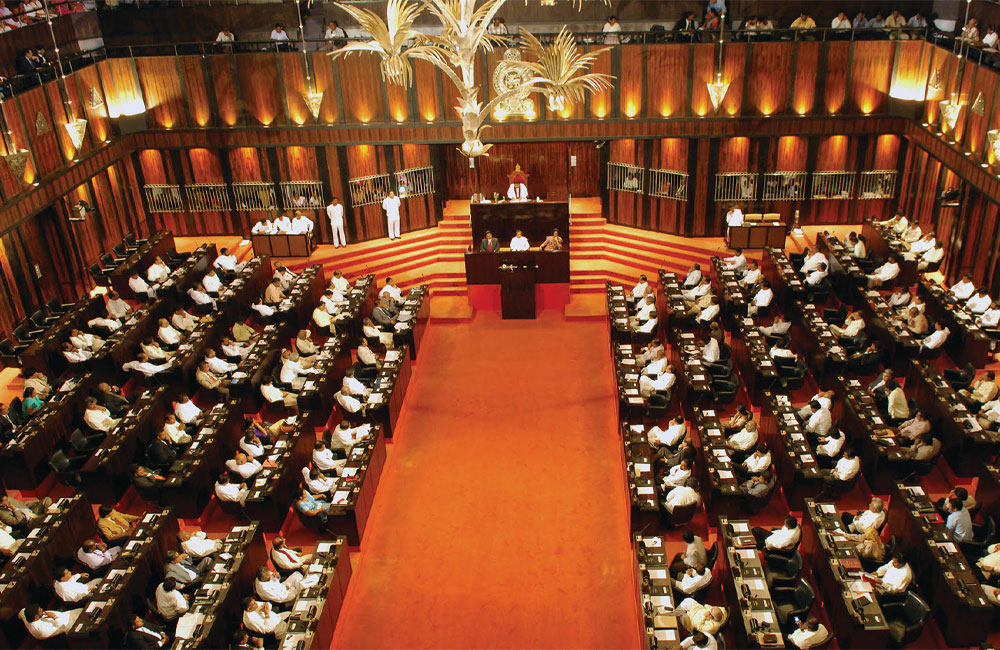
A proposal calling for the appointment of a Parliamentary Select Committee (PSC) to conduct a comprehensive study into the 1983 Black July tragedy and its impact has been submitted to Parliament.
The proposal was presented by National People's Power (NPP) MP Thanura Dissanayake and seconded by fellow NPP MP Bhagya Sri Herath.
The proposed committee is expected to examine the events surrounding Black July and submit its findings to Parliament, together with proposals and recommendations aimed at promoting national reconciliation and providing relief to those affected by the tragedy.

Harsha urges govt. to resolve gas shortage
A widespread LP gas shortage has plunged low and middle income Sri Lankan households into fresh operational distress, prompting severe criticism from the main parliamentary Opposition over state inaction.
Samagi Jana Balawegaya (SJB) Member of Parliament Dr. Harsha de Silva publicly challenged the government over its handling of the crisis, highlighting the compounding financial burden placed on families already battling elevated prices for staple items including bread, wheat flour, and fuel.
Addressing the persistent failure to resolve distribution bottlenecks, the former minister pointed out that reliance on commercial food delivery applications is a luxury out of reach for ordinary citizens reliant on domestic cooking.
He noted that while state-backed Litro cylinder distribution remains accessible to a segment of consumers, private distributor Laugfs Gas continues to face severe operational paralysis.
The logistical shortfall has been further complicated by international regulatory scrutiny, including reported United States trade sanctions targeted at a Dubai-registered subsidiary of Laugfs over alleged transactions tied to Iranian petroleum products.
The Opposition representative noted that the government possesses the administrative capacity to clear such straightforward supply impediments quickly, taking a side swipe at the ruling Janatha Vimukthi Peramuna by saying they would have mobilised street demonstrations over the identical grievance had they remained on the Opposition benches.
Page 3 of 800