Sri Lanka's parliamentary opposition has accused the government of undermining democratic governance by blocking a debate on a motion of no-confidence against the Speaker.
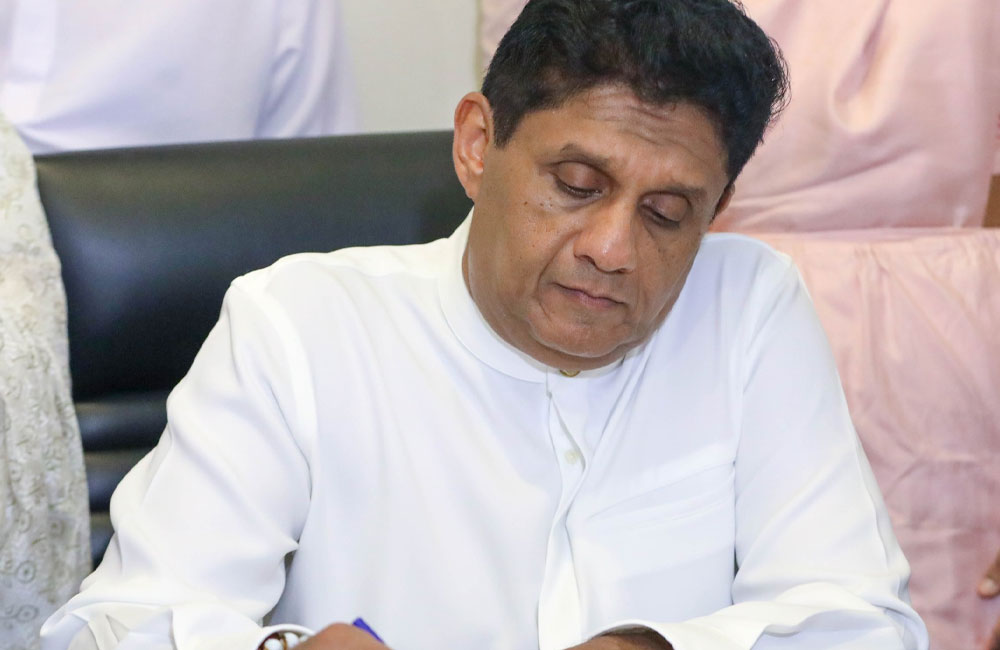
Opposition Leader Sajith Premadasa issued a special statement in Colombo condemning the decision of the Committee on Parliamentary Business to dismiss the resolution without allowing floor time.
He noted that although a formal privilege motion will be submitted regarding constitutional violations, legislative supremacy, and the chair's partiality, there is little expectation that parliamentary authorities will allow the matter to be heard.
Restrictions on legislative speech
The Opposition Leader said that constitutional guarantees securing freedom of expression within the house have been systematically undermined by the governing coalition.
He noted that under Article 3 of the Constitution, national sovereignty resides with the public, while Article 4b dictates that legislative power must be exercised exclusively through elected representatives.
Parliament remains a constitutional mechanism designed to execute popular sovereignty rather than an instrument governed by the political preferences of any single party. Article 74 grants the assembly explicit power to establish standing orders, providing a binding legal framework intended to safeguard collective legislative authority, he said.
Impartiality of the chair
The Opposition Leader Pointed out that the office of the Speaker represents a constitutional role created to preserve the dignity, authority, and democratic function of the entire legislature rather than advance party agendas.
Drawing on Westminster traditions, absolute political neutrality remains the defining obligation of the chair, who must guarantee equitable floor time for members across the chamber.
Authentic parliamentary democracy requires protecting the right of minority and opposition groups to scrutinise executive actions, express alternative opinions, and challenge government policies.
Rejection of no-confidence motion
Suppressing legitimate parliamentary actions through majority power violates the foundational principles of representative democracy, the Opposition Leader noted.
He said that a resolution detailing 50 specific charges against the Speaker, bearing the signatures of 44 opposition members, was formally submitted to the Secretary-General of Parliament on 9 October and placed on the order paper on 12 October.
He also said the subsequent decision by the Committee on Parliamentary Business to reject the item prevented any debate, effectively insulating the head of the assembly from answering public allegations.
Breach of parliamentary privilege
The refusal to allow a floor debate raises fundamental questions over the independence of the legislature, the neutrality of the chair, and the constitutional protections afforded to lawmakers, he said.
Standing orders and constitutional provisions impose a clear duty on presiding officers to maintain established procedures without creating artificial barriers to speech.
A formal investigation must now determine whether suppressing the resolution constitutes a direct breach of parliamentary privileges guaranteed to elected representatives, he added.
Leave your comments
Login to post a comment
Post comment as a guest