A multi-billion rupee Chinese grant for emergency bridge reconstruction has exposed Sri Lanka's chronic dependence on foreign aid and critical gaps in national disaster preparedness.
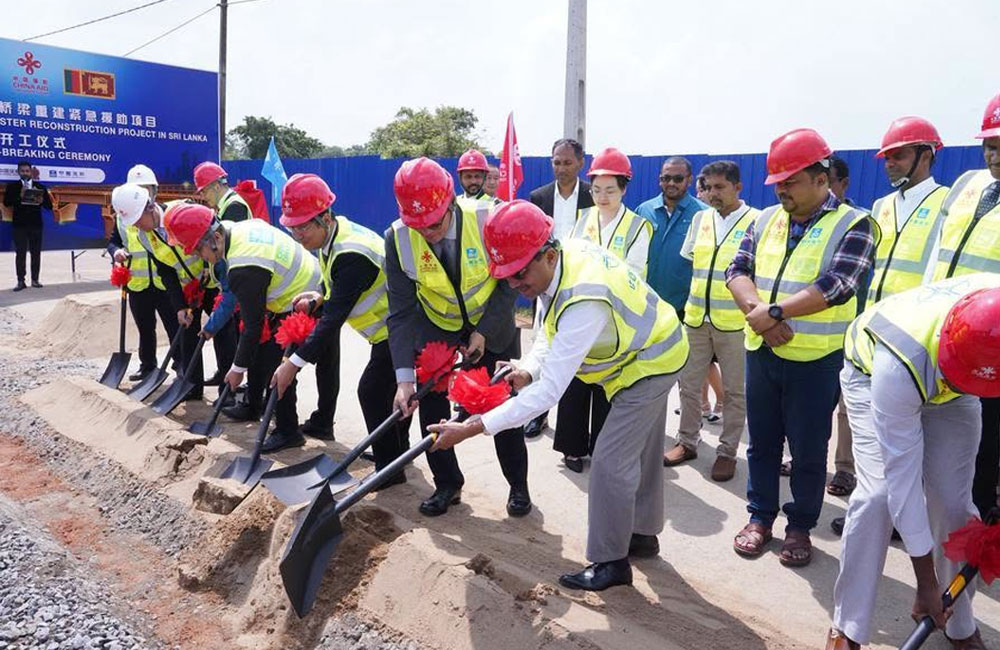
Work officially commenced on 1 November near the Yakkala Seventh Bridge in Gampaha for the first phase of the China Government Emergency Assistance Project, which will see nine disaster-damaged bridges rebuilt across six districts.
Attended by Transport Minister Bimal Rathnayake, Deputy Finance Minister Dr. Anil Jayantha Fernando, and Chinese Ambassador Wei Huaxiang, the launch marks the initial step in a two-phase scheme targeting 14 vital crossings island-wide.
The initial phase is backed by a 79 million Chinese yuan grant, equivalent to approximately Rs. 3.93 billion, jointly managed by the Finance Ministry, the Ministry of Transport, Highways and Urban Development, and the Road Development Authority.
Operations began with the Bemmulla Bridge on the Aluthgama to Wigoda Road, spanning damaged sites across Gampaha, Kegalle, Ampara, Kurunegala, Polonnaruwa, and Batticaloa districts.
While the bilateral assistance addresses immediate structural failures that sever rural transport routes and isolate communities, it leaves broader policy vulnerabilities unaddressed.
Questions remain over whether the chosen sites stem from a systematic national risk assessment or merely fixed bilateral selections.
Furthermore, authorities have yet to release critical project parameters, including individual financial allocations, completion timelines, and independent engineering standards designed to withstand future climate shocks.
Without transparent project data and a comprehensive national inventory of vulnerable assets, recurring environmental disasters will continue to trigger costly emergency interventions.
Leave your comments
Login to post a comment
Post comment as a guest