Economic

Migrant Worker Remittances Surge Past $5 Billion
Foreign exchange earned through remittances sent home by Sri Lankan migrant workers has surpassed the US$5 billion threshold for the first seven months of 2026, according to the latest Central Bank data. Cumulative inflows between January and July reached US$5,382.4 million, marking a rise of 21.4 percent compared with US$4,435.2 million recorded over the same period last year.
Rupee Terms Show Even Sharper Growth
In rupee terms, the increase was even more pronounced, with inflows climbing 30.3 percent to Rs. 1,724.2 billion from Rs. 1,323.2 billion during the corresponding seven months of 2025. The gap between the dollar and rupee growth rates reflects currency movements over the period, underlining the scale of the boost to domestic liquidity brought about by these inflows.
July Alone Records Strong Gains
For July 2026 alone, remittances totalled US$777.6 million, equivalent to Rs. 261.3 billion, rising from US$697.3 million, or Rs. 210.0 billion, recorded in July of the previous year. The steady month-on-month growth suggests that the upward trend seen across the first half of the year has carried through into the third quarter.
Remittances Remain Sri Lanka's Top Foreign Exchange Source
With both export earnings and tourism continuing to face external headwinds, remittances have once again cemented their position as the country's single largest source of foreign exchange.
These inflows continue to provide crucial support to Sri Lanka's external reserves and to the stability of the macroeconomic environment, at a time when other foreign exchange channels remain under pressure.

Expert Warns Rapid Tariff Cuts Risk Economic Self-Sabotage
Sri Lanka must not rush into dismantling tariffs and para-tariffs under the newly introduced Economic Stabilisation Act, No. 45 of 2024, until the country rebuilds “safe and sustainable” levels of foreign exchange reserves, a leading industry expert has cautioned.
Ceylon United Business Alliance (CUBA) Industry Sub-Committee Chairman and former KPMG auditor M.R. Jeffrey warned that while the Act’s goal of modernising the tariff system is commendable, any unilateral opening of the economy would be dangerously premature in the current fragile environment.
Tariff Cuts Premature Amid Fragile Forex Position
Jeffrey argued that tariff reforms should not move ahead unless regional economies adopt similar frameworks, noting that Sri Lanka cannot afford to liberalise when neighbouring countries continue to shield their industries with robust protectionist policies.
“We are still under severe forex pressure,” he said. “If we remove protective duties now, cheap imports will flood the market, the rupee will come under renewed attack, and our domestic industries which we are struggling to revive will face further collapse.”
He stressed that under WTO Article XXVIII and the Common But Differentiated Responsibilities (CBDR) principle, Sri Lanka has every right to adopt a gradual and strategic path toward liberalisation rather than emulate the accelerated timelines expected of wealthier nations.
Para-Tariff Distortions: Politically Favoured Sectors vs. Neglected Industries
Jeffrey highlighted deep historical distortions in the country’s para-tariff structures, pointing out that earlier administrations provided extraordinary protection to sectors such as tiles, aluminium, and hardware often linked to politically connected interests with para-tariffs ranging from 40% to 75%.
In sharp contrast, one of Sri Lanka’s largest domestic consumption industries the $2 billion clothing sector received only 5% to 10% protection. He cited the example of imported denim fabric, which faces a mere Rs. 200 para-tariff per metre, despite Sri Lanka having the capability to produce it competitively.
“This imbalance distorts market competition, discourages local manufacturing, and rewards import-heavy business models,” he said. “Such a system is economically indefensible.”
Jeffrey added that Sri Lanka must abandon politically motivated tariff protection and move toward a uniform, transparent, and rational tariff band, similar to the 25–35% protection range used by most developing economies.
Call for WTO-Compliant Safeguards
Rather than blindly cutting tariffs, Jeffrey urged policymakers to adopt WTO-permitted non-tariff measures including stricter quality standards, licensing frameworks, and safeguard clauses that protect domestic industries without breaching international trade commitments.
He insisted that any future tariff liberalisation must be linked to a foreign reserve threshold, ensuring that reforms do not undermine economic stability.“Economic sovereignty begins with economic stability,” he emphasised.
The CUBA Industry Sub-Committee continues to advocate for evidence-based reforms across apparel, footwear, industrial materials, and related sectors

Stable outlook masks deep risks to Sri Lanka's economic recovery, says S&P
S&P Global Ratings has affirmed Sri Lanka's sovereign rating at 'CCC+/C' with a stable outlook, offering the country a measure of relief as it continues to recover from its 2022 debt default.
However, the agency's own report makes clear that this stability rests on fragile ground, one that could easily be disturbed by events unfolding well beyond Sri Lanka's shores.
The economy has shown genuine signs of improvement. Real GDP grew by 4.8 percent in the final quarter of 2025 and picked up further to 5.1 percent in the first quarter of 2026, surprising many observers.
Tax reforms have boosted government revenue, helping authorities narrow the fiscal deficit and strengthen the country's ability to service its debts.
These gains, however, have not come without cost.
Higher taxes and stricter fiscal discipline have squeezed households and businesses, even as they reassured international lenders.
Sustaining public patience while continuing reforms required under the IMF programme remains one of the government's toughest balancing acts.
S&P has flagged several risks that could unsettle this fragile progress.
Chief among them is the country's weakening external position. Rising imports, driven by stronger domestic activity, have increased demand for foreign currency, while uncertainty over tourism earnings and worker remittances raises questions about how those imports will be financed.
The ongoing Middle East conflict poses a threat as large numbers of Sri Lankan migrant workers are employed across the Gulf, and tourists from the region form a significant share of visitor arrivals.
Should the conflict drag on, rising global oil prices would push up fuel import costs, adding pressure to inflation and reserves alike.
Climate risks add another layer of concern. A stronger El Niño pattern expected through 2026 and 2027 could hurt agricultural output, reduce hydropower generation and slow economic growth, potentially undoing recent fiscal improvements and forcing higher public spending.
S&P has tied Sri Lanka's future rating path firmly to policy execution.
Continued progress on IMF backed reforms, including stronger revenue collection, cost recovery in utilities and better public financial management, will be essential for any future upgrade. Should reform momentum slip, funding pressures return, or external conditions worsen, a downgrade could follow.

Tourism Earnings Hit USD 2.65 Billion in First 10 Months of 2025
The Central Bank of Sri Lanka reports that total tourism earnings for the first ten months of 2025 stand at USD 2,659 million.
Tourism revenue recorded for October 2025 alone amounts to USD 186.1 million.
According to the Central Bank, this reflects a 4.9% increase compared to the first ten months of 2024, during which earnings reached USD 2,533.7 million.
Meanwhile, the latest statistics from the Sri Lanka Tourism Development Authority show that 1,972,957 tourists arrived in the country between January and November 12, 2025.
Of these arrivals, 443,622 were from India, 180,592 from the United Kingdom, 144,308 from Russia, 123,053 from Germany, and 115,400 from China.
Between November 1 and 12, Sri Lanka welcomed 82,270 foreign visitors.

Sri Lanka’s Foreign Reserves Reach USD 6.8 Billion by End of 2025, Deputy Minister Confirms
Sri Lanka’s foreign reserves have risen to USD 6.8 billion as of December 31, 2025, Deputy Minister of Economic Development Nishantha Jayaweera announced in Parliament today. The statement came during a session where the Deputy Minister was responding to a query raised by MP Dayasiri Jayasekara regarding the country’s foreign currency holdings.
MP Jayasekara highlighted concerns over the nation’s reserves, noting that when the National People’s Power (NPP) government assumed office, the foreign reserves were around USD 6 billion and suggesting that the figure had since declined below that level.
Deputy Minister Jayaweera firmly rejected the claim, emphasizing that the reserves had, in fact, grown. “As of December 31, 2025, the foreign reserves of Sri Lanka have increased to USD 6.8 billion,” he stated, underscoring the government’s efforts to stabilize and strengthen the country’s economic position.
Economic analysts say that foreign reserves play a crucial role in maintaining a country’s financial stability, as they are used to support imports, manage external debt, and stabilize the national currency. An increase in reserves often reflects improved fiscal management, higher export revenues, or effective foreign investment inflows.
The Deputy Minister’s announcement is likely to reassure both international investors and the general public, as higher reserves indicate a buffer against external shocks and economic volatility.
It also reflects the government’s focus on enhancing foreign exchange stability and ensuring that essential imports, such as fuel, medicine, and food, are not disrupted.
Jayaweera called on Parliament to view the growth in reserves as a positive outcome of ongoing economic policies, which he said include boosting exports, attracting foreign investment, and managing government spending prudently.
With foreign reserves now at USD 6.8 billion, Sri Lanka is in a stronger position to navigate global economic challenges in 2026, analysts note, while maintaining confidence in the national currency and financial system.

Port City Office Boom Signals Stronger Economic Revival
Sri Lanka’s Port City Colombo is experiencing a surge in foreign investment, with several major real estate and infrastructure projects recently designated as “Primary Businesses of Strategic Importance” a clear sign of growing global confidence in the special economic zone (SEZ).
It has has gained a fresh boost as a Singapore-led consortium announced a major investment in a new 34-storey commercial tower, marking one of the most significant international commitments to the project this year..
A consortium headed by Canary Wharf Holdings Pte Ltd has signed an agreement with CHEC Port City Colombo (Pvt) Ltd to develop the Colombo Gateway Tower One
Among the key developments announced this year are four landmark projects that together represent over US$ 1 billion in foreign direct investment (FDI). Daily Mirror+2Ceylon Today+2
IFC Colombo 1 (Pvt) Ltd A subsidiary of CHEC Port City Colombo (owned by China Harbour Engineering Company), this mixed-use development on a 12,561 m² plot is backed by an investment of US$ 142.7 million.
Ceylon Real Estate Holdings (Pvt) Ltd Focused on residential and commercial construction, this group is putting in US$ 320 million for their projects inside the Port City. Ceylon Today
Clothespin Management & Development (Pvt) Ltd Behind the ambitious “Clothespin Towers” twin-tower plan, combining ultra-luxury residences, a seven-star hotel, high-end retail, and art facilities. Their commitment amounts to about US$ 540.1 million, including land and construction.
ICC Port City (Pvt) Ltd A high-end residential proposal featuring two luxury apartment towers and villas, investing US$ 66 million, alongside LKR 13.8 billion in development.
Building Momentum: Developments Already Underway
Beyond the newly designated flagship ventures, several other projects in Port City Colombo are progressing rapidly, underscoring the SEZ’s momentum.
Luxury Marina Development: A high-profile waterfront scheme that broke ground in January 2025. Jointly developed by Browns Investments PLC (LOLC Group) and CHEC, this project spans 33,776 m² and has attracted US$ 120 million in investment.
It will host restaurants, retail, entertainment spaces, and a marina capable of berthing up to 200–250 yachts, betting on Sri Lanka’s potential as a regional yachting hub.
Business Centre / IT Hub: Operational commercial activity began in June 2025, following the handover of nine low-rise buildings including an IT hub and office cluster.
This centre, backed by a US$ 5 million FDI injection from CHEC, has already leased about 80% of its capacity to “Authorised Persons” approved by the Port City Economic Commission.
According to the Port City Economic Commission, further long-term investment pipelines include plans for an international university, hospital, and school within the SEZ.
Economic Impact & Strategic Significance
These developments come at a critical juncture for Sri Lanka. The estimated full potential of Port City Colombo is immense: when completed, the 269-hectare reclaimed area is projected to house up to US$ 15–20 billion in total FDI over time.
Already, the US$ 1.4 billion initial investment by China Harbour Engineering Company (CHEC) makes this SEZ one of Sri Lanka’s largest foreign-led development partnerships.
Port City has also earned recognition: in October 2025, it was named the Asia-Pacific’s Best Knowledge Zone by fDi Intelligence, highlighting its emerging role in innovation, technology, and free-zone services.
World Bank Warns: Recovery Holds, Structural Challenges Persist
The World Bank’s Global Economic Outlook 2026 notes Sri Lanka’s improving macroeconomic indicators but warns that recovery is driven more by fiscal tightening and favourable external conditions than by deep structural reform. While the country is expected to maintain fiscal and current account surpluses, growth is projected to slow to just above 3% by 2027, constrained by long-standing inefficiencies in labour and product markets, crisis-related scarring, and fragile global demand.
Key concerns include high emigration of skilled workers, leaving long-term gaps in productivity and innovation, and vulnerability to global trade shocks due to reliance on limited export markets. Risk preparedness also remains weak, with potential losses from disasters like Ditwah not yet factored into projections.
The report emphasizes that fiscal discipline alone is insufficient; sustainable growth requires targeted reforms, strategic labour policies, and resilient export strategies. Sri Lanka has stabilised its economy, but turning stability into inclusive, long-term growth remains the critical challenge.

Treasury Funds to Private Estates Set Dangerous Precedent
A recent government proposal to allocate Rs 5,000 million from the unified Treasury fund to pay wages or allowances exclusively for workers in plantation companies — raised by MP Rohini Kaviratne and sent to the Auditor General’s Department and other oversight bodies — signals a significant shift in public‑finance policy with serious implications for the Sri Lankan economy.
At issue is the scheme’s focus: only plantation workers in certain companies would benefit from state funds. This raises both fiscal and equity concerns. Official labour‑force data show the “estate” residential sector accounts for roughly 316,658 employed persons (in the first quarter of 2024) out of about 7.9 million employed in total.
While historic data suggest the plantation workforce once numbered in the hundreds of thousands, some sources put active labour in plantations now at about 115,000 with wider dependent families.
The immediate economic burden: if Rs 5,000 million is to be spent, and assuming roughly 40,000 plantation workers (as cited by the MP) are covered, the average additional cost per worker would be Rs 125,000 or over Rs 10,000 per month, equivalent to far more than existing typical wage levels. Given the mean monthly wage for “estate” sector monthly‑earners is around Rs 42,000 (median) in 2023.
Extending this to a larger population (e.g., 100,000+ workers) would raise costs sharply, potentially placing unsustainable demands on public finances already under strain.
Beyond the numbers, the precedent is troubling: using public funds to subsidise what are essentially private‑sector plantation wages erodes the principle that the private sector should fund its labour costs.
It blurs lines between public and private responsibilities. The risk is further magnified by the fact that only some plantation companies (particularly large or state‑linked ones) would be eligible, creating a two‑tier system and possible inequity vis‑à‑vis smaller or medium‑sized private plantations and their workers. The MP herself voiced concern of “differential treatment” of workers in smaller estates.
Moreover, attributing the scheme to mistakes or mis‑management at the Treasury raises governance issues: if the budget procedure assigns such wage funding via the existing Public Finance Management Act to the Director‑General of Budget, misuse or unintended liabilities could become a recurring burden. The MP’s letter argues for intervention by oversight institutions to safeguard legal and administrative propriety.
For the economy, this proposal comes at a delicate time: the plantation sector remains a key source of export earnings (for example, tea exports alone constitute a significant foreign‑exchange inflow), yet cost pressures (wage increases, fertiliser, fuel) already threaten competitiveness.
By shifting wage‑funding onto the state, the policy may relieve plantation firms, but at the expense of the national budget and possibly at the cost of global competitiveness.
In conclusion, while the aim of improving wages for plantation workers is socially justifiable given long‑standing poverty in the sector, the mechanism proposed using public consolidation funds to pay private plantation wages risks placing large, open‑ended liabilities on the state, distorting public‑private boundaries, and setting a damaging precedent. A more sustainable option would involve establishing a wage‑support fund co‑financed by the state and the plantation industry, clearly time‑limited and targeted, with transparency on costing and coverage.

Manufacturing, Services Grow Steadily Despite Slower November Momentum
Sri Lanka’s manufacturing and services sectors continued to expand in November, although growth moderated from October’s stronger performance, reflecting seasonal adjustments and the impact of adverse weather, according to the latest Purchasing Managers’ Index (PMI) released by the Central Bank of Sri Lanka (CBSL).
The Manufacturing PMI recorded 55.5 in November, remaining firmly in expansionary territory but easing from 61 in October. CBSL noted that growth was broad-based, with all major sub-indices contributing positively, underscoring the sector’s continued role in supporting domestic production, employment, and supply chain activity during the final quarter of the year.
New Orders remained a key driver of manufacturing growth, led by increased activity in the food and beverages sector and the textiles and apparel industry. Manufacturers reported a surge in orders linked to seasonal and festive demand, reinforcing the sector’s importance in meeting domestic consumption needs and sustaining export-oriented industries such as apparel.
Production levels, however, remained broadly unchanged compared to October, suggesting that firms were consolidating output rather than aggressively expanding capacity. Employment and stocks of purchases increased month-on-month, indicating cautious optimism among manufacturers and preparation for near-term demand. Supplier delivery times remained extended, reflecting sustained demand for inputs and continued pressure on logistics and procurement chains.
Despite weather-related disruptions during the month, CBSL said expectations for manufacturing activity over the next three months remain positive, supported by seasonal consumption patterns and stable macroeconomic conditions.
Meanwhile, the Services PMI stood at 50.5 in November, signalling marginal expansion but a sharp slowdown from October’s robust 66. Business activity growth was moderated by adverse weather conditions towards the end of the month, which affected mobility, retail footfall, and tourism-related services.
Accommodation, food, and beverage services remained the primary contributors to services-sector expansion, highlighting the sector’s ongoing recovery and its contribution to employment and regional economic activity. Financial services also continued to strengthen, supported by increased lending activity, reinforcing the sector’s role in facilitating investment, trade, and household consumption.
New business activity improved in November, driven by rising demand for financial services and better performance in wholesale and retail trade. Employment in the services sector continued to grow, reflecting seasonal hiring needs, while backlogs of work increased after three consecutive months of decline, suggesting renewed operational pressure.

Bureaucratic Delays and Policy Drift Stall Public-Private Partnerships.
In a decisive move to restore investor confidence and ensure long-term policy stability, the Government of Sri Lanka has approved the drafting of a new Investment Security Act, designed to prevent arbitrary nationalization of private enterprises and safeguard both domestic and foreign investments. The proposal, presented by President Anura Kumara Dissanayake in his capacity as Minister of Finance, Plan Implementation, and Economic Development, aims to establish a stronger legal foundation for investment protection and dispute resolution.
Sri Lanka Moves Ahead with Investment Security Act to Rebuild Investor Confidence
The Cabinet of Ministers has already granted approval for the Legal Draftsman’s Department to begin preparing the bill, following recommendations from a high-level committee of officials who developed the initial concept paper. The Act is expected to include provisions that guarantee the protection of private property, create an Investment Security Board to handle disputes, and enhance transparency in government dealings with investors.
This landmark legislation was first proposed in the 2025 National Budget, reflecting the administration’s effort to rebuild investor trust shattered during the economic crisis of 2022. During that period, Sri Lanka’s economy contracted by 7.8%, inflation surged above 70%, and foreign direct investment (FDI) inflows fell to below $800 million—one of the lowest levels in over a decade. The uncertainty surrounding property rights, ad-hoc taxation, and frequent policy shifts further discouraged new investors and prompted several multinationals to postpone or withdraw expansion plans.
However, in the first nine months of 2025, signs of gradual recovery have emerged. According to the Central Bank, Sri Lanka recorded FDI inflows of approximately $950 million, marking a 15% year-on-year increase compared to 2024. The rupee has stabilized around Rs. 310 per dollar, inflation has eased to 5.2%, and GDP growth is projected at 2.8% for the year. Yet, economists warn that without consistent policy frameworks and legal assurance, this recovery remains fragile.
The proposed Investment Security Act is thus seen as a critical step toward creating a predictable investment climate. It will legally prohibit the arbitrary seizure or nationalization of private enterprises a fear that resurfaced during past political transitions—and ensure that any state intervention occurs under transparent, compensatory frameworks.
Economic analysts argue that the Act could also help Sri Lanka improve its ranking in the World Bank’s Ease of Doing Business Index, attract long-term investors, and position itself as a stable investment hub in South Asia. The new Investment Security Board will serve as a dispute resolution mechanism, enabling investors to settle grievances without lengthy litigation, thereby speeding up decision-making and reducing bureaucratic risks.
If implemented effectively, the Act could complement the broader economic stabilization program under the IMF’s Extended Fund Facility and reinforce the government’s pledge to maintain a liberal, rules-based economy. As Sri Lanka transitions from crisis management to growth revival, ensuring investor protection through robust legislation will be vital to attracting capital, creating jobs, and sustaining confidence in its economic future.

Digital Transformation in Focus: Sri Lanka Highlights Tax Innovation in Manila
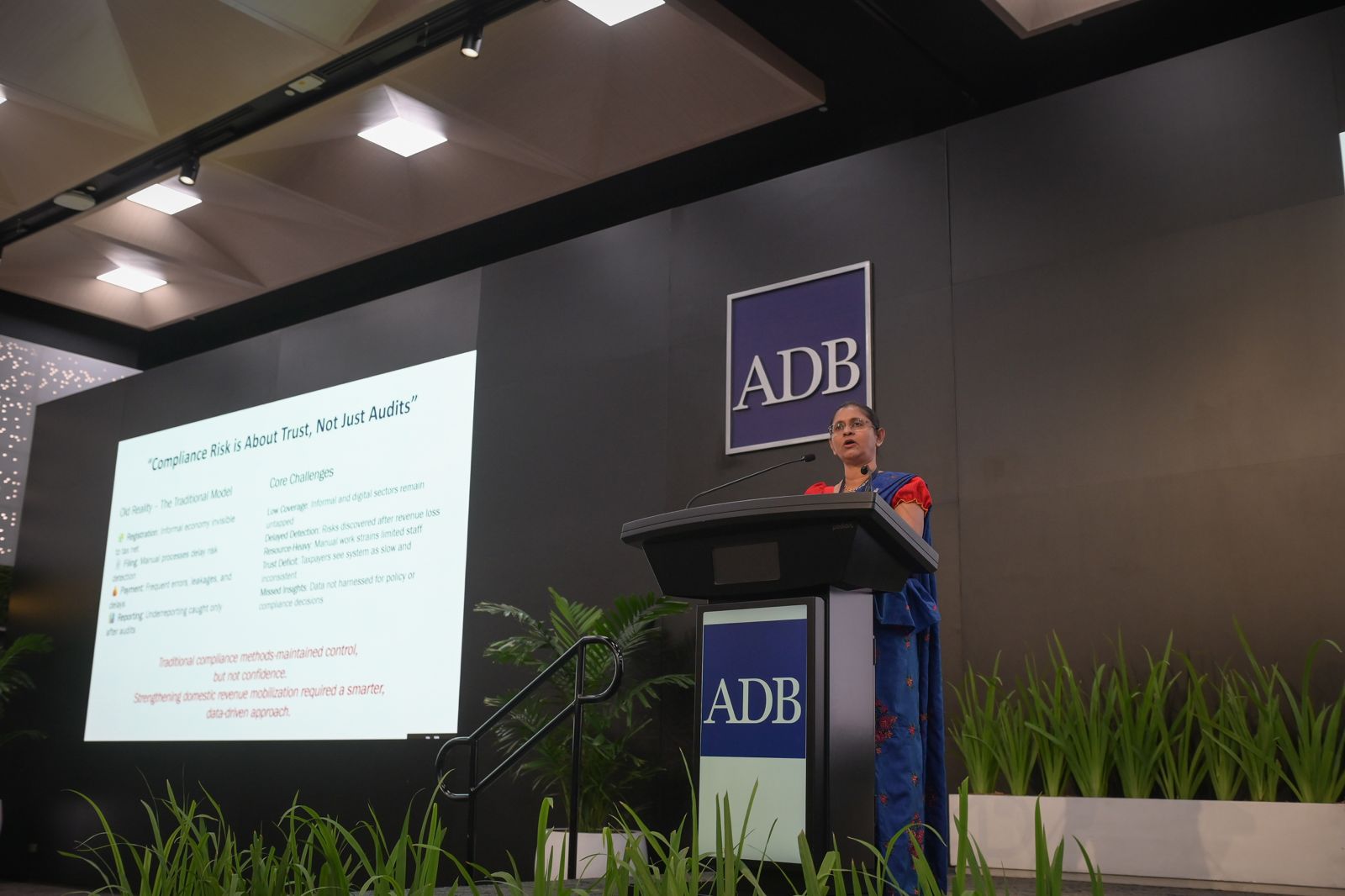
Sri Lanka’s ongoing efforts to modernize its tax administration received regional attention at the High-Level Regional Tax Conference 2025, held at the Asian Development Bank (ADB) Headquarters in Manila.
A presentation titled “Digital Roads: Strengthening Compliance Risk Management in Sri Lanka” highlighted how digital transformation is reshaping the country’s tax landscape. The session focused on the role of technology in improving compliance risk management, enhancing transparency, and fostering a culture of trust-driven voluntary compliance.
The conference brought together representatives from ADB member countries, regional policymakers, and development partners, creating a dynamic environment for knowledge exchange. Discussions with experts and leaders across the region offered valuable perspectives on building smarter, more resilient revenue systems capable of supporting sustainable development.
Sri Lanka’s progress in digital tax administration—including advancements in data-driven decision-making, automation of core processes, and the integration of emerging technologies—was positively received by participants, reinforcing the country’s commitment to reform and innovation.
The event also facilitated meaningful exchanges, new professional connections, and an opportunity to showcase Sri Lanka’s digital journey at a regional platform. The experience underscored the importance of continued collaboration and shared learning as countries across Asia work toward modern, transparent, and efficient tax ecosystems.
Moving forward, ongoing engagement and regional cooperation will remain essential in strengthening revenue systems through innovation and collective action.
Honoured to speak at the High-Level Regional Tax Conference 2025 at the ADB Headquarters in Manila. I had the opportunity to present on “Digital Roads: Strengthening Compliance Risk Management in Sri Lanka,” sharing insights on how digital transformation can reshape tax systems, enhance transparency, and build trust-driven compliance. It was a privilege to exchange ideas with representatives from ADB member countries, regional leaders, and development partners all committed to building smarter, more resilient revenue systems. Grateful for the meaningful discussions, new connections, and the platform to showcase Sri Lanka’s progress in digital tax administration. Looking forward to continuing this journey of knowledge sharing and regional collaboration.


Sri Lanka to “Restructure two Housing Banks to Stop Looming Crisis”
The government has taken approved a bold restructuring initiative for two specialised banks Housing Development Finance Corporation Bank (HDFC Bank) and State Mortgage & Investment Bank (SMIB) as part of a broader effort to shore up the country’s financial stability and safeguard depositors’ interests.
Ownership Transfer
Under the approved plan, the Government will transfer its shareholding in HDFC Bank into Bank of Ceylon (BOC), making the housing finance specialist a subsidiary of the state-owned commercial bank. At the same time, all shares in SMIB will be acquired by People’s Bank, placing SMIB under its wing.
Background and Financial Challenges
Both HDFC Bank and SMIB serve a critical purpose: providing housing-related financial services in Sri Lanka. HDFC Bank was established under the Housing Development Finance Corporation Act No. 7 of 1997 and is listed on the Colombo Stock Exchange.
SMIB, formed under Act No. 13 of 1975, is fully state-owned and focused on mortgage financing. Yet both banks have been underperforming. HDFC Bank’s latest published financials show a net loss of around LKR 352 million, with return on equity (ROE) at –4.39% and return on assets (ROA) meaningfully negative at –0.54%.
The bank’s market capitalisation is just LKR 2.88 billion and its price-to-book ratio stands at a weak 0.37, underlining market concern about its profitability and asset quality.
For SMIB, the broader picture suggests weak deposit-raising capacity, low profitability and failing to meet capital adequacy norms—factors cited by the Central Bank of Sri Lanka as underpinning the push for restructuring.
Rationale for Restructuring
Why restructure? First, integrating these weaker specialised banks into stronger state banks allows for economies of scale, centralised risk management and access to deeper deposit bases. It emphasises that the housing finance niche cannot thrive in isolation when deposit mobilisation is limited and regulatory demands (such as capital adequacy) are not met.
Second, from a systemic risk perspective, weak specialised banks raise concerns over contagion within the financial system and erode depositor confidence especially in a pressured macro-economic environment.
Third, through the restructuring, the banks’ housing mandate can be preserved while being supported by stronger parent institutions capable of absorbing shocks and providing strategic direction.
Strategic Challenges
However, the restructuring must go further than ownership changes. It must address core strategic failings: lack of diversification, weak profitability, low capital buffers, and sub-par asset quality. At HDFC Bank, the negative ROE and ROA reveal that returns are not covering cost of equity and assets are not generating sufficient incomeraising questions about business model viability.
At SMIB, its niche focus on housing finance may not be sufficient in a challenging interest rate and economic climate, unless operational efficiencies and business scope are widened.
Policymakers should set clear milestones: accelerated deposit growth, improvement in net interest margin, reduction in non-performing loans (NPLs), and enhancement of capital adequacy ratios and integration of digital banking capabilities. These should be tracked publicly to ensure the restructuring yields measurable improvements and does not simply become a cosmetic ownership shift.
In sum, the Cabinet-approved transfer of shares in HDFC Bank and SMIB into larger state-owned banks is a welcome recognition that these specialist institutions have not progressed satisfactorily on their own. With HDFC Bank posting losses and SMIB under regulatory strain, the need for decisive action is clear.
But success will depend on more than structural change it will require rigorous business model overhaul, stronger governance and ongoing regulatory oversight if depositors and the housing finance sector are to reap the benefits of stability and growth
Subcategories
Page 2 of 23