Cyclone Ditwah struck Sri Lanka with devastating force. This prompted the government to request international assistance. India responded within hours
I vividly remember boarding the then INS Vikrant — formerly HMS Hercules — with my father during a special port call to Colombo in the 1970s. I was a young boy then, absorbed in a hobby of building model airplanes and ships, especially aircraft carriers. The encounter was unforgettable. It was my first time aboard a carrier — a steel giant that captured both my imagination and my awe.
So, the announcement that the newly built, fully indigenous INS Vikrant would make its maiden overseas visit to Sri Lanka for the International Fleet Review 2025 and the Sri Lanka Navy’s 75th anniversary celebrations stirred nostalgia. But, only afterward did I fully grasp how fortuitous and meaningful her arrival would prove to be.
Cyclone Ditwah struck Sri Lanka with devastating force, leaving hundreds dead and hundreds of thousands displaced, alongside widespread destruction to infrastructure and housing. This prompted the government to request international assistance. India responded within hours. Humanitarian relief operations under Operation Sagar Bandhu were swiftly mobilised.
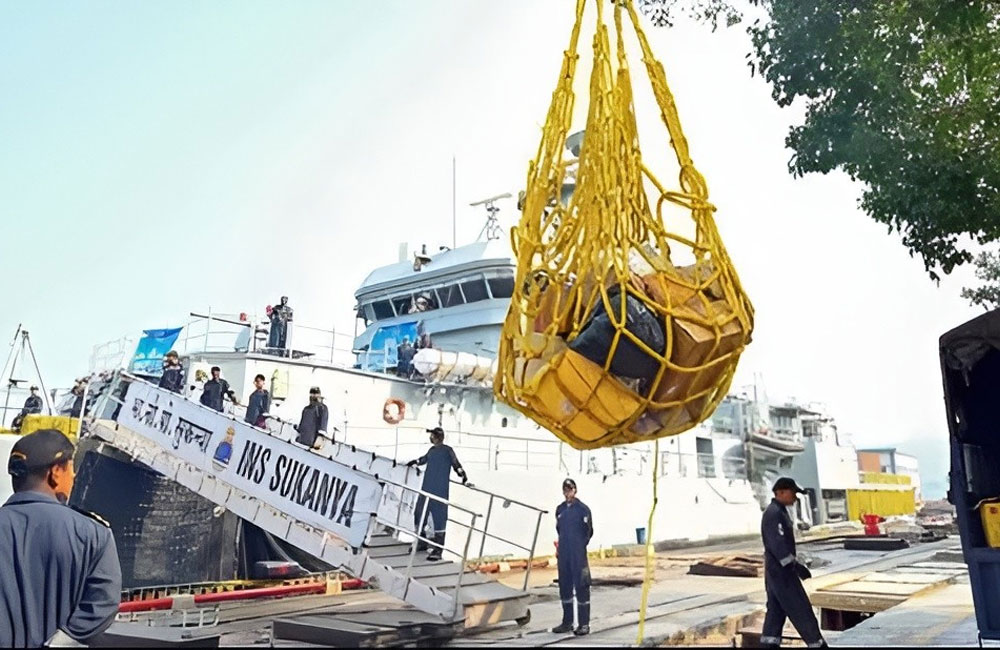
By extraordinary circumstance, INS Vikrant, along with INS Udaygiri, was already berthed in Colombo. INS Sukanya soon joined them to strengthen the operation. This marked the third major instance in recent years in which India, guided by Prime Minister Narendra Modi’s Neighbourhood First policy, has stepped forward to support Sri Lanka: First, during the Covid-19 pandemic through the Vaccine Maitri initiative; next, during the economic collapse of 2022, when India extended more than $4 billion in financial assistance; and, now again in 2025, through rapid disaster relief.
(Hindustan Times)
Leave your comments
Login to post a comment
Post comment as a guest