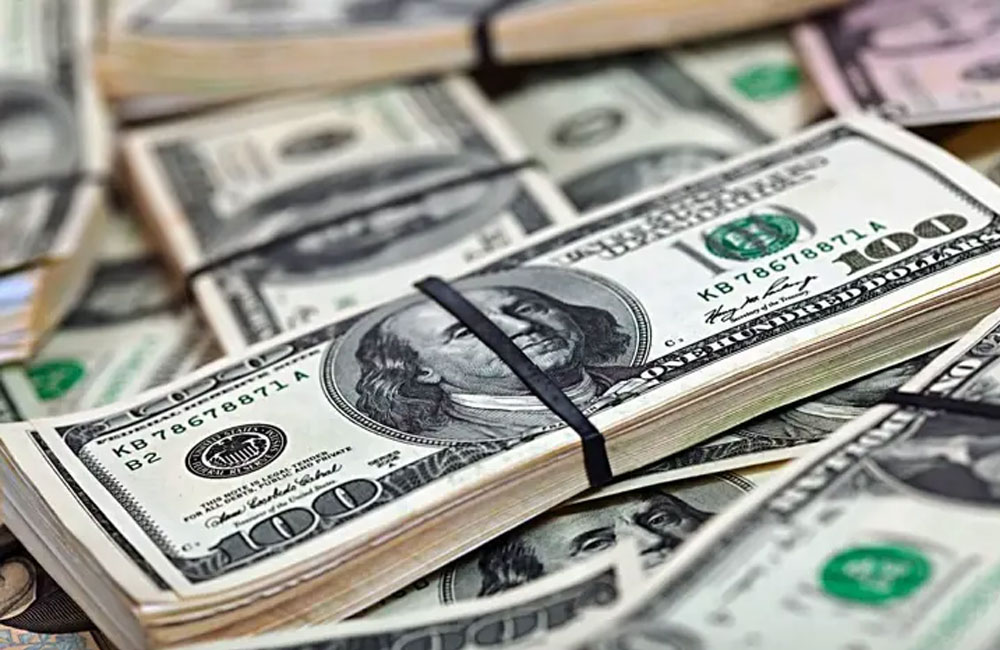
The dollar took another leg higher on Monday, jumping to a three-month peak on the euro as oil surged past $100 a barrel, stocks slid and investors headed for safety as protracted war in the Middle East threatened to disrupt global energy supplies.
The dollar was up 0.8% to $1.1525 on the euro , its highest since November, and rose almost 0.4% to 158.48 yen early in the Asia session.
Sterling and the Australian and New Zealand dollars fell by more than 0.6% on the dollar, while Brent and U.S. crude futures shot to more than $108 a barrel, which is expensive enough to make a dent in global growth.
"Oil remains the transmission channel into inflation expectations, rates and currency markets, with the dollar’s resurgence echoing the 2022 energy crisis," said Bob Savage, head of markets macro strategy at BNY.
"The week ahead will test whether markets continue to treat the current conflict as a contained shock or begin to price a more durable supply disruption."
The dollar, which notched its sharpest one-week rise in 15 months on the breakout of war last week, has been the most effective safe haven asset for investors as gold has faltered amid broad selling in anything that has lately made sharp gains.
"The dollar benefits from its twin status as a safe-haven and energy exporter," said Joe Capurso, Head of Foreign Exchange, International and Geoeconomics at Commonwealth Bank in Sydney.
"We expect the Iran-U.S. war to escalate before it de-escalates. Iran is incentivised to strike back to gain leverage in future negotiations to end the war.
The US and Israel are incentivised to degrade Iran’s offensive capabilities."
The Australian dollar was down 0.7% to $0.6983 and the New Zealand dollar down 0.6% to $0.5860. Sterling slid nearly 0.8% to $1.3324, while the dollar even gained 0.5% on its fellow safe haven in the Swiss franc .
Iran on Monday named Mojtaba Khamenei to succeed his father, as Supreme Leader, signaling hardliners remain firmly in charge in Tehran a week into battle with the United States and Israel.
The conflict has already led to the suspension of around a fifth of global crude and natural gas supply, as Tehran targets ships in the vital Strait of Hormuz between its shores and Oman, and attacks energy infrastructure across the region.
Qatar’s energy minister told the Financial Times on Friday he expects all Gulf energy producers to shut down exports within weeks, a move he said could drive oil to $150 a barrel.
High energy prices act like a tax and can also stoke inflation, leaving investors worried that central bankers may be reluctant to cut interest rates.
Surprisingly weak U.S. jobs data had on Friday briefly stalled dollar gains, and raised expectations for U.S. rate cuts, but that faded somewhat on Monday morning and U.S. stock futures tumbled, too, with S&P 500 futures down 1.6%.
Source:adaderana.lk
Leave your comments
Login to post a comment
Post comment as a guest