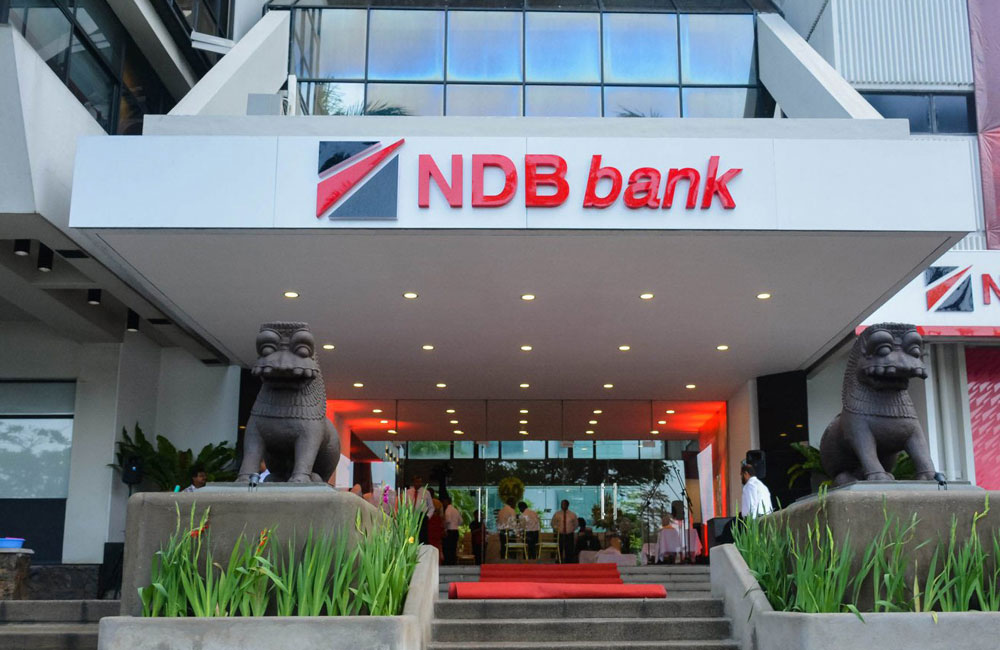
A fraud that quietly took root within internal systems has escalated into one of the most significant financial scandals in recent times, forcing National Development Bank PLC (NDB) to reckon with a staggering loss and renewed scrutiny over its governance.
Trading of NDB shares was temporarily halted by the Colombo Stock Exchange as the bank moved to disclose the true scale of the incident. What initially appeared to be a Rs.380 million irregularity has now ballooned to approximately Rs.13.2 billion, following internal investigations that uncovered collusion among employees within a specific operational unit.
In a decisive move, the bank has chosen to absorb the full impact immediately, provisioning for a worst-case scenario. This translates to an estimated after-tax loss of Rs.4 billion for the March 2026 quarter.
Seeking to contain any ripple effects, the Central Bank of Sri Lanka issued a parallel assurance that customer deposits and accounts remain untouched. The regulator emphasized that NDB continues to maintain capital adequacy and liquidity ratios above required thresholds, while also signaling readiness to provide liquidity support if needed—indicating the issue is contained within the institution.
At the heart of the crisis lies a breakdown in oversight. NDB’s Director and CEO, Kelum Edirisinghe, acknowledged that while controls existed, scrutiny had not been rigorous enough.
“With the benefit of hindsight, there should have been more probing questions,” he admitted, framing the episode as a lesson in governance rather than a total absence of safeguards.
Investigations revealed that the fraud had been unfolding since around 2024, with funds routed through internal accounts in a series of smaller transactions designed to remain within approval limits. Over time, these transactions accumulated into a multi-billion-rupee loss, aided by collusion and monitoring gaps.
The bank has since acted swiftly to contain the damage. Employees linked to the scheme have been suspended, system access revoked, and the affected unit isolated under tighter supervision. Internal controls have been strengthened across the board, while law enforcement authorities, including the Criminal Investigation Department (CID), have been engaged to pursue accountability and recovery.
Despite the scale of the fraud, NDB’s overall financial position appears resilient. With an asset base nearing Rs.990 billion, the estimated erosion stands at around 0.7 percent. Key capital ratios, including Common Equity Tier I and Total Capital Adequacy Ratio, are expected to remain comfortably above regulatory minimums.
However, supervisory concerns have prompted the central bank to direct NDB to suspend its cash dividend, underscoring the seriousness of the breach. In a further step toward transparency, the bank has committed to appointing an independent forensic auditor—a move likely to draw close attention from regulators and investors alike.
While NDB has reiterated that normal operations continue and customer funds remain secure, the incident has reignited broader questions about the robustness of internal controls in the face of coordinated fraud.
Oversight of the bank rests with a board chaired by Sriyan Cooray and comprising a roster of senior professionals, now under pressure to ensure that lessons from this episode translate into lasting institutional reform.
As investigations continue, the case stands as a stark reminder that even well-capitalized institutions are not immune to internal vulnerabilities—and that vigilance remains the cornerstone of trust in the financial system.
Leave your comments
Login to post a comment
Post comment as a guest