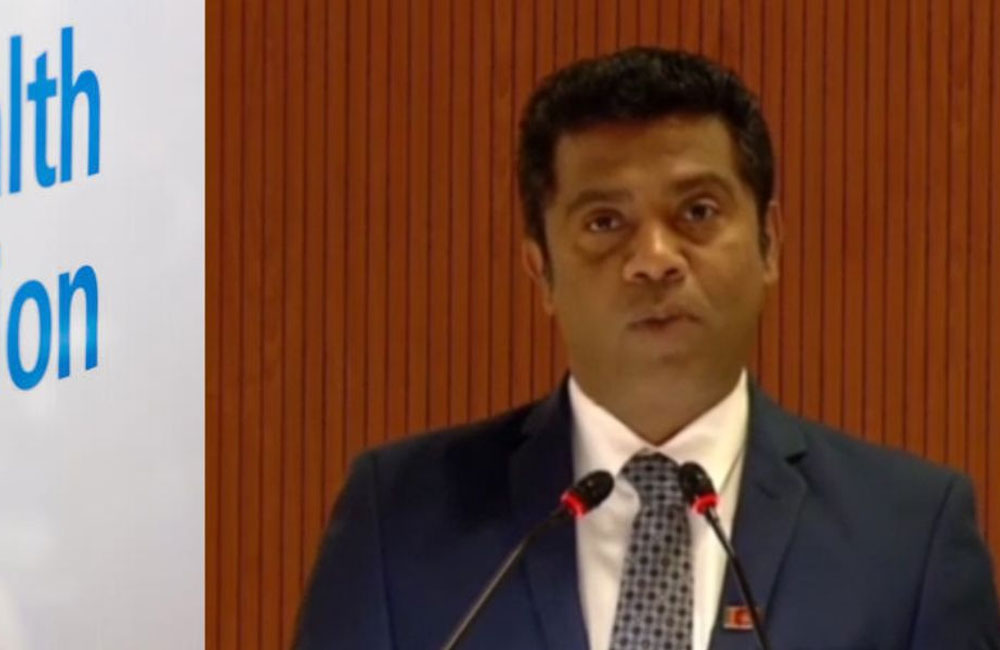
Sri Lanka has reiterated its commitment to strengthening lifelong care for childhood cancer survivors, emphasizing that survival must be measured not only by numbers but also by quality of life.
Health and Mass Media Minister Nalinda Jayatissa made the remarks while addressing a special session on childhood cancer care on the sidelines of the 79th World Health Assembly in Geneva.
He said that “the true measure of success in childhood cancer is not only how many children survive, but how they live,” highlighting the importance of ensuring survivors lead healthy, dignified and productive lives.
Global health leaders at the meeting pledged to raise the survival rate of children with cancer to at least 60 percent by 2030 under the World Health Organization’s Global Initiative for Childhood Cancer.
Speaking at a session titled “Measuring survival, driving change – Advancing equity through the WHO Global Initiative for Childhood Cancer,” the Minister stressed that many survivors continue to face long-term physical, mental and social challenges. These include heart-related complications, endocrine disorders, learning difficulties, mental health issues, reproductive health concerns, as well as social and economic risks.
He noted Sri Lanka’s continued collaboration with the World Health Organization, international partners, health professionals and survivor communities to strengthen long-term care for children who survive cancer.
Sri Lanka’s free public health system, he said, provides a strong foundation for equitable access to diagnosis, treatment, rehabilitation, follow-up care and psychosocial support.
The Minister further emphasized that care must extend beyond hospitals into primary healthcare services, schools, families and communities. Sri Lanka is also strengthening organized follow-up services through paediatric cancer treatment centres and hospitals to ensure continuous care from childhood into adulthood.
He added that Medical Officer of Health services, public health nursing, maternal and child health programmes and newly introduced Arogya Suwatha centres will play a key role in community-based follow-up care.
The WHO Global Initiative for Childhood Cancer, launched in 2018, is currently active in 87 countries, with 50 countries already integrating childhood cancer control into their national health strategies.
Leave your comments
Login to post a comment
Post comment as a guest