News
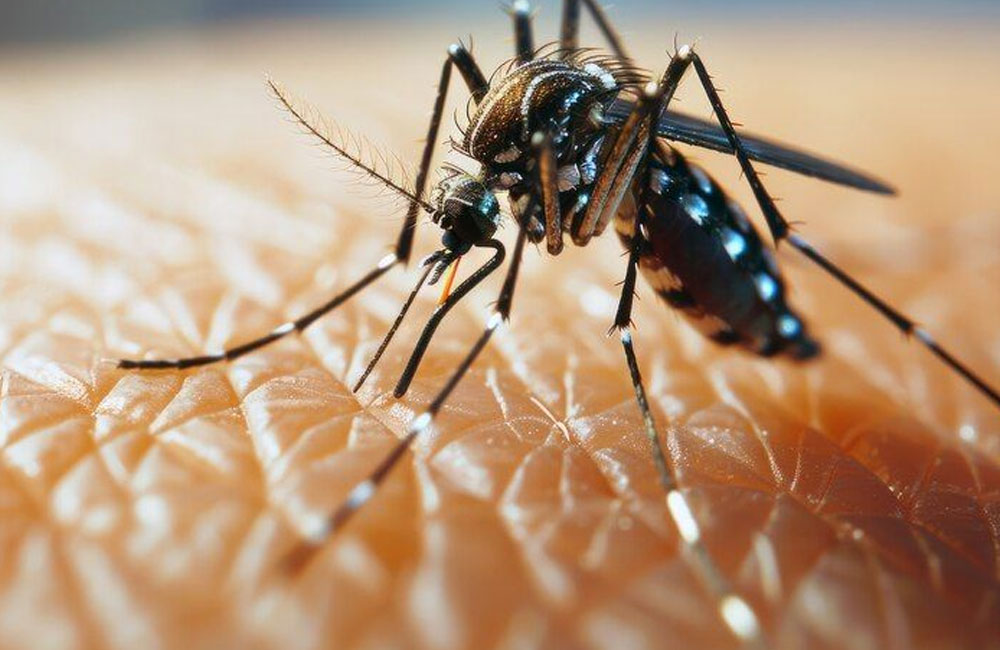
Sri Lanka Dengue Cases Near 95,000 as Death Toll Reaches 72
Sri Lanka has recorded 94,805 dengue cases so far this year, with 72 dengue-related deaths reported to date, according to the National Dengue Control Unit.
Dengue infections have continued to rise in recent months, with 9,469 cases reported so far in August. This follows 29,962 cases recorded in July and 21,533 cases in June.
The Western Province continues to account for the largest share of the country’s dengue burden, recording 50,167 cases, or 52.92 per cent of the total.
The Southern Province has reported 13,823 cases, while 8,624 cases have been recorded in the Central Province.
At district level, Gampaha has recorded the highest number of dengue infections, with 20,207 cases reported so far this year.
Colombo follows with 18,794 cases, while Kandy has recorded 6,913 cases. Kalutara and Galle have reported 6,117 and 6,111 cases respectively.
Meanwhile, 76 Medical Officer of Health (MOH) areas across the country continue to be identified as high-risk zones for dengue.
The latest figures highlight the continued spread of dengue across several parts of the country, with the Western Province remaining the most heavily affected region.
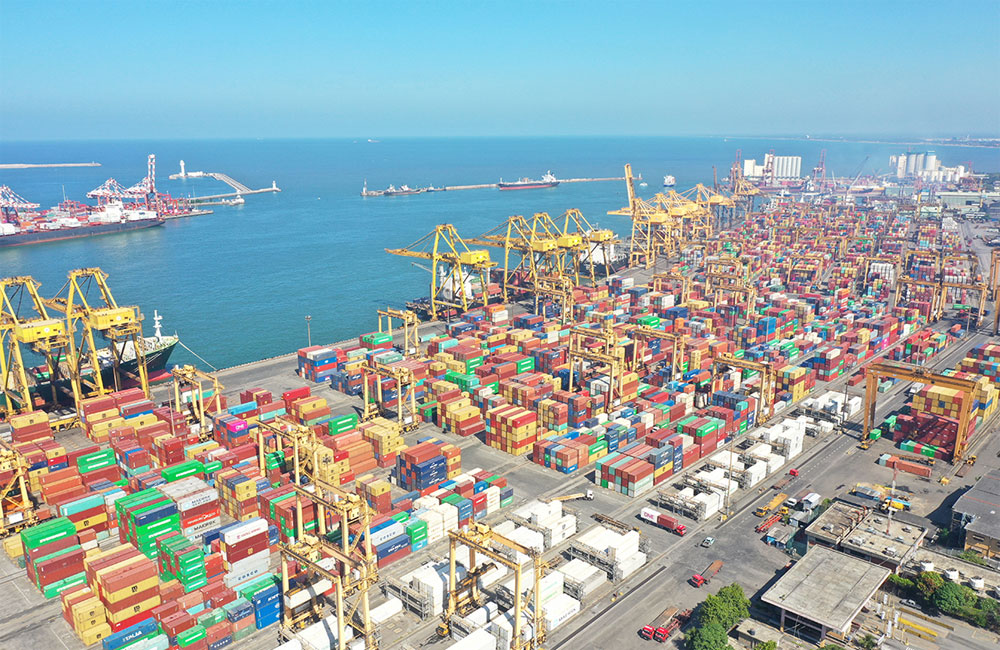
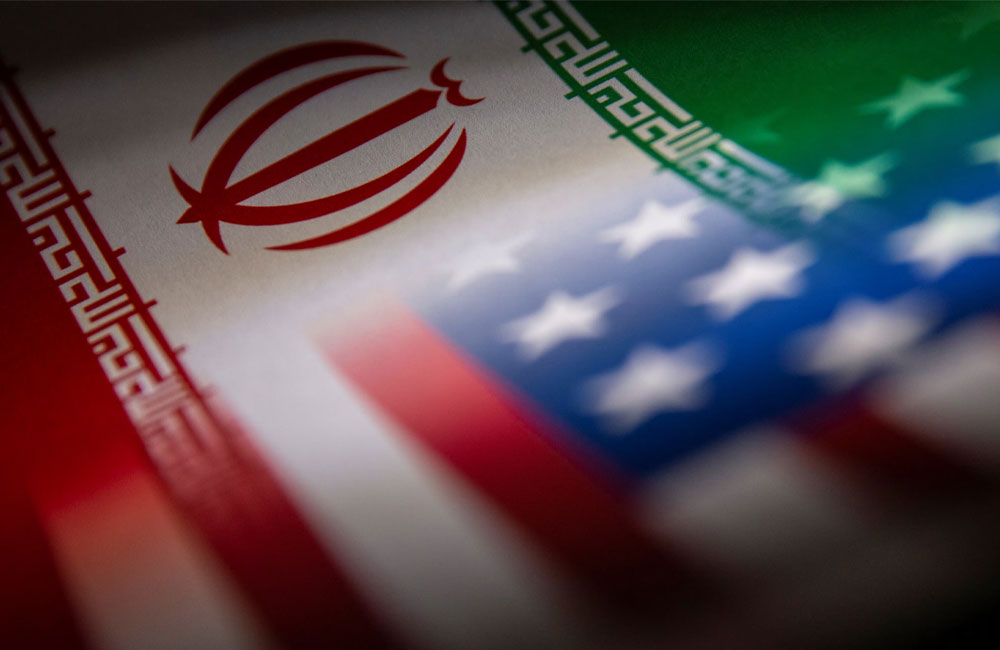
Iran war diplomacy turns toward reopening Strait of Hormuz
Iran war mediators have placed renewed emphasis on reopening the Strait of Hormuz, with Tehran agreeing to draw up a list of conditions to restore normal traffic after a Qatari emissary pressed the Iranians to respect freedom of navigation.
With the U.S. having disengaged from talks in favour of an economic pressure campaign, the prime minister of Qatar met senior Iranian leaders in Tehran on Thursday, stressing the importance of returning to the pre-war status of open shipping through an international waterway.
Qatar, a U.S. ally and Gulf neighbour of Iran, and Pakistan helped broker a memorandum of understanding in June that led to a ceasefire and set terms for shipping in the Strait of Hormuz, the narrow stretch between Iran and Oman that before the war was the conduit for 20% of the world's oil supply.
After the U.S. and Israel launched the war six months ago, Iran threatened to strike any vessel transiting the strait without its authorization, driving down traffic and sending up the price of oil, providing Iran with leverage in the bargain.
In his mission to Tehran on Thursday, Qatari Prime Minister and Foreign Minister Sheikh Mohammed bin Abdulrahman Al Thani said on X that he underscored to senior Iranian officials "the importance of respecting freedom of navigation in the Strait of Hormuz in accordance with international law."
Mohsen Rezaei, secretary of Iran's Supreme National Security Council, later said Iran was preparing a list of conditions for reopening the strait after mediators asked Tehran to set them out.
Speaking through an interpreter in an Al Manar TV interview, Rezaei said Iran had agreed with Oman on a shipping corridor through the strait, with parts of the route in Omani waters and parts in Iranian waters. Ships would use a designated central channel if the U.S. met Iran's conditions, he said.
In the past Iran's conditions have included an end to the U.S. blockade on Iranian ports, compensation and removal of sanctions. It remained unclear whether Iran intended to amend those demands in a way that might be acceptable to the Americans.
Tehran and Washington have exchanged little more than bellicose statements in recent weeks, leaving the diplomacy to third parties.
So far Iran has insisted on returning to the June memorandum of understanding that established a ceasefire within a 60-day window for negotiations. But that deal quickly fell apart over differing interpretations of Iran's authority over shipping arrangements, and Trump declared the MOU was "over" three weeks after it was signed.
Iran's Revolutionary Guards said on Wednesday that Iran and Oman had agreed in principle on administering traffic in the strait and sharing revenues, but a senior Iranian source later said the two countries were still working on the details of an agreement.
Meanwhile, U.S. military commanders say American forces have cleared sea mines from the strait that had been laid months ago by Iran's Islamic Revolutionary Guard Corps.
"Bottom line: today, international shipping lanes are open and momentum is building," Admiral Brad Cooper, commander of the U.S. military's Central Command, said in a video message posted on social media.
U.S. forces have in recent months helped 1,500 commercial vessels carrying nearly 750 million barrels of crude oil to transit the strait, Cooper said.
Trump has repeatedly said the strait was open, but many vessels have opted against sailing through it because of Iranian threats, and ship tracking services have estimated activity at roughly 5% to 15% of normal volumes.
The U.N.'s International Maritime Organization has reported 70 incidents in the Strait of Hormuz since the start of the war that have killed 19 seafarers.
Source: Reuters
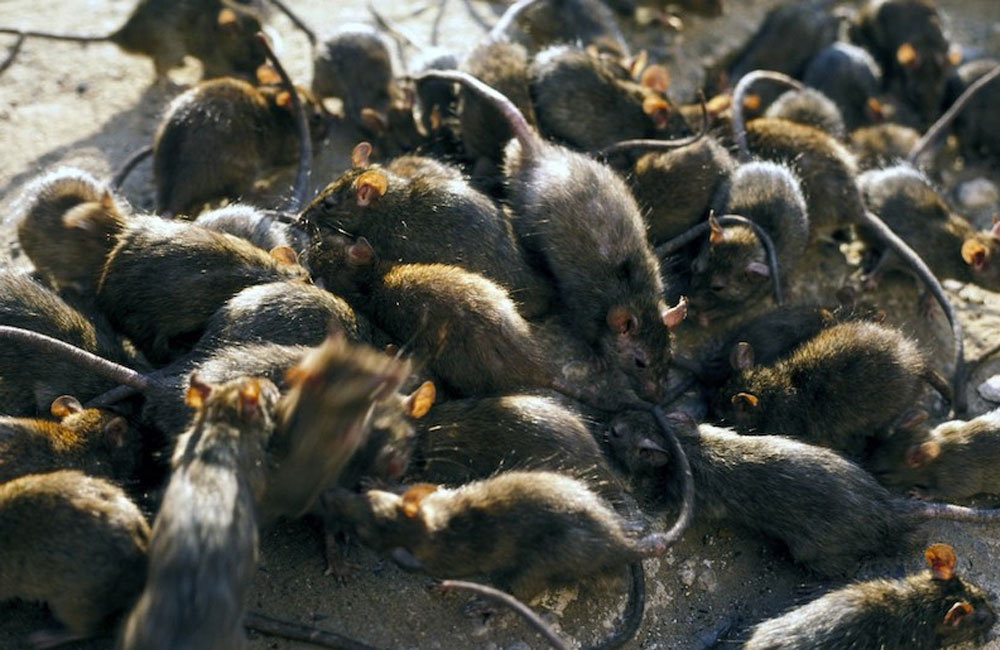
Colombo battles growing rat infestation amid health fears
A growing rat infestation across Colombo is fuelling public health fears and disrupting daily life in Sri Lanka's commercial capital, with residents and business owners now demanding urgent municipal intervention.
The problem has intensified in recent weeks, affecting major hotels, restaurants and retail outlets throughout the city, as uncollected garbage continues to attract rodents to public spaces.
Health officials have linked the surge in the rat population directly to piles of uncollected waste scattered across Colombo, warning that rats feeding on this rubbish have created serious safety hazards for commuters and visitors alike.
Beyond the immediate risk of disease transmission, the expanding rodent presence has also begun to cause structural damage to buildings and surrounding infrastructure, compounding losses for affected businesses.
Commercial establishments have borne the brunt of the infestation, with several major hotels and eateries reporting rodent activity severely affecting operations and customer confidence.
Residents have voiced growing frustration over the Municipal Council's apparent inability to contain the problem, arguing that delays in waste collection have allowed the infestation to spread unchecked across the city.
Authorities and members of the public have been urged to act jointly to bring the situation under control, with proper waste disposal, stricter food hygiene practices and the regular clearance of city drainage systems identified as key measures needed to curb the rodent population.
Efforts to obtain an official response from the Colombo Municipal Council Commissioner proved unsuccessful, as the relevant telephone number was found to be out of service.

59-Year-Old Woman Killed in Alleged Husband’s Attack in Anuradhapura
A 59-year-old woman was allegedly killed by her husband following an attack with a sharp weapon inside a forest reserve in the Korakahawewa area of Anuradhapura this morning (28), police said.
According to police, the man had travelled to the location with his wife on a motorcycle before allegedly attacking her with the weapon.
The woman, a mother of three from the Ulukkulam area, died at the scene as a result of the attack.
The husband also sustained serious injuries after allegedly attempting to take his own life using the same weapon. He was subsequently admitted to the Anuradhapura Teaching Hospital for treatment.
Police suspect that a personal dispute may have led to the incident.
Anuradhapura Police are conducting further investigations into the circumstances surrounding the attack.

Ugandan King Oyo Nyimba, once world's youngest monarch, dies at 34
Oyo Nyimba, a Ugandan king, who became the world's youngest reigning monarch when he took the crown in 1995, has died aged 34, the prime minister of his kingdom announced.
Uganda is a republic, ruled by an elected head of state, but it has several traditional monarchies that still preside over their kingdoms as they were constituted in the pre-colonial period. Their political power is largely symbolic, but they wield enormous cultural and social influence.
Oyo Nyimba Kabamba Iguru Rukidi IV was the King of Tooro, a small kingdom in Uganda's west near the border with the Democratic Republic of Congo.
"It is with profound sadness and a heavy heart that I announce the passing of His Majesty the Omukama of Tooro, King Oyo Nyimba Kabamba Iguru Rukidi IV," the prime minister of the kingdom, Calvin Armstrong Rwomiire Akiiki, said in a post on X late on Thursday.
The king died at around 10:00 p.m. local time on Thursday, Akiiki said, without revealing the cause of his death.
Rukidi IV was crowned at just three years old on September 12, 1995 after the death of his father, Rukirabasaija Patrick David Matthew Kaboyo Olimi III.
Balaam Barugahara, a minister in the government of President Yoweri Museveni, said shortly before the announcement of the king's death that he was receiving treatment in the U.S.
"This is an immeasurable loss," the prime minister said, adding the king, who was unmarried, had left an heir and that "continuity of the Crown is assured."
His death triggered an outpouring of grief across social media platforms in Uganda and widespread media coverage nationally.
"Most devastating news! May His Majesty the King's soul rest in eternal peace," Bobi Wine, Ugandan pop star-turned-politician who is the country's leading opposition leader, said in a post on X.
In April, in a message to celebrate the King's birthday, Tooro's prime minister had said: "Our King is not distant from the realities of his people; he is part of this generation, part of this ecosystem, growing, learning, and leading... His youth is not a limitation; it is a strength. It brings energy, fresh perspective, and the courage to imagine a different future for Tooro."
Source: Reuters
Nepal monitoring two lakes, flood risk to remain until they're fully drained, official says
Nepal is monitoring two lakes upstream of the flood zone where hundreds died on Wednesday, an official with Nepal's Disaster Management Authority said.
Flood risks will remain until the two lakes have fully drained, the official added, as one of the two lakes began overflowing on Friday.
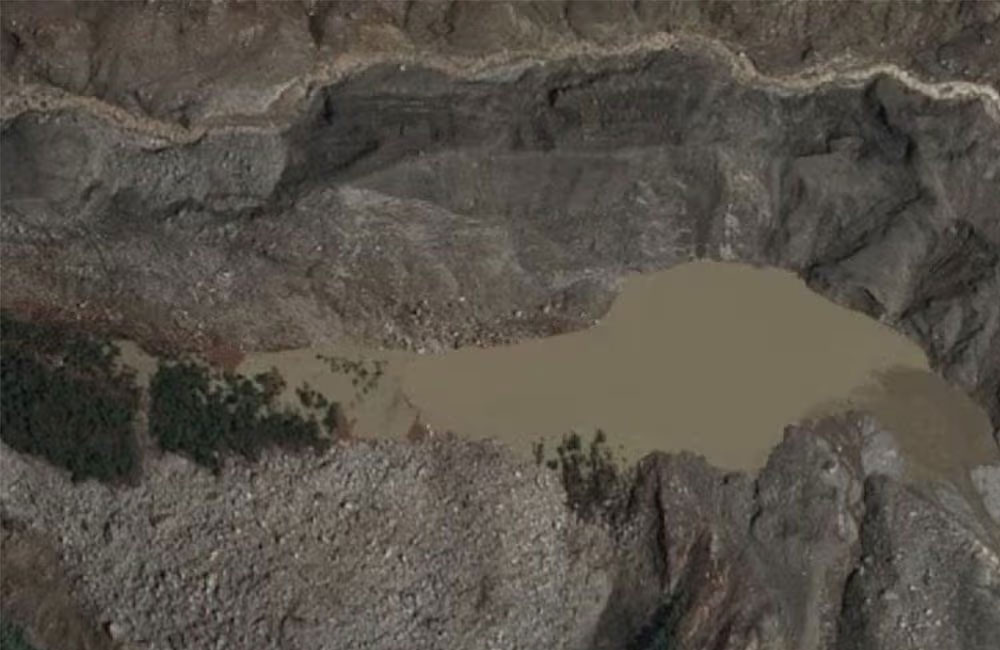
Satellite images showed the two lakes in proximity to the site where a glacier collapse was believed to have pushed rock, ice, mud and debris into river systems on Wednesday, causing flood waves that levelled houses and tore away bridges.
The formation of one of the two lakes had been captured in aerial footage by a Chinese rescue team on Thursday.
The footage on Thursday showed masses of brown water accumulating in a basin. By Friday, water was draining from that lake, according to new satellite imagery.
The imagery also showed another lake upstream that appeared to be growing in size and was bigger in surface area than the first lake, without any visible outlet as of Friday morning, meaning that water pressure may still be building there.
Nepalese authorities are relying on satellite imagery to track conditions, though monitoring is limited by the availability of images, the Nepalese official said.
Nepal plans to install cameras and sensors downstream, including near the border town of Timure, and is assessing deployment options by helicopter, he said.
Source: Reuters

Government Pharmacists Announce One-Day Strike Over Allowance Dispute
The Society of Government Pharmacists has announced a one-day trade union action from 8.00 a.m. on Monday (August 31) over unresolved issues concerning their additional service allowances.
Association President Ajith P. Thilakarathna said the decision follows a dispute over a circular issued by the Health Secretary on August 29, 2026, which renamed pharmacists’ overtime allowances as “additional service allowances.”
According to Thilakarathna, the circular was subsequently cancelled without an acceptable explanation, allegedly following pressure from the medical services sector.
He said authorities have yet to provide a satisfactory solution to the issue.
The association is therefore calling for the immediate reinstatement of the cancelled circular, with the planned trade union action intended to pressure authorities to address the matter.
However, the association said several healthcare institutions will be exempted from the strike on humanitarian grounds.
These include maternity and children’s hospitals, cancer hospitals and mental health institutions.
A special arrangement has also been made to ensure the continuation of emergency and essential services at other hospitals during the trade union action.
According to the association, heads of hospitals and other institutions can maintain these services by contacting the chief pharmacists at their respective facilities.
Thilakarathna said the relevant authorities and parties have been informed of the planned action and requested that necessary measures be taken to minimise inconvenience to the public.
The association said the trade union action will proceed unless its concerns regarding the additional service allowances are addressed.
Nepal does not need foreign rescue help with flood, foreign ministry says
Nepal does not need help from other countries to conduct search and rescue operations after a devastating flash flood wrecked towns, its foreign ministry said on Friday (Aug 28).
"The offer for help is natural. Our security agencies are doing the search and rescue operation. For now we don’t require such help,” Lok Bahadur Chhetri, spokesperson for the foreign ministry said on Friday.
This comes as Nepal's government has received both official and unofficial requests from countries and organisations to deploy their own search and rescue teams, said a senior foreign ministry official, as reported by The Kathmandu Post.
The Nepali newspaper added that the government has responded by saying that Nepal's own security agencies are capable of handling the operation.
Instead, the newspaper reported that Nepal wants cash contributions through a one-door mechanism, where financial aid will be collected through a single designated government channel.
The foreign ministry has instructed its overseas missions to seek financial support only through the Prime Minister's Disaster Relief Fund.
Officials said the government will seek additional financial aid and other support during the reconstruction phase, reported The Kathmandu Post, adding that some countries such as the US and the UK have already offered financial assistance.
Among those who have requested to send their own search and rescue teams are officials from India, China, US, UK, Japan, South Korea, Sri Lanka and Bangladesh.
South Korea's foreign ministry said it will "keep negotiating with Nepal over the matter".
Seoul has pledged US$1 million in humanitarian assistance through international organisations, its foreign minister said on X.
Nine South Koreans working in a hydropower plant were missing and 10 were stranded, South Korea's foreign ministry said on Wednesday.
According to The Kathmandu Post, the official said that the government's decision is based on its experience in the 2015 Nepal earthquake, when an influx of foreign search and rescue teams had caused significant coordination and management issues.
The decision was also made on the recommendation of the Nepali Army and police.
Meanwhile, Nepal's foreign affairs ministry has set up an emergency response team (ERT) to assist foreigners affected by the floods, which occurred in the Rasuwa district.
"The ERT shall serve as the central coordinating body within the Ministry to facilitate search, rescue, information verification and consular assistance in respect of foreign nationals affected by, missing in, or otherwise connected to the flood incident," read a statement on the ministry's website.
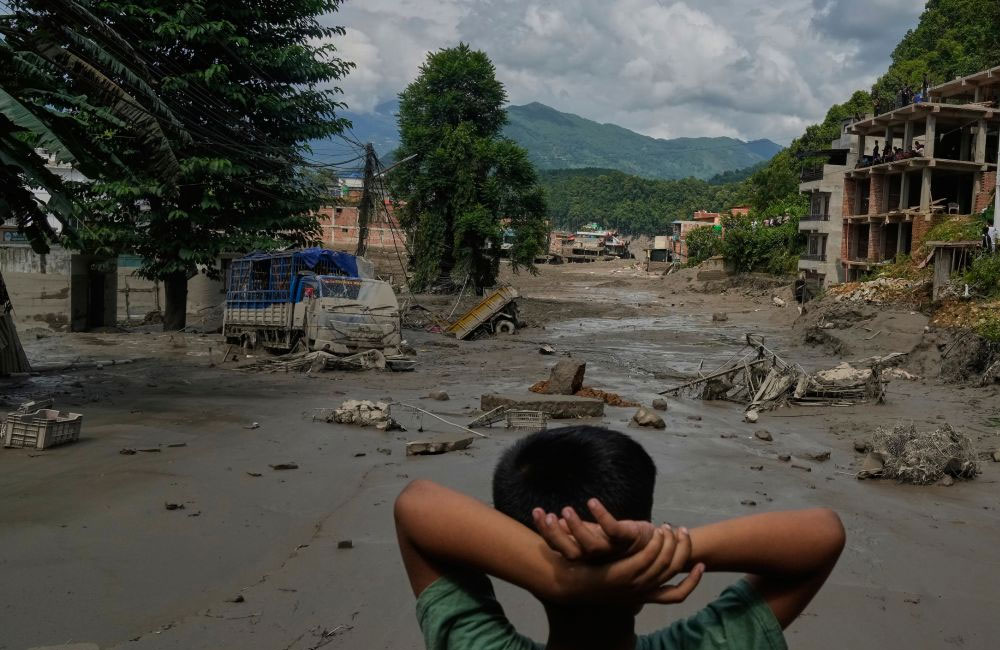
The death toll in Nepal reached 469 on Friday, with almost 1,000 more missing there and in neighbouring Tibet, near where a glacier collapse on Wednesday morning sent a huge torrent of rock, ice, mud and debris cascading through Himalayan mountain river systems.
The flood ripped through villages and valleys, destroying power stations, roads and bridges along a route that links Kathmandu with Lhasa in Tibet and is popular with trekkers and pilgrims. Of those missing, at least 540 are foreigners.
The foreigners out of contact include citizens from Australia, Britain, Malaysia, the Netherlands, Portugal, South Africa and South Korea, Nepal's tourism board said.
Source: CNA
Sri Lanka has one last chance to become a strategic hub in Indian Ocean
Sri Lanka has three assets that could make it a logistics and energy hub in the Indian subcontinent comparable in concept, if not scale, to Rotterdam, Singapore, and Dubai.
The sight of over a dozen Iranian oil tankers gathered off the Sri Lankan coast, together with the sinking of an Iranian vessel by a United States submarine in March, has once again placed the nation at the centre of a geopolitical crisis far beyond its shores. More importantly, it has highlighted something Sri Lanka has too often taken for granted: its geography.
The island sits astride some of the world’s busiest sea lanes. Throughout history, its location has given Sri Lanka a strategic importance disproportionate to its size. The Portuguese, Dutch, and British understood this. During the Second World War, Admiral Lord Louis Mountbatten established his South East Asia Command headquarters in erstwhile Ceylon. The island also played a crucial role in maintaining Allied communications and supply lines across the Indian Ocean.
One of the most remarkable reminders of that role was the famous “Double Sunrise” service. From 1943, Qantas Catalina flying boats operated between Australia and Sri Lanka, maintaining an air link after the fall of Singapore. The flights were so long that crews and passengers saw two sunrises. As the 83rdanniversary of the service is commemorated, it is worth recalling that Sri Lanka once served as an indispensable logistical link across the Indian Ocean.
The question is whether the country can do so again.
What Sri Lanka lacks
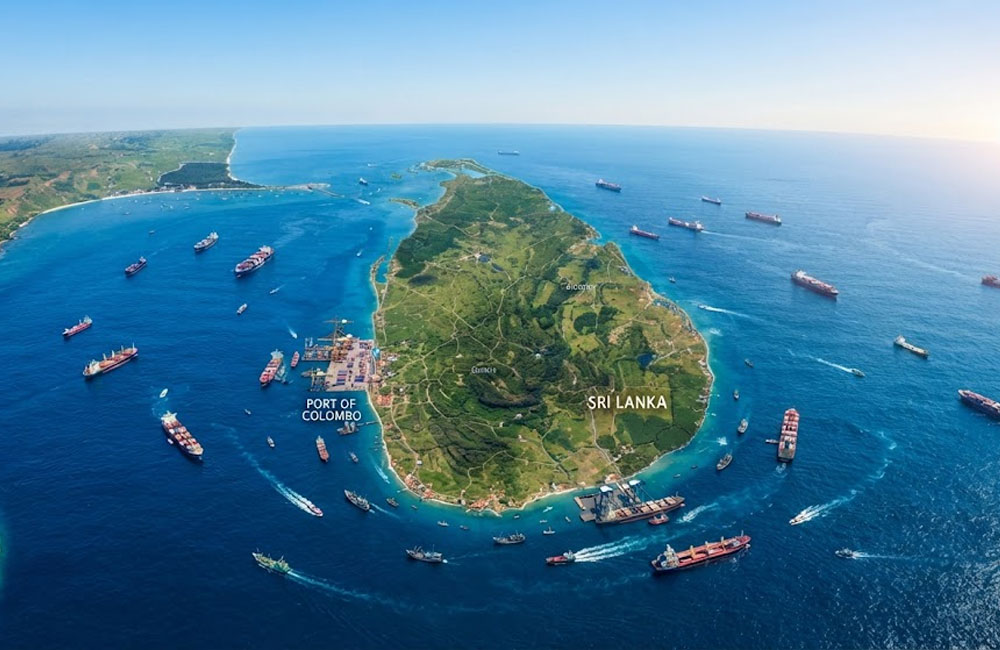
Sri Lanka today possesses three extraordinary maritime assets. Colombo has become one of the world’s important transhipment centres, handling around 90 lakh TEUs a year, with a substantial share of its transhipment business connected to India. Trincomalee possesses one of the world’s greatest natural harbours, with enormous potential for energy, storage, and industrial development. Hambantota is close to the main east-west maritime routes and offers land and deep-water capacity for industries that cannot easily be accommodated around Colombo.
Together, these assets could form the foundation of something much larger: a logistics and energy hub in the Indian subcontinent comparable in concept, if not scale, to Rotterdam, Singapore, or Dubai.
Yet, Sri Lanka has never fully realised this potential.
Since independence, development has too often proceeded in fits and starts, driven by individual projects rather than a sustained national strategy. The country’s 30-year war was another major impediment. It diverted resources, discouraged investment, and made long-term infrastructure planning and development far more difficult.
But the war is over. Today, there are no comparable excuses. In the years since 2009, Sri Lanka has not lacked strategic geography. It has lacked the political will and continuity to convert geography into economic power.
That must now change. The international environment has offered the island an opportunity that may not come again.
The disruption surrounding the Strait of Hormuz and the wider Middle East is likely to accelerate the search for alternative logistics, energy, and supply-chain arrangements. Countries and companies are increasingly looking not simply for the cheapest routes, but for resilient and trusted ones.
This creates a potential space between the established hubs of the Gulf and Southeast Asia in which Sri Lanka could play a greaterrole.
But if Sri Lanka does not move, India will inevitably develop alternatives of its own.
A fundamental rethink
It would be a mistake to view India’s expanding maritime infrastructure simply as competition. Instead, it presents an opportunity for Sri Lanka to integrate into a much larger logistics ecosystem. Colombo and Trincomalee should become complementary to India’s ports rather than just competing with them.
This calls for a fundamental change in thinking.
Colombo needs further expansion, including new breakwaters, terminals, and efficient inter-terminal and hinterland connectivity. If Sri Lanka is to become a genuine multimodal hub, the airport too needs a major expansion, including a second runway.
There is also an opportunity to rethink Colombo’s role as an aviation gateway to India. Under such an arrangement, Indian customs and immigration facilities could operate at Colombo airport, along the lines of arrangements at international airports elsewhere, making travel and onward connectivity more seamless. Such an arrangement would require detailed negotiations between the two governments, but the strategic objective must be clear: Colombo should function increasingly as an extension of the economic space in the Indian subcontinent and the Middle East.
Sri Lankan Airlines must be privatised without further delay and placed with a strategic airline investor capable of developing Colombo as an aviation hub for the Indian subcontinent and the Middle East. A national airline cannot be an end in itself; connectivity comes first.
Trincomalee should become the centre of an integrated energy strategy. Its oil-storage capacity could be expanded and connected to India. The oil pipeline proposal now under discussion involving India, Sri Lanka, and the United Arab Emirates (UAE) could become an important example of how the island’s strategic location can facilitate trilateral cooperation. Refining, petrochemical, and other energy-storage possibilities should also be examined.
The electricity connectivity discussions now taking place between India and Sri Lanka must be implemented quickly. Combined with large-scale investment in the island’s wind and solar resources, such connectivity could transform Sri Lanka from an energy importer into an important regional producer of renewable electricity. Green hydrogen could eventually become part of this strategy.
Sri Lanka’s mineral resources, including graphite, ilmenite, and phosphate, also need to be incorporated into this broader strategic vision.
The Japanese proposal for an India-Sri Lanka export-oriented industrial corridor provides another opportunity. Rather than a simple industrial development project, it could become a model trilateral initiative between India, Japan, and Sri Lanka, linking Japanese technology and investment, India’s enormous market and manufacturing capabilities, and Sri Lanka’s strategic location and connectivity.
India must win Sri Lanka over
Ultimately, the boldest step would be physical connectivity between India and Sri Lanka.
A road and rail connection across the Palk Strait would be politically sensitive and would require careful consideration of environmental concerns. But if designed appropriately, it could become the ultimate catalyst for Sri Lanka’s transformation into a regional logistics and manufacturing platform.
This would also symbolise a larger change, from thinking of Sri Lanka and India as two economies separated by a narrow stretch of water to seeing them as interconnected components of a larger economic system extending across the subcontinent, toward the Middle East and beyond.
There are precedents.
After the Second World War, the Netherlands made a strategic decision to build itself into Europe’s distribution and logistics centre. Rotterdam port and Amsterdam airport became the physical expressions of that decision. Singapore’s leaders similarly recognised that the city-state’s survival depended upon turning geography into an economic asset. The UAE later pursued a comparable strategy, transforming Dubai into a global centre for trade, aviation, logistics, and finance.
None of these transformations occurred automatically. They required political will, consistency, foreign investment, infrastructure, and, above all, a national decision about what the country wanted to become.
Sri Lanka faces a similar choice.
The current crisis in the Middle East should therefore not be viewed solely through the narrow lens of immediate security risks. It is also a warning about the vulnerability of global supply chains and an opportunity to rethink the architecture of the Indian Ocean.
The post-Hormuz world may be more fragmented and multipolar. That makes trusted regional partnerships all the more important.
For Sri Lanka, the most important of those partnerships will inevitably be with India. No ambitious strategy for the island can succeed without Indian confidence. Equally, India has an interest in a stable, prosperous, and economically integrated Sri Lanka located immediately across its southern maritime approaches.
Trust, however, cannot be assumed. India too will need to win the confidence of Sri Lankan sceptics. This will require sensitivity, patience, and a willingness to address Sri Lankan concerns gently—not cold economic logic. The success of deeper integration will depend as much on political and people-to-people trust as on ports, pipelines, and railways.
The Iranian tankers now lying off Sri Lanka are a dramatic reminder of the island’s location. Eight decades after the Double Sunrise flights connected Australia and Ceylon across the Indian Ocean, Sri Lanka again finds itself at the intersection of major global currents.
The choice is whether to remain a strategically located island or become the strategic hub that its geography has always made possible. The post-Hormuz period may be Sri Lanka’s last great opportunity to make that choice.
(Milinda Moragoda is founder of the Pathfinder Foundation, a strategic affairs think tank. can be contacted via This email address is being protected from spambots. You need JavaScript enabled to view it.. courtesy The Print https://l1nq.com/7mjv2dr)
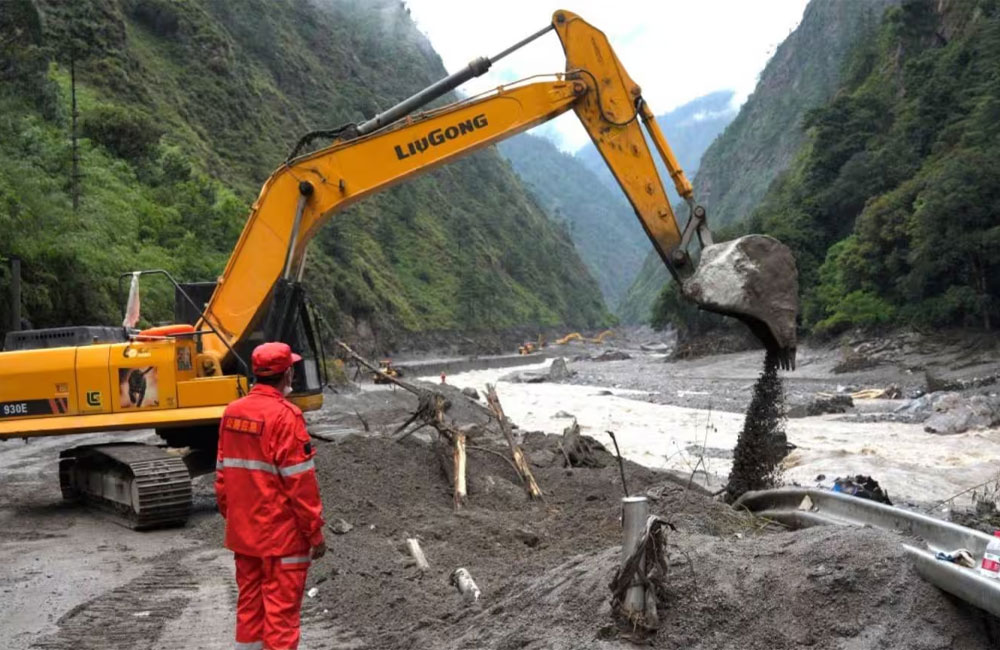
Rescue operations suspended after lake near China-Nepal border overflows
A lake that formed near to the China-Nepal border after Wednesday's floods has overflowed, causing rescue operations in the area to be halted, Chinese state broadcaster CCTV reported.
The incident brings risks of further flooding to the region after it was hit by the flash floods earlier this week.
The lake formed upstream from Gyirong Port in Tibet after debris formed a dam and blocked a river at an earlier flood site.
Chinese authorities have warned three million cubic meters of water were expected to flow into the lake over the next three days, with peak flow expected on 1 September.
Source: Sky News
Page 1 of 764