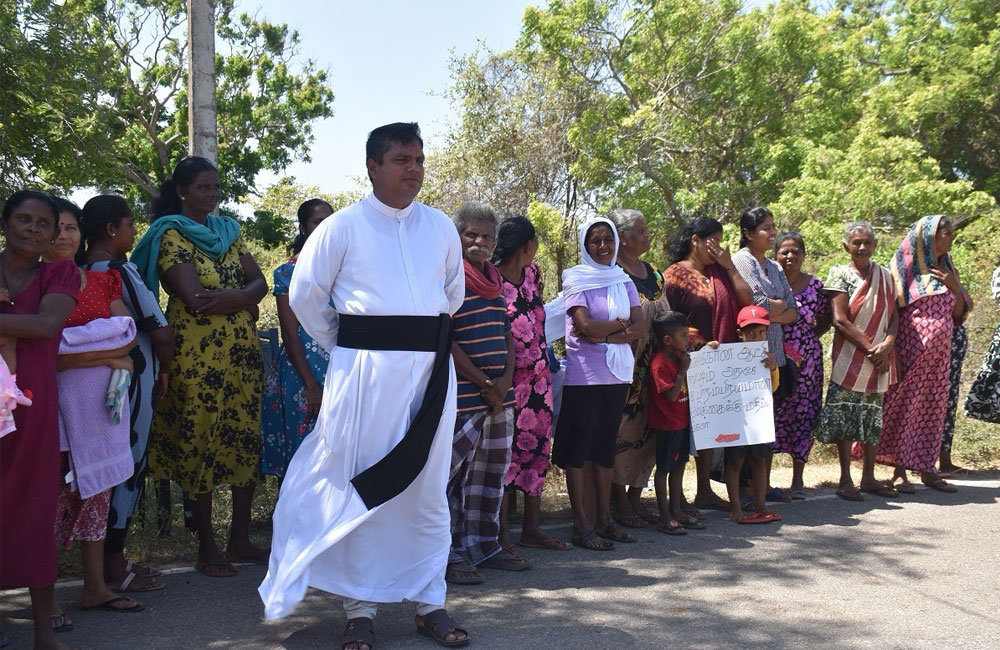
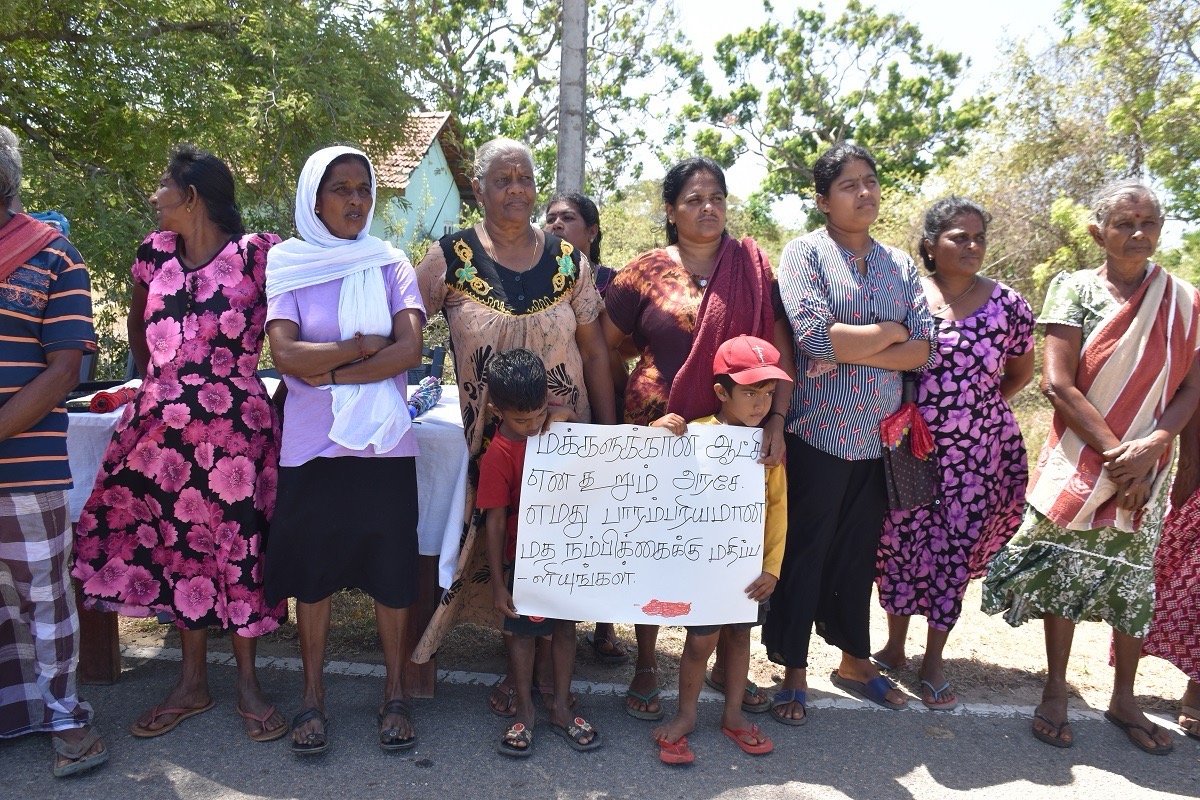
A group of Catholic devotees from Mannar have launched a protest demanding that the Sri Lankan government reopen, for five days, a route through Wilpattu National Park that has been used for centuries to attend an annual feast festival.
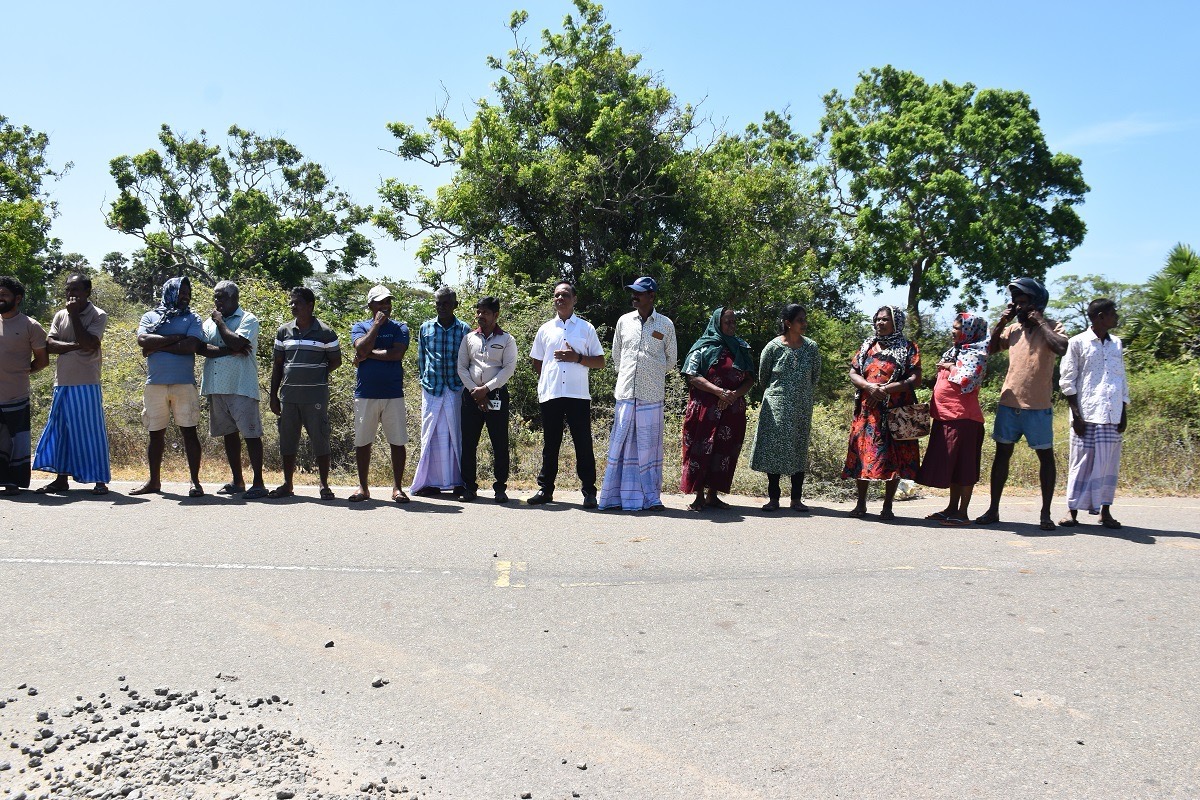
Catholic devotees from the villages of Mullikulam, Pallekandal and Kayakkuli staged a protest on 7th July near the main road leading to Mullikulam, calling on the authorities to reopen the route so they could attend the annual festival at the historic Pallekandal St. Anthony's Church, scheduled to be held from 8th to 12th July.
A petition outlining their demands was also handed over to Mannar District Secretary K. Kanageswaran on the same day.
The protesters said they had been forced to travel hundreds of kilometres via a longer route after officials from the Wildlife Conservation Department informed them a week earlier that they would not be permitted to use the traditional route this year, citing a court ruling.
Environmentalists emphasise that the use of the road from Mullikulam to St. Anthony's Church in Pallekandal has been explicitly prohibited by a Supreme Court ruling. They point out that the road passes through a sensitive ecological strip that is currently being naturally reintegrated into the forest system.
Local Catholic representatives said that an official meeting held late last month had decided that this year's annual feast would be conducted according to ancient traditions.
Father Terence Cullas, head of the Mullikulam Mission, who participated in the protest, told journalists that the traditional route to St. Anthony's Church in Pallekandal, a journey of about 30 kilometres, had been blocked, forcing devotees to travel approximately 250 kilometres instead.
“If we use the Marichchakattu - Puttalam road from here to reach the Pallekandal Church, it is only 30 kilometres away. Otherwise, if we go through Anuradhapura and Puttalam, we will have to travel about 250 kilometres. Since the people live in poverty, they cannot travel this far. We request that this route be opened and we be allowed to travel.”
According to Catholic devotees, pilgrims from across Sri Lanka who travel to this 17th century built church were unable to use the traditional route only during the war period from 1983 to 2009.
Environmentalists allege that the approximately 30,000 pilgrims who visit the park annually move through the park in disregard of park regulations.
Leave your comments
Login to post a comment
Post comment as a guest