News

Supreme Court Upholds APIT Deductions From Judges’ Remuneration
The Supreme Court has ruled that the Inland Revenue Department’s decision to impose Advance Personal Income Tax (APIT) on the remuneration of judicial officers is legally valid under the Inland Revenue (Amendment) Act.
The decision was delivered after the Court dismissed appeals filed by representatives of the High Court Judges’ Association, the Judicial Service Association of Sri Lanka and the Association of Judicial Officers of Labour Tribunals.
With the dismissal of the appeals, the Court determined that judicial officers, including High Court judges, District Judges and Magistrates, are liable to pay income tax on their remuneration.
The ruling also confirms that the relevant authorities have the legal authority to deduct APIT directly from the remuneration paid to judicial officers.

Symposium on Jayewardene statecraft brings UNP and SJB leaders together
Former President Ranil Wickremesinghe and Opposition Leader Sajith Premadasa will share a stage tomorrow (17) at an academic conference in Colombo examining the governance philosophy and foreign policy of former President J.R. Jayewardene.
The event, organised by the Alumni Association of the D.S. Senanayake Political Academy, is scheduled to begin at 2.00 p.m. at the National Library and Documentation Services Board Auditorium near Independence Square, Colombo 07, under the theme "J.R., Governance, and the Middle Path."
The joint appearance of United National Party leader Ranil Wickremesinghe and Samagi Jana Balawegaya chief Sajith Premadasa on a single platform has sparked widespread interest across the political spectrum.
The conference will focus on the economic and social reforms introduced by J.R. Jayewardene, who brought open market policies to Sri Lanka in 1977, the first such move in South Asia at the time.
Discussions are expected to assess the long term legacy of large scale state led development projects carried out during his tenure, along with the concentration of executive authority established under the 1978 Constitution and its effect on the country's socio-economic trajectory.
Organisers have also indicated that a key focus of the event will be the concept of 'middle path governance' and its relevance to developing nations navigating current global financial instability and regional geopolitical tensions, with the aim of drawing out expert perspectives on how such an approach might help stabilise a state under external pressure.
The event, spearheaded by D.S. Senanayake Political Academy Chairman Buddhika Pathirana, is expected to draw a wide cross section of academics, diplomats, policy researchers and political figures.
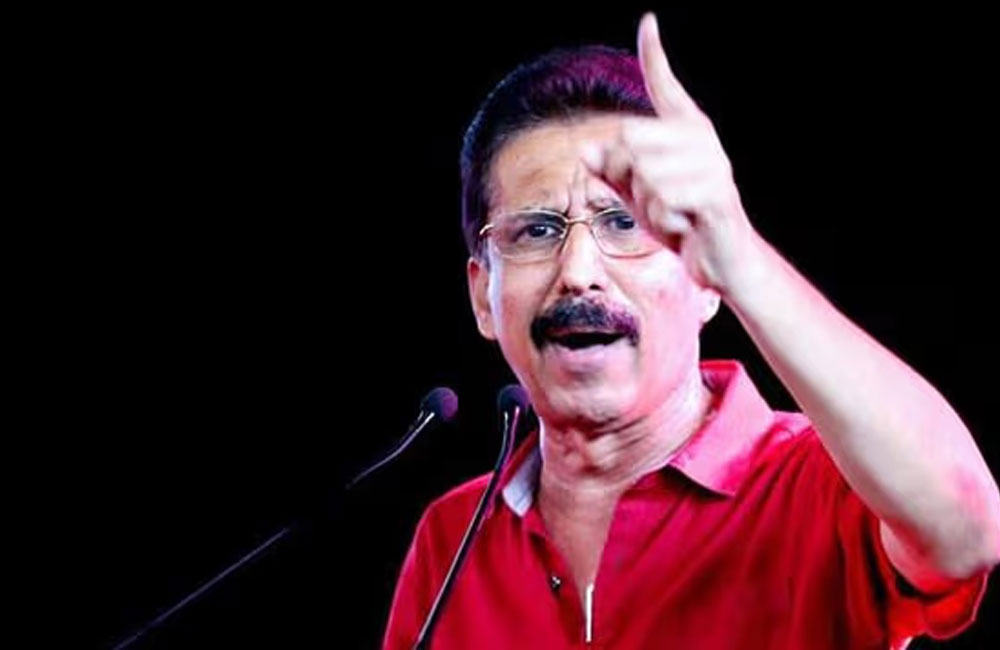
Former NTC Chairman Renuka Perera Arrested Over Alleged Route Permit Irregularities
Former National Transport Commission (NTC) Chairman Renuka Perera has been arrested by the Commission to Investigate Allegations of Bribery or Corruption (CIABOC) over alleged irregularities in the issuance of passenger transport permits.
According to CIABOC, the arrest relates to allegations that Perera caused a financial loss to the government and provided an unlawful benefit to an outside party while serving as NTC Chairman.
He was taken into custody at around 9:55 a.m. today (17) over allegations that 56 bus passenger transport service permits were issued to operate on the Southern Expressway without following the legally prescribed procedures.
The permits were also allegedly issued without collecting the required annual fees as a single payment, according to CIABOC.
The alleged conduct is said to have violated provisions of the National Transport Commission Act No. 37 of 1991, as well as recommendations contained in a Cabinet decision dated September 19, 2014.
Perera, who is also the Administrative Secretary of the Sri Lanka Podujana Peramuna (SLPP), is due to be produced before the Colombo Chief Magistrate’s Court.
He previously served as Chairman of MILCO, the state-owned dairy producer and marketer.
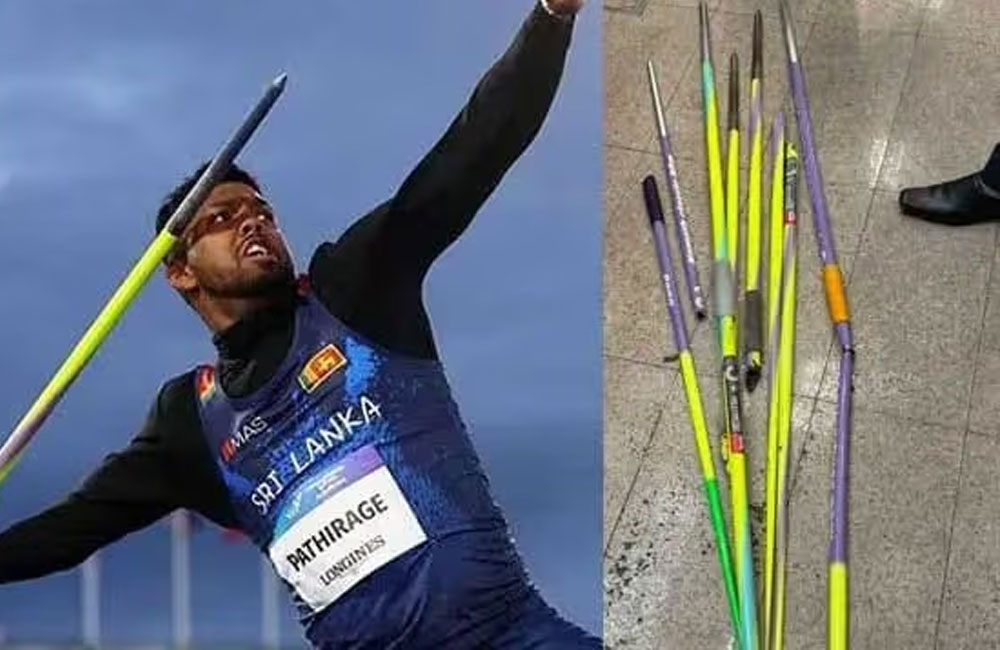
Turkish Airlines to Compensate Javelin Champion Over Damaged Sports Equipment
Turkish Airlines has agreed to compensate Sri Lankan javelin throw champion Rumesh Tharanga Pathirage after his sports equipment was reportedly damaged during his return to Sri Lanka.
Pathirage, who secured the gold medal in the javelin throw at the World Athletics Ultimate Championship in Hungary, discovered that his equipment had been damaged after arriving at Bandaranaike International Airport (BIA) on the morning of September 15.
The issue was discussed at a meeting held yesterday (15) at the Civil Aviation Authority, chaired by Deputy Minister of Ports and Civil Aviation Janith Ruwan Kodithuwakku.
Ministry Secretary W.W.W.S. Mangala, Civil Aviation Authority Director General Captain Daminda Rambukwella, Chairman Colonel (Retired) Ranjith Rajasinghe and representatives of Turkish Airlines were also present.
According to a statement issued by the Ministry of Ports and Civil Aviation, Turkish Airlines representatives expressed regret over the damage caused to the athlete’s equipment.
Following discussions, the airline agreed to conduct an internal investigation into the incident and evaluate the extent of the damage.
Turkish Airlines has also agreed to take immediate action to compensate Pathirage for the damaged sports equipment, the ministry said.

Mattakkuliya Crash Leaves Three Dead as Driver Found Under Cannabis Influence
Police have found that the driver involved in a fatal road accident in Mattakkuliya was allegedly under the influence of cannabis when the crash occurred.
The accident took place last night (16) after the car, which was travelling at high speed, collided with several vehicles on the road.
According to police, the car crashed into three three-wheelers and four motorcycles during the incident.
Ten people were seriously injured and were admitted to the Colombo National Hospital for treatment. Three of the injured later succumbed to their injuries, bringing the death toll from the accident to three.
Police arrested the driver of the car following the crash.
The Mattakkuliya Police are continuing investigations into the incident.
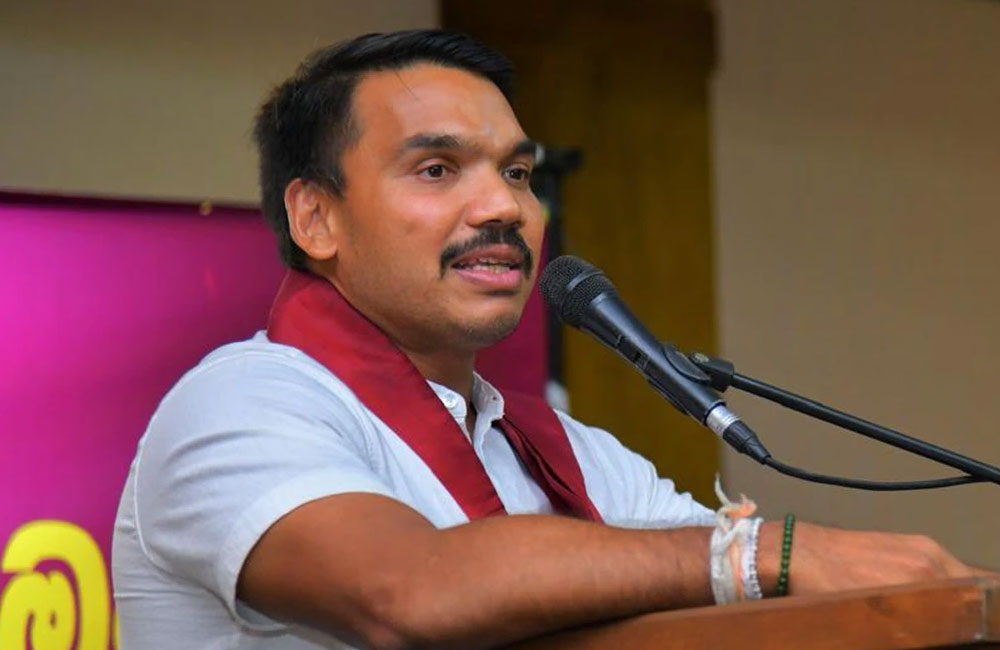
Namal Rajapaksa Remanded Until September 23 Over SriLankan Airlines Airbus Investigation
Parliamentarian Namal Rajapaksa has been remanded until September 23 after being produced before the Colombo Fort Magistrate’s Court today (16) in connection with an investigation into the alleged misappropriation of approximately USD 2 million during the acquisition of Airbus aircraft for SriLankan Airlines.
Colombo Fort Magistrate Pasan Amarasena issued the remand order after hearing submissions from both sides.
Deputy Solicitor General Janaka Bandara appeared for the Criminal Investigation Department (CID), which is conducting the investigation, while President’s Counsel Anil Silva and other attorneys represented Namal Rajapaksa.
The court also ordered that the decision on Rajapaksa’s bail application be delivered on September 23.
Rajapaksa, who is currently in custody, was produced before the court today as a suspect in the investigation into the alleged financial irregularities surrounding the acquisition of Airbus aircraft by SriLankan Airlines.

51-Year-Old Man Found Dead Under Suspicious Circumstances in Horana
Police have commenced an investigation following the discovery of the body of a 51-year-old man on an abandoned piece of land near Ilimba Junction in Horana.
According to police, the man was a resident of Pokunuwita. His body was found on land located across the canal, prompting authorities to investigate the circumstances surrounding his death.
A magistrate’s inquiry is due to be held today (17) as part of the investigation into the incident.
The Horana Police are continuing investigations to establish the circumstances that led to the man’s death.
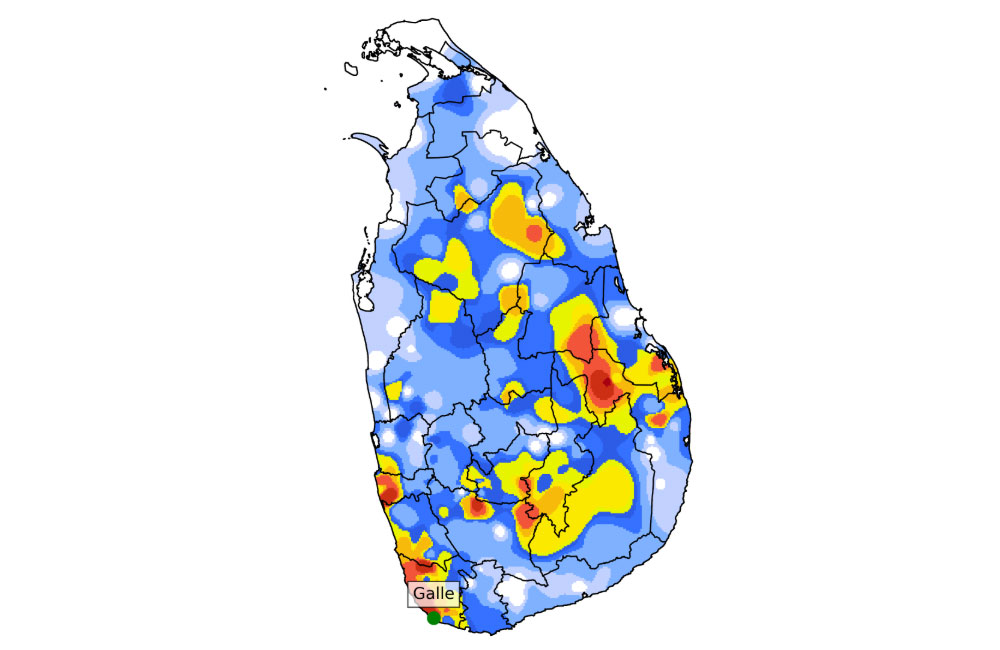
Heavy Rain, Floods and Landslides Expected as Sri Lanka Enters Wetter Period
Sri Lanka is expected to experience widespread rainfall over the next 10 days, with the Department of Meteorology cautioning that heavy rain could trigger flooding and landslides in vulnerable areas.
Meteorology Department Director General Ajith Wijemanna issued the warning at a special media briefing today (16), urging both the public and authorities to prepare for potentially worsening weather conditions.
Wijemanna said preparations are already being made to deal with the effects of prevailing El Niño conditions, but additional steps will be necessary as forecasts indicate an increased risk of heavy rainfall and related hazards.
He said October and November are expected to bring particularly heavy rainfall, during which flooding and landslides could occur in several areas.
According to Wijemanna, atmospheric disturbances commonly form over the Bay of Bengal during these months, and their impact could become stronger under El Niño conditions.
He also warned that rainfall is expected to increase in the northeastern parts of the island in December, while calling on the public and relevant agencies to remain vigilant.
Rainfall in the Northern and Eastern provinces is expected to remain around average levels. However, Wijemanna noted that certain Indian Ocean Dipole (IOD) conditions could contribute to flooding in those regions.
Looking further ahead, February, March and April next year are expected to bring higher temperatures accompanied by comparatively lower rainfall.
Wijemanna stressed that effective management of rainfall over the coming months will be important as the country prepares for changing weather patterns and potential weather-related hazards.
Prof. Pradeep Weerasinghe appointed SJB organiser for Badulla
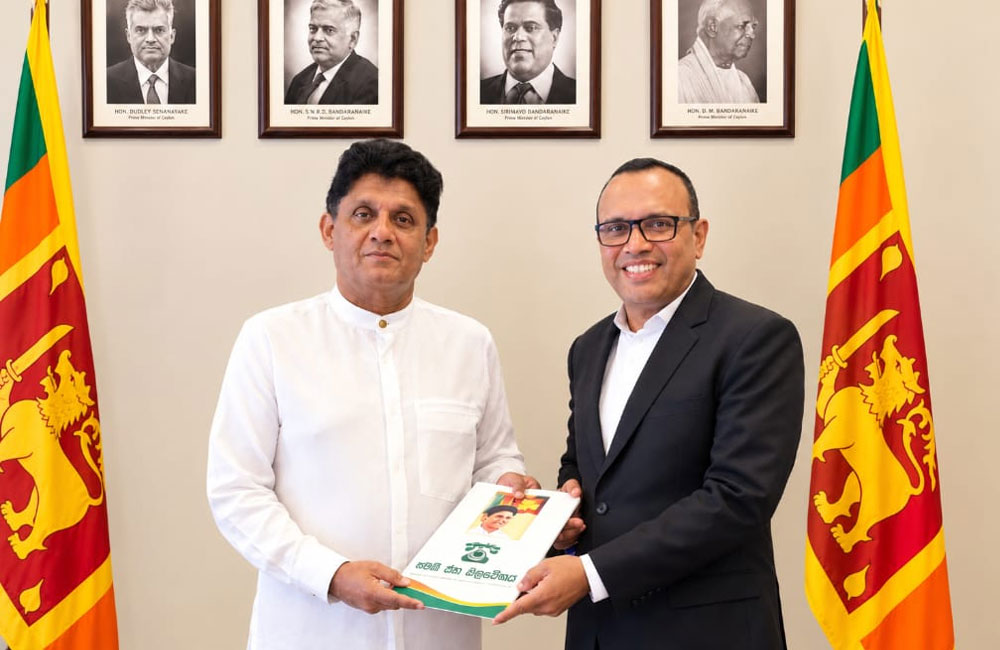
Prof. Pradeep Weerasinghe of the University of Colombo has been appointed main organiser for the Badulla electorate by the Samagi Jana Balawegaya (SJB).
Party leader Sajith Premadasa presented the appointment letter to Prof. Weerasinghe, entrusting him with political and policy operations in Badulla after his previous tenure as the SJB's main organiser for Hali Ela.
Educated at Badulla Central College and Uva Provincial School, Prof. Weerasinghe maintained active involvement in regional welfare initiatives from his youth.
He led local community projects during his school days through leadership roles in the All Ceylon Buddhist Students Federation and the Badulla Hospital Health Care Unit, before pioneering community radio initiatives across the Uva Province.
As a senior professor in the Department of Mass Media Studies at the University of Colombo, Prof. Weerasinghe has established a distinguished research record within the national university system.
He received the Vice Chancellor's Award for Research Excellence at the University of Colombo in 2025 and has secured Senate Awards for Research Excellence consecutively since 2023, while regularly hosting broadcast discussions on social issues.
Prof. Weerasinghe brings extensive public sector experience, having served as a National Communications Consultant for the Asian Development Bank Health System Enhancement Project and as a director at the Regional Development Bank.
His career includes chairing the National Media Reforms Secretariat, managing programmes at the Sri Lanka Broadcasting Corporation, and serving as an international expert at the Beijing International Radio and Television Institute in China.
Having managed policy training and strategic planning as an SJB Working Committee member and Hali Ela organiser since 2023, Prof. Weerasinghe represents a broader shift toward deploying academics in frontline politics.
Opposition Leader meets German lawmakers to push for strategic investment and green energy partnerships
Opposition Leader Sajith Premadasa met a delegation from the South Asian Parliamentary Group of the German Bundestag at his office yesterday (15) to discuss strengthening parliamentary relations and building long-term bilateral partnerships between Sri Lanka and Germany.
The visiting delegation was headed by German Parliamentarian Nicklas Kappe and included fellow Member of Parliament Gerold Otten alongside senior parliamentary officials.
The discussion focused heavily on expanding cooperation across investment, technology, innovation, and skills development.
Premadasa urged a strategic shift towards productivity-driven economic growth for the island.
He underlined the necessity of advancing technical and vocational training while expanding renewable energy and climate resilience projects.
The Opposition Leader also called for better exploitation of Sri Lanka's strategic geographic location within the Indian Ocean trade routes.
Both parties explored mutual opportunities in the blue economy, maritime development, and green energy transition.
Premadasa stressed that future international partnerships must focus on building local manufacturing capacity, generating sustainable employment, and transferring advanced technology.
He added that such economic progress must be achieved while protecting natural resources and boosting national economic resilience.
The meeting concluded with both delegations reaffirming their commitment to maintaining continuous parliamentary dialogue and bilateral cooperation.
SJB MPs Kabir Hashim, Kavinda Jayawardena, and Chamindrani Kiriella also attended.
Six Train Services Reportedly Cancelled Tonight Ahead of Railway Strike
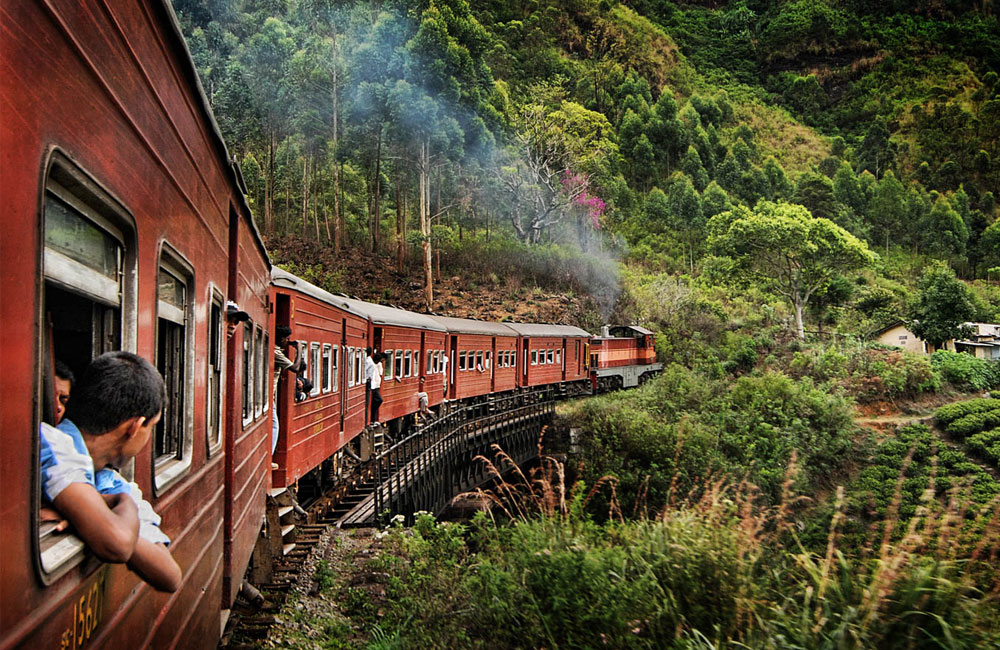
Six train services scheduled to operate tonight (16) are reportedly set to be cancelled ahead of the railway strike planned for tomorrow (17).
Among the services reportedly affected are the train scheduled to leave Colombo Fort for Batticaloa at 7.00 p.m. and the 8.00 p.m. service bound for Kankesanthurai.
The Night Mail train scheduled to depart Colombo Fort for Batticaloa at 9.30 p.m. is also reportedly among the services facing cancellation.
However, the reported cancellations have not yet been officially confirmed by the Department of Railways or other relevant transport authorities.
Passengers have therefore been advised to await an official announcement regarding the status of tonight’s train services.
Johnston Fernando’s Luxury Vehicle Case to Be Called Again on October 28
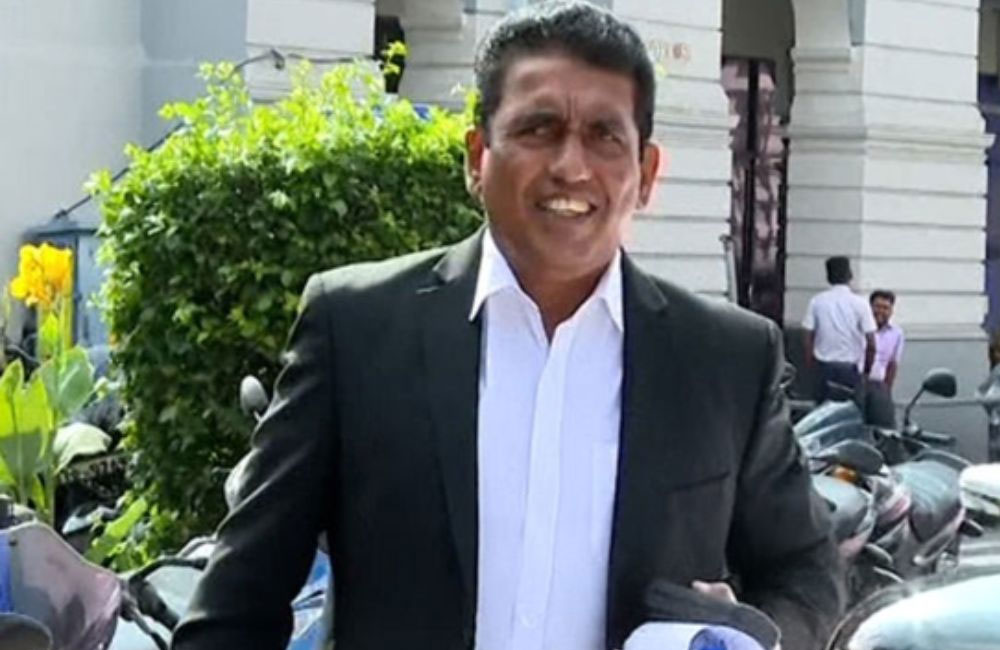
The Colombo Fort Magistrate’s Court today (16) fixed October 28 to recall the case against former Minister Johnston Fernando over the alleged illegal possession of a luxury vehicle.
The case was taken up before Colombo Fort Magistrate Pasan Amarasena, with Fernando appearing in court as a suspect currently released on bail.
During the proceedings, President’s Counsel Sampath Mendis, who represented Fernando, submitted that the matter falls within the provisions of the Motor Traffic Act.
Following the submissions, the Magistrate ordered that the case be called again on October 28.
Fernando is facing the case in relation to allegations concerning the possession of the luxury vehicle.
Page 1 of 774