News
IMF envisages Sri Lanka re-entering sovereign bond market to secure $3 billion
Sri Lanka may issue USD 3 billion in international sovereign bonds by 2028, according to an assumption made by the International Monetary Fund (IMF).
Speaking in parliament yesterday, Deputy Minister for Finance and Planning Dr. Anil Jayantha Fernando clarified that this was an IMF estimate and not a projection of the Sri Lankan authorities.
He said that the IMF's staff report assumes issues of USD 1.5 billion each in 2027 and 2028.
Any final decision on whether to actually tap global markets will be made by the government on a periodic basis, following a careful assessment of the prevailing situation.
Simultaneously, the Public Debt Management Office is working to strengthen the regulatory framework for liability management operations.
These efforts are designed to reduce financing, interest rate, and currency risks within the government's overall debt portfolio.
The office is currently assessing both opportune market conditions and the range of available instruments for this purpose.
Dr Fernando declined to provide details on specific operations or strategies, describing the information as highly sensitive.
Regarding official reserves, the Deputy Minister emphasised that gross official reserve figures are not defined as program targets under the IMF Extended Fund Facility.
He stated that the relevant target is the program net international reserves, which are defined in the published IMF documents.
For the end of the year, the net international reserves target has been set at USD 944 million.
Data indicates that gross official reserves reached USD 6.9 billion in August, which is equivalent to 3.4 months of import cover.
The primary driver for the build-up in gross official reserves has been Central Bank purchases of foreign exchange directly from the market, although the pace of these purchases has slowed.
Net purchases fell from USD 1.76 billion in the six months to June 2024 to USD 0.56 billion in the six months to June 2026.
Gross reserves include the People’s Bank of China swap facility.
Apart from that swap and a marginal amount of encumbered balances, the reserves are readily available for debt service payments or market intervention.
On the issue of short-term foreign currency obligations, outstanding currency swaps totalled USD 4.1 billion at the end of May 2026.
This amount includes USD 1.8 billion in international swaps and USD 2.3 billion in domestic ones.
Of the domestic swaps, only around USD 83 million are due to mature beyond one year, with the rest expected to be settled within twelve months.
Domestic swaps had previously peaked at USD 2.7 billion in August 2016.
The Central Bank expects to maintain a flexible exchange rate, only intervening to build reserves or to mitigate excessive volatility.
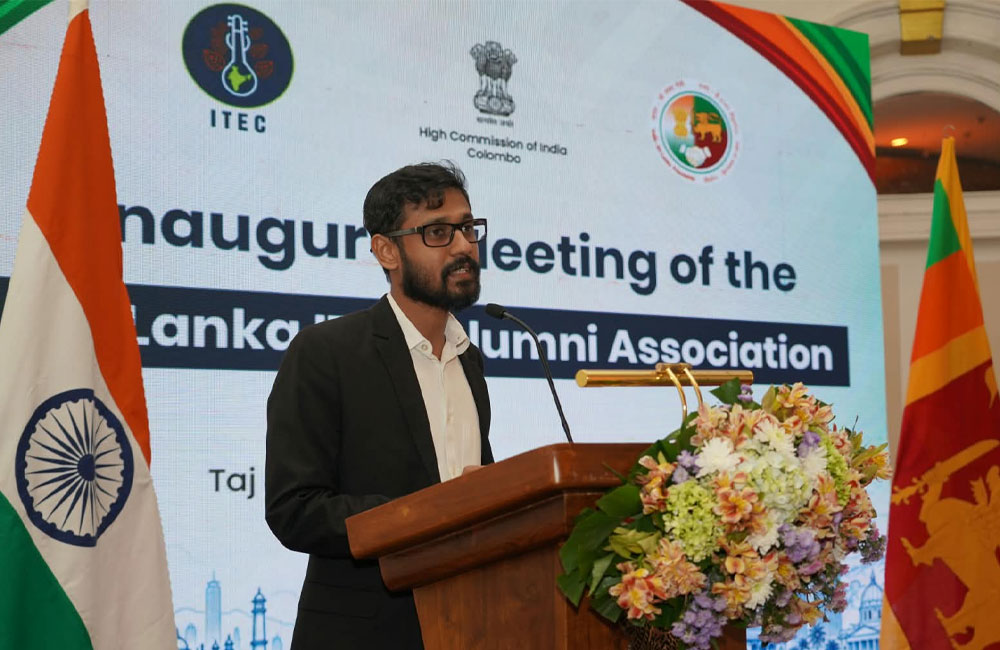
Prominent Journalist Vimukthi Dushantha Elected Assistant Secretary of the ITEC Alumni Association
Prominent young journalist, digital media strategist, and civil society leader Vimukthi Dushantha has been elected by vote as the Assistant Secretary of the Indian Technical and Economic Cooperation (ITEC) Alumni Association for the upcoming term. The appointment recognizes his extensive contributions to media, digital advocacy, public communication, and strengthening bilateral professional ties between Sri Lanka and India.
Dushantha, who currently serves as the Assistant Manager (Web News) at Lotus Technologies (Hiru News), brings over a decade of multifaceted experience spanning newsroom leadership, government communications, and civic advocacy. He is the Founder of Info Sri Lanka and also serves as the Assistant Secretary of the Sri Lanka–India Media Friendship Association (SLIMFA).
His distinguished career includes serving as the Director of Communications and Public Relations at the Jathika JanaSabha Secretariat under the Presidential Secretariat, as well as holding key editorial positions at Lake House (The Associated Newspapers of Ceylon Ltd). He has also contributed his strategic expertise to election monitoring initiatives, anti-corruption boards, and regional reconciliation frameworks, including roles with the Secretariat for Coordinating Reconciliation Mechanisms (SCRM) under the Prime Minister's Office and the UN-assisted ‘Ahanna’ reconciliation campaign.
An alumnus of professional training programs in India—holding a specialization in media management from the Dr. Marri Channa Reddy Human Resource Development Institute of Telangana (MCRHRDIAP)—Dushantha’s election to the ITEC Alumni Association executive committee marks a significant step forward in fostering stronger professional, cultural, and collaborative networks across the region.
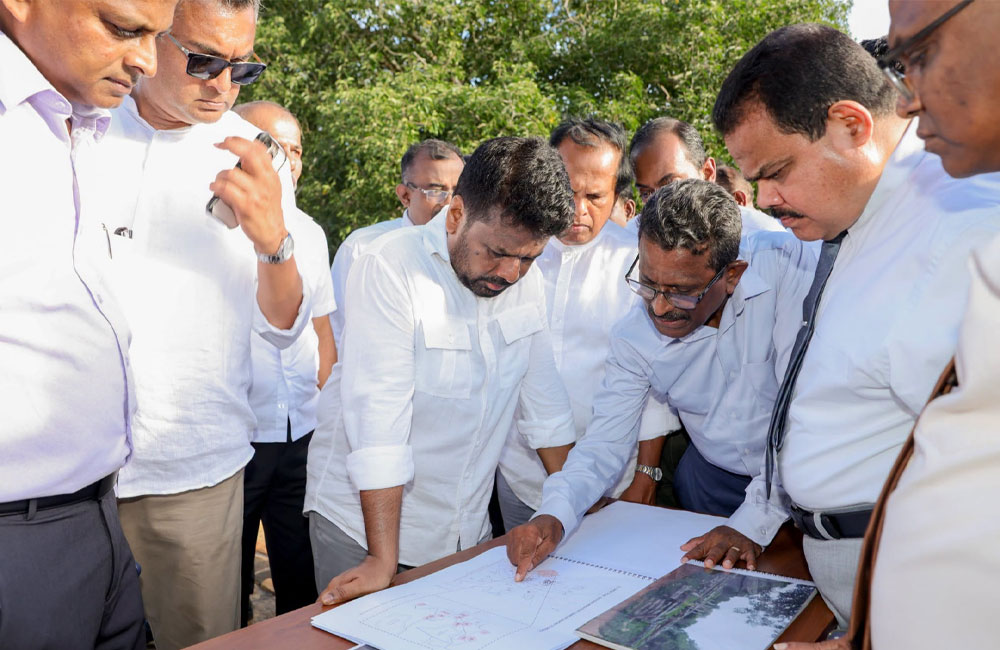
President reviews proposed Anuradhapura Sacred Area Development Project
President Anura Kumara Dissanayake visited the Anuradhapura sacred area this afternoon (23) to review the progress of the proposed development project.
The Anuradhapura Sacred Area Development Project aims to renovate access roads, improve facilities for devotees and local and foreign tourists, and enhance waste management, while safeguarding the historic character, antiquity and religious significance of the Anuradhapura Sacred City.
The National Physical Planning Department has prepared a structural plan, which was gazetted as the Anuradhapura Sacred Area Planning Scheme.
On 27 February 2026, an updated Anuradhapura Sacred Area Development Plan, together with the criteria to be followed in carrying out development activities, was published in the Gazette.
The Government of India has agreed to provide funding for the project, which has an estimated total cost of Rs. 7.7 billion.
Upon arriving at the Anuradhapura Sacred City, the President walked through the area to inspect the sites and plans relating to the development activities.
He also held discussions with officials and inquired about the progress of the work.
The President inspected road development work in the vicinity of the three historic ponds in the Anuradhapura Sacred City, as well as archaeological excavations at the Western Monastery complex.
He subsequently inspected the site proposed for the construction of a car park in the Atamasthana area, near the Ruwanwelisaya, and reviewed the sites and plans relating to the proposed development projects.
The President stressed the importance of carrying out all development activities in a manner that safeguards the antiquity and religious significance of the historic Anuradhapura Sacred Area.
He also instructed officials to expedite the development work by discussing and resolving any issues that arise during project implementation through consultations involving all relevant stakeholders.
Meanwhile, President Anura Kumara Dissanayake paid homage to the historic Ruwanwelisaya Stupa and received blessings. He also inquired about the development activities being carried out there.

Litro to Release 350,000 Gas Cylinders to Market Over Next Three Days
Litro Gas Lanka Limited has announced plans to distribute 350,000 gas cylinders across Sri Lanka over the next three days following the arrival of a fresh liquefied petroleum gas (LPG) shipment.
According to the company, the vessel CORINTHIAN, carrying 3,900 metric tonnes of LPG, arrived in Sri Lanka on October 22.
Unloading operations began yesterday evening, enabling the company to proceed with the planned release of gas cylinders to the market.
Litro Gas stated that the arrival of the shipment would support the uninterrupted distribution of LPG throughout the island, allowing consumers to purchase cylinders through normal channels.
The company also appealed to the public to avoid panic buying and the unnecessary accumulation of gas cylinders, urging consumers to purchase gas according to their usual requirements.
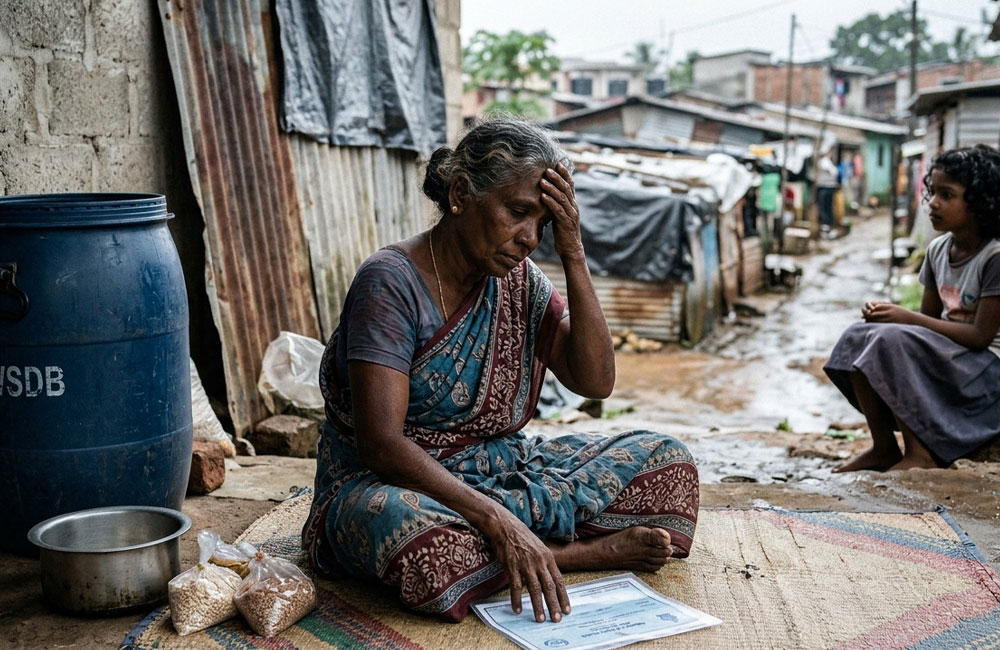
Sri Lanka social safety net fails to protect shock-hit poor - IPS
Sri Lanka's flagship social safety programs are failing to prioritize the country's most vulnerable households when major economic, health, and climate crises strike.
A study released by the Institute of Policy Studies in Colombo revealed that state welfare benefits are distributed uniformly without accounting for a family's vulnerability to external shocks.
Research fellow Dr Ganga Tilakaratna presented the findings, drawing from the think tank's annual flagship report.
The analysis evaluated cumulative family exposure across thirteen categories of crises, including the coronavirus pandemic, recent economic volatility, and recurring natural disasters.
Data compiled from thousands of surveyed homes revealed that over eleven percent of local households face severe cumulative shock exposure, while more than half endure moderate risks.
Although primary welfare schemes like Aswesuma cover nearly thirty percent of all households, the study found no direct link between crisis vulnerability and actual welfare distribution.
Within the lowest income bracket, overall assistance dropped significantly for families enduring high crisis exposure compared to less vulnerable peers, leaving forty-five percent of highly exposed low-income homes completely unsupported.
The estate sector, while showing improved general coverage compared to previous government initiatives, recorded lower benefit rates for high-exposure households than for low-exposure ones.
To address these systemic flaws, policy analysts outlined actionable reforms centered on digital integration and rapid emergency deployment.
Healthcare adaptations
The research institution advised linking all safety net operations directly into a centralized integrated welfare management platform to capture excluded families.
Experts recommended connecting welfare databases with national disaster registries to instantly identify vulnerable populations in high-risk zones.
The proposed strategy calls for predefined emergency expansion protocols, digital payment architecture, and dedicated financing mechanisms to ensure swift resource mobilization during crises.
Investments in labor market initiatives were also cited as critical for strengthening long-term financial independence across local communities.
Beyond general social protection, the presentation emphasized the urgent need to prepare Sri Lankan institutions for a rapidly aging population.
Assessments of the national healthcare system uncovered structural deficits, including a lack of age-specific health data, supply chain disruptions, and an absence of dedicated financing for long-term care.
Proposed health interventions include reinforcing primary medical services, expanding digital health solutions like telemedicine, and reducing personal medical spending for elderly citizens through targeted subsidies.
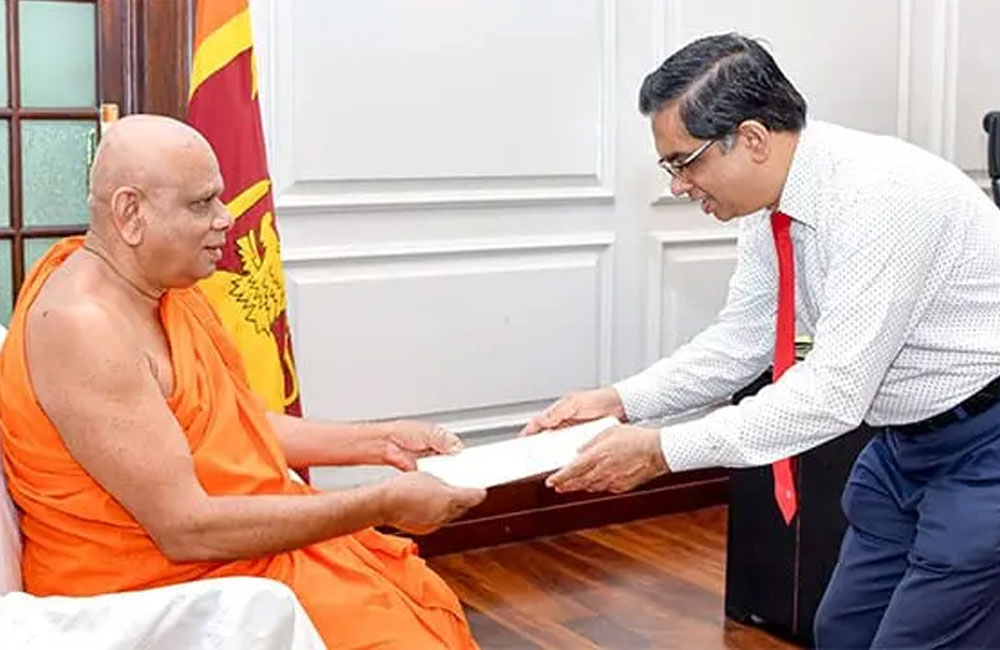
Gallelle Sumanasiri Thera Appointed Chancellor of Sabaragamuwa University
Aggamaha Panditha Senior Professor Most Ven. Dr. Gallelle Sumanasiri Thera has been appointed as the new Chancellor of the Sabaragamuwa University of Sri Lanka.
The appointment was made by President Anura Kumara Dissanayake, with the official letter of appointment handed over to the Thera at the Presidential Secretariat today (October 23).
The letter was presented by Secretary to the President Dr. Nandika Sanath Kumanayake.
Most Ven. Dr. Sumanasiri Thera is a distinguished Buddhist scholar and academic who serves as the Chief Incumbent of Kotamudungala Rajamaha Viharaya in Molagoda.
He previously held the position of Vice-Chancellor at the Buddhist and Pali University of Sri Lanka and also served as Chancellor of Rajarata University. However, he subsequently resigned from the latter position.
His appointment marks his return to a university chancellorship in Sri Lanka's higher education sector.

SJB MP: Why aren't bribe-givers extradited to face justice?
Samagi Jana Balawegaya (SJB) MP Chaminda Wijesiri has questioned the government’s approach to bribery investigations, asking why individuals alleged to have paid bribes are being questioned overseas instead of being brought back to Sri Lanka to face further legal proceedings.
Speaking in Parliament, Wijesiri acknowledged the authorities’ efforts to apprehend underworld figures operating overseas but questioned whether the same approach was being adopted in investigations into alleged large-scale corruption.
He pointed out that while individuals accused of accepting bribes were being arrested, remanded and produced before courts, investigators were travelling overseas to obtain statements from individuals alleged to have paid bribes.
“Offering a bribe is also an offence. If a person admits to having paid a bribe, why isn’t that individual also brought back to Sri Lanka?” Wijesiri said.
He stressed that investigations should establish the circumstances surrounding alleged bribery transactions, including who offered the money, who accepted it and where the transactions took place.
Wijesiri also questioned whether obtaining statements and sworn affidavits from individuals overseas, while other suspects remained in custody, was sufficient to ensure accountability.
He suggested that the process could create the impression of a political performance rather than a comprehensive investigation into the alleged offences.
Questioning the minister directly, Wijesiri asked whether the government approved the procedure or whether it was being pursued for political reasons.
He noted that authorities should investigate both parties involved in alleged bribery transactions and ensure that everyone suspected of an offence is dealt with according to the law.
Wijesiri called on the minister to clarify whether the procedure followed by investigators was deliberate government policy and whether the same legal standards were being applied to all individuals implicated in bribery cases.
His remarks highlighted questions over the consistency of anti-corruption investigations and whether authorities were pursuing those alleged to have offered bribes with the same determination as those accused of accepting them.
The test will be whether Sri Lanka can turn its ancient healing heritage and rising international visibility into a diversified, sustainable source of tourism revenue, rather than another promotional achievement measured primarily by recognition and publicity.
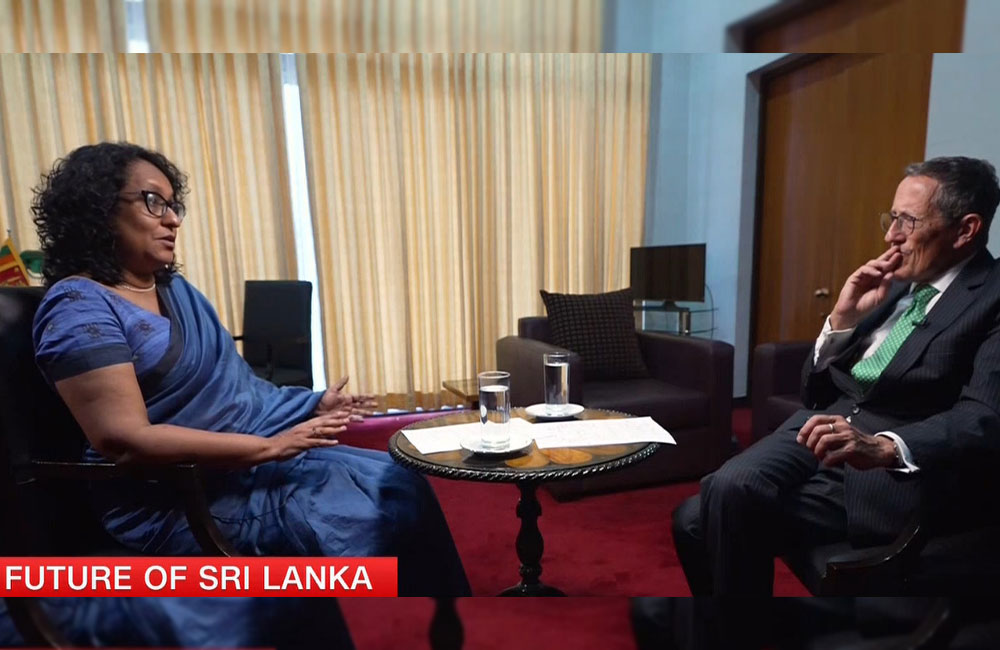
Conflicts like the Iran war serve no one, says PM
In a world increasingly fractured by major power rivalries, smaller nations are discovering that the cost of taking sides is a luxury they simply cannot afford.
Speaking with CNN's Richard Quest on October 22, Prime Minister Dr. Harini Amarasuriya cuts straight through the diplomatic fog surrounding the ongoing Middle East tensions stating that "conflicts like the Iran war serve no one".
For an island nation positioned along major Indian Ocean shipping routes, the war is not a distant headline but an active threat to domestic stability.
The National People’s Power (NPP) government has spent months navigating an intense diplomatic tug-of-war.
Colombo previously rejected requests from Washington to land military aircraft at Mattala Airport, while concurrently denying specific naval requests from Tehran.
By turning away both superpowers, Sri Lanka has sent a clear message: it will not allow its territory, sea, or airspace to become a staging ground for external war games.
The collateral of conflict
The Prime Minister’s comments highlight a harsh economic reality.
Recovering from bankruptcy, Sri Lanka faces a "triple whammy" of soaring global fuel costs, disrupted trade corridors, and maritime emergencies right off its southern coast.
From rescuing survivors of sunken vessels to handling damaged foreign warships, the island has absorbed heavy logistical burdens.
The Prime Minister's stance asserts that the Global South should not be forced to bear the systemic shockwaves of conflicts triggered by the West or regional powers.
Humanity above geopolitics
What distinguishes Sri Lanka’s current foreign policy is its balance of strict military non-alignment with aggressive humanitarianism.
Despite political pressure from Western allies to withhold assistance or block the repatriation of rescued sailors, Colombo has consistently prioritized international maritime law and humanitarian values.
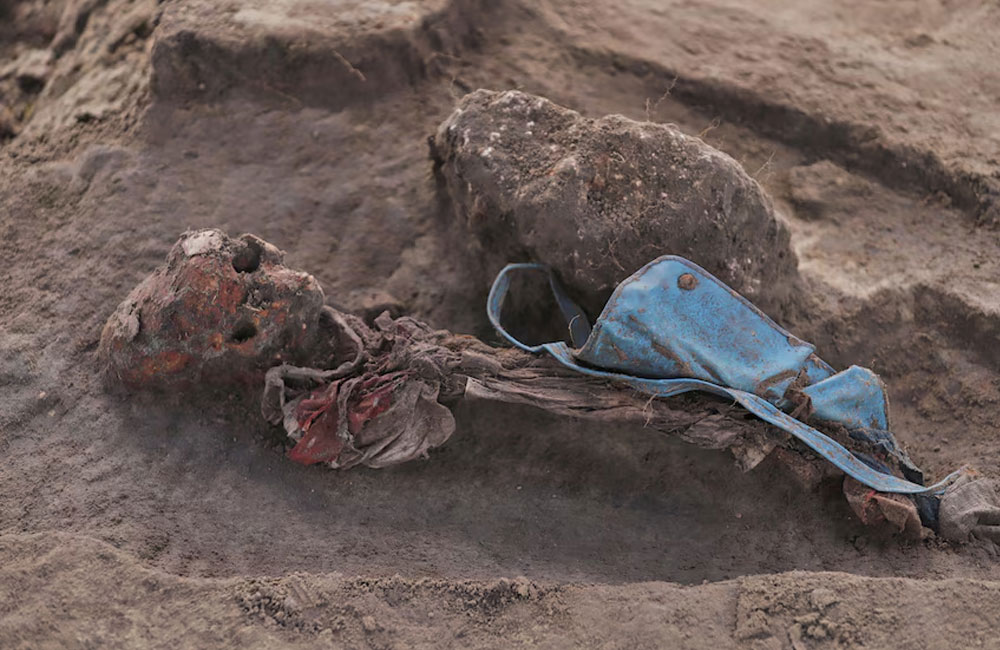
BTF demands international probe into Chemmani mass grave site
A prominent diaspora organization has called for an immediate international investigation into the mass grave discovered at Chemmani in northern Sri Lanka.
The British Tamils Forum released a statement expressing deep concern over claims that the human remains recovered from the site could be attributed to a historical epidemic or a natural disaster.
The group argued that the lead archaeologist appointed to the Chemmani investigation lacks specialized qualifications in forensic archaeology and anthropology.
Human remains numbering 583 sets have been excavated from the location, alongside personal items including feeding bottles, toys, and schoolbags.
Demographic reports indicate that children account for an estimated 41 percent of the bodies recovered, while infants comprise 22 percent.
Rights organizations noted that such demographic findings strongly align with historical military crackdowns and mass enforced disappearances recorded in the Jaffna Peninsula during the 1990s.
Previous assessments conducted by the Human Rights Commission of Sri Lanka observed that naked bodies were buried in disorderly heaps at the site.
The rights commission previously concluded that these burial practices were entirely incompatible with local cultural rites and indicated a reasonable likelihood of unlawful extrajudicial killings.
The Tamil diaspora group warned that unverified natural disaster narratives risk deflecting scrutiny from potential state or military criminal responsibility.
The organization stated that Sri Lankan state authorities lack both the political resolve and specialized forensic facilities required to conduct a credible local inquiry.
To ensure accountability, the forum requested the immediate deployment of accredited international forensic pathologists and anthropologists to preserve the chain of custody.
The proposal calls for a multidisciplinary expert review of the archaeological report alongside the implementation of the United Nations Minnesota Protocol on potentially unlawful deaths.
Recommendations submitted by the forum include establishing a UK-based satellite analysis project to trace historical topographic changes and vehicle routes around the burial grounds.
The group further urged international bodies to build a cross-verified database of missing persons and create an independently supervised DNA databank utilizing accredited laboratories in Europe.
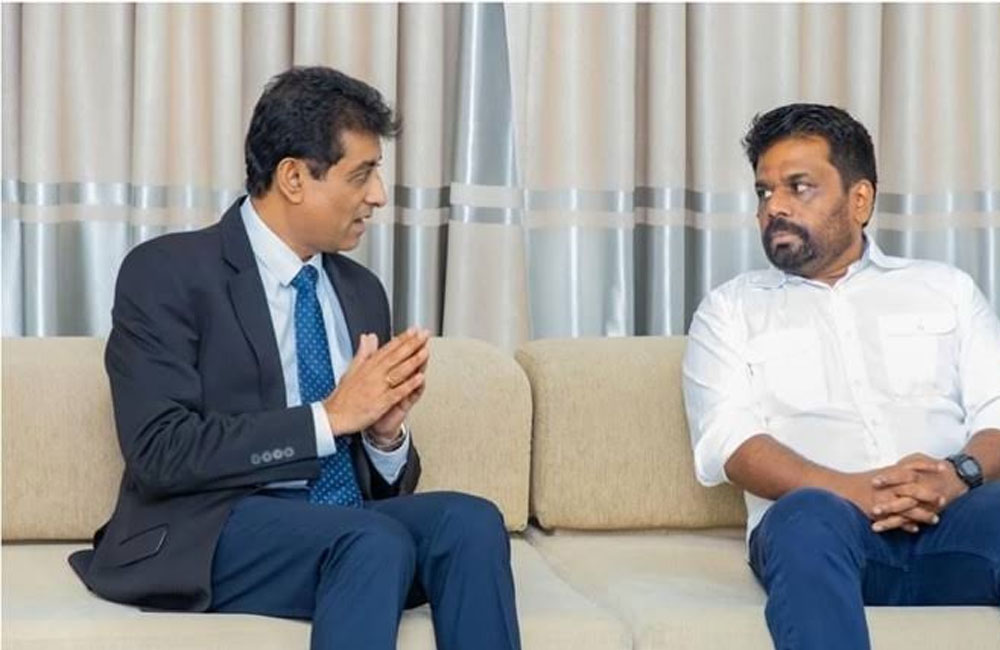
Govt. refutes Opposition claims regarding presidential adviser's past roles
Claims made by Samagi Jana Balawegaya (SJB) MP Dr. Harsha de Silva regarding the background of President Anura Kumara Dissanayake's economic adviser Duminda Hulangamuwa have been rejected in Parliament by Leader of the House Bimal Rathnayake.
Speaking in parliament yesterday (23), the Minister clarified that the senior adviser had never held any advisory position under former President Ranil Wickremesinghe or any previous head of state.
He said that the appointment under the present National People's Power (NPP) government represents the first time the economic expert has accepted a formal state advisory role.
Rathnayake noted that adviser's past involvement with previous governments was restricted entirely to committee memberships held in his official capacity as Chairman of the Ceylon Chamber of Commerce.
He said that former President Wickremesinghe had never directly appointed the economic expert to any official post or advisory team.
Calling the assertions completely false, Rathnayake requested the Opposition parliamentarian to formally withdraw his statements.
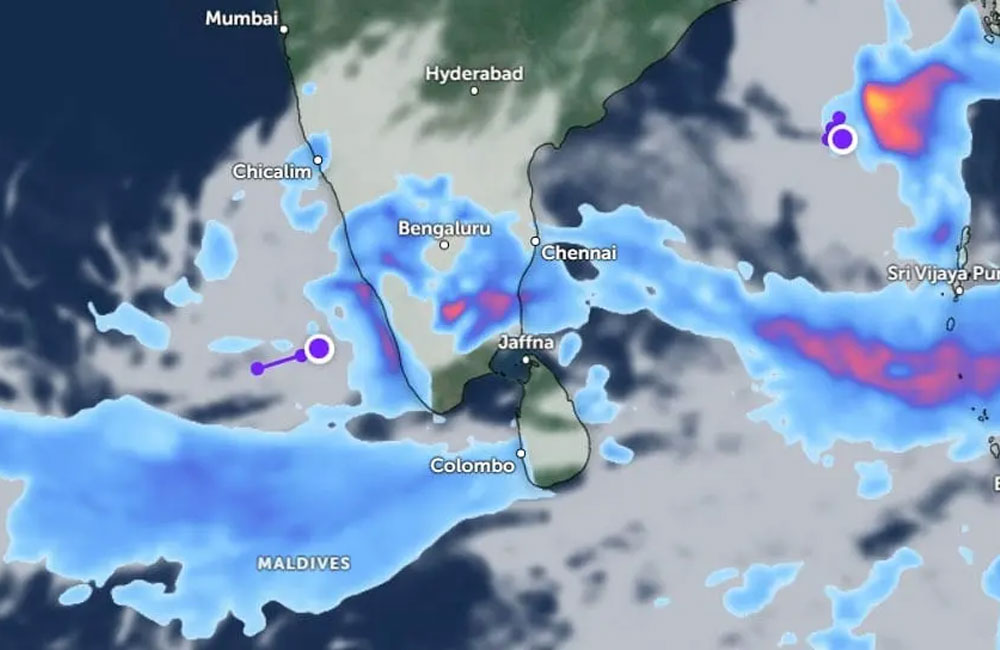
Bay of Bengal Weather System to Intensify, Increasing Rainfall Across Sri Lanka
A developing weather system over the Bay of Bengal is expected to strengthen into a depression today (October 24), with further intensification forecast over the next two days, according to the Department of Meteorology.
The low-pressure area, currently located near the North Andaman Islands, is forecast to move west-northwestwards and develop into a deep depression by October 25. It is then expected to intensify into a cyclonic storm over the west-central Bay of Bengal by October 26.
Although the system is not expected to directly affect Sri Lanka, its associated winds could bring increased rainfall to the southwestern parts of the island over the coming days.
According to the Meteorology Department, showers or thundershowers are likely at times today in the Western, Sabaragamuwa, Northern and North Western provinces.
Other parts of the country may experience showers or thundershowers after 1.00 p.m., with some areas likely to receive fairly heavy rainfall exceeding 50 mm.
The department has advised the public to take necessary precautions against temporary localized strong winds and lightning that may occur during thundershowers.
Meanwhile, misty conditions are expected in some areas of the Central and Uva provinces during the early morning hours.
Flawed agricultural directives devastate paddy crops - Nalin Bandara
Conflicting government directives regarding anticipated El Niño climatic threats have caused widespread rainfall damage to paddy crops across several agricultural regions, opposition lawmakers alleged.
Speaking in parlaiment on 22 October, Samagi Jana Balawegaya (SJB) MP Nalin Bandara highlighted that inconsistent guidance issued by local agricultural officers left numerous farmers vulnerable to unseasonal heavy downpours.
He claimed that while certain officers provided accurate technical guidance, others issued flawed instructions, leading farmers to cultivate early only to see their crops submerged.
In response, Deputy Agriculture Minister Namal Karunarathne defended the government's strategy, saying that the decision to advance the Maha cultivation timeline by two weeks was based on weather forecasts supplied by the Meteorology Department and global climate models.
He pointed out that extreme evaporation rates, which have risen by roughly 20 per cent, were rapidly depleting water storage in wells and major reservoirs.
The Deputy Minister noted that advancing the agricultural cycle was necessary to protect water reserves for the upcoming Yala season, when severe drought conditions are expected to peak in January and February.
He added that farmers had been instructed to sow short-term Yala paddy varieties to ensure harvesting could be concluded before the onset of dry weather, while reassuring the assembly that affected cultivators would receive state financial compensation.
Page 8 of 796