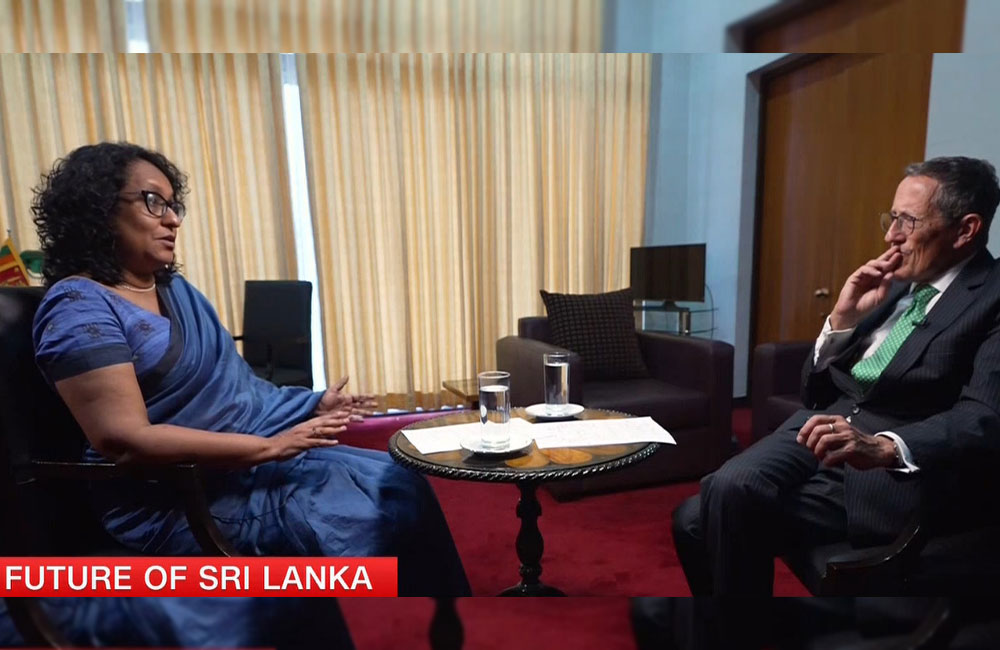
In a world increasingly fractured by major power rivalries, smaller nations are discovering that the cost of taking sides is a luxury they simply cannot afford.
Speaking with CNN's Richard Quest on October 22, Prime Minister Dr. Harini Amarasuriya cuts straight through the diplomatic fog surrounding the ongoing Middle East tensions stating that "conflicts like the Iran war serve no one".
For an island nation positioned along major Indian Ocean shipping routes, the war is not a distant headline but an active threat to domestic stability.
The National People’s Power (NPP) government has spent months navigating an intense diplomatic tug-of-war.
Colombo previously rejected requests from Washington to land military aircraft at Mattala Airport, while concurrently denying specific naval requests from Tehran.
By turning away both superpowers, Sri Lanka has sent a clear message: it will not allow its territory, sea, or airspace to become a staging ground for external war games.
The collateral of conflict
The Prime Minister’s comments highlight a harsh economic reality.
Recovering from bankruptcy, Sri Lanka faces a "triple whammy" of soaring global fuel costs, disrupted trade corridors, and maritime emergencies right off its southern coast.
From rescuing survivors of sunken vessels to handling damaged foreign warships, the island has absorbed heavy logistical burdens.
The Prime Minister's stance asserts that the Global South should not be forced to bear the systemic shockwaves of conflicts triggered by the West or regional powers.
Humanity above geopolitics
What distinguishes Sri Lanka’s current foreign policy is its balance of strict military non-alignment with aggressive humanitarianism.
Despite political pressure from Western allies to withhold assistance or block the repatriation of rescued sailors, Colombo has consistently prioritized international maritime law and humanitarian values.
Leave your comments
Login to post a comment
Post comment as a guest