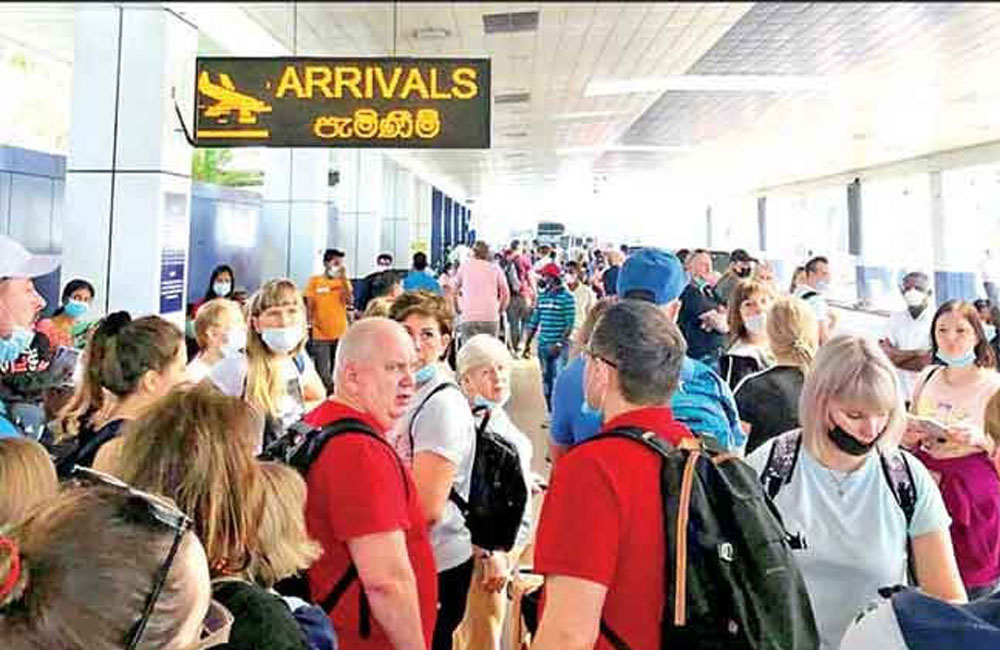
Serious concerns were raised in Parliament yesterday (21) over the growing disconnect between Sri Lanka’s record tourist arrivals and the weak flow of foreign exchange into the country’s official financial system through the tourism industry.
These concerns were raised in the House by opposition member of parliament (MP) Ravi Karunanayake when he noted that Sri Lanka recorded more than 2.36 million tourist arrivals in 2025, yet total tourism earnings had increased only marginally to about $ 3.22 billion. He stated that average spending per tourist had declined by nearly 12 percent year-on-year, although arrivals surged, raising questions about the quality and sustainability of tourism growth.
According to him, tourism-related foreign exchange inflows reflected in the reserves of the Central Bank of Sri Lanka (CBSL) had not increased in line with the rise in arrivals, suggesting possible revenue leakages, offshore settlements and weak regulatory enforcement in the sector.
The MP further noted that the fact that around 40,000 hotel and accommodation entities operating in Sri Lanka remain unregistered, allowing a large segment of tourism activity to take place outside formal regulatory and banking systems.
Karunanayake sought clarification from the government on the structural reasons behind the decline in per-capita tourist earnings, including changes in source markets, length of stay and pricing practices.
He further asked how much tourism-related foreign exchange was converted through licensed commercial banks and reflected in CBSL reserves in 2025, and how that figure compares with the total earnings reported by the Sri Lanka Tourism Development Authority.
Karunanayake also questioned the government if it had assessed foreign exchange leakages arising from offshore settlement of payments by international online booking platforms and overseas credit card usage, where invoicing and settlement often take place outside Sri Lanka, thereby bypassing domestic taxation and the local banking system, and asked what proportion of tourism activity is estimated to be carried out by unregistered accommodation providers and informal operators, and whether the government accepts that a significant share of tourism-generated foreign exchange is not strengthening official reserves.
Karunanayake warned that Sri Lanka risks losing a substantial portion of the economic benefits of its tourism boom, despite the impressive growth in visitor numbers unless these structural and regulatory gaps are addressed
(Source:pulseline.lk)
Leave your comments
Login to post a comment
Post comment as a guest