Sri Lanka’s apparel sector has received a timely boost from the United Kingdom, as London moves to further liberalise trade rules under its Developing Countries Trading Scheme (DCTS), sharpening the island’s competitive edge in one of its most important export markets.
The UK, Sri Lanka’s second-largest export destination, rolled out the DCTS in June 2023 to grant preferential access to 65 developing economies. For Sri Lanka, the scheme already opened the door wide: more than 92% of its product lines qualify for duty-free entry. Now, a new round of reforms promises to transform opportunity into momentum.
From 1 January 2026, liberalised rules of origin under the DCTS will allow Sri Lankan apparel manufacturers to source up to 100% of their raw materials from anywhere in the world without losing zero-tariff access to the UK market. The change marks a significant departure from earlier restrictions and offers manufacturers far greater flexibility to manage supply chains, control costs, and respond swiftly to global demand.
The stakes are high. Apparel exports to the UK were valued at around USD 660 million in 2024 and approximately USD 610 million in 2025, with garments accounting for nearly 73% of Sri Lanka’s total exports to the UK. Industry stakeholders say the revised DCTS rules could help reverse recent dips, attract new buyers, and secure long-term growth.
Equally significant is the removal of complex compliance hurdles. The revised framework eliminates the requirement that two substantial manufacturing processes must take place locally an obligation that often added administrative burden and operational constraints. The simplified processing rules are expected to ease compliance, particularly for small and medium-sized exporters, while strengthening Sri Lanka’s overall appeal as a sourcing destination.
The benefits extend beyond apparel. Under the expanded scheme, Sri Lankan exporters can now source inputs from the Asia Regional Cumulation Group an 18-country network while still treating those inputs as Sri Lankan in origin for DCTS purposes. This expanded cumulation facility opens new pathways for diversification and deeper integration into regional and global value chains.
Trade officials see the reforms as more than a technical adjustment. They represent a strategic opportunity to reposition Sri Lanka as a resilient, flexible, and competitive manufacturing hub aligned with modern supply chain realities.
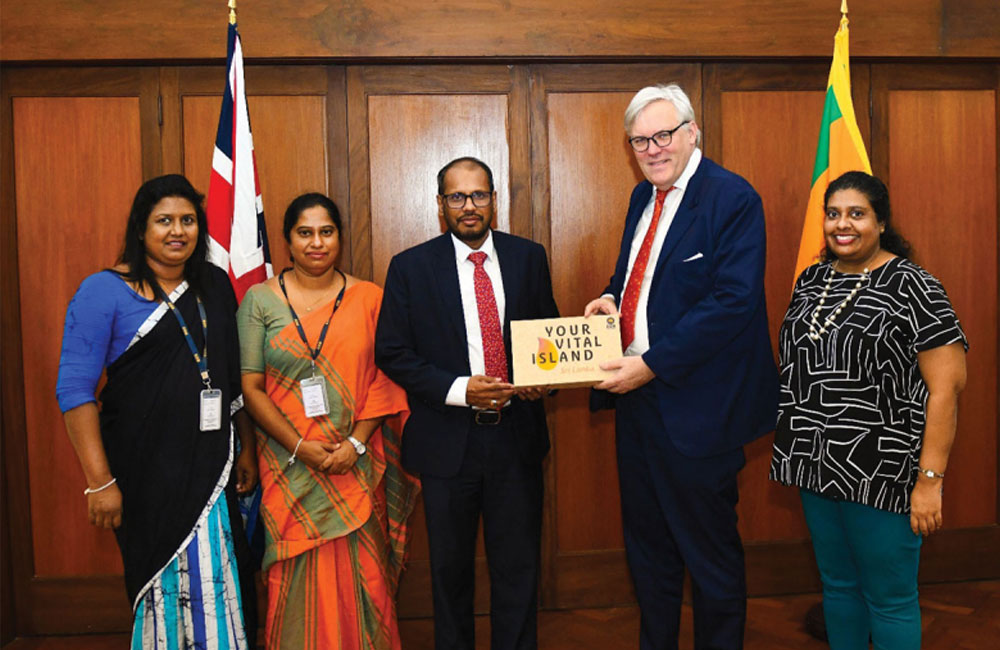
Reflecting this renewed momentum, Chairman and Chief Executive Officer of the Sri Lanka Export Development Board, Mangala Wijesinghe, recently met with British High Commissioner to Sri Lanka, Andrew Patrick, to discuss the enhanced trade prospects under the revised DCTS. Their talks also covered preparations for Sri Lanka Expo 2026 and forthcoming brand promotion initiatives designed to strengthen Sri Lanka’s footprint in the UK market.
As both countries reaffirm their commitment to deeper trade ties, the liberalised DCTS framework is set to play a pivotal role supporting export earnings, job creation, and sustainable industrial growth, while weaving Sri Lanka more tightly into the fabric of UK and global trade
(Source: lankanews.lk)
Leave your comments
Login to post a comment
Post comment as a guest