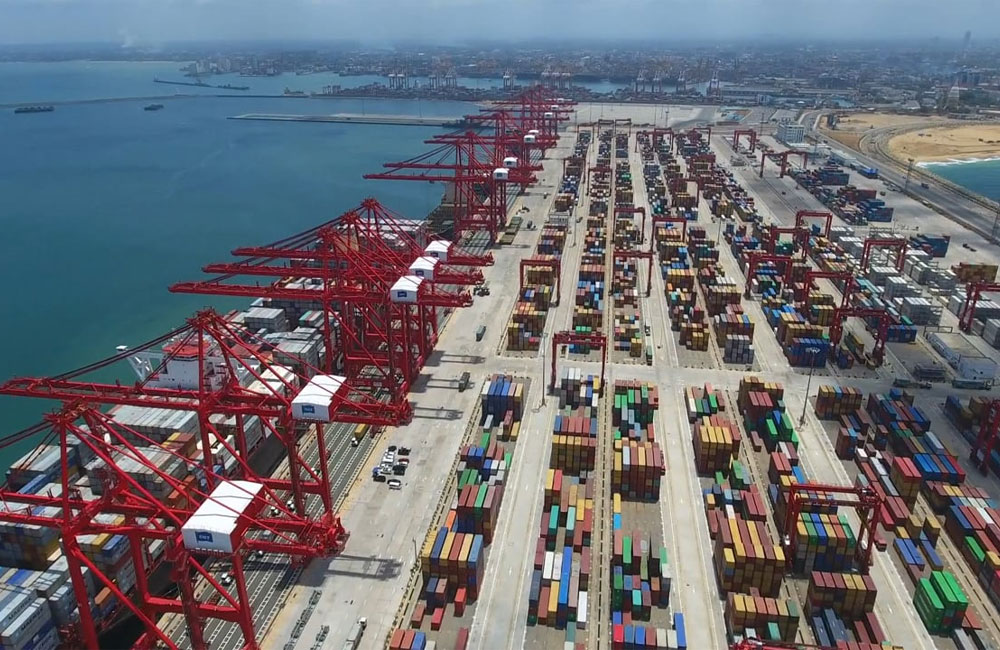
More than 13,000 containers lying idle at the Port of Colombo is not merely a logistics issue—it is an unfolding economic risk at a moment when Sri Lanka can least afford inefficiency. As the country struggles to sustain fragile post-crisis growth, port congestion is quietly undermining trade competitiveness, revenue flows, and investor confidence.
A high-level meeting convened this week—with the Ports Minister, Customs leadership, Sri Lanka Ports Authority (SLPA) officials, and trade stakeholders—once again exposed a familiar pattern: extensive discussion, minimal decision-making. While operational suggestions were floated, no time-bound resolution emerged, reinforcing industry frustration that the port crisis has become institutionalised.
Colombo Port handles over 90% of Sri Lanka’s containerised trade and functions as a regional transshipment hub. Prolonged congestion increases demurrage charges, storage costs, and vessel delays, directly inflating import prices and eroding export margins. For an economy battling high inflation, weak consumer demand, and tight foreign exchange conditions, these inefficiencies translate into higher costs passed on to businesses and households.
One proposal at the meeting to convert a newly constructed parking yard into an additional Customs examination bay, particularly for foodstuff containers highlights a deeper structural issue: misaligned infrastructure utilisation. While physical capacity exists, regulatory and procedural bottlenecks prevent its effective deployment.
Customs officials suggested that containers awaiting clearance from Other Government Agencies (OGAs) be temporarily parked at the new yard. However, this merely relocates congestion rather than resolving it, unless OGA approvals themselves are streamlined. Multiple agencies operating in silos continue to delay cargo clearance, a problem repeatedly flagged but rarely corrected.
Another critical concern is the demand by the CHA Traders Association to permit outside-panel examinations at consignees’ warehouses. Such measures, already practised in competing regional ports, could drastically reduce yard congestion. Yet resistance persists, often due to outdated compliance frameworks and risk-averse administrative culture.
Perhaps most telling is the unresolved issue of 323 containers stalled due to objections raised at parliamentary and committee levels. The lack of clarity on this matter reflects a governance failure where political processes directly disrupt commercial logistics an alarming signal for international traders.
Sri Lanka’s ports must function as economic enablers, not choke points. Every day of delay weakens Colombo’s standing against regional competitors like India, Singapore, and emerging South Asian hubs aggressively modernising their clearance systems.
What the crisis demands is executive authority, digital integration, and inter-agency accountability not another cycle of meetings. Without immediate, decisive reform, port congestion risks becoming a silent drag on Sri Lanka’s recovery, undermining the very trade flows needed to stabilise the economy.
Leave your comments
Login to post a comment
Post comment as a guest