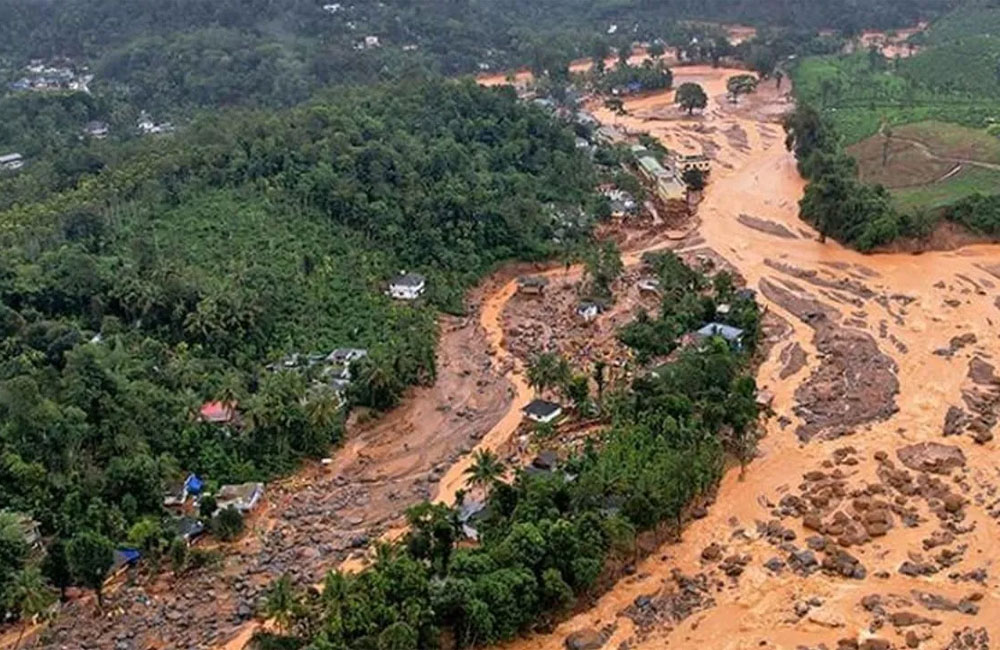
The economic fallout from Cyclone Ditwah is proving far deeper and more structurally damaging than initial disaster narratives suggested, with the International Labour Organisation (ILO) warning that nearly 16% of Sri Lanka’s GDP about $16 billion has been exposed to potential damage, largely concentrated in a handful of districts.
This concentration, the ILO cautions, risks uneven recovery and prolonged regional economic stagnation if policy responses remain fragmented and poorly coordinated.
In its Preliminary Employment Assessment, the ILO used night-time light data combined with flood and landslide mapping to estimate economic exposure. The analysis shows that 16.3% of observed economic activity, measured through illuminated zones, fell within disaster-affected areas highlighting the vulnerability of growth hubs rather than peripheral regions alone.
By contrast, the World Bank’s rapid damage assessment placed initial losses at $4.1 billion, or around 4% of GDP, a figure that excludes income losses, business disruptions, and long-term reconstruction costs.
While the Bank acknowledged that total recovery needs would be substantially higher, the sharp gap between the two estimates underscores methodological differences and, more critically, the absence of a unified national damage assessment framework.
Adding to the concern is the labour market impact, which the ILO describes as severe and immediate. Around 374,000 workers were employed in flood- and landslide-affected zones, with potential income losses estimated at $48 million per month if employment disruptions persist.
Agriculture and fisheries were among the hardest hit, with 23% of paddy land affected and tea output losses projected at up to 35%. Smallholder tea farmers who account for 70% of sector output have borne the brunt of the damage.
While the UNDP has repeatedly warned that climate-induced disasters will increasingly reverse development gains in countries with weak institutional coordination, Sri Lanka’s response to Ditwah appears to validate those concerns.
Relief delivery, livelihood restoration, and infrastructure rehabilitation have suffered from overlapping mandates, delayed data sharing, and weak local-central coordination, particularly in estate and rural economies.
From an IMF perspective, disaster shocks of this scale pose significant fiscal and macroeconomic risks, especially for a country already under a tight adjustment programme.
The Fund has consistently stressed that climate resilience, social protection targeting, and disaster-risk financing must be integrated into fiscal planning yet Ditwah exposed gaps in preparedness, insurance coverage, and rapid labour market support.
The ILO has called for emergency cash assistance, employment-intensive recovery programmes, and targeted MSME support, but it also stressed that such measures will only succeed if governance systems are strengthened. Without institutional reform and coordination, Sri Lanka risks turning a climate shock into a prolonged economic setback
Leave your comments
Login to post a comment
Post comment as a guest