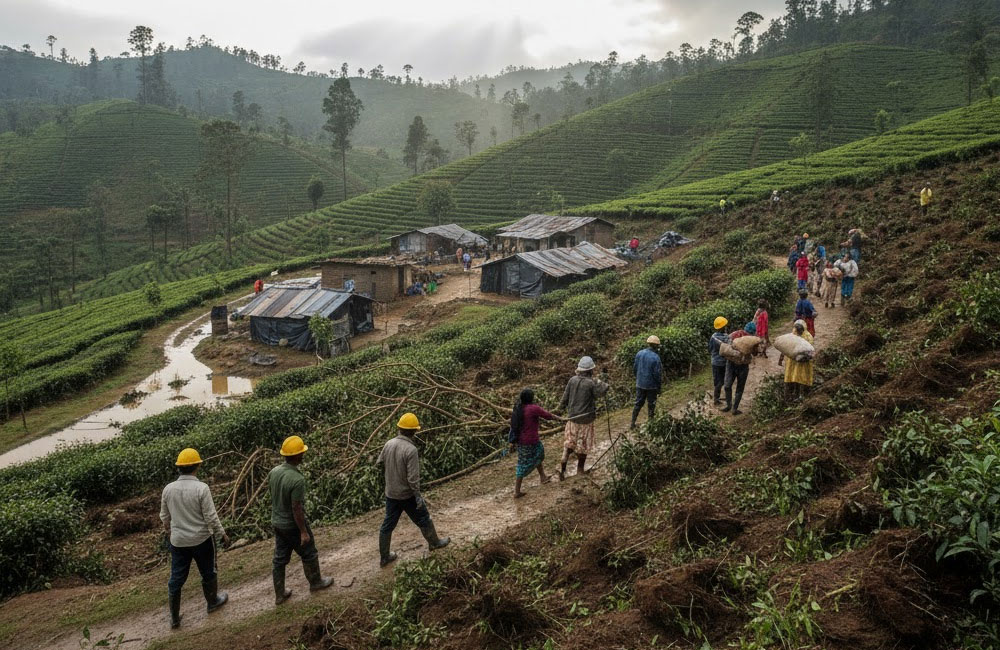
Sri Lanka’s plantation sector is once again confronting the difficult task of balancing humanitarian response with economic recovery, following the widespread disruption caused by Cyclone Ditwah. According to the Planters’ Association of Ceylon (PA), Regional Plantation Companies (RPCs) moved quickly to protect estate workers and surrounding communities, activating emergency protocols and coordinating closely with State authorities to manage immediate risks.
Plantation estates, often located in environmentally sensitive and disaster-prone regions, were among the areas most exposed to flooding and landslides. In the cyclone’s immediate aftermath, estate management teams identified high-risk zones and relocated families from vulnerable locations to safer shelters, including schools and places of worship. These actions, the PA says, were aimed at minimising loss of life and ensuring basic safety during extreme weather conditions.
While access routes and essential services are gradually being restored, the PA acknowledges that a full assessment of damage to estate housing, infrastructure, and cultivations is still ongoing. Preliminary evaluations, supported by the Plantation Human Development Trust (PHDT) and relevant Government agencies, point to localized damage across multiple estates, particularly in hill-country regions already weakened by persistent rainfall.
Beyond emergency relief, RPCs have focused on restoring a degree of normalcy to estate life. Debris clearance, temporary repairs to housing, and the reopening of access roads have allowed most estates to resume limited operations. Estate medical teams and welfare officers remain active, monitoring health conditions and working alongside public health authorities to prevent post-disaster risks such as waterborne diseases.
However, the cyclone has struck at a time when the plantation sector is already under severe economic strain. Rising production costs, labour shortages, volatile global tea and rubber prices, and declining productivity have left little fiscal space for unplanned shocks. Industry analysts note that climate-related disruptions are becoming more frequent, intensifying the urgency for resilience-building rather than short-term recovery alone.
The PA has stressed that while humanitarian priorities remain paramount, the sector’s revival cannot be delayed indefinitely. Damage to cultivations—particularly tea bushes vulnerable to waterlogging and soil erosion—could have medium-term impacts on output and export earnings if rehabilitation is slow. Tea exports, which earned over $1.4 billion in recent years, remain a key source of foreign exchange.
As Sri Lanka enters another rainy season, RPCs are reviewing disaster preparedness frameworks, reinforcing early warning systems, and reassessing settlements in high-risk areas. Temporary closures and precautionary evacuations are being implemented where necessary.
The PA argues that Cyclone Ditwah should be viewed as both a crisis and a warning—underscoring the need for coordinated policy support, climate adaptation investment, and sustainable reform if the plantation sector is to recover and remain viable in an increasingly unpredictable environment.
Leave your comments
Login to post a comment
Post comment as a guest