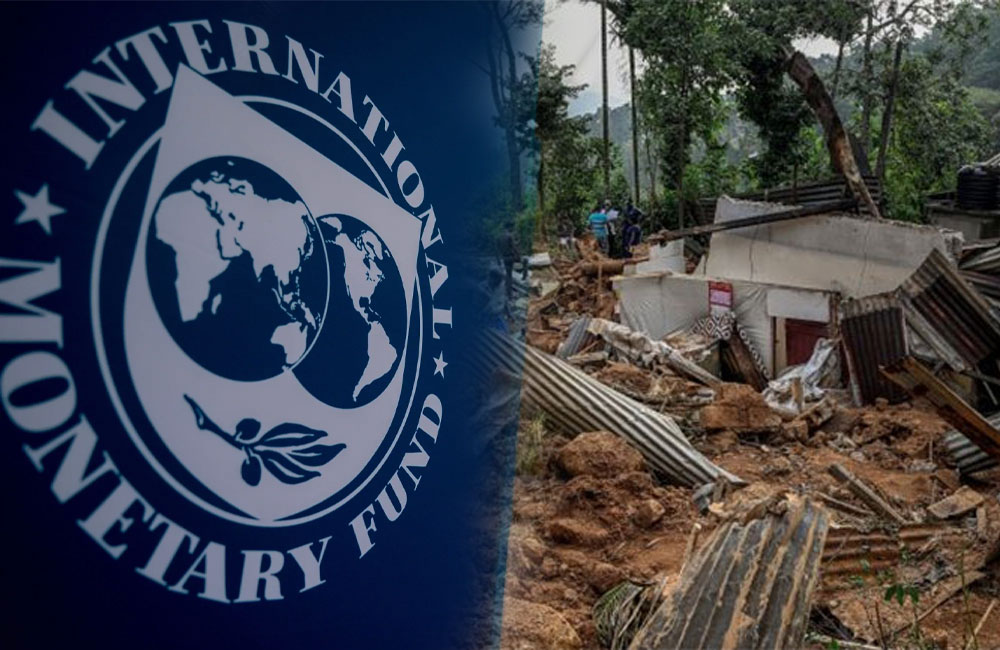
Beyond the immediate economic damage, Cyclone Ditwah has exposed the growing difficulty Sri Lanka faces in meeting IMF benchmarks and reform conditions while responding to an escalating climate crisis.
The IMF’s latest assessment acknowledges that Sri Lanka entered the disaster with stronger macroeconomic fundamentals than in previous years. Inflation was subdued, reserves had stabilised, and growth momentum had returned. However, the cyclone has fundamentally altered the policy landscape, forcing the Government to juggle fiscal discipline with urgent humanitarian and reconstruction needs.
One of the most immediate challenges lies in public finance management. Emergency relief, housing reconstruction, and infrastructure repair will inevitably increase spending pressures at a time when the IMF programme demands strict expenditure control, revenue mobilisation, and primary surplus targets. While the Fund supports temporary disaster-related spending, it has made clear that transparency, procurement discipline, and adherence to fiscal rules are non-negotiable a tall order given Sri Lanka’s past record of weak oversight during emergencies.
Capacity constraints represent another binding limitation. Administrative resources are now being diverted toward disaster response, potentially delaying structural reforms, tax administration upgrades, and state-owned enterprise restructuring all key IMF benchmarks. The Fund itself flagged this risk, warning that reform momentum could slow just when consistency is most needed to anchor investor confidence.
Externally, the cyclone compounds existing vulnerabilities. Higher import demand for food, fuel, and construction materials threatens to widen the current account deficit, while tourism disruptions and export losses weaken inflows. At the same time, global risks — including potential renewed US trade tariffs, geopolitical tensions, and volatile energy prices — could further undermine projections underpinning the IMF programme.
Inflation management also becomes more complex. Food shortages and supply-chain disruptions are already feeding into prices, increasing the likelihood of inflation overshooting targets. Tightening monetary policy to contain inflation risks slowing growth further, while loosening it could undermine programme credibility a delicate balancing act for policymakers.
Yet the IMF assessment is not without constructive signals. The Fund projects that growth could recover to around 3.1% by 2027, with inflation easing and external balances improving as agriculture and tourism rebound. Reconstruction, if well-managed, could even strengthen climate resilience and productivity.
The central challenge, therefore, is execution. Meeting IMF conditions amid a climate shock requires not just compliance, but institutional strength, political discipline, and policy coherence. Failure to manage this balance risks turning a temporary natural disaster into a prolonged economic setback.
Leave your comments
Login to post a comment
Post comment as a guest