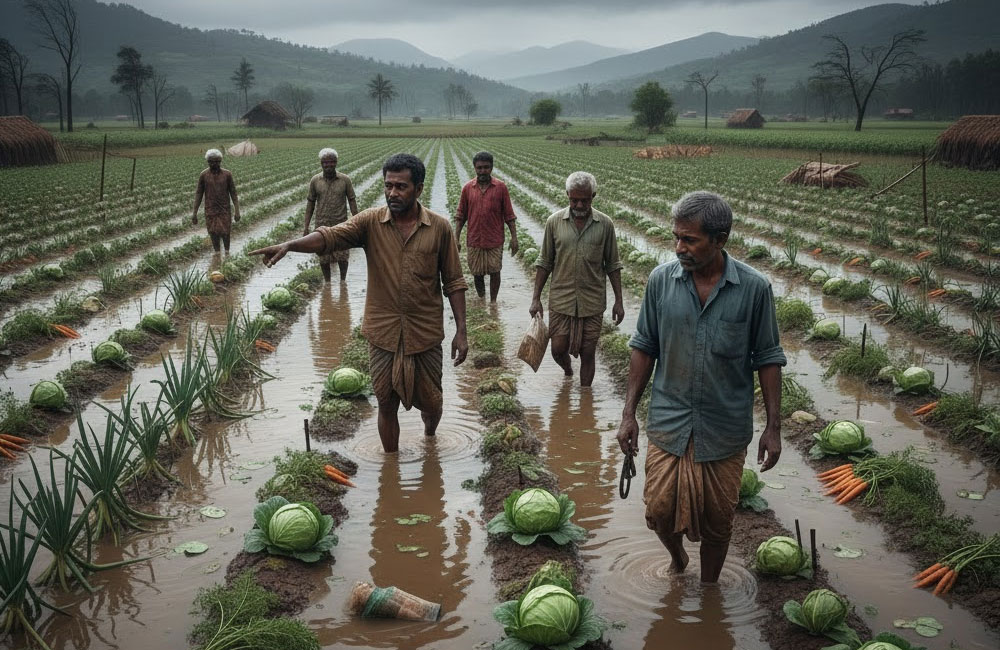
The cyclone did not just flood fields it washed away the fragile foundations of Sri Lanka’s vegetable cultivation sector. While policymakers speak of resilience and recovery, thousands of farmers are staring at ruined plots, mounting debt, and no clear roadmap for survival.
Out of the 175,000 hectares of agricultural land damaged nationwide, up to 8,000 hectares of vegetable crops have been destroyed. This may appear modest compared to paddy losses, but vegetables are the fastest route from farm to plate. When these crops fail, shortages hit markets within weeks, not months.
The worst-hit districts read like a map of the country’s food supply chain. Nuwara Eliya and Badulla, critical suppliers of carrots, leeks, cabbage, and beans, have suffered extensive damage. Low-country vegetable belts in Anuradhapura, Kurunegala, Batticaloa, and Trincomalee have also been submerged, disrupting both production and transport.
What makes this crisis sharper is the debt trap surrounding rural farming. UNDP estimates show that more than one-third of rural households are already indebted. Many vegetable farmers financed seeds, fertilizer, and labour through informal loans, banking on quick harvest cycles to repay lenders. With crops destroyed and tools damaged, repayment is no longer possible. For many, the next step is distress sales of land or exit from farming altogether.
Satellite imagery confirms that this was not a localized disaster. Flood inundation of up to 16 percent in several northern and eastern districts highlights a growing climate threat that current agricultural planning has failed to address. Drainage systems remain neglected, crop insurance penetration is weak, and disaster response is largely reactive.
The government’s challenge is no longer about assessments it is about execution. Seed distribution delayed by bureaucracy is meaningless. Compensation that arrives after the planting window is wasted money. What farmers need now is immediate input support, fast-tracked insurance payouts, and state-backed credit that replaces predatory lending.
Without decisive intervention, vegetable cultivation will shrink in the coming seasons, driving prices higher and increasing dependence on imports. The cyclone was unavoidable. The collapse of farmer confidence is not.
Leave your comments
Login to post a comment
Post comment as a guest