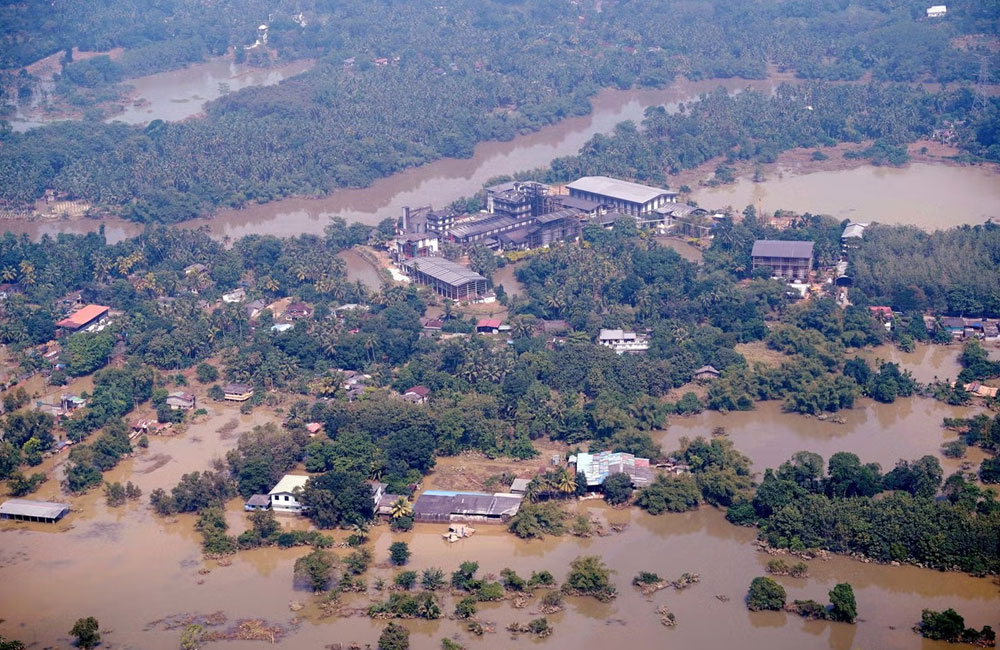
Cyclone Ditwah may be remembered as one of Sri Lanka’s worst natural disasters in decades, but its geopolitical aftershocks could prove just as significant. India’s rapid and large-scale humanitarian response has not only shaped the country’s immediate recovery but has also underscored how disaster response is increasingly becoming a defining instrument of diplomacy in the Indian Ocean region.
When the cyclone struck on 27 November, Sri Lanka faced widespread flooding, landslides and the collapse of critical infrastructure. Within hours, India launched Operation Sagar Bandhu, mobilising naval, air and disaster-response assets at a speed unmatched by other international partners. The presence of Indian naval vessels in Colombo at the time of the disaster allowed relief supplies to be delivered almost immediately, while air force aircraft and helicopters sustained rescue and evacuation operations over several days.
Beyond the humanitarian imperative, the response highlighted India’s evolving role as a regional first responder. The scale of the operation demonstrated not just goodwill but operational readiness, combining military logistics with civilian disaster-management capabilities. Field hospitals, temporary bridges and specialised rescue teams filled critical gaps at a moment when Sri Lanka’s own capacity was severely stretched.
This approach aligns closely with India’s broader vision for the Indian Ocean as a zone of shared security and stability. As climate change increases the frequency and intensity of extreme weather events, disaster response is becoming a strategic asset. Countries that can act decisively in emergencies build trust, visibility and influence without the political sensitivities often associated with traditional power projection.
For Sri Lanka, the episode highlights both opportunity and responsibility. Reliable regional support can significantly reduce the human and economic costs of disasters. At the same time, Colombo must ensure that emergency cooperation does not evolve into long-term dependency. Strengthening domestic disaster preparedness, early-warning systems and climate-resilient infrastructure remains essential to preserving strategic autonomy.
India’s engagement so far has been largely framed around immediate relief and reconstruction support, with no overt political conditions attached. This has helped reinforce the perception of assistance driven by proximity and shared risk rather than transactional diplomacy. Yet it would be unrealistic to separate humanitarian action entirely from strategic context. Sri Lanka’s central location along major sea lanes ensures that stability on the island is a regional priority for India.
The lesson from Cyclone Ditwah is not that disaster diplomacy is inherently problematic, but that it reflects a changing regional reality. In the Indian Ocean, influence is increasingly measured by responsiveness, reliability and the ability to deliver public goods in times of crisis.
As Sri Lanka rebuilds, the challenge will be to convert this moment of solidarity into durable resilience strengthening partnerships while safeguarding national interests. For India, the operation marks a test case of how humanitarian leadership can shape regional diplomacy in an era defined as much by climate risk as by geopolitics.
Leave your comments
Login to post a comment
Post comment as a guest