
 Verité Research Executive Director Dr. Nishan de Mel
- Verité Research Chief warns Sri Lanka poised to repeat past mistakes amid cyclone recovery funding push
- Argues IMF RFI financing effective rate exceeds 6% and time-based surcharges add further 2.75% after three years
- IMF Executive Board decides on $ 200 m RFI today
Economic think tank Verité Research has cautioned that Sri Lanka’s move to seek emergency financing from the International Monetary Fund (IMF) under the Rapid Financing Instrument (RFI) could prove costly in the current debt context, urging policymakers to weigh alternative funding options for post-cyclone recovery.
In a detailed analysis shared on ‘X,’ Verité Research Executive Director Dr. Nishan de Mel, a critic of Sri Lanka’s handling of debt repayments during the COVID-19 crisis and the subsequent debt restructuring process, said IMF borrowing has become relatively expensive for Sri Lanka due to effective interest rates that factor in surcharges, Special Drawing Rights (SDR) valuation, and exchange rate movements. He warned against what he described as “knee-jerk” financing decisions in response to Cyclone Ditwah-related spending needs.
According to Dr. de Mel, the effective cost of IMF RFI financing currently could exceed an effective rate of 6% in US dollar terms and over 11% in rupee terms, once exchange rate effects and SDR-linked costs are taken into account.
He also pointed to IMF time-based surcharges, which add a further 2.75% after three years, raising the long-term cost of such borrowing.
Verité argued that these costs could exceed those of alternative financing options available to the Government. Dr. de Mel noted that domestic borrowing in rupees at current three-year Bond yields of around 9% would be cheaper than the effective rupee cost of an RFI loan, while domestic US dollar borrowing could also offer a lower-cost option.
As an alternative, Verité suggested issuing a domestic US dollar Bond specifically for cyclone recovery, potentially through a yield-capped second-price auction. Dr. de Mel said Sri Lankans, including the diaspora, are already lending US dollars to local banks at rates of around 5%, indicating available market appetite at lower yields.
He further said Sri Lanka could explore issuing an Environmental, Social and Governance (ESG)-linked International Sovereign Bond (ISB), backed by cyclone recovery spending key performance indicators and underwritten by a multilateral development bank, which could reduce borrowing costs further.
However, Verité’s preferred option was for Sri Lanka to pursue non-debt or concessional financing. Dr. de Mel proposed that the Government seek disaster recovery grants amounting to around 1% of GDP, or approximately $ 1 billion, from a consortium of multilateral development banks and bilateral partners, instead of relying on additional debt.
He also called for legal adjustments to allow expanded spending capacity, suggesting that Parliament move a resolution under Section 16 of the Public Finance Management Act of 2024 to temporarily lift the 13% of GDP limit on primary expenditure for 2026 to accommodate cyclone-related recovery needs.
“There is no immediate liquidity constraint and recovery spending will take time,” Dr. de Mel said, adding that professional evaluation-based decision-making on debt management was critical to avoid repeating past mistakes.
The analysis comes as the Government expressed confidence on Wednesday that Sri Lanka would secure around $ 200 million from the IMF under the RFI to meet urgent foreign exchange needs following Cyclone Ditwah, while keeping its broader debt restructuring program on track.
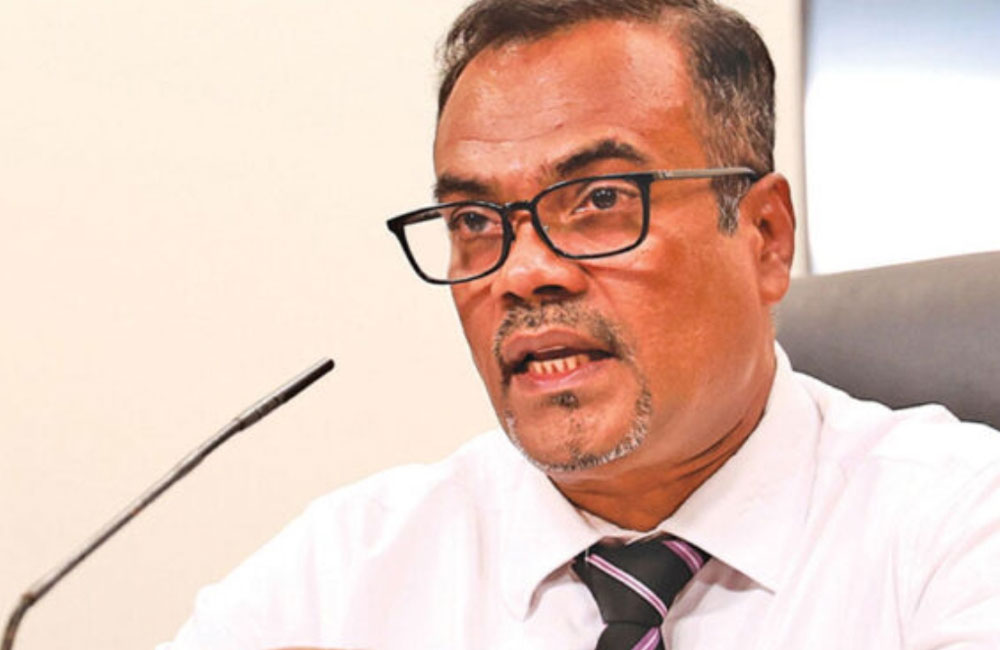 Dr.Anil Jayantha Fernando
Addressing a special media briefing, Finance and Planning Deputy Minister Dr. Anil Jayantha Fernando said the request for IMF support was justified under the Fund’s rules given the extraordinary circumstances created by the disaster. The facility was being sought to address immediate financing pressures without destabilising the ongoing IMF-supported reform framework.
The RFI request amounts to SDR 150.5 million (approx. $ 200 million), or about 26% of Sri Lanka’s IMF quota, and is currently under consideration by the IMF Executive Board, which is scheduled to meet today (19).
Sri Lanka had initially been expecting an Extended Fund Facility (EFF) disbursement of about $ 347 million in December following the Fifth Review. However, the foreign exchange pressures triggered by Cyclone Ditwah prompted the Government to seek immediate relief through the RFI. Dr. Fernando said the EFF disbursement is now likely to be delayed until early next year, as a new Rs. 500 billion Supplementary Estimate was submitted for IMF review.
An IMF team is expected to visit Sri Lanka next month to renegotiate a staff-level agreement in line with the revised fiscal position, while safeguarding social protection commitments, which the Deputy Minister said have taken on added urgency in the wake of the disaster.
Leave your comments
Login to post a comment
Post comment as a guest