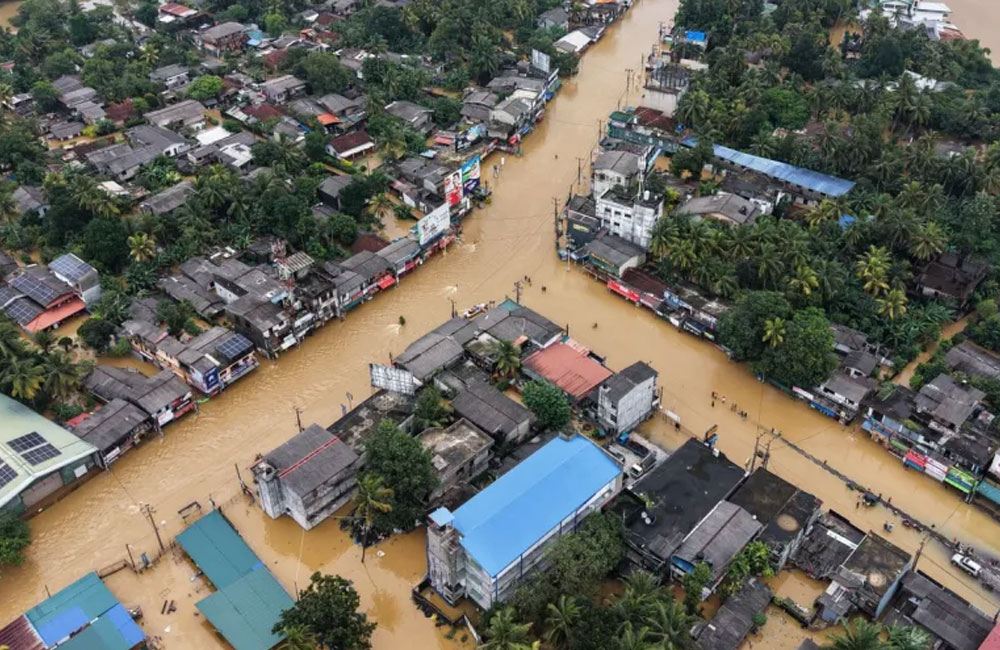
Sri Lanka’s micro, small and medium enterprise (MSME) sector is facing a prolonged and costly recovery after Cyclone Ditwah inflicted widespread damage on manufacturing and enterprise activity across the country. Newly released data from the Industry and Entrepreneurship Development Ministry reveal the scale of disruption and the mounting challenges confronting businesses that form the backbone of regional economies and employment.
According to assessments compiled by the Industrial Disaster Support Centre (IDSC), nearly 9,630 industrial and business entities under the Ministry’s purview have been directly affected by the cyclone. The damage has fallen disproportionately on smaller firms. Micro-scale enterprises alone account for about 12,300 reported cases, representing more than 40% of all submissions received. Small enterprises number close to 9,850, while medium-scale firms stand at around 6,640. Although large enterprises make up a relatively small share about 860 cases their losses carry wider supply-chain implications.
For MSMEs, the damage extends well beyond physical assets. Many businesses report destroyed machinery, damaged inventories, power disruptions and loss of access to transport links. For micro and small firms operating with limited buffers, even short interruptions translate into cash-flow crises, delayed wage payments and the risk of permanent closure.
Recovery timelines highlight the uneven path ahead. While around 44% of affected enterprises have managed to resume operations, often at reduced capacity, the remainder face significant delays. About a quarter of businesses expect to reopen within two weeks, while another 20% estimate it will take up to a month. Alarmingly, nearly 8% anticipate that restarting operations will take three months or longer, signalling deep structural damage and financing constraints.
Officials say the data will be used to prioritise relief measures, including emergency grants, concessional credit and technical assistance. However, industry representatives caution that access to finance remains a critical bottleneck. Many MSMEs lack collateral or formal credit histories, complicating loan approvals at a time when rapid liquidity support is essential.
The cyclone has also exposed long-standing vulnerabilities in the MSME sector limited insurance coverage, heavy dependence on local infrastructure and weak disaster preparedness. Without targeted support, there is concern that temporary disruptions could translate into permanent job losses, especially in rural and semi-urban areas where MSMEs are major employers.
As the Government rolls out relief programmes, policymakers face a delicate balancing act: delivering swift financial assistance while tailoring support to the real conditions on the ground. The speed and precision of this response will determine whether Sri Lanka’s battered MSME sector can recover—or whether Cyclone Ditwah leaves lasting scars on the country’s industrial base.
Leave your comments
Login to post a comment
Post comment as a guest