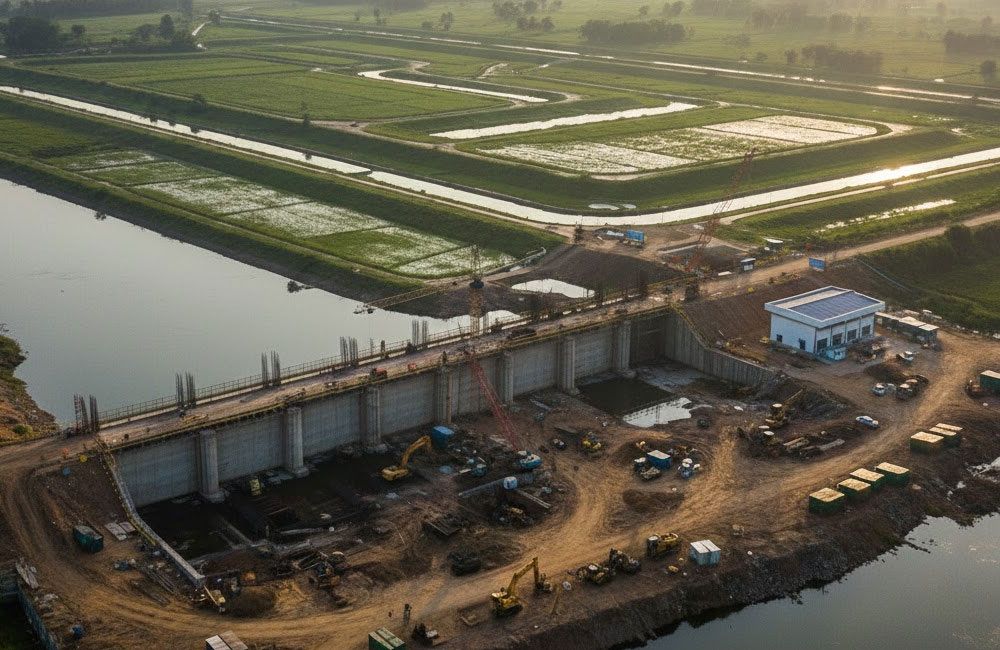
After years of delay caused by the COVID-19 pandemic and Sri Lanka’s worst economic crisis in decades, the Lower Malwathu Oya multipurpose hydro power project is set to resume following renewed Cabinet approval. The project, originally sanctioned in July 2019 at an estimated cost of Rs. 22.9 billion, now carries a revised price tag of Rs. 47.18 billion, more than doubling in rupee terms over six years.
The revised estimate, submitted to the Cabinet in December 2025, reflects a 106 percent increase in costs, largely driven by the sharp depreciation of the Sri Lankan rupee and prolonged project suspension. Between mid-2019 and late 2025, the rupee weakened from Rs. 176 to around Rs. 308 per US dollar, a collapse of nearly 74 percent, following aggressive monetary easing, open market operations, and sweeping tax cuts introduced to stimulate growth.
These policy decisions, implemented under Sri Lanka’s flexible inflation-targeting framework without a fully floating exchange rate, ultimately triggered serial balance-of-payments crises. The fallout culminated in a sovereign default and left large infrastructure projects such as Lower Malwathu Oya stranded midway.
Despite these challenges, the project’s revival is being viewed as strategically important, particularly for the agriculture-dependent Northern Province. Once completed, the scheme is expected to enhance irrigation for 24,450 acres of farmland under the Giant’s Tank, 6,230 acres under the Akitamuruppu Tank, and bring 2,000 acres of new land under cultivation. These improvements could significantly raise crop yields, reduce dependency on rainfall, and stabilize farmer incomes.
Beyond irrigation, the project includes a small hydro power component capable of generating 4.28 gigawatts, contributing to Sri Lanka’s renewable energy mix at a time when the country is seeking to reduce reliance on imported fossil fuels. The scheme also aims to supply two million cubic metres of drinking water, addressing chronic water shortages in surrounding communities.
From a sustainability perspective, the project aligns with long-term national priorities on food security, climate resilience, and clean energy. However, analysts caution that its economic viability will depend heavily on disciplined cost control, timely completion, and stronger macroeconomic management. Without these, escalating costs could erode projected returns and place additional pressure on public finances already strained by debt restructuring commitments.
As Sri Lanka cautiously emerges from crisis, the Lower Malwathu Oya project stands as both a symbol of recovery and a reminder of how macroeconomic instability can sharply inflate the cost of development.
Leave your comments
Login to post a comment
Post comment as a guest