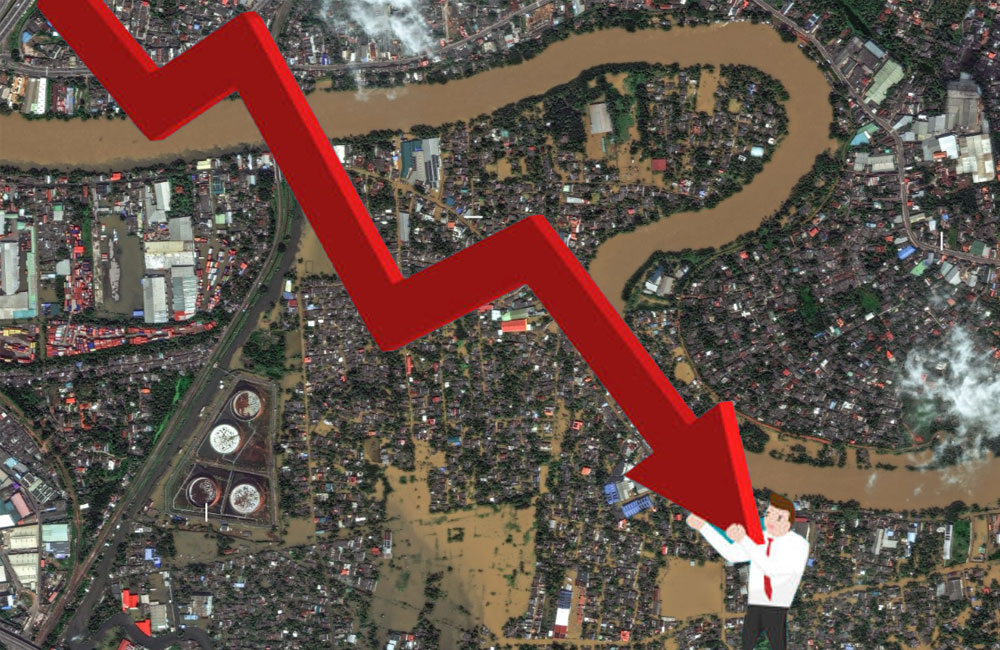
The Government’s renewed focus on disaster governance, showcased at the 16th meeting of the National Council for Disaster Management chaired by President Anura Kumara Dissanayake, signals an ambitious attempt to overhaul Sri Lanka’s disaster response framework.
However, while policy reforms and institutional restructuring dominate the agenda, mounting evidence suggests that these initiatives may unintentionally delay urgent reconstruction and livelihood recovery for millions affected by Cyclone Ditwah.
At the heart of the meeting was a Cabinet Memorandum proposing a National Integrated Disaster Management Mechanism alongside amendments to the Sri Lanka Disaster Management Act of 2005.
In principle, these reforms aim to strengthen coordination, transparency, and long-term resilience. In practice, however, critics warn that layering new mechanisms onto an already overstretched system risks slowing immediate action when speed is critical.
The scale of devastation underscores the urgency. According to the Disaster Management Centre, approximately 2.2 million people were affected islandwide, with more than 6,000 houses completely destroyed and over 112,000 partially damaged.
Nearly 73,000 people remain in temporary shelters weeks after the cyclone, highlighting gaps between policy intent and ground-level delivery.
Several new initiatives announced at the meeting including a Central Fragile Area Management Plan, multi-stakeholder landslide risk mitigation in plantation regions, and a unified digital data-sharing platform are technically sound but administratively complex.
Each requires the formation of committees, consolidation of data across institutions, and the establishment of new certification and legal frameworks. Disaster experts caution that these processes, while necessary for long-term planning, could further delay reconstruction approvals, resettlement decisions, and livelihood restoration.
The President’s directive to identify 15,000 houses in high-risk zones and construct 8,000 new homes by end-2026 reflects a commitment to durable solutions. But affected communities argue that immediate transitional housing, faster compensation payments, and simplified approval procedures are more pressing needs.
Even the Rs. 25,000 cleaning allowance for flood-affected households has faced disbursement delays, prompting direct presidential intervention to clear payments within a week.
Transparency reforms, including the establishment of a Foreign Aid Coordination Committee, aim to restore donor confidence. However, the timing raises concerns. Sri Lanka’s past experiences show that excessive procedural checks during emergencies often deter timely inflows of foreign assistance and slow deployment to affected areas.
Historical lessons were also revisited. The Finance Ministry revealed that the 2016 flood insurance scheme resulted in a net loss of Rs. 5.79 billion to the State due to weak reinsurance coverage. While reforming such schemes is prudent, delaying decisions until “expert advice” is finalised risks leaving vulnerable communities exposed in the interim.
Unless policy decisions are expedited and emergency exceptions applied, Sri Lanka’s disaster reforms may remain strong on paper while survivors continue to wait.
Leave your comments
Login to post a comment
Post comment as a guest