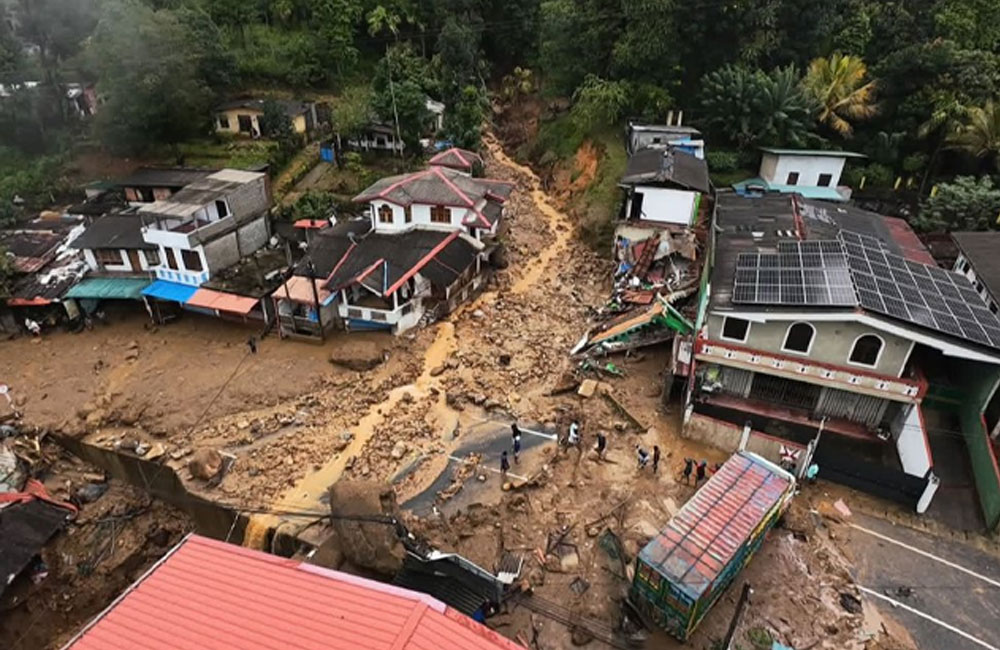
Sri Lanka’s decision to convene an international donor conference in the wake of Cyclone Ditwah is being presented by the government as a decisive diplomatic move. Yet, behind the public optimism lies a troubling gap between rhetoric and results. Nearly three weeks after the disaster, only US$170 million around 17% of the estimated US$6.5-7 billion reconstruction requirement—has been mobilised, exposing serious shortcomings in foreign engagement and crisis diplomacy.
Foreign Affairs Minister Vijitha Herath confirmed that the donor conference will be convened once a comprehensive needs assessment, currently led by the World Bank alongside government agencies, is completed.
While the procedural logic is sound, critics argue that the delay reflects a lack of urgency in a crisis that has already claimed more than 600 lives and devastated national infrastructure, including highways, irrigation networks, power transmission lines, and public buildings.
Government spokesmen have attempted to project Minister Herath as a capable international operator, even drawing implicit comparisons with the late Lakshman Kadirgamar, whose diplomatic stature helped galvanise global support after the 2004 tsunami.
Such comparisons, however, appear premature and misplaced. Kadirgamar combined global credibility, strategic communication, and bipartisan respect qualities that translated into swift and large-scale international mobilisation. By contrast, the current administration’s outreach has been fragmented and low-impact.
Although Sri Lanka has received emergency assistance from several countries—including India, the United States, China, Japan, Australia, the UK, and regional neighbours the bulk of this aid has arrived in-kind or as limited emergency funding rather than large-scale reconstruction financing. India’s early response stood out, but broader donor engagement has remained cautious, reflecting concerns about governance capacity, transparency, and policy coherence.
Domestically, the government established the Rebuilding Sri Lanka Fund, which has collected approximately Rs. 3.4 billion, largely from local donors and business figures. While commendable, this amount is negligible when measured against the scale of national losses. Internationally, the UN-led Humanitarian Priorities Plan (HPP) has sought US$35.3 million to support 658,000 vulnerable people through April 2026 again highlighting the gap between humanitarian relief and long-term reconstruction needs.
The proposed donor conference could still serve as a turning point, but only if backed by credible leadership, transparent frameworks, and clear reform commitments. Without these, the initiative risks becoming another symbolic gesture—heavy on announcements, light on outcomes—at a time when the country can least afford diplomatic underperformance.
Leave your comments
Login to post a comment
Post comment as a guest