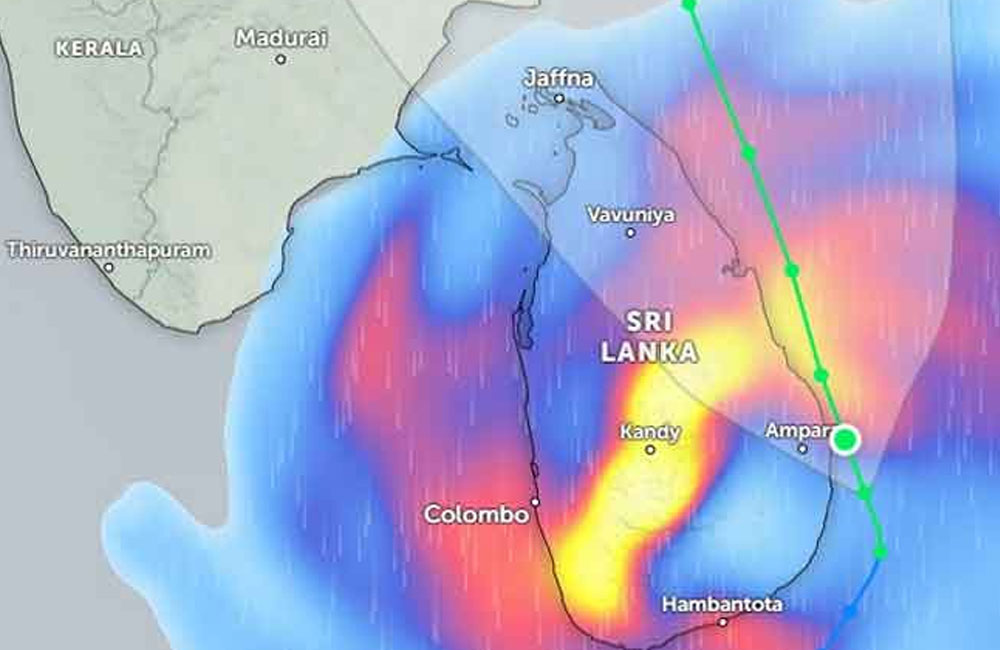
Sri Lanka has taken a significant step toward modernising its disaster-management framework with the launch of the GeoAI for Disaster Resilience initiative, an ambitious programme that combines Artificial Intelligence with Geographic Information Systems (GIS) to strengthen early warnings, emergency response and long-term planning.
Launched in Colombo amid sombre reflections on the recent devastation caused by Cyclone Ditwah, the initiative signals a shift in how the country plans to confront increasingly frequent climate-related disasters.
Proceedings began with a minute’s silence to honour victims of the cyclone, which affected more than one million people, caused extensive loss of life and damage, and has been described as the most destructive natural disaster since the 2004 tsunami. The economic recovery has also suffered setbacks, with large-scale reconstruction still underway.
Addressing the gathering, ADRIMP President Sarath Premalal said Sri Lanka could no longer rely on traditional disaster-response models. He stressed that climate risks were intensifying each year and called for predictive, technology-driven solutions that allow authorities to anticipate hazards rather than merely respond to them. According to him, GeoAI provides responders with critical foresight, improving preparedness and potentially saving lives.
The year-long programme brings together over 20 government officials and 125 university students, supported by the United States Embassy in Sri Lanka. It aims to build a pipeline of disaster-technology specialists capable of applying advanced data tools to national emergencies.
GeoAI Project Lead Dr. Novil Wijesekara described the initiative as a system-wide transformation rather than a standalone technology project. He explained that the programme would strengthen the entire disaster-response ecosystem, integrating real-time data, predictive modelling and advanced analytics. This approach, he said, would help Sri Lanka move from reactive crisis management to intelligence-led preparedness.
Digital Economy Ministry Acting Secretary Waruna Sri Dhanapala highlighted the importance of digital integration, noting that fragmented data systems often delay decision-making during emergencies. He said GeoAI would help unify data across agencies, enabling faster coordination and more effective national responses.
Disaster Management Centre Director General Major General Sampath Kotuwegoda emphasised operational benefits, stating that early warnings and accurate forecasts can provide crucial lead time during floods, landslides and cyclones.
With training planned in hazard mapping, drone-based data analysis and real-time response applications, the GeoAI initiative is expected to strengthen national resilience and position Sri Lanka as a regional leader in AI-powered disaster preparedness.
Leave your comments
Login to post a comment
Post comment as a guest