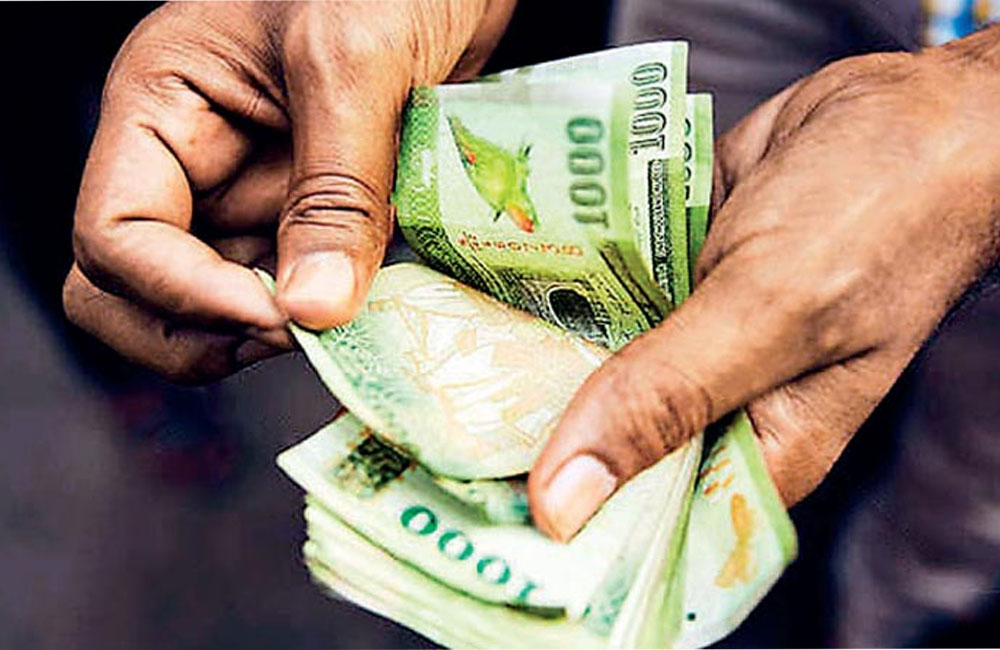
Sri Lanka’s microfinance landscape is at a critical inflection point as the clock nears the enactment of the Microfinance and Credit Regulatory Authority Act 2025, a law intended to overhaul a largely unregulated credit sector that has long burdened low-income borrowers and burdened lenders alike.
At present, only a handful of microfinance companies about four are formally regulated under the 2016 framework, leaving tens of thousands of informal lenders and community moneylenders outside recognised oversight.
Microcredit has historically offered a lifeline for poor households, rural entrepreneurs, and women seeking small business capital or emergency cash when banks would not lend. These services aim to support income generation, asset building and financial inclusion.
Still Sri Lanka’s poverty rate nearly 24.5 percent of the population remains high, illustrating the fragile economic conditions underpinning microfinance demand.
Despite good intentions, the current system has fuelled mounting distress. Parliamentary committees are now collecting data on borrowers unable to repay microfinance loans in regions including Nuwara Eliya, Batticaloa, Polonnaruwa and Colombo, signalling growing concern about defaults and financial stress.
Civil society and advocacy groups warn that predatory interest rates sometimes more than 40 percent and aggressive recovery tactics have pushed households deeper into hardship, especially women who make up a large share of borrowers.
For lenders, the absence of a strong regulatory regime has meant unclear lending standards and inconsistent risk management practices.
This environment impedes institutional robustness and contributes to uneven credit risk across portfolios. Regulators and microfinance practitioners report that the sector’s formal share of total credit is modest,but unregulated lending accounts for a much larger, opaque portion of the market.
The pending 2025 Act aims to establish a dedicated authority to license and supervise both traditional moneylenders and microfinance institutions, enforce consumer protection standards, and introduce transparent interest and collection practices.
Policymakers hope this will curb abusive lending while strengthening formal sector discipline.
Nonetheless, critics caution that enforcement alone will not resolve underlying socioeconomic pressures.
With the economy still recovering from a protracted financial crisis and natural disaster shocks pushing more families particularly in rural and war-affected areas into borrowing, structural vulnerabilities are deeply entrenched. Microfinance’s promise of poverty alleviation hangs in the balance between greater regulation and the real lived hardships of borrowers.
Leave your comments
Login to post a comment
Post comment as a guest