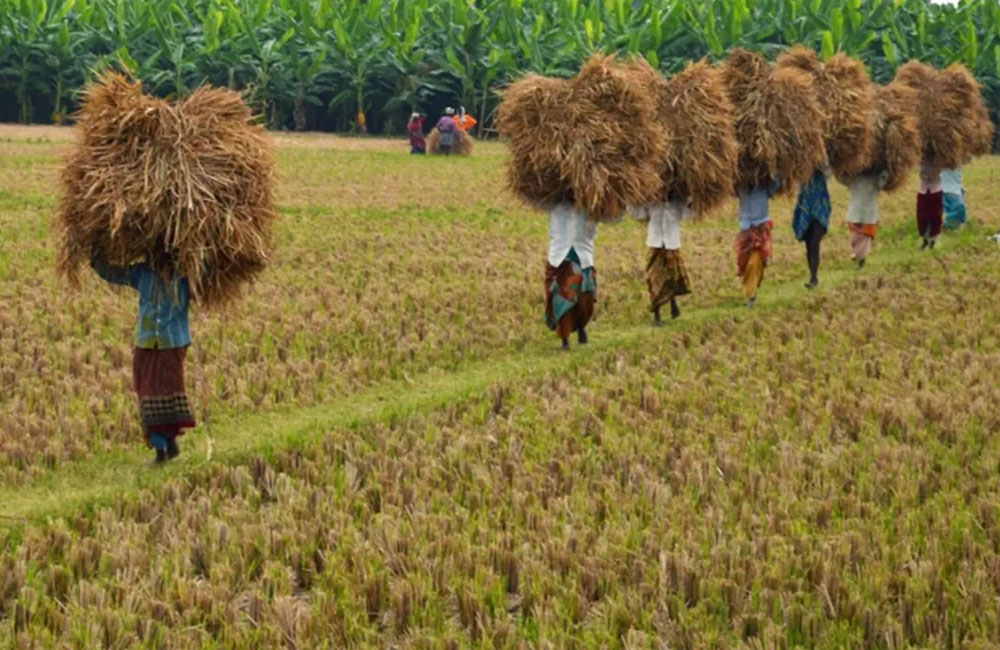
Sri Lanka’s agricultural heartland has been dealt a severe blow as Cyclone Ditwah struck at the peak of the country’s Maha season, inundating large stretches of farmland and placing the upcoming rice harvest at risk.
According to a Joint Rapid Needs Assessment by the United Nations and the Disaster Management Centre, 563,950 hectares of paddy sown by nearly 775,000 farmers were already at various stages of growth when the cyclone unleashed prolonged, intense rainfall.
The Maha season normally covers 800,000–850,000 hectares, making it the country’s most important cultivation cycle. However, vast areas are now submerged or heavily waterlogged, with officials warning of significant yield losses.
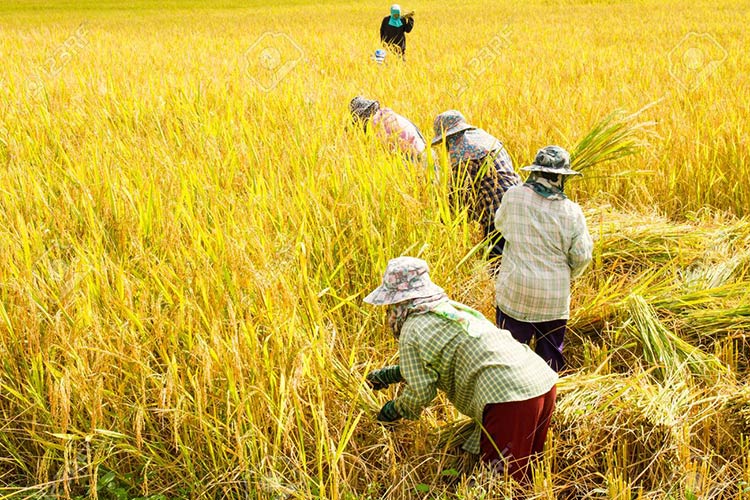
While paddy can tolerate short-term flooding, the extent of damage varies by growth stage; young seedlings in early-sown districts such as Ampara face the highest risk of complete destruction. Fields left underwater for days may see plants suffocate, while strong currents can sweep away newly sown plots or leave thick layers of sand, making resowing difficult.
Although time remains to replant in certain areas, the availability of seed paddy has emerged as a major concern. Stocks stored by farmers have also been damaged by flooding, raising fears that the country may struggle to recover the lost extent.
Sri Lanka’s long-criticised land regulations further complicate recovery: farmers are barred from planting alternative crops on paddy lands and are required to navigate a maze of permissions simply to remove sand deposited by floods. In past disasters, farmers noted they could have earned income by selling sand to contractors but only if the state authorised removal before weeds contaminated it.
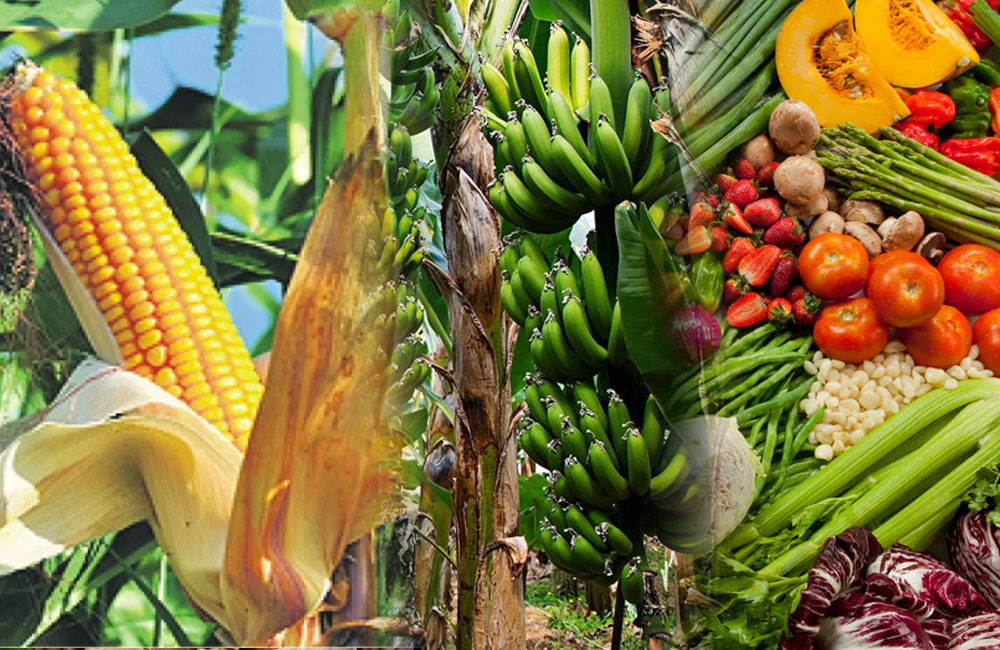
Beyond rice, an estimated 95,799 hectares of other field crops including maize, pulses, bananas and 13,463 hectares of vegetables have sustained extensive flood damage. The Food and Agriculture Organization (FAO), together with the Department of Agriculture, is conducting field-level assessments to determine district-specific losses that will inform input support and livelihood restoration.
The cyclone’s fallout extends to the livestock sector. Heavy rains and collapsing shelters resulted in the drowning of cattle and poultry. Feed stocks, grazing lands, and water points have been damaged or contaminated, heightening the risk of disease outbreaks.
The report warns that disruptions to veterinary services, transport links, and breeding inputs could further undermine farmers’ ability to restart operations, threatening rural incomes and nutrition.
The fisheries and aquaculture sectors have also reported widespread destruction. Nearly 200 small boats and traditional crafts have been damaged, along with an undetermined number of multi-day vessels operating offshore.
Inland reservoirs suffered structural damage, leading to the escape of stocked fish. Aquaculture sites shrimp farms, ornamental fish units, seaweed and sea cucumber operations—have all incurred losses.
The potential economic and social consequences are profound. Losing a large portion of the Maha harvest could tighten domestic rice supply, push prices upward, and strain household food security. With thousands of farmers affected, the damage threatens to ripple through rural economies, weakening livelihoods at a time when the country cannot afford another shock.
Leave your comments
Login to post a comment
Post comment as a guest