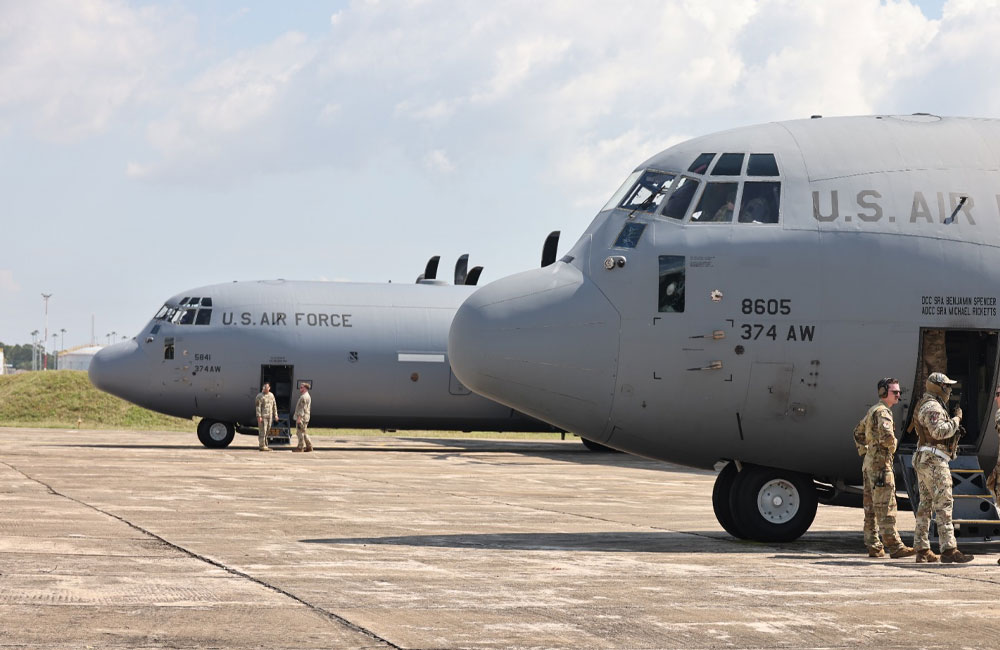
The arrival of two U.S. Air Force C-130J Super Hercules aircraft in Sri Lanka with full media visibility and an unusually high-profile diplomatic presence marks a striking departure from Washington’s historically discreet approach to military disaster assistance on the island.
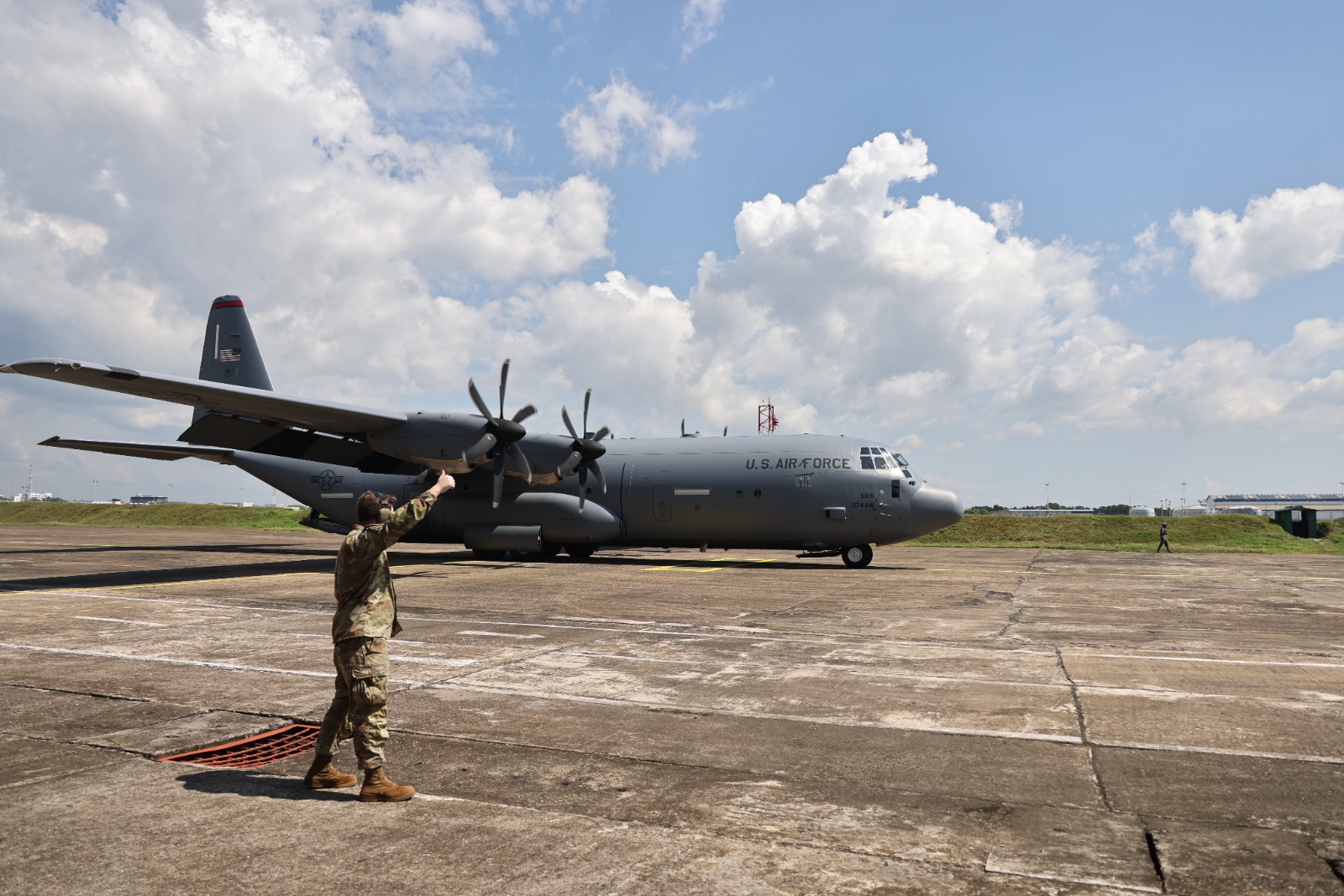 U.S. Air Force C-130J Super Hercules aircraft in Sri Lanka
While past U.S. military deployments for emergency relief have often been conducted with minimal publicity due to geopolitical sensitivities, this week’s response to Cyclone Ditwah has been accompanied by extensive public messaging, embassy-issued photographs, and top-level diplomatic commentary.
The aircraft, deployed under U.S. Indo-Pacific Command, were welcomed at Katunayake Air Base by Ambassador Julie Chung and senior Sri Lankan officials. The Embassy’s announcement highlighted America’s “airlift and logistics muscle,” presenting the operation as a visible symbol of U.S. commitment to Sri Lanka.
The messaging stood in contrast to earlier instances such as disaster operations following floods or landslides over the past decade when U.S. air assets were deployed more quietly, sometimes without advance public disclosure.
Diplomatic observers note that the sudden emphasis on visibility comes at a time when major powers are intensifying humanitarian diplomacy across the Indian Ocean.
Sri Lanka’s strategic location makes disaster-relief optics a valuable tool for influence. Several analysts argue that the U.S. may be signalling greater operational transparency or strategic presence amid heightened competition with other regional actors.
The official narrative frames the deployment squarely as humanitarian. According to the U.S. Embassy, the C-130Js and personnel from the 36th Contingency
Response Group will provide rapid airlift to deliver shelter materials, sanitation supplies, medical aid, and food to cyclone-affected regions.
Additional support from the 374th Airlift Wing and the U.S. Marine Corps reinforces what officials call a “multinational, inter-service humanitarian partnership.”
Ambassador Chung praised Sri Lankan responders and underscored the urgency of logistics following severe damage to road infrastructure.
“The United States is here to take on some heavy lifting,” she said. Defense Attaché Matthew House emphasized that the mission builds on long-running military cooperation, noting that joint exercises have strengthened coordination for crises like Cyclone Ditwah.
Yet beneath the humanitarian partnership lies a broader geopolitical context. The public roll-out of this operation raises questions about why previous U.S. military-supported relief missions some involving aerial surveillance, airlift support, or operational planners received little or no publicity.
Officials who follow defense cooperation note that the U.S. typically keeps deployments low-profile to avoid triggering regional sensitivities,
but the robust public messaging in this instance suggests a shift: either an effort to demonstrate commitment to Sri Lanka, or an intention to maintain visibility in a crowded strategic theatre.
The United States has also recently provided SLAF with $2.1 million worth of airlift-support equipment fuel trucks, loading platforms, and ground-power units now deployed in the cyclone response. This accompanies the $2 million in humanitarian aid announced within 72 hours of landfall.
As relief operations continue, the high-visibility American deployment raises a new question: Is this transparency a one-off gesture for Cyclone Ditwah, or the beginning of a more assertive U.S. humanitarian footprint in Sri Lanka?
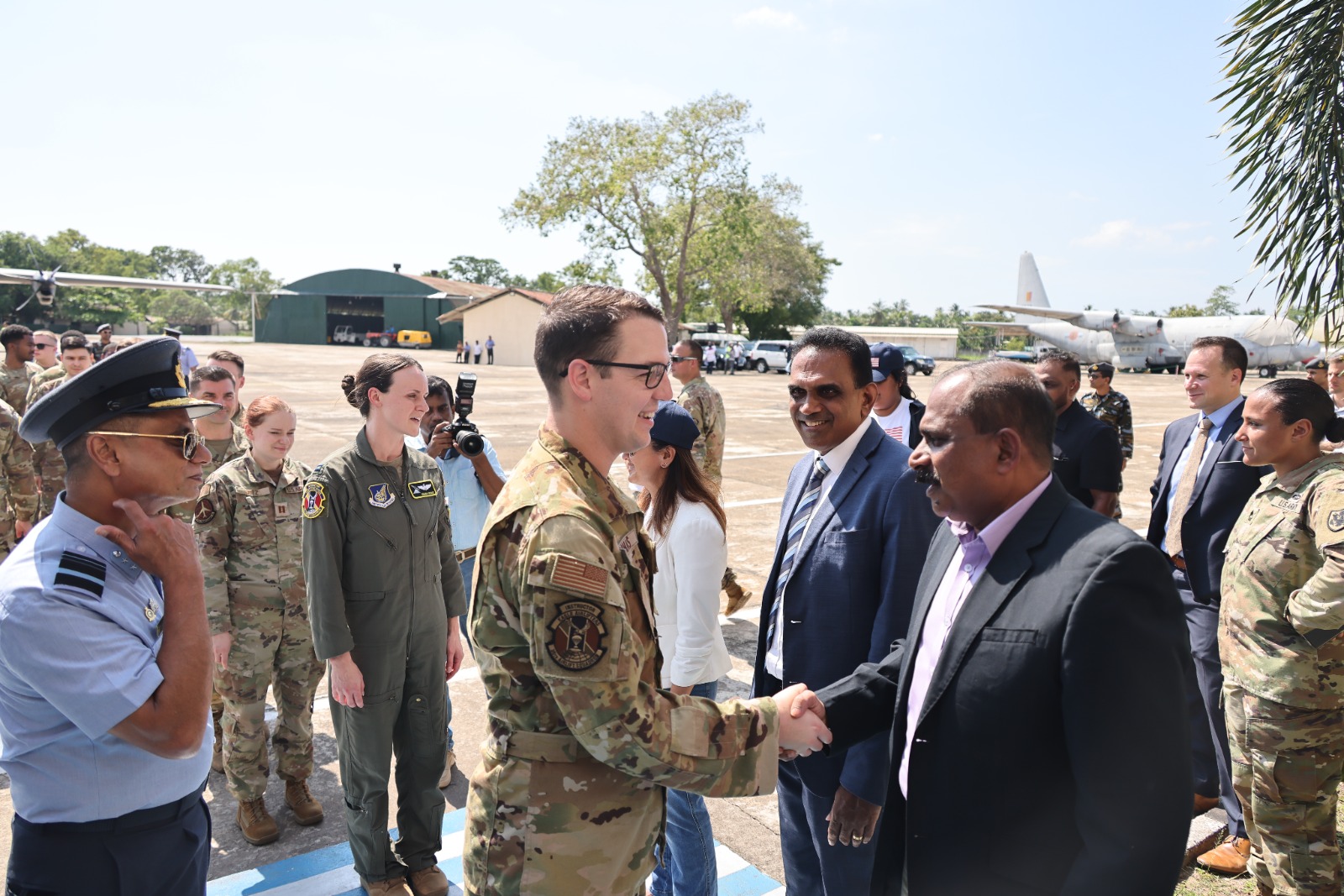 U.S. Ambassador to Sri Lanka Julie Chung and Sri Lanka’s Deputy Minister of Defense Major General KP Aruna Jayasekara (Retd.) welcome U.S. Air Force Airmen at Katunayake Air Base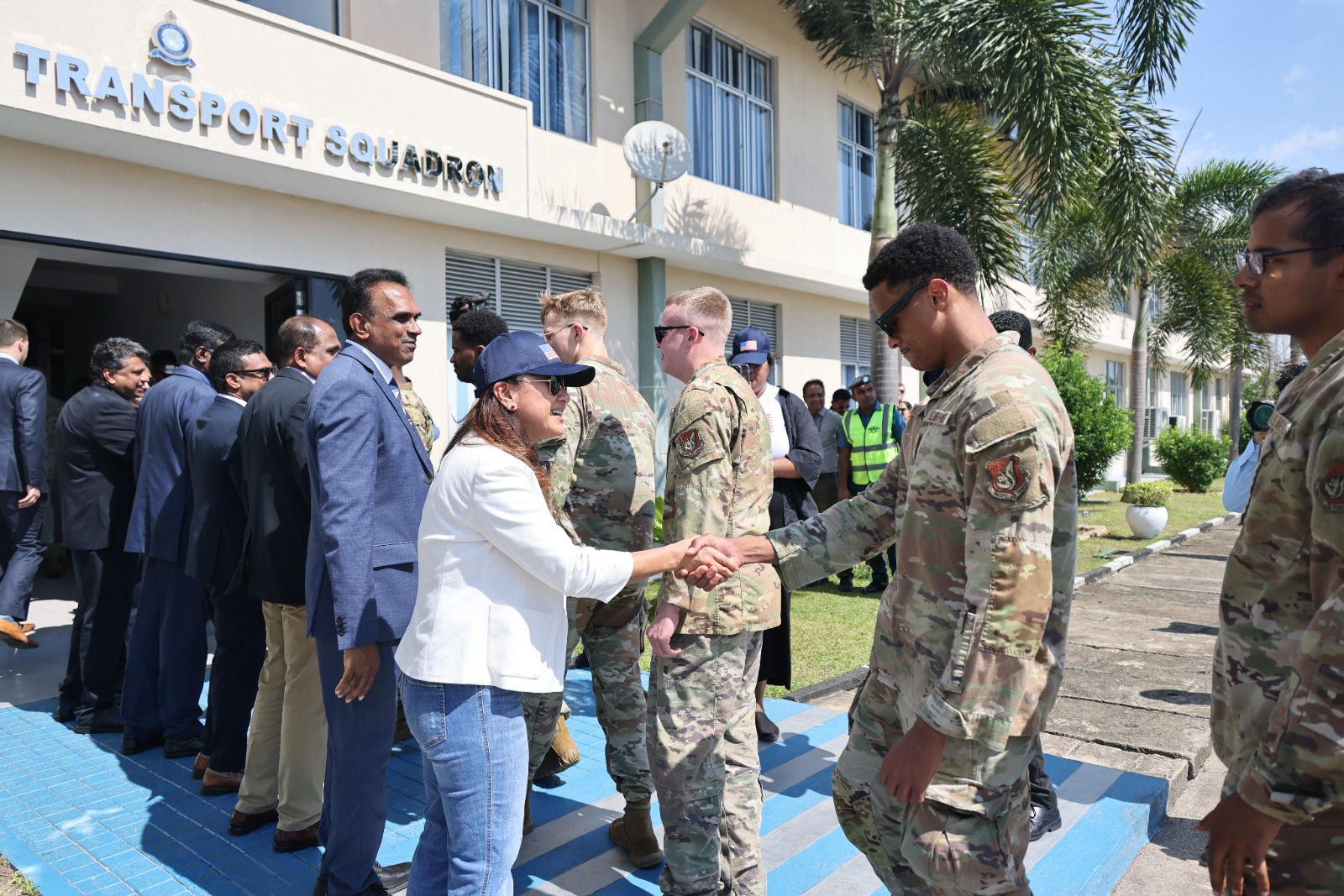
Leave your comments
Login to post a comment
Post comment as a guest