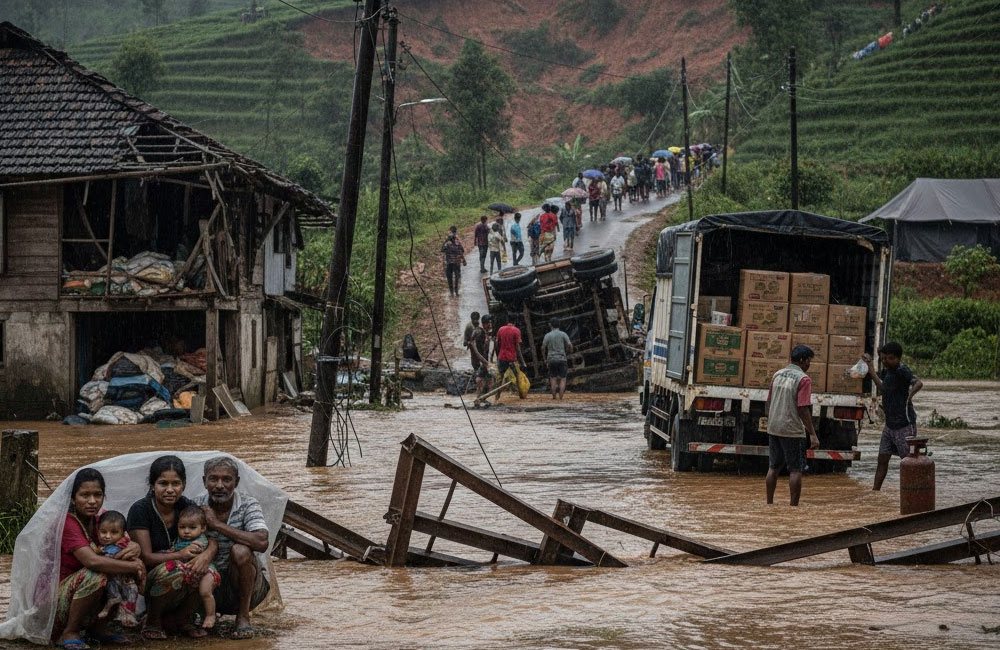
Sri Lanka’s latest emergency relief push rushed out as floods and landslides devastate homes, highways, and entire districts has triggered fresh scrutiny over the government’s dependence on costly imports and ad-hoc crisis management. Behind the promises of rapid delivery lies a deeper question: can an economy still recovering from its worst financial collapse realistically sustain another round of disaster-driven expenditure?
Commissioner General of Essential Services B.K. Prabath Chandrakeerthi confirmed that the state will import frozen vegetables that meet Agriculture Department standards to fill immediate food shortages. But with foreign reserves under stress and the rupee already vulnerable, economists warn that every new import bill tightens the fiscal noose. Floods have destroyed more than 15,000 homes and left over 200 roads impassable, meaning transport costs—and by extension, retail prices are set to surge in the weeks ahead.
While the government plans to publicise district-level lists of required essentials to help suppliers respond faster, past crises show that such decentralised reporting is often plagued by inconsistencies, political interference, and poor verification. Several District Secretariats in highly affected provinces have yet to restore full operations, raising doubts over the accuracy of the needs assessments that will drive procurement decisions.
Officials have opened discussions with Litro Gas to safeguard the distribution of LP gas, but the state’s track record suggests that logistical bottlenecks, not supply shortages, will determine whether cylinders reach rural and hill-country households. Landslides have severed key routes in Badulla, Ratnapura, Nuwara Eliya, and Matale areas heavily dependent on timely fuel and gas deliveries.
The government’s medium-term plan aims to create a centralised list of needs through the Prime Minister’s Office, giving local and international donors a clearer view of what to send. Aid arriving from abroad will be processed through the Disaster Management Centre to secure tax concessions, a move expected to speed up Customs clearance.
However, policy analysts argue that this system essentially outsources disaster recovery to donors, highlighting the state’s depleted fiscal capacity. Sri Lanka’s public debt remains above 120% of GDP, and emergency imports—even essential ones—could widen the trade deficit at a time when foreign exchange inflows have slowed. The reliance on frozen food imports also risks hurting recovering local farmers once floodwaters recede, unless the government phases out imports quickly.
Critics say the current relief framework is reactive rather than strategic. Without real-time data integration across ministries, digitised supply chains, and stronger district administration, the risk of mismatched aid, duplication, and delays remains high.
For thousands displaced across multiple provinces, the real test is not the government’s announcements but whether food, gas, and basic necessities arrive before shortages turn into a secondary humanitarian crisis. As economic vulnerabilities collide with climate disasters, Sri Lanka faces a painful question: how many more shocks can a weakened economy absorb?
Leave your comments
Login to post a comment
Post comment as a guest