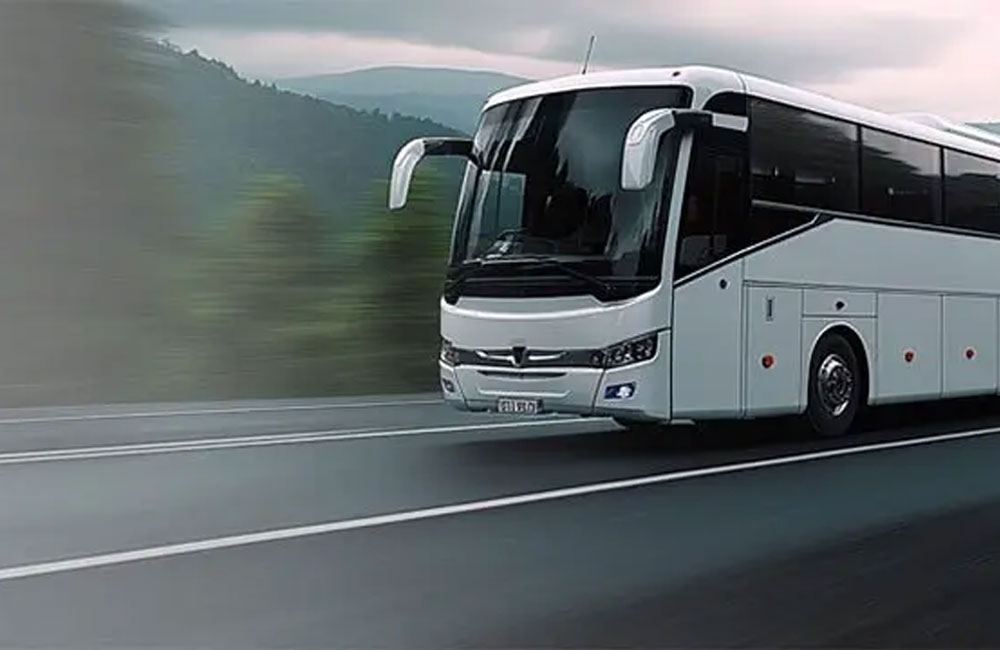
The cabinet of ministers recently approved the purchase of 600 deluxe air-conditioned buses, expanding a previously controversial tender that had drawn criticism over restrictive procurement conditions.
The decision, taken as part of the government's 2025-2026 National Road Safety Plan, authorises the use of Rs 14.4 billion originally set aside for conventional SLTB buses to finance the larger, upgraded fleet, with officials describing the move as a step towards improving passenger comfort, road safety and long-distance transport services nationwide.
Original tender faced scrutiny over restrictive conditions
The expanded programme effectively supersedes an earlier procurement exercise that had sought to acquire only 200 luxury diesel buses for expressway operations.
The tender had come under sustained scrutiny from industry observers, who questioned whether its conditions had been designed, whether intentionally or otherwise, to favour a narrow pool of international manufacturers.
One the most contested requirements were financial thresholds requiring bidders to show annual turnovers exceeding Rs 6 billion in three of the previous five years, along with liquid working capital above Rs 3 billion.
Eligible manufacturers also had to demonstrate production of at least 750 buses annually and exports to five or more countries.
Critics say that such benchmarks measured corporate scale rather than product quality, and that they excluded smaller, experienced suppliers capable of delivering internationally certified buses supported by established maintenance networks.
The procurement timetable added to these concerns. Bid documents were issued between 20 March and 9 April 2026, with submissions closing on 10 April following a single pre-bid conference.
Industry participants said the short preparation window made it difficult for prospective bidders to compile compliant submissions, which in turn limited the scope for genuine competition.
Further technical conditions required manufacturers to have more than 15 years of production experience and to manufacture at least 1,000 units annually of the proposed model, while foreign manufacturers were required to appoint local representatives with at least five years of repair and maintenance experience backed by operational workshop facilities.
Government defends criteria
Government authorities have rejected suggestions that the conditions were unnecessarily restrictive, maintaining that the criteria were designed to ensure reliability, safeguard taxpayer funds and secure long-term after-sales support for one of the country's largest public transport investments.
With the latest Cabinet decision, the disputed 200-bus tender has now been absorbed into a centralised procurement covering 600 deluxe buses, marking a shift from a limited acquisition to a nationwide modernisation strategy.
The broader modernisation drive is also moving forward on a separate track. The Ministry of Transport has already contracted Indra Traders (Pvt) Ltd to supply 104 Metro buses manufactured by China's FOTON International Corporation.
These buses are expected to arrive by mid-August and enter passenger service before late September, introducing electronic fare collection and operating from new depots currently under construction.
The scale of the investment underscores the Government's determination to overhaul the country's ageing public transport fleet, though its ultimate success will depend as much on transparency as on the buses themselves, with procurement experts likely to press for a clear account of how a 200-bus tender grew into a Rs 14.4 billion, 600-vehicle programme in the weeks ahead.
Leave your comments
Login to post a comment
Post comment as a guest