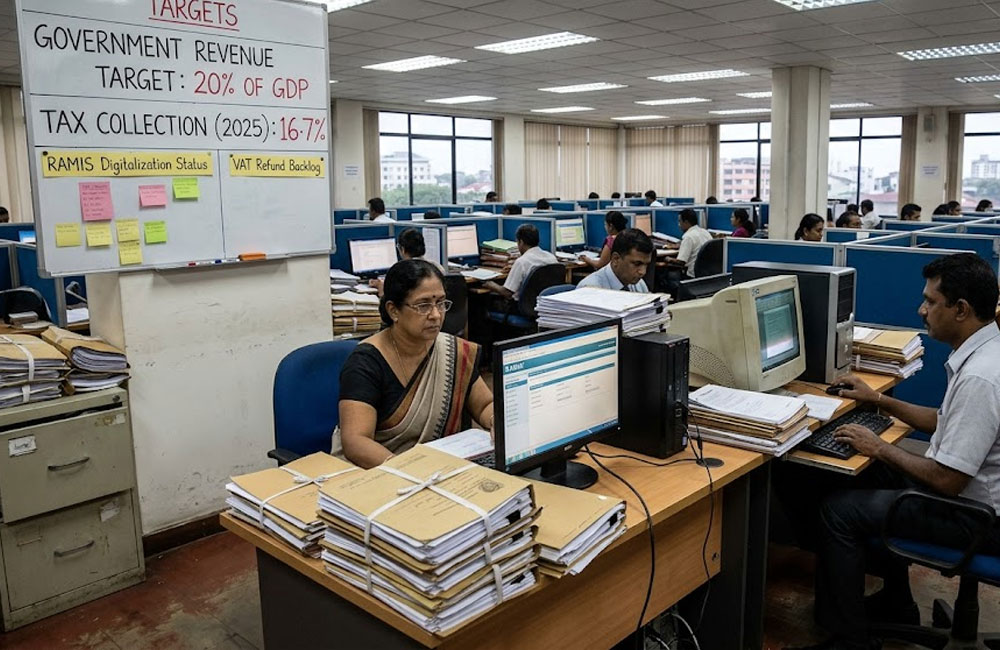
Sri Lanka’s Inland Revenue Department faces critical structural hurdles that threaten to derail the sustainability of its recent tax administration gains unless institutional capacity is urgently rebuilt.
According to a July 2026 solution brief published by economic policy think tank Arutha Research in Colombo, state tax collection has rebounded remarkably to 16.7 percent of gross domestic product in 2025 from a low of 8.3 percent in 2021.
However, the report cautions that despite these revenue improvements, the state revenue body remains constrained by chronic staff shortages in specialized information technology, incomplete digitalization, and a heavy reliance on inefficient manual processes.
Structural challenges hindering long-term progress
Modernization efforts within the revenue body are being severely impeded by legacy operational practices and suboptimal resource allocation.
The policy brief highlights that the department continues to rely on broad traditional checking rather than modern risk-based compliance systems, while the Large Taxpayer Unit remains burdened by legal disputes from past assessments instead of focusing on active audits.
Furthermore, procedural bottlenecks persist across key administration areas, including unrecoverable tax arrears requiring write-offs, an uncleaned taxpayer registry following the 2023 expansion, and manual final-stage processing for Value Added Tax refunds that currently absorbs 40 full-time officers.
The think tank also criticized street-level business surveys in Colombo as resource-intensive distractions from large-scale evasion, warned against proposed taxpayer privilege schemes that could reward past non-compliance, and cautioned that expanding third-party data access without robust governance risks compromising taxpayer information security.
Positive milestones and institutional outlook
Despite these vulnerabilities, significant institutional improvements have taken root over the past two years, including enhanced staff morale, the recruitment of 100 officers in early 2026, leadership stability, upgraded digital infrastructure, and effective joint inter-agency investigations with the Customs Department.
Resolving these operational defects is essential to safeguarding Sri Lanka's fiscal trajectory and achieving the state target of raising government revenue to 20 percent of gross domestic product.
Broad administrative updates, policy evaluations, and capacity-building measures are expected to take center stage as fiscal authorities assess the think tank's strategic recommendations in the coming months.
Leave your comments
Login to post a comment
Post comment as a guest