We will not make decisions at the rural level while sitting in the offices in Colombo
Take actions to send the plans based on the requirements of the rural level through the District Coordination Committees by structural committees
All officials from the Ministry of Education down to the schools shall commit to working efficiently and humanely
Prime Minister Dr. Harini Amarasuriya
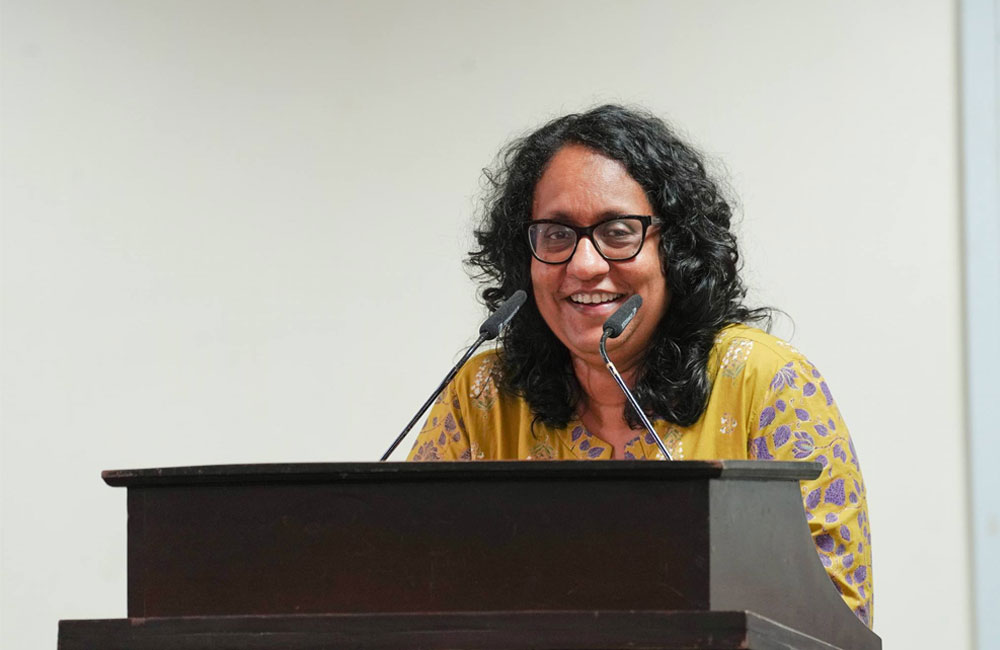
The Minister of Education, Higher Education and Vocational Education Prime Minister Dr. Harini Amarasuriya stated that aligning with the development activities carried out under the new education reforms, decisions at the rural level will not be taken from Colombo and plans should be sent the plans based on the requirements of the rural level through the District Coordination Committees by structural committees. She further noted that all officials, from the Ministry of Education down to the school level, must commit to working efficiently and with a human-centered approach.
The Prime Minister made these remarks while addressing a discussion held with education authorities of the Hambantota District on February 12 at the auditorium of the Hambantota District Secretariat regarding the new education reforms and prevailing issues in the education sector.
During the meeting, the Prime Minister provided an opportunity for education authorities including chief prelates of pirivenas, zonal education directors, teacher advisors, and principals to present the challenges they face and officials raised concerns including salary disparities among principals, developing school infrastructure, issues arising from the division between national and provincial schools, and the upliftment of pirivena education.
Further elaborating, Prime Minister Dr. Harini Amarasuriya stated:
The new education reforms were initiated from 2025 through dialogue, consultations, and the collection of necessary data. As officials, you have extended your support to us during this process. We have embarked on a difficult and long journey, and we look forward to your continued cooperation.
We initiated these reforms in response to a strong social demand. Many have attempted such reforms at different times. Within our political vision, we understood clearly that if this country is to be rebuilt, an educational transformation is essential. The human resource is the most valuable resource of this country and it should be nurtured properly.
Solutions to many of the crises our country faces lie within the education system. Addressing the issues in economic challenges, social issues, drug abuse, violence, the breakdown of political culture, corruption, waste, and even the deterioration of human relationships all lie within the education.
In order to achieve the transformation we envision as a government, an education transformation is necessary.
This education system should focus on reducing the pressures within the system, minimize school dropouts, increase employability, and instill confidence in children about their future.
There are disparities within the school system, between rural and urban schools, national and provincial schools, and difficult schools. This should not happen. All children must have equal opportunities.
Decisions regarding the establishment of schools or expansion of classes should not be political decisions. They must be decisions taken through Structural Committees. Those representatives understand their divisions, village economies, and population dynamics. Based on your decisions and assessments of needs, prepare the plans, discuss them with the District Coordination Committees, and submit them to us. We will then take steps to provide the necessary allocations and other support. We will not make decisions for the rural level while sitting in Colombo.
We are taking steps to minimize salary disparities. A Cabinet paper regarding the salary anomalies of principals has already been prepared for submission. Steps are also being taken to introduce new reforms in pirivena education through the Pirivena Committee of the Ministry of Education. We require the support of the chief prelates in this regard.
A significant number of teachers turn to human rights due to delays caused by inefficiency. Therefore, all officials from the Ministry of Education down to the schools must commit to working efficiently and in a humane manner
The discussion was attended by Chief prelates of pirivenas, deputy ministers, Members of Parliament, zonal directors, principals, and other education sector officials.
Prime Minister’s Media Division
2026.02.13
(Source : newswire.lk)
Leave your comments
Login to post a comment
Post comment as a guest