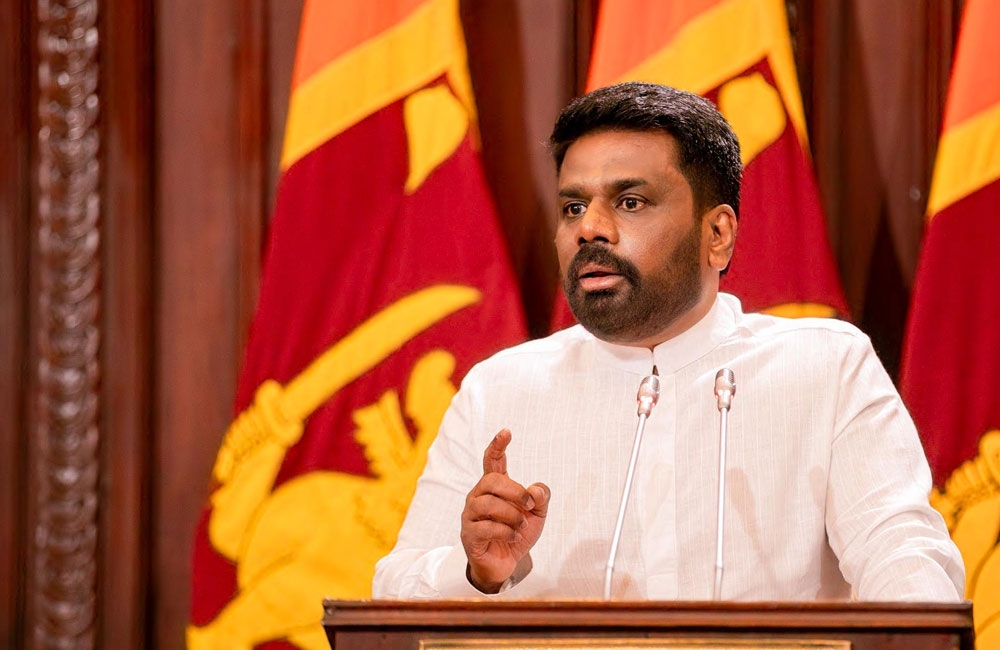
In response to the post-disaster situation triggered by Cyclone Ditwah, President Anura Kumara Dissanayake has extended the declaration of several services as essential public services under the Essential Public Services Act, No. 61 of 1979.
The decision was formalised through a Gazette Extraordinary, which mandates the uninterrupted continuation of services provided by public corporations, government departments, local authorities, and co-operative societies that are vital to the life and well-being of the public.
According to the Schedule attached to the Order, the essential services include electricity supply; fuel distribution, including petroleum products and gas; healthcare services covering hospitals, nursing homes, and similar institutions; public transport for passengers and goods; and the facilitation and maintenance of transport and tourism infrastructure such as roads, railways, airports, ports, bridges, and highways.
The declaration also covers water supply and drainage services; the supply, protection, and distribution of food and essential commodities; the full range of services carried out by District and Divisional Secretariats and their field officers; ambulance services; state banking and insurance services, including the Central Bank of Sri Lanka; and services provided by local authorities such as water, electricity, sewerage, waste disposal, fire-fighting, and emergency response.
In addition, irrigation services, telecommunications and media services, land reclamation and development of low-lying areas, as well as agricultural and agricultural insurance services, have been designated as essential.
The Gazette states that the measure aims to ensure continuity of critical services necessary for public safety, survival, and recovery during the aftermath of Cyclone Ditwah.
The Order, signed by Secretary to the President Dr. N. S. Kumanayake, came into effect on 28 January 2026.
Leave your comments
Login to post a comment
Post comment as a guest