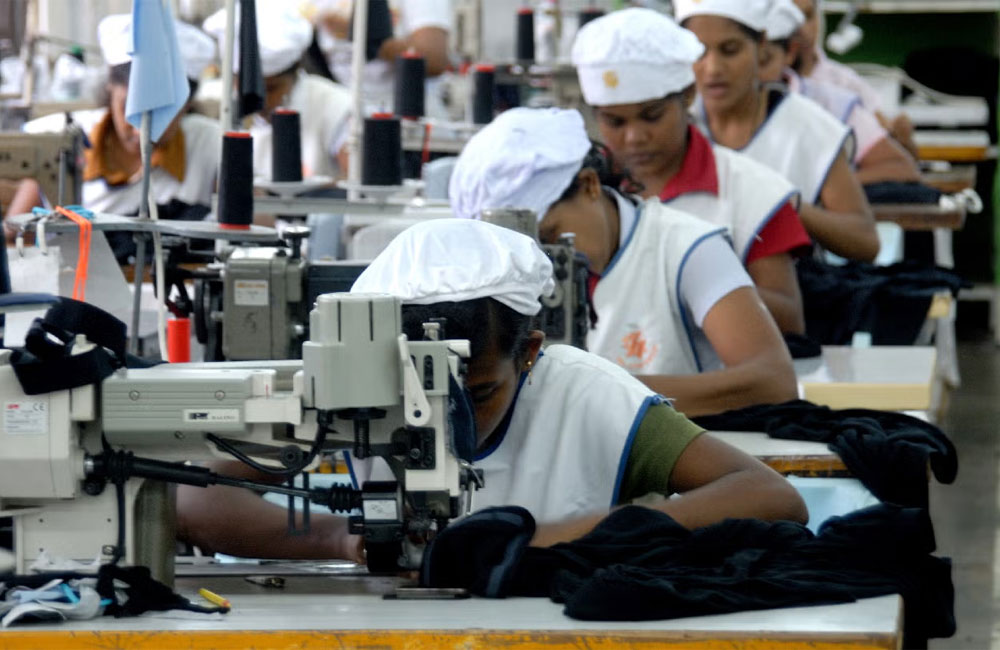
Sri Lanka's flagship apparel sector has entered a critical operational window as the government prepares to formally reapply for the European Union's revised GSP Plus trade preference scheme under heightened compliance rules.
The garment industry, which generates over USD 5 billion in annual exports, employs more than 350,000 workers, and contributes up to seven per cent of the national Gross Domestic Product, risks losing its competitive edge in key European markets if the country fails to meet the updated criteria.
With the European Parliament adopting a expanded regulatory framework, beneficiary nations must now demonstrate verified implementation across an expanded set of obligations, including human rights, climate action under the Paris Agreement, labor inspections, and anti-corruption measures.
A major commercial hurdle facing the sector is the historic underutilisation of existing trade benefits, with local exporters successfully claiming preferential access on only 49 to 59 per cent of eligible shipments.
According to industry analysts, this deficit is primarily driven by strict European Union rules of origin that require domestic yarn sourcing, a requirement that Sri Lanka struggles to fulfill due to insufficient local textile manufacturing capacity.
European Union Ambassador Carmen Moreno recently emphasised that the island nation has not fully capitalised on these concessions, urging domestic policymakers to accelerate industrial reforms, replace the Prevention of Terrorism Act with international standard legislation, and tackle issues surrounding illegal fishing and illicit narcotics before submitting the renewal application.
The urgency of securing a seamless transition is further compounded by the World Bank's recent reclassification of Sri Lanka as an upper middle income economy, a status that would eventually disqualify the nation from GSP Plus benefits if maintained for three consecutive years.
Government officials and industrial leaders must submit a comprehensive, evidence backed action plan during 2027 to prevent Sri Lankan exports from reverting to standard standard tariffs by mid 2029, a move that will determine the long term stability of the country's primary manufacturing export.