World
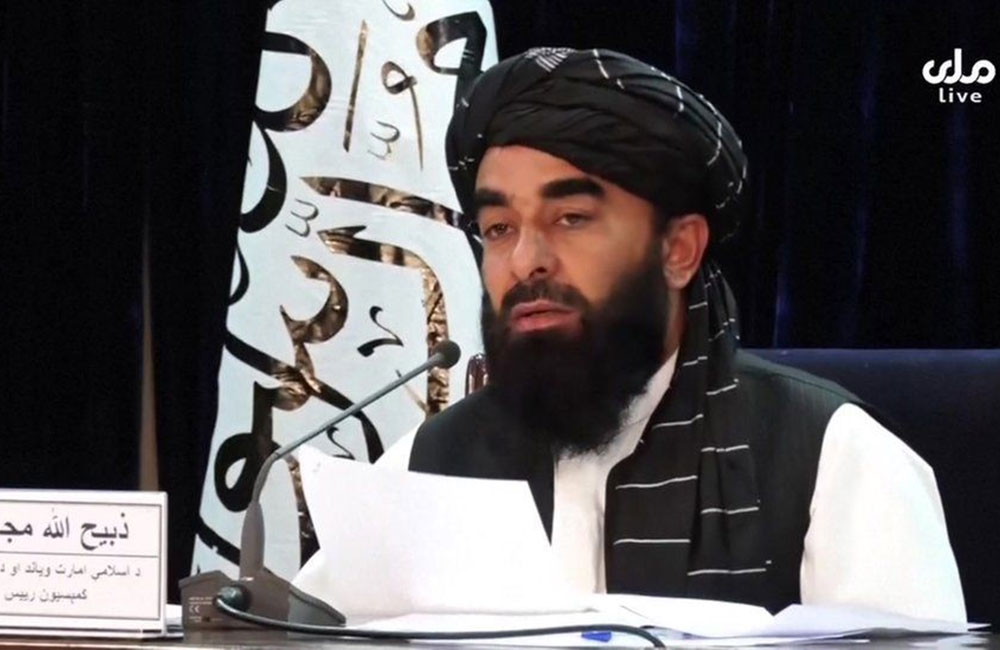
Taliban announce new government for Afghanistan
The Taliban have announced an interim government in Afghanistan, and declared the country an "Islamic Emirate".
The government will be led by Mullah Mohammad Hassan Akhund, one of the movement's founders.
The interior minister will be a feared FBI-wanted leader of the Haqqani militant group.
The Taliban seized control of most of the country more than three weeks ago, ousting the previous elected leadership.
The announcement of the acting cabinet is a key step in the formation of a Taliban government.
"We know the people of our country have been waiting for a new government," Zabihullah Mujahid said, adding that the group had answered the people's needs.
Sarajuddin Haqqani, the new acting interior minister, is head of the militant group known as the Haqqani network who are affiliated with the Taliban and have been behind some of the deadliest attacks in the country's two-decade-long war.
Unlike the wider Taliban, the Haqqani network has been designated a foreign terrorist organisation by the US.
Other appointments include Mullah Yaqoob as acting defence minister, Amir Khan Muttaqi as acting foreign minister, and Taliban co-founder Mullah Abdul Ghani Baradar and Mullah Abdul Salam Hanafi as two deputies.
Asked why no women were appointed, Ahmadullah Wasiq told the BBC's Secunder Kermani that the cabinet had not been finalised yet.
This breaking news story is being updated and more details will be published shortly. Please refresh the page for the fullest version.

G7 set to pledge 1 billion vaccine doses
The Group of Seven nations are set to commit at least 1 billion coronavirus vaccine shots to nations struggling to contain the virus.
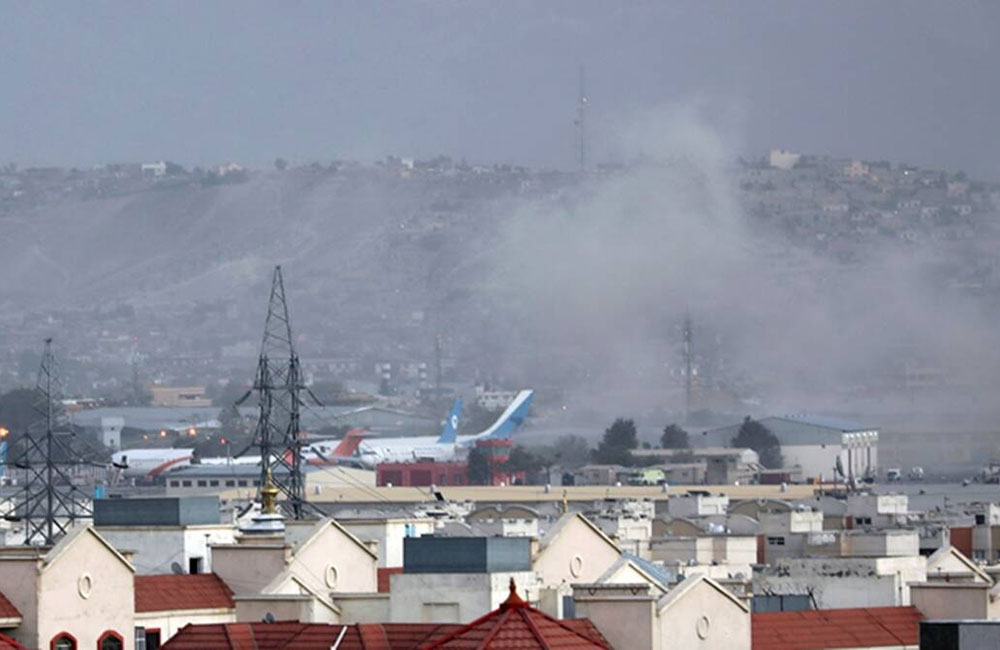
Explosion outside Kabul airport, casualties unclear - reports
There has been an explosion outside the Kabul airport, the Pentagon press secretary said on Thursday, adding that it was unclear whether there were casualties amid the large evacuation effort in Afghanistan’s capital.
U.S. President Joe Biden has been briefed on the explosion, according to a White House official. Biden was in a meeting with security officials about the situation in Afghanistan, where the United States is in the final steps of ending its 20-year war, when the explosion was first reported, according to a person familiar with the matter.
The United States has been racing to airlift its citizens and some Afghan citizens from Kabul before its military is set to fully withdraw from Afghanistan on Aug. 31.
The explosion came hours after British Armed Forces Minister James Heappey said there was “very credible” intelligence that militants were planning an attack on people gathering at the airport, foreign media reported.
Western nations had warned of a possible attack on Kabul’s airport in the waning days of the massive evacuation efforts.
Several countries urged people to avoid the airport, where an official said there was a threat of a suicide bombing. But just days — or even hours for some nations — before the evacuation effort ends, few appeared to heed the call.
Over the last week, the airport has been the scene of some of the most searing images of the chaotic end of America’s longest war and the Taliban’s takeover, as flight after flight took off carrying those who fear a return to the militants’ brutal rule.
Already, some countries have ended their evacuations and begun to withdraw their soldiers and diplomats, signaling the beginning of the end of one of history’s largest airlifts. The Taliban have so far honored a pledge not to attack Western forces during the evacuation, but insist the foreign troops must be out by America’s self-imposed deadline of Aug. 31
-Agencies
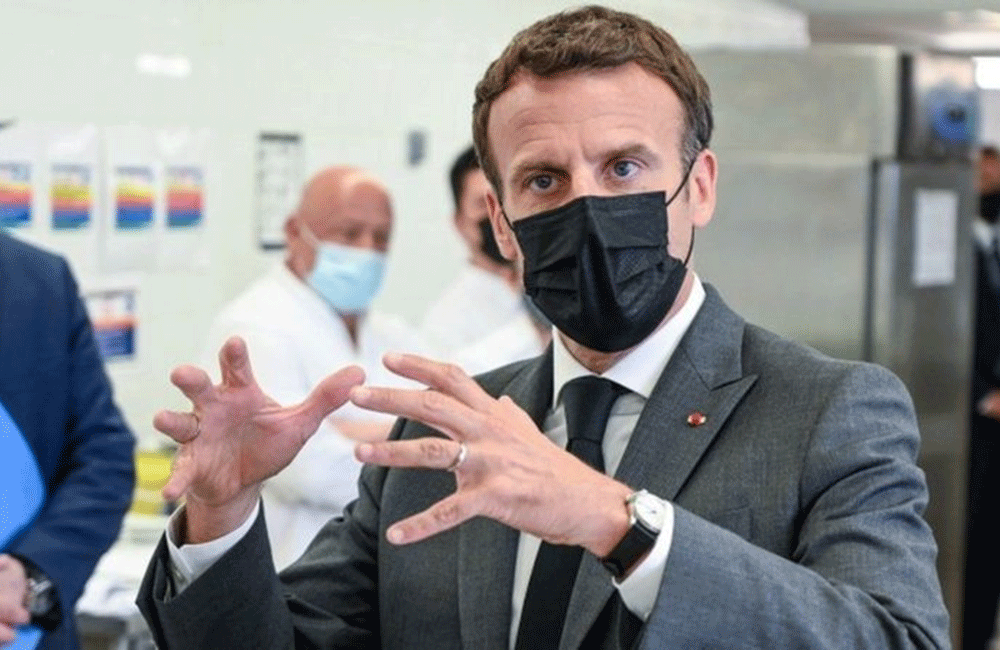
French President slapped in the face
The scene, which was filmed, shows Macron working a rope line in the town of Tain-l'Hermitage. While shaking Macron's hand, a man is able to slap the president's face before security intervenes.
French media said the two arrested are identified with the yellow vest movement — the mostly white, working-class protests that dogged Macron politically and personally during much of 2018 and 2019.
The slapper yelled, "Montjoie Saint-Denis, à bas la Macronie." Part of the phrase is a 12th century royalist slogan that today has become a rallying cry of the far right. The other part means "down with Macronism."
Several hours afterward, Macron played down the incident in an interview with a local newspaper, Le Dauphiné Libéré. "Everything is fine," he said.
"You have to relativize this incident, which is I think an isolated one. We can't let this take over the public discussion of more important issues which concern everyone's lives."
Macron said the country could not let a few ultraviolent individuals take over the public debate.
"They don't deserve it," he said.
French politicians from across the political spectrum were quick to condemn the attack.
Former socialist President François Hollande tweeted, "To attack a President of the Republic is to give an unbearable intolerable blow to our institutions."
And far-right leader Marine Le Pen called the behavior unacceptable and deeply deplorable in a democracy.
"I am the first opponent of Emmanuel Macron, but he is the president of the Republic," she said in an interview.
"We can fight him politically, but we cannot afford to have to the slightest violence."
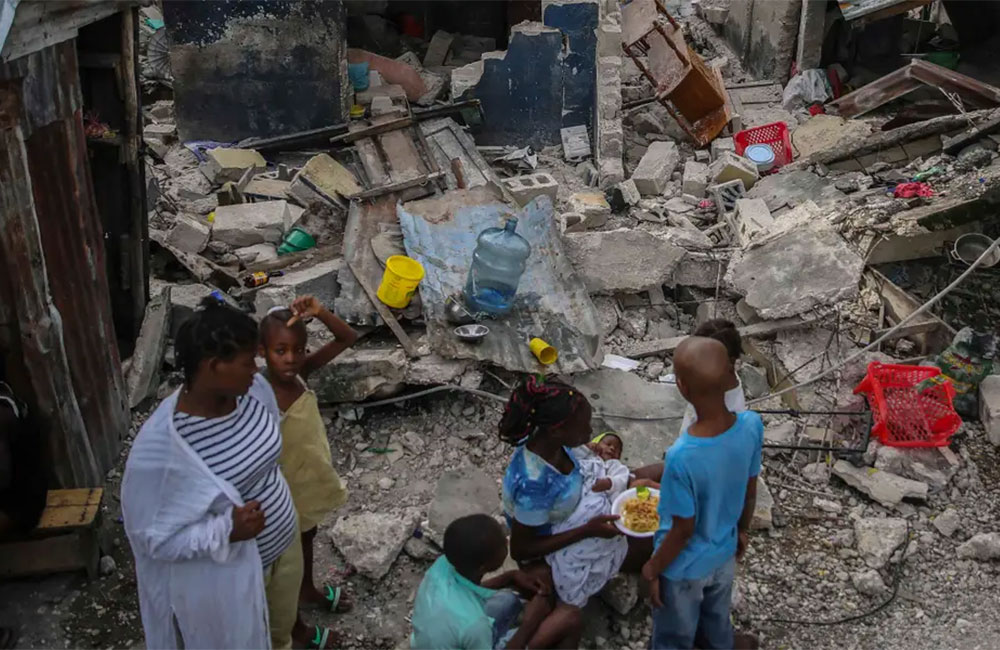
304 Dead After A 7.2 Magnitude Earthquake Hits Haiti
A massive 7.2 magnitude earthquake struck Haiti on Saturday morning, the U.S. Geological Survey said, raising fears of destruction similar to the devastating 2010 quake that shattered the country.
At least 304 people have died and more than 1,800 were injured, according to Haiti’s civil protection service. The USGS predicts the death toll could reach into the thousands.
In a news conference on Saturday evening, the head of the country’s civil protection agency, Jerry Chandler, said 304 people had been confirmed dead – up from an initial toll of 29 – while at least 1,800 others were injured.
Chandler told reporters 160 of the deaths were reported in Haiti’s southern department; 42 were in Nippes; 100 were in Grand Anse, and two were in the country’s northwest.
The earthquake struck on Saturday morning 12km (7.4 miles) northeast of Saint-Louis du Sud, on Haiti’s southern Tiburon Peninsula, at a shallow depth of 10km (6.2 miles), the United States Geological Survey (USGS) reported.
It is the latest crisis to befall the Caribbean nation, which is struggling amid widespread gang violence and ongoing political instability in the aftermath of the assassination of President Jovenel Moise last month.
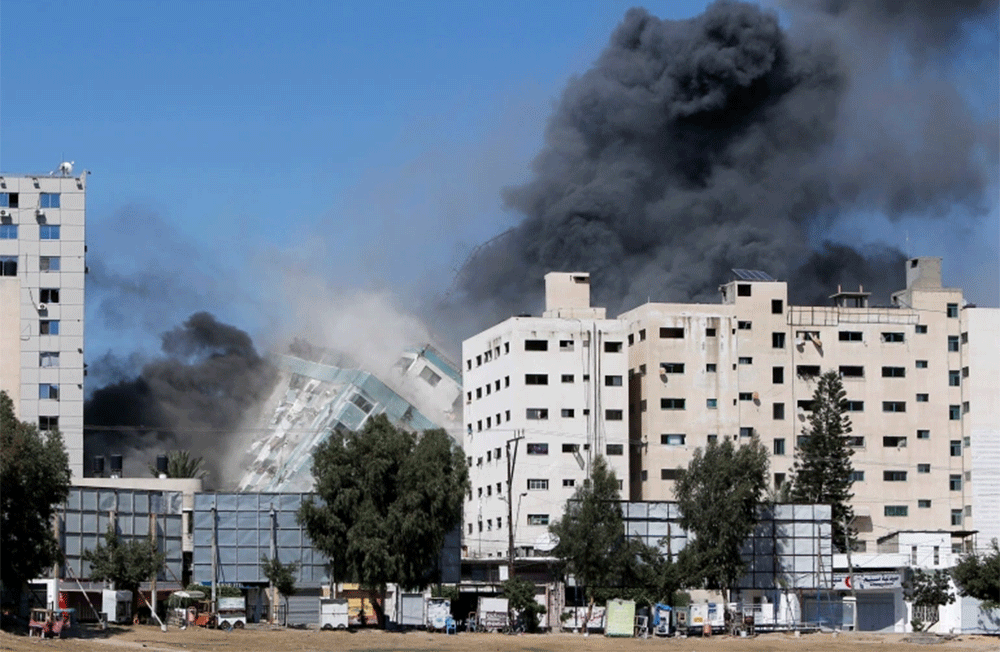
Israel strike in Gaza destroys building housing foreign media
An Israeli airstrike destroyed a high-rise building in Gaza City that housed offices of The Associated Press and other media outlets hours after another Israeli air raid on a densely populated refugee camp killed at least 10 Palestinians from an extended family, mostly children, on Saturday.
The strike on the high-rise came nearly an hour after the military ordered people to evacuate the 12-story building, which also housed Al-Jazeera, other offices and residential apartments. The strike brought down the entire structure, which collapsed in a gigantic cloud of dust. There was no immediate explanation for why it was attacked.
The earlier Israeli airstrike on the Gaza City refugee camp was the deadliest single strike of the current conflict between Israel and the militant group Hamas. Both sides are pressing for an advantage as cease-fire efforts gather strength.
The latest outburst of violence started in Jerusalem and spread across the region over the past week, with Jewish-Arab clashes and rioting in mixed cities of Israel. There were also widespread Palestinian protests Friday in the occupied West Bank, where Israeli forces shot and killed 11 people.
The spiraling violence has raised fears of a new Palestinian “intifada,” or uprising, when peace talks have not taken place in years. Palestinians on Saturday were marking Nakba (Catastrophe) Day, when they commemorate the estimated 700,000 people who were expelled from or fled their homes in what was now Israel during the 1948 war surrounding its creation. That raised the possibility of even more unrest.
U.S. diplomat Hady Amr arrived Friday as part of Washington’s efforts to de-escalate the conflict, and the U.N. Security Council was set to meet Sunday. But Israel turned down an Egyptian proposal for a one-year truce that Hamas rulers had accepted, an Egyptian official said Friday on condition of anonymity to discuss the negotiations.
Since Monday night, Hamas has fired hundreds of rockets into Israel, which has pounded the Gaza Strip with strikes. In Gaza, at least 139 people have been killed, including 39 children and 22 women; in Israel, eight people have been killed, including the death Saturday of a man killed by a rocket that hit in Ramat Gan, a suburb of Tel Aviv.
The strike on the building housing media offices came in the afternoon, after the owner received a call from the Israeli military warning that the building would be hit. AP’s staff and others in the building evacuated immediately, and were reported safe.
Al-Jazeera, the news network funded by Qatar’s government, broadcast the airstrikes live as the building collapsed.
“This channel will not be silenced. Al-Jazeera will not be silenced,” an on-air anchorwoman from Al-Jazeera English said, her voice thick with emotion. “We can guarantee you that right now.”
The bombardment earlier Saturday struck a three-story house in Gaza City’s Shati refugee camp, killing eight children and two women from an extended family.
Mohammed Hadidi told reporters his wife and five children had gone to celebrate the Eid al-Fitr holiday with relatives. She and three of the children, aged 6 to 14, were killed, while an 11-year-old is missing. Only his 5-month-old son Omar is known to have survived.
Children’s toys and a Monopoly board game could be seen among the rubble, as well as plates of uneaten food from the holiday gathering.
“There was no warning,” said Jamal Al-Naji, a neighbor living in the same building. “You filmed people eating and then you bombed them?” he said, addressing Israel. “Why are you confronting us? Go and confront the strong people!”
The Israeli military did not immediately respond to a request for comment. Hamas said it fired a salvo of rockets at southern Israel in response to the airstrike.
A furious Israeli barrage early Friday killed a family of six in their house and sent thousands fleeing to U.N.-run shelters. The military said the operation involved 160 warplanes dropping some 80 tons of explosives over the course of 40 minutes and succeeded in destroying a vast tunnel network used by Hamas.
Lt. Col. Jonathan Conricus, a military spokesman, said the military aims to minimize collateral damage in striking military targets. But measures it takes in other strikes, such as warning shots to get civilians to leave, were not “feasible this time.”
Israeli media said the military believed dozens of militants were killed inside the tunnels. The Hamas and Islamic Jihad militant groups have confirmed 20 deaths in their ranks, but the military said the real number is far higher.
Gaza’s infrastructure, already in widespread disrepair because of an Israeli-Egyptian blockade imposed after Hamas seized power in 2007, showed signs of breaking down further, compounding residents’ misery. The territory’s sole power plant is at risk of running out of fuel in the coming days.
The U.N. said Gazans are already enduring daily power cuts of 8-12 hours and at least 230,000 have limited access to tap water. The impoverished and densely populated territory is home to 2 million Palestinians, most of them the descendants of refugees from what is now Israel.
The conflict has reverberated widely. Israeli cities with mixed Arab and Jewish populations have seen nightly violence, with mobs from each community fighting in the streets and trashing each other’s property.
Late on Friday, someone threw a firebomb at an Arab family’s home in the Ajami neighborhood of Tel Aviv, striking two children. A 12-year-old boy was in moderate condition with burns on his upper body and a 10-year-old girl was treated for a head injury, according to the Magen David Adom rescue service.
In the occupied West Bank, on the outskirts of Ramallah, Nablus and other towns and cities, hundreds of Palestinians protested the Gaza campaign and Israeli actions in Jerusalem. Waving Palestinian flags, they trucked in tires that they set up in burning barricades and hurled stones at Israeli soldiers. At least 10 protesters were shot and killed by soldiers. An 11th Palestinian was killed when he tried to stab a soldier at a military position.
In east Jerusalem, online video showed young Jewish nationalists firing pistols as they traded volleys of stones with Palestinians in Sheikh Jarrah, which became a flashpoint for tensions over attempts by settlers to forcibly evict a number of Palestinian families from their homes.
On Israel’s northern border, troops opened fire when a group of Lebanese and Palestinian protesters on the other side cut through the border fence and briefly crossed. One Lebanese was killed. Three rockets were fired toward Israel from neighboring Syria without causing any casualties or damage. It was not immediately known who fired them.
The tensions began in east Jerusalem earlier this month, with Palestinian protests against the Sheikh Jarrah evictions and Israeli police measures at Al-Aqsa Mosque, a frequent flashpoint located on a mount in the Old City revered by Muslims and Jews.
Hamas fired rockets toward Jerusalem late Monday, in an apparent attempt to present itself as the champion of the protesters.
Prime Minister Benjamin Netanyahu has vowed that Hamas will “pay a very heavy price” for its rocket attacks as Israel has massed troops at the frontier. U.S. President Joe Biden has expressed support for Israel while saying he hopes to bring the violence under control.
Hamas has fired some 2,000 rockets toward Israel since Monday, according to the Israeli military. Most have been intercepted by anti-missile defenses, but they have brought life to a standstill in southern Israeli cities, caused disruptions at airports and have set off air raid sirens in Tel Aviv and Jerusalem.
Soruce: Associated Press (AP)
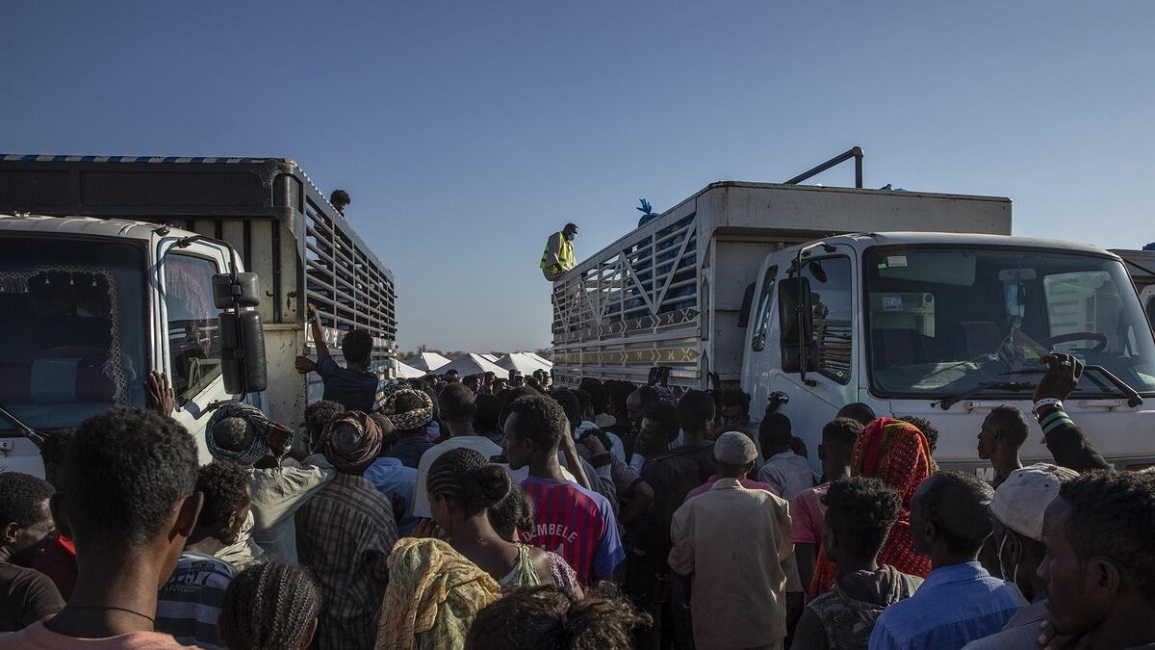
More than 400,000 people facing famine in Ethiopia
While a unilateral cease-fire was declared by the government of Ethiopia last week, the U.N officials have warned of increasing starvation and violence in Tigray, Ethiopia.
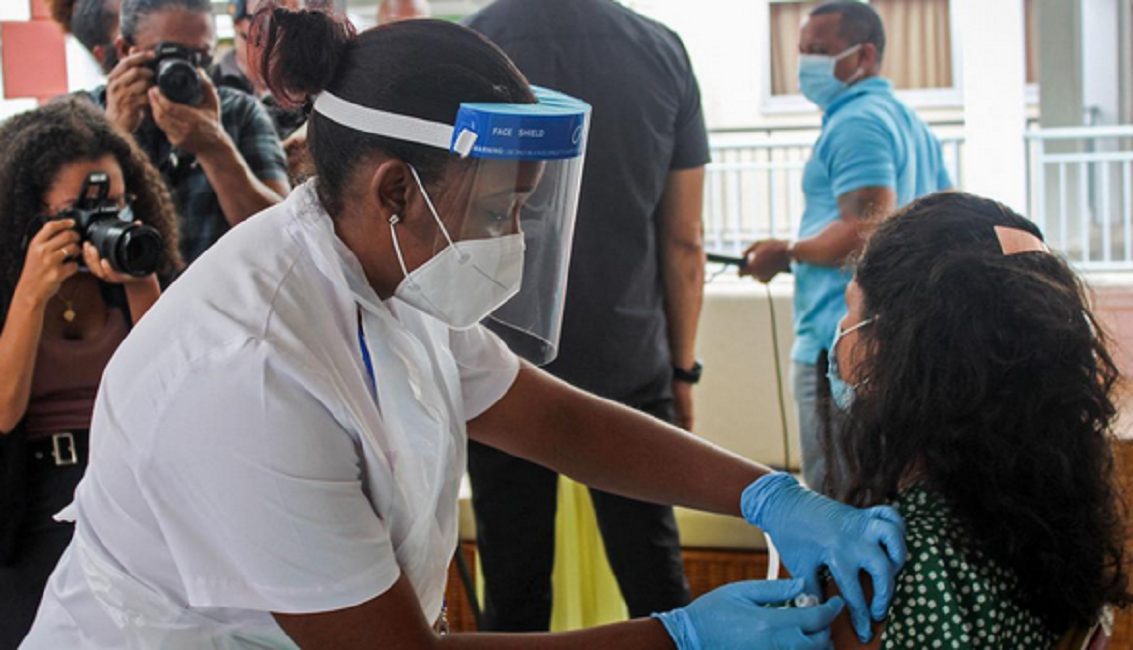
The Seychelles: Covid cases on the rise in the most vaccinated nation on earth
The Seychelles is causing concern for world health experts after a rise of Covid-19 cases among fully vaccinated individuals.

Indonesian Covid deaths add to questions over Sinovac vaccine
At least 10 out of 26 Indonesian doctors who have died from Covid-19 this month had been fully vaccinated with Sinovac, prompting authorities to consider whether medics should receive alternative doses to boost immunity.
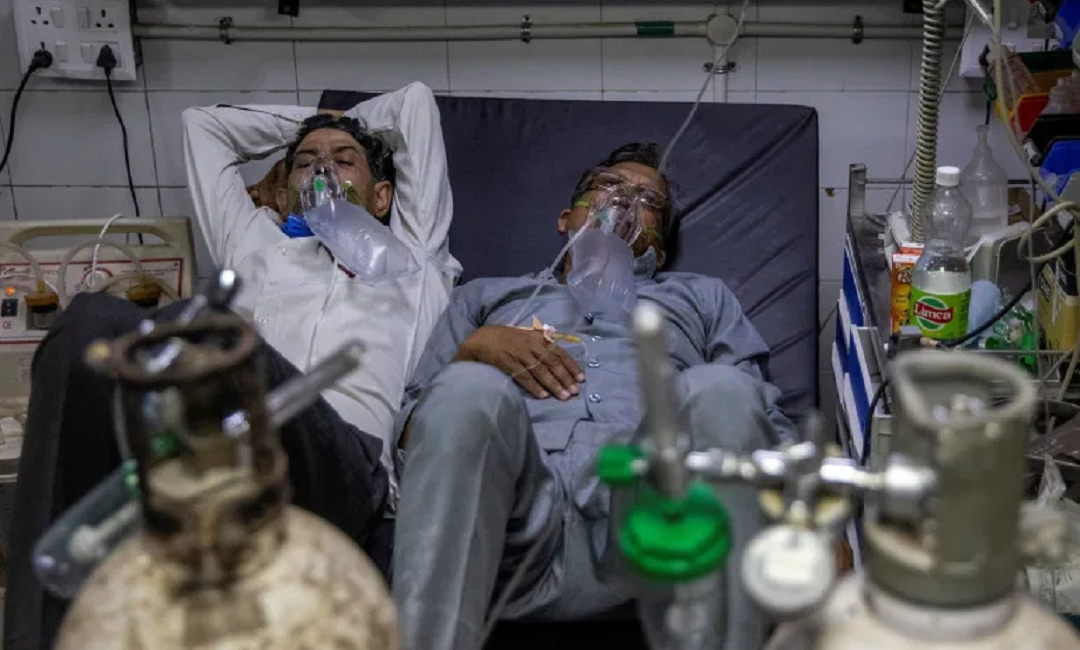
Coronavirus 'swallowing' people in India; crematoriums overwhelmed
NEW DELHI, Delhi — With life-saving oxygen in short supply, family members in India are left on their own to ferry coronavirus patients from hospital to hospital in search of treatment as the country is engulfed in a devastating new surge of infections.

China fumes after Nepal's media exposes Sinopharm vaccine procurement price
China, which is reportedly selling Nepal vaccines against the coronavirus disease (Covid-19) at a price of $10 per dose, conveyed its displeasure with Kathmandu after some regional media publications disclosed the procurement price, reported news agency ANI on Sunday morning.
It was earlier reported that Nepal had had to sign a non-disclosure agreement with the makers of China’s Sinopharm Covid-19 vaccine in order to gain access to doses amid questions about the legality of such an undertaking.
Meanwhile, the disclosure of procurement price of China's Sinopharm vaccine in Sri Lanka sparked a row after reports emerged that Colombo had to shell out a higher per-dose price than its fellow South Asian country Bangladesh.
According to the Daily Mirror, Sri Lanka is paying $15 per dose for the Sinopharm vaccine, which is USD 5 higher than what Bangladesh paid.
Contrary to media reports, Channa Jayasumana, State Minister of Supply and Regulation of Pharmaceuticals, said there is "no such an agreement to give the vaccine at USD 10 for Bangladesh."
However, the State Minister's claims stand in contrast with what Bangladesh's Finance Minister AHM Mustafa Kamal, a Cabinet Division official, said in May that Bangladesh was purchasing the vaccine at USD 10 per dose.
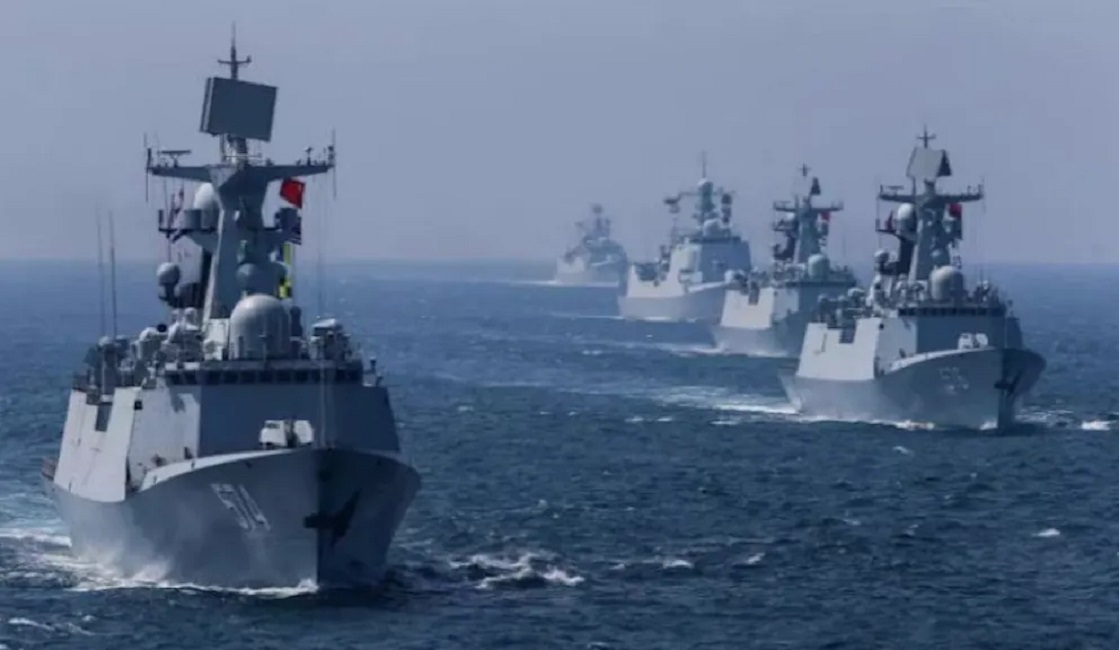
Chinese Navy seeks to be more ‘port’able
One of China’s strengths – as an authoritarian communist state – is its ability to wield a whole-of-nation approach to security, diplomatic and economic affairs around the globe.
Page 23 of 57