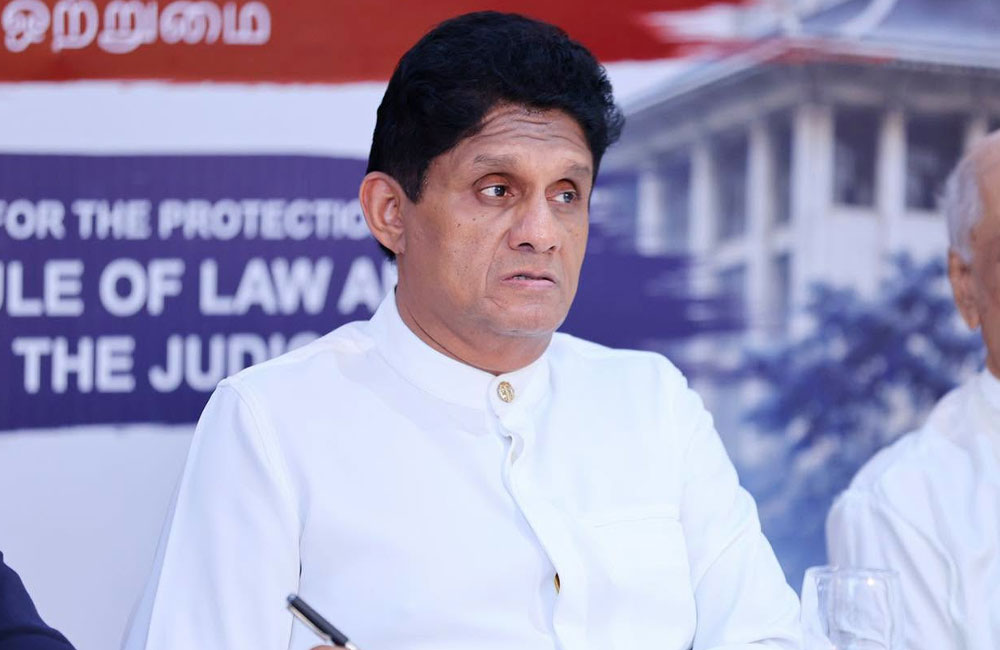
Sri Lanka should secure a successor agreement with the International Monetary Fund (IMF) to targetedly reduce poverty, drive exports, and ease public hardship, Opposition Leader Sajith Premadasa said.
Delivering a special statement following recent comments by Minister Bimal Rathnayake regarding plans to exit the IMF programme when the current Extended Fund Facility expires in March 2027, the Opposition Leader warned that an abrupt departure would expose the island nation to severe economic risks.
The warning comes as fiscal metrics highlight the precarious nature of the domestic economy.
Projections from the multilateral lender indicate that total public debt will remain at 100 per cent of gross domestic product in 2026 before easing slightly to 96 per cent in 2027.
Over the same period, external foreign debt is forecast to rise from 51 per cent to 52 per cent of national output.
With debt servicing and interest obligations set to consume 8.5 per cent of gross domestic product in 2026 and 7.4 per cent in 2027, absorbing approximately 15 per cent of total government revenue, long-term strategic economic management remains imperative to prevent a relapse into insolvency.
The Opposition Leader stressed that macroeconomic stability achieved under the existing arrangement has relied on severe sacrifices imposed on ordinary citizens.
Countering statements that the economic recovery will be complete by March 2027, he insisted that the current programme remains flawed and incomplete.
While acknowledging the necessity of strict fiscal discipline until the expiry date of 3 March 2027, he said that the government must proactively construct a credible alternative framework.
Such a plan, he noted, must safeguard international credibility, ensure sustainable debt, maintain robust foreign exchange reserves, preserve market access, and protect investor confidence, while simultaneously offering immediate relief to farmers, fishermen, labourers, entrepreneurs, the self-employed, youth, women, and children across the country.
Leave your comments
Login to post a comment
Post comment as a guest