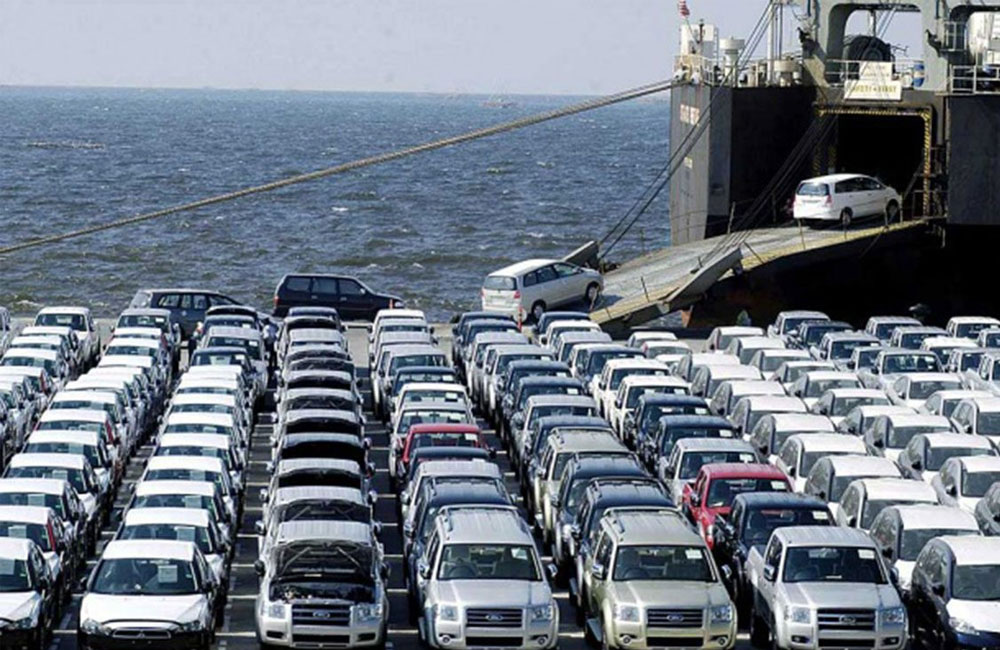
Sri Lanka's ongoing vehicle import restrictions could trigger severe market complications if left unaddressed, CEO of Advocata Institute Dhananath Fernando said.
He said that the domestic demand for vehicles has already been met to a certain degree, meaning that state tax revenue generated from vehicle imports this year is highly anticipated to decline compared to the previous year.
He pointed out that the trajectory of the market will heavily depend on whether the government decides to extend the current vehicle import policy beyond the upcoming 15 August deadline.
Ferando further explained that a gradual decline in vehicle registrations is already visible because importers have actively brought in vehicles to satisfy current requirements, which will inevitably drag down import tax revenue levels compared to last year.
He noted that while additional surcharges cannot be legally introduced under the active agreements signed with the International Monetary Fund, the outright removal of existing surcharges could paradoxically deliver another shock to the local automotive market.
Highlighting the existing tax framework, Fernando said that it would be fundamentally unfair for the government to impose further financial levies on consumers when vehicles are already hit with customs duties as high as 150 per cent and 200 per cent.
Instead of continuously increasing the tax burden on the exact same segment of society, he urged the state to focus its efforts on effectively managing public expenditure.
He added that tax revenue could instead be expanded by accelerating essential economic reforms, a move that would simultaneously signal to the market that the national economy is transitioning towards recovery and sustainable growth.
Leave your comments
Login to post a comment
Post comment as a guest