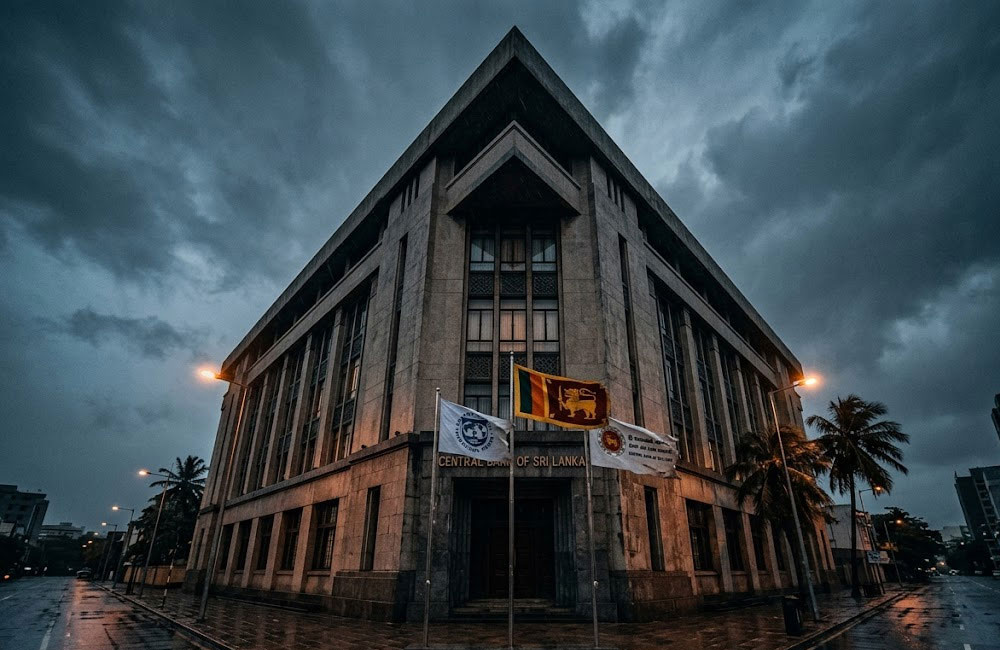
A nine-member IMF delegation, headed by Sri Lanka Mission Chief Evan Papageorgiou, is holding staff-level discussions in Colombo from 24th to 30th June, as part of the seventh review of the country's Extended Fund Facility programme.
The talks focus on the implementation of emergency fiscal measures, customs reforms, and preparations for a revised Medium-Term Revenue Strategy.
The review will determine whether Sri Lanka has honoured a series of demanding reform commitments, with officials under pressure to show that momentum has not weakened, even after receiving temporary flexibility following recent economic shocks.
One of the IMF's key concerns is Sri Lanka's commitment to honour its debt restructuring obligations without slipping back into external payment defaults. Maintaining the agreed repayment schedule has become a critical benchmark for restoring international confidence following years of financial instability.
The country's economic outlook has, however, become increasingly complicated.
The conflict in the Middle East and the impact of Cyclone Ditwah are expected to push inflation higher, increase fuel import costs, weaken the current account, and reduce tourism earnings.
In recognition of these extraordinary circumstances, the IMF approved a temporary relaxation of fiscal targets for 2026.
The concession includes a Rs.500 billion supplementary budget to assist cyclone-affected families and finance the reconstruction of damaged infrastructure.
The IMF also agreed to lower Sri Lanka's primary budget surplus target for the year, on condition that authorities return to the original target of 2.3 percent of GDP in 2027.
Despite this flexibility, the IMF has made clear that emergency spending cannot become an excuse for fiscal indiscipline. Officials are reviewing the government's mid-year budget performance to ensure expenditure remains within the approved emergency allocation.
The Central Bank also faces strict monetary restrictions. Under programme conditions, net monetary financing must remain at zero, effectively prohibiting money printing to finance government expenditure.
At the same time, Sri Lanka must continue building net foreign reserves, even as the Central Bank intervenes in currency markets to stabilise the rupee.
Governance reforms remain another major area under review.
The IMF expects the Commission to Investigate Allegations of Bribery or Corruption to become fully operational, with independently appointed commissioners and adequate funding for financial forensic investigations.
Attention is also focused on restructuring or divesting loss-making state-owned enterprises that continue to burden public finances, with the government expected to show measurable progress in reducing their dependence on Treasury support.
During the visit, IMF officials also inspected Sri Lanka Customs to assess ongoing digitalisation initiatives designed to improve transparency and strengthen revenue collection.
Successful completion of the review is widely expected to pave the way for the release of the eighth EFF tranche, worth SDR 254 million, or approximately US$335-350 million.
The funding would further strengthen Sri Lanka's external finances, but only if the government continues to demonstrate commitment to the difficult reforms demanded under the IMF programme.
Leave your comments
Login to post a comment
Post comment as a guest